NCERT Solutions: Universal Franchise and India’s Electoral System


Page No. 117
The Big Questions
Q1: What is the universal adult franchise?
Ans: Universal Adult Franchise is the right of all adult citizens (above 18 years of age) to vote in an election, regardless of their caste, gender, race, creed, religion, economical, educational or social status.
Q2: What is an electoral system?
Ans: An electoral system is the set of rules and procedures used for electing representatives in a democracy. It shows how people cast their votes, how votes are counted, and how winners are declared. A clear electoral system helps make elections fair, transparent and understandable so that citizens can directly take part in choosing their leaders.
Q3: How does India's electoral system work?
Ans: India's electoral system works through free and fair elections where representatives are chosen by the people using secret ballots, based on the principle of Universal Adult Franchise which means every adult citizen has the right to vote. This system ensures that elections are fair and everyone's vote is kept secret.
Page No. 118
Let's Explore
Q1: India changed the minimum age for voting from 21 to 18 in 1988. Discuss whether this was a good move.
Ans: Lowering the voting age from 21 to 18 in 1988 was a positive step for India's democracy. It:
- Included young people in public decision-making and gave them a voice on issues that affect their future.
- Encouraged political awareness and civic responsibility among youth, helping develop a habit of participation early on.
- Brought India in line with many other democracies, increasing representativeness.
While some worried that younger voters might lack experience, giving them the vote also meant citizens, political parties and schools had to work harder at civic education. Overall, it made the system more inclusive and representative.
Page No. 120
Let's Explore
Q1: In 1947, our literacy rate was about 14 per cent, only about 8 per cent among women. Some argued that the right to vote should be given only to literate people. Discuss in your group why the Constitution makers may have decided on universal franchise from the time of Independence itself.
Ans: The Constitution makers may have decided on Universal Adult Franchise from the time of independence to:
- Ensure equality and fairness by giving every adult citizen, regardless of caste, gender, creed, religion, income, or education, the right to vote.
- Strengthen democracy by involving all citizens in the decision-making process, not just a small educated elite.
- Help break social hierarchies and promote social justice in a diverse country such as India.
- Demonstrate that independent India values inclusive and participatory governance from the very beginning.
Page No. 121
Let's Explore
Q1: Discuss in Groups
(a) What role do such measures play in a democracy?
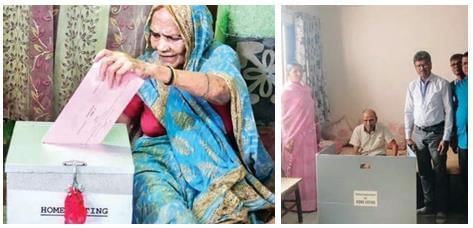
Ans: These measures ensure every eligible citizen - including the elderly, persons with disabilities and those in remote areas - can take part in elections. By removing barriers, such measures uphold Universal Adult Franchise and make democracy more inclusive and representative.
(b) Do you know of anyone who benefited from these improved accessibility measures?
Ans: (Suggestive Answer) Yes, I know of an elderly neighbour who was able to vote from home during the 2024 general elections using the postal voting option. This allowed them to exercise their right despite mobility issues.
(c) How might they increase voter participation in your neighbourhood?
Ans: Improved accessibility can raise turnout by making voting easier: providing transport to polling stations, setting up temporary booths in local centres, offering home voting or postal ballots for those who cannot travel, and running local awareness campaigns so people know about these services.
(d) How can technology assist?
Ans: Technology can assist by offering:
- Apps and websites for registration and information on polling locations.
- Assistive features such as Braille-enabled voter ID information and audio guidance at polling stations.
- Online systems to request support or home voting and databases to map needs at each polling station so staff are prepared.
Q2: If you have access to the internet, visit the ECI website (https:// www.eci.gov.in/persons- -with-disabilities.) Read and identify the various interventions that the ECI has taken to facilitate voting by people with disabilities.
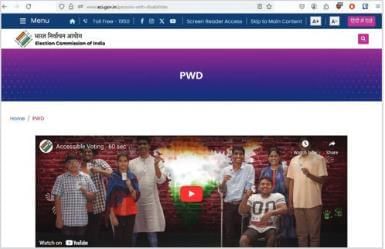
Ans: The Election Commission of India (ECI) provides many facilities to help persons with disabilities (PwDs) vote. PwD voters are recorded under four categories: visual impairment, speech and hearing disability, locomotor disability and others. Registration can be done online, at service centres, or through the Saksham app.
Key initiatives to assist PwDs include:
- Mapping PwDs polling station-wise so officials can provide targeted help.
- Locating polling stations on the ground floor wherever possible to avoid stairs.
- Providing separate queues and PwD-friendly facilities to reduce waiting and difficulty.
- Offering optional home voting for those who cannot reach polling booths.
- Issuing voter ID cards and slips in Braille for visually impaired voters.
- Adding tactile marks and Braille features to ballot equipment so visually impaired voters can vote independently.
- Supplying wheelchairs, ramps, and free pick-and-drop transport where needed.
Page No. 123
Let's Explore
Q1: (a) About 34 per cent of eligible voters did not exercise their right to vote in the 2024 elections. Why do you think this is so?
Ans: Many who did not vote may have faced voter apathy or practical problems. Common reasons include lack of interest or trust in politics, long distances to polling stations, health problems, work or family commitments, or not having the correct identity documents. Some also feel a single vote will not change the result.
(b) What are some challenges people face in exercising their rights?
Ans: Some challenges that people face in exercising their rights are:
- Physical disabilities or old age that make travel difficult.
- Inaccessible polling stations without ramps or facilities.
- Lack of Voter ID or difficulties in registration.
- Poor awareness about voting procedures and timings.
- Poor transport links in remote areas.
- Conflict between voting day and work or family duties.
(c) Design and conduct a short survey among adults in your family and neighbourhood to answer these questions. Analyse the data and write a report with suggestions on how it may be possible to ensure everyone votes.
Ans: A short local survey found that many adults were unable to vote because of transport problems, long queues and lack of clear information about polling places and candidates. Suggested measures to increase turnout include:
- Mobile polling booths or special camps in remote areas.
- Awareness drives explaining how and where to vote.
- Extended polling hours or more polling booths to reduce queues.
- Free or subsidised transport for elderly and disabled voters.
- Assistance desks at booths to help with voter ID and registration issues.
Page No. 125
Let's Explore
Q1: What are the most important aspects of the election process in this caselet?
Ans: The most important aspects of the election process in this caselet are:
- Free and fair election conducted without any outside influence or pressure.
- Equal voting rights for every student, showing equality in practice.
- Use of a secret ballot to protect voter privacy and choice.
- An independent election officer to organise and oversee voting impartially.
- Calling a witness during counting to ensure transparency and build trust in the result.
- Active voter awareness and participation by students.
Q2: Why was it important to have a secret ballot?
Ans: A secret ballot is important because it lets voters choose freely without fear of punishment, pressure or social pressure. It protects privacy and prevents intimidation, which helps make elections fair and genuine.
Q3: What considerations might the students have had while exercising their choice?
Ans: While voting, students may have considered:
- The candidate's honesty, behaviour and background.
- The issues the candidates promised to address, such as class discipline or activities.
- Personal beliefs, values or which candidate seemed more responsible.
Q4: Do you think the students have any responsibility after Gurmat was elected as the class rep? If yes, what are they?
Ans: Yes. Students have a responsibility to:
- Cooperate with the elected representative in implementing class plans and rules.
- Hold the class rep accountable by giving constructive feedback if promises are not met.
- Respect the outcome of the election and help maintain a peaceful and supportive class environment.
Q5: What was the role that Ms. Usha played? Why was it important?
Ans: Ms. Usha acted as the Election Officer. Her role was important because she ensured that voting was conducted fairly, that rules were followed, and that the process remained impartial and transparent. An independent official prevents bias and builds trust in election results.
Q6: Why was it important for Ms. Usha to organise braille ballot paper for Neha?
Ans: It was important because Neha was visually impaired and needed Braille ballots to vote independently and secretively. Providing Braille ballots ensured Neha could participate on an equal footing with other students. In a democracy, making such reasonable adjustments prevents exclusion and guarantees every eligible person can exercise their right to vote.
Q7: What would happen if many students in the class chose not to mark a preference?
Ans: If many students do not mark a preference, the number of valid votes falls and the result may not reflect the wider will of the class. Low participation suggests lack of interest or awareness and can weaken the elected representative's legitimacy. It may also reduce accountability because fewer voices influence the choice of leader.
Don't Miss Out
Q8: Imagine if a student did not want to vote for any of the candidates Ahmed, Gurmat, or Ravi. What option would they?
Ans: If a student did not want to vote for Ahmed, Gurmat or Ravi they could choose NOTA (None Of The Above). Choosing NOTA lets a voter record that they do not support any candidate on the ballot while still taking part in the election.
Page No. 128
Let's Explore
Q1: Identify teachers in your school or vicinity who may have performed election duty. Invite them to your class to share their experiences.
Ans: (Suggestive Answer) We invited two teachers, Mrs. Sunita Sharma and Mr. Rajesh Kumar, who served on election duty during the 2024 general elections. Mrs. Sharma spoke about running a rural polling booth, learning to use EVMs and VVPATs and overcoming challenges to reach remote voters. Mr. Kumar described his city booth work, including helping elderly and disabled voters and arranging ramps and Braille slips. Both teachers said the work was tiring but rewarding, and their experience helped us understand how carefully elections are organised.
Page No. 131
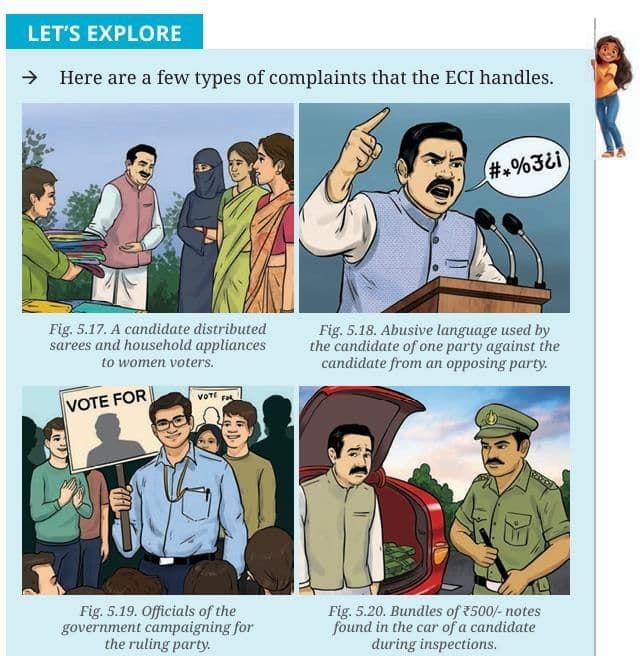
Q1: Why do you think these might be violations of the code of conduct?
Ans: These actions are violations of the Model Code of Conduct because:
- Sarees distributed: Giving gifts or freebies to voters amounts to bribery, which unfairly influences voter choice and is prohibited.
- Abusive language against another candidate: Using insulting or threatening language undermines respectful campaigning and may incite anger or violence.
- Government officials working for ruling party candidate: Officials must remain neutral during elections; their partisan actions create unfair advantage and break rules.
- 500 bundles found in car: Large unaccounted cash near campaigning suggests an attempt to buy votes, which is illegal and corrupt.
All these practices damage fairness, transparency and equality - key principles that must guide elections in a democracy.
Page No. 132
Let's Explore
Q1: When is the next election in the region where you are located? Is it to the state, urban local body or panchayat?
Ans: (Suggestive Answer) In my region, i.e., Delhi, the next election will be to the Municipal Corporation of Delhi in 2027. This is an urban local body election responsible for municipal governance and local services.
Page No. 133
Don't Miss Out
Q1: The legislative assembly is called by several names in regional languages, for example, Vidhan Sabha and Niyama Sabha. What is it called in your state?
Ans: In my region, West Bengal, the legislative assembly is called the Vidhan Sabha.
Page No. 134
Let's Explore
Q1: Who are the MP and MLA / MLAs of the constituency you are located in? (A Lok Sabha constituency may have two or more assembly constituencies.)
Ans: (Students to rewrite answer after finding their local MLAs and MP.) In my area, which falls under the Gurugram Lok Sabha constituency in Haryana, our Member of Parliament (MP) is Rao Inderjit Singh from the Bharatiya Janata Party (BJP), elected in the 2024 General Elections. This Lok Sabha constituency includes nine assembly segments. Some MLAs (2024) in nearby assembly segments are Mukesh Sharma from Gurgaon, Rao Narbir Singh from Badshahpur, Bimla Chaudhary from Pataudi (SC), and Tejpal Tanwar from Sohna.
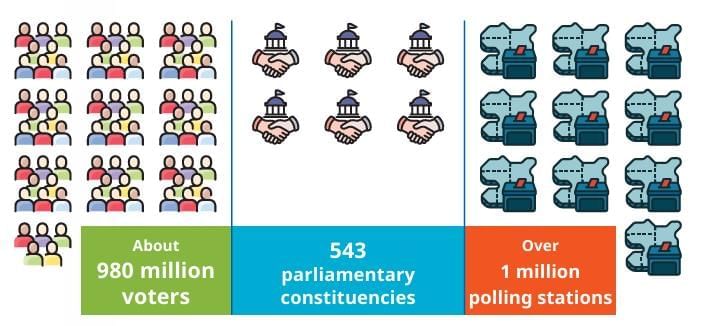 A few numbers showing the scale of the 2024 Lok Sabha elections.
Q2: Which party does each of them belong to?
Ans: All the representatives from the Gurugram Lok Sabha constituency mentioned here belong to the Bharatiya Janata Party (BJP). This includes Rao Inderjit Singh, the MP, together with the MLAs from Gurgaon, Badshahpur, Pataudi (SC) and Sohna assembly segments. Thus, both national and state representation from this area is with the BJP at present.
Q3: What are the concerns of the MP and MLA, respectively?
Ans: The concerns of an MP and MLAs differ in scope:
- An MP (Member of Parliament) mainly raises national and regional issues in Parliament, such as national infrastructure, laws, major economic programmes and matters that affect the whole constituency at a national level.
- An MLA (Member of Legislative Assembly) focuses on local and state issues like roads, water supply, health centres, schools and implementation of state government schemes in their assembly segment.
Page No. 136
Think About It
Q1: Why do you think the I above group of people is not involved in electing the President of India? Why are the common people not involved in the election of the president?
Ans: The group mentioned (such as nominated members) is not involved because the President of India is elected by an Electoral College made up of elected Members of Parliament and elected Members of State Legislative Assemblies only. Nominated members are not part of this College because they are not chosen by a popular vote. Common people do not vote directly for the President to keep the choice balanced between the Centre and the states and to reflect the federal nature of the country; elected representatives vote on behalf of the people.
Page No. 138
Questions and Activities
Q1: Why is the universal adult franchise important for a healthy democracy?
Ans: Universal adult franchise (UAF) means that every adult citizen has the right to vote, regardless of caste, gender, religion or wealth. It is important because it ensures equal participation, allows all sections of society to be represented, and makes leaders accountable to the people. UAF gives legitimacy to government decisions and helps protect citizens' rights.
Q2: What is the meaning of 'secret ballot'? Why is this important in a democracy?
Ans: A secret ballot means voting in private so that no one knows who a person has voted for. It is important because it protects voters from pressure, threats or bribery. Secret voting ensures that people can choose freely, which helps keep elections fair and honest.
Q3: Give examples of direct and indirect elections.
Ans: In a direct election, citizens vote directly for the candidate they want. Examples include elections to the Lok Sabha, State Legislative Assemblies, Gram Panchayats and Municipal Corporations. In an indirect election, elected representatives vote to choose a leader. Examples include the election of the President and Vice-President of India and the election of most members of the Rajya Sabha, where MPs or MLAs cast votes on behalf of the people.
Q4: How is the election of members to the Lok Sabha different from that to the Rajya Sabha?
Ans: Lok Sabha members are chosen by direct elections: all eligible citizens vote in their constituencies and the candidate with the most votes wins. Rajya Sabha members are elected indirectly: they are chosen by elected MLAs in state assemblies, and a few members are nominated by the President for their special contributions to society.
Q5: What, in your view, are the advantages of the EVM over paper ballots?
Ans: Advantages of EVM (Electronic Voting Machine) over ballot papers are:
- Faster Counting: Results are available more quickly because votes are recorded and counted electronically.
- Cost-effective: Less spending on printing and transporting large quantities of paper ballots.
- Reusable: EVMs can be used in many elections after proper testing and calibration.
- Reduces Errors: Electronic recording reduces mistakes that can occur during manual counting.
- Eco-friendly: Saves paper and helps protect trees by reducing the need for printed ballots.
- Prevents Fraud: Properly managed EVMs and VVPATs reduce chances of invalid, duplicate or tampered paper ballots.
Q6: Voter turnout has been declining in some urban areas of India. What could be the reasons for this trend, and what steps can be taken to encourage more people to vote?
Ans: Turnout falls in some cities because of busy lifestyles, lack of awareness, a feeling that one vote does not matter, dissatisfaction with candidates, and long queues at booths. To increase turnout, authorities and civil society can run awareness campaigns, simplify online voter registration, set up more convenient polling stations, provide flexible voting hours and make special efforts to involve young voters and first-time electors. Building trust in the process and showing how votes matter also helps.
Q7: Why do you think a proportion of seats in the Lok Sabha is reserved for the Scheduled Castes and the Scheduled Tribes? Write a short note.
Ans: Seats are reserved for Scheduled Castes (SC) and Scheduled Tribes (ST) to ensure these historically disadvantaged communities get fair political representation. Reservation helps them have a voice in law-making and public policy, corrects past inequalities, and promotes social justice by enabling their concerns to be raised directly in Parliament.
Q8: Social media is changing the way we experience elections - from catchy campaign reels and live speeches to political debates on Instagram and Twitter. But is this strengthening democracy or confusing it? Discuss in pairs: What are the benefits, what are the challenges, and what might the future of elections be in a digital age?
Ans: Benefits:
- Social media helps political messages reach a wide audience quickly and at low cost.
- It increases youth participation and encourages public discussion on issues.
- Leaders can communicate directly with voters, improving transparency and accountability.
Challenges of Social Media in Elections and Democracy are:
- Misinformation and Fake News: Incorrect or misleading content can spread fast and influence voters on false grounds.
- Trolling and Harassment: Online abuse can silence constructive debate and deter people from participating.
- Manipulation: Coordinated campaigns or automated accounts may unfairly shape public opinion.
Future of Elections in Digital Age:
- Online Voting: Secure online voting could increase turnout if confidentiality and security are ensured.
- AI and Data Analytics: Campaigns may use data to reach specific voter groups, which raises questions about privacy and fair practice.
- Greater Regulation: Stronger rules may be needed to control political advertising and to limit misinformation.
- Hybrid Campaigning: Future elections will likely blend digital outreach with traditional ground-level campaigning to reach all voters.
Q9: Visit the website https://www.indiavotes.com, and choose a parliamentary constituency election from any year and explore its results. Do the same for an assembly election in your state.
Ans: I visited www.indiavotes.com and looked at both a parliamentary and a state assembly result. For the parliamentary seat, I reviewed the Bolangir Lok Sabha constituency in Odisha during the 2024 general elections. Sangeeta Kumari Singh Deo of the BJP won by a margin of over one lakh votes, defeating Surendra Singh Bhoi of the BJD. For the state assembly example, I examined the Bhabanipur constituency in the 2021 West Bengal Assembly elections, where Mamata Banerjee of the Trinamool Congress (TMC) won against Priyanka Tibrewal of the BJP. These cases show how citizens decide national and state leadership through direct voting and how results reflect local political choices.
FAQs on NCERT Solutions: Universal Franchise and India’s Electoral System
| 1. What exactly is universal franchise and how does it work in India's elections? |  |
| 2. Why did India choose universal adult suffrage instead of limiting voting rights to educated or wealthy people? | |
| 3. How does India's electoral system actually conduct elections with so many voters across the country? | |
| 4. What are the main differences between India's electoral system and other countries' voting methods? | |
| 5. How does the Election Commission of India protect the principles of universal franchise during elections? | |