NCERT Solutions: Earth-Our Shared Home


Page No. 162
Activity 1
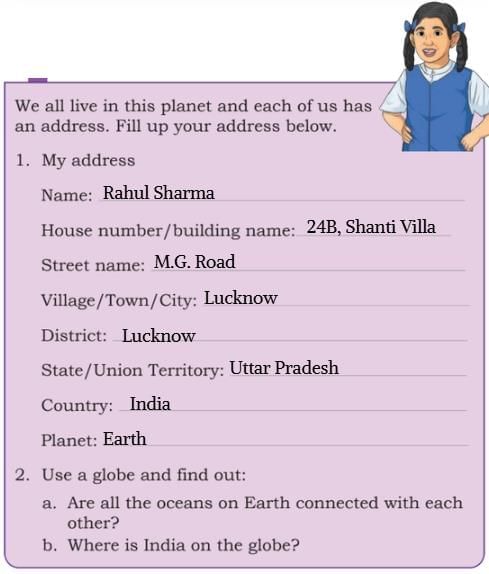
Q2 (a) Are all the oceans on Earth connected with each other?
Ans: Yes. All the named oceans - the Pacific, Atlantic, Indian, Southern and Arctic - are parts of one continuous global ocean. People give them different names because of their location, but water, waves and ocean currents flow between them and join them together.
(b) Where is India on the globe?
Ans: India lies in South Asia. It is mainly in the Northern and Eastern Hemispheres. On a globe, India is south of China, between Africa (to the west) and Australia (to the east), with the Arabian Sea to its west and the Bay of Bengal to its east.
Page 164
Write
Q1. Does the rosy starling visit your area? What is it called locally?
Ans: Yes. The rosy starling visits many parts of India in winter as a migratory bird. Locally it is often called "Gulabi Maina" (गुलाबी मैना). These birds usually arrive in cooler months and return to their breeding areas when it becomes warm.
Q2. What does this story tell us about nature?
Ans: This shows how migratory birds join different ecosystems, help control insect pests and link places far apart. It also reminds us that we must respect and protect nature's balance so these birds and other animals can continue their journeys safely.
Page 165
Activity 2
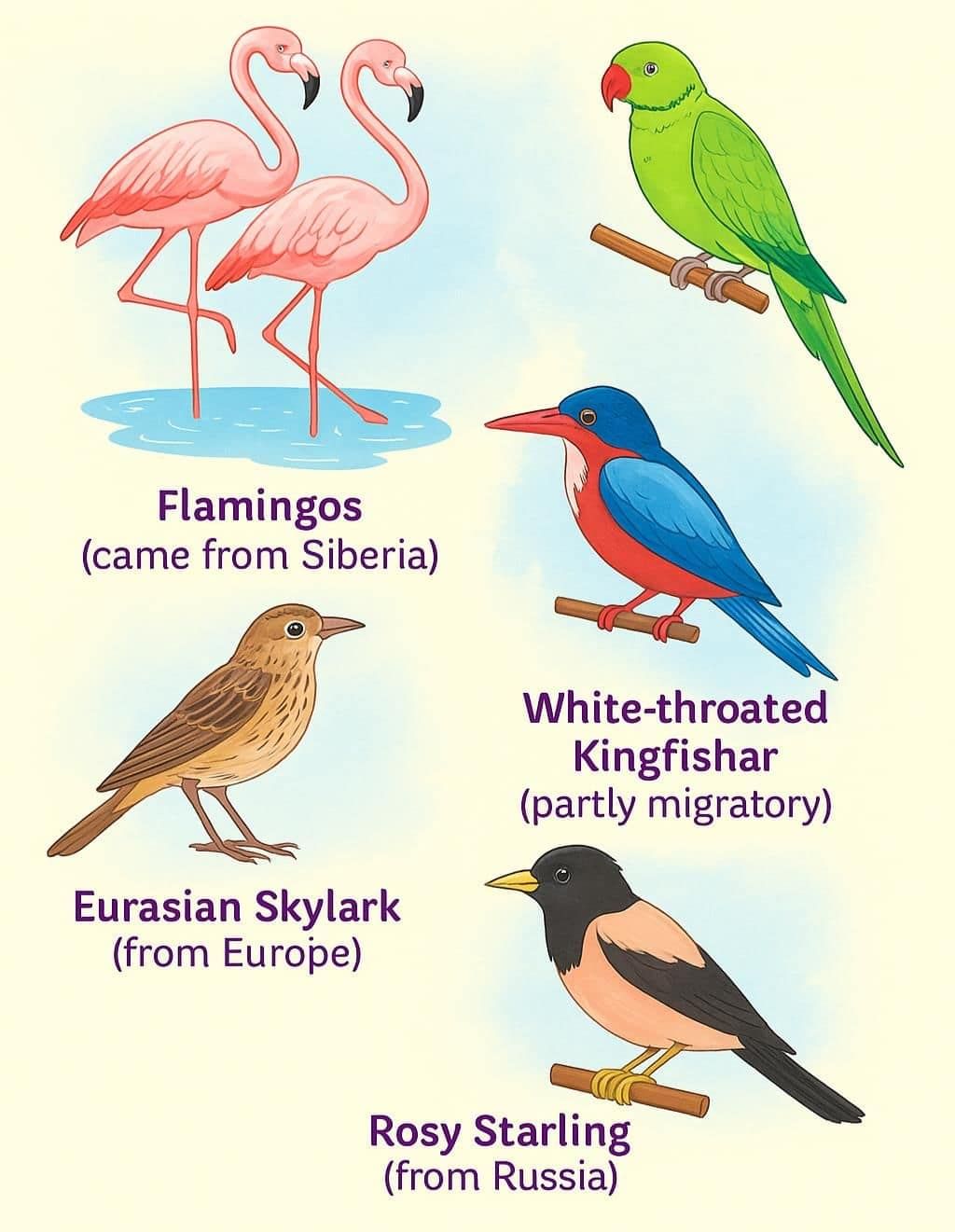
Q1. Make a poster of 5 birds that visit your place in winter. Find out where they come from.
Ans: Birds poster ideas: Flamingos (came from Siberia), Rose-ringed Parakeet (local resident), White-throated Kingfisher (partly migratory), Eurasian Skylark (from Europe), Rosy Starling (from Russia). Add small notes on the poster showing the region each bird comes from and the months they visit.
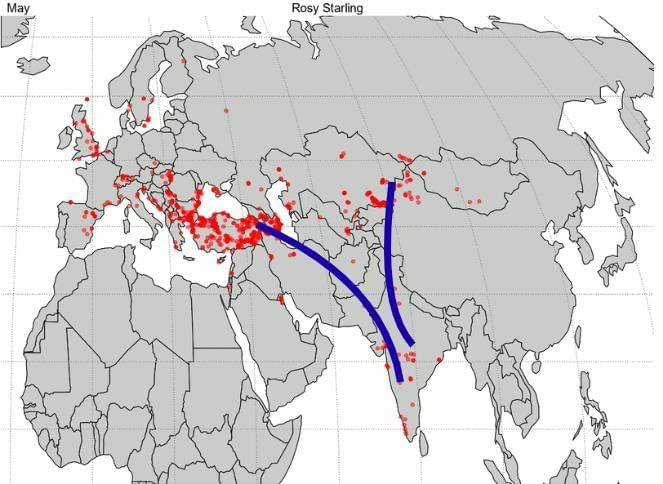
Q2. Using a string, trace the journey on a globe showing the paths rosy starlings take (Russia/Mongolia → India).
Ans: On a globe, stretch a piece of string from the rosy starling's breeding areas in Russia and Mongolia down to the parts of India where they winter. This will show their migration route clearly. Students can also watch birding videos to learn more about stops the birds make.
Q3. Imagine you are a bird travelling the world. Write a short postcard or note about what you see and what helps you on your journey (wind, ocean currents, warm weather). Share it with your classmates.
Ans: Postcard:
"Dear Friend, I am flying from the cold Siberian plains to warm India. The wind helps me glide long distances, and I stop at wetlands and farms where there is food and safety. Friendly trees and warm weather make my stay pleasant. I will rest here and then fly back when it gets warmer. Love, A Travelling Starling"
Write
Q. What does it mean when we say 'nature has no boundaries'?
Ans: It means that things in nature - such as air, water, clouds, seeds and animals - move freely across places and countries. Natural processes and living things do not stop at the lines drawn on maps, so nature links all living things everywhere.
Page No. 167
Discuss
Q. Why do you think yoga became popular in so many countries?
Ans: Yoga became popular because it helps keep the body healthy and the mind calm. The exercises and breathing are simple to learn, they can be done by people of many ages, and they do not need special equipment. Teachers, books and videos have also helped spread yoga to many countries.
Write
Q. Can you name a yoga pose you have tried or seen? What do you think it helps with?
Ans: Pose: Tree Pose (Vrikshasana).
Benefit: It helps improve balance, concentration and a steady posture. While doing it, you learn to stand still and focus, which is good for both body and mind.
Page No. 168
Write
Q1. What would happen if chillies disappeared from our kitchens for a week?
Ans: Food would taste milder without the spicy flavour that chillies give. Some dishes would seem less exciting. People might use other spices like black pepper, ginger or roasted spices to add flavour during that week.
Q2. Ask your parents and write down the name of any recipe in which they have used black pepper and not red chillies.
Example Ans: Chicken stew often uses black pepper for flavour instead of red chillies.
Activity 3
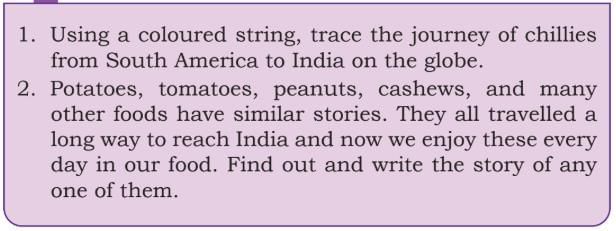
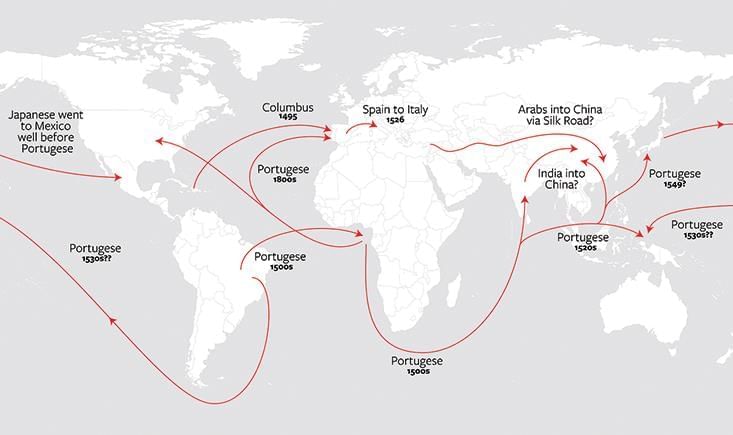
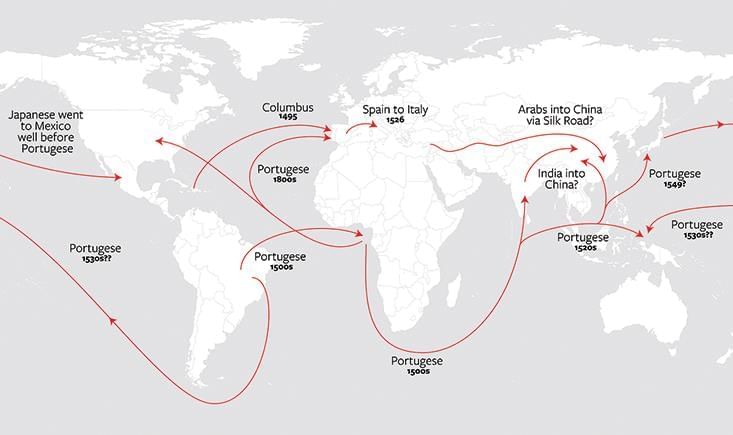
Example answer for Q2: A long time ago, potatoes did not grow in India. They first grew in South America. In the early 1600s, Portuguese traders brought potatoes to India, starting along the western coast, especially in the Malabar area. Later, when the British ruled India, they spread potatoes to other places, like the Nilgiri Hills in the south. At first, people thought potatoes might not grow well here, but they grew just fine in many types of soil and weather.
Potatoes became popular because they could be cooked in many ways, were easy to grow, and could be eaten by everyone, no matter their religion. Soon, they became part of many Indian dishes, like Bengal's aloo posto and South India's masala dosa.
Today, potatoes are grown all over India and are a big part of our daily meals. This shows how a food from far away travelled across the world, was welcomed by farmers and cooks, and became a favourite in Indian kitchens.
Page No. 169
Discuss
Q1. If you could choose one Indian food to share with the world, what would it be?
Example Ans: Biryani, because of its rich flavours and special way of cooking. Many people enjoy its mix of spices, rice and vegetables or meat.
Q2. What kind of new food items do you think will travel in the future?
Example Ans: Plant-based meat alternatives may travel more as people look for foods that use fewer natural resources. New healthy snacks and foods that last longer without spoiling may also become popular around the world.
Page No. 170-172
Write
Q1. Why do you think both Indian and Mexican cultures use marigolds during their festivals?
Ans: Marigolds are bright and colourful, which represent joy and celebration. They are easy to grow, last for many hours after being picked, and add a warm, cheerful look to homes and temples. That is why both cultures use them in festivals.
Q2. Why do you think people in different countries include flowers in their celebrations?
Ans: Flowers add beauty and fragrance to ceremonies and symbolise respect, purity or happiness. They help make special occasions feel more joyful and peaceful.
Write
Q. What does this story tell us about animals moving from one place to another?
Ans: Animals like Indian cows can adapt to new places and become valuable there. Moving animals to new lands can help people by providing milk, work or food, and it also shows how different cultures can share useful plants and animals.
Activity 4
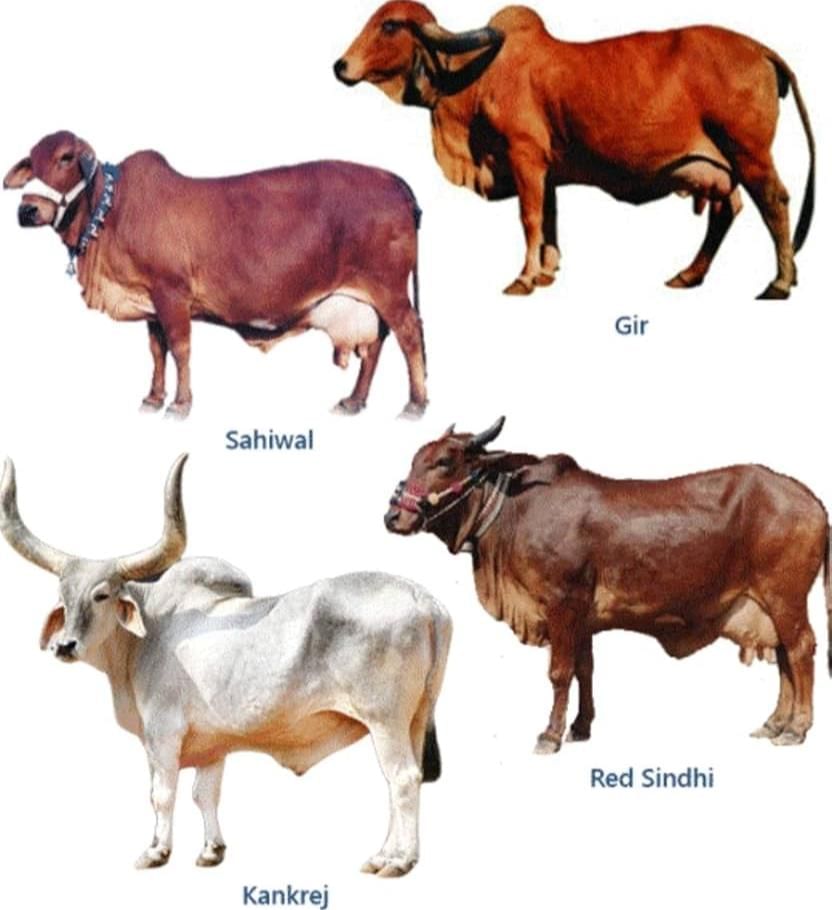
Q1. With the help of your teacher or an elder, find out the names of at least 5 different breeds of cows.
Ans: Some cow breeds you can ask about are Gir, Sahiwal, Red Sindhi, Tharparkar and Jersey.
Q2. Make a list of a few things in your house or school that may have come from another part of the world. Find out where they originally came from.
Ans: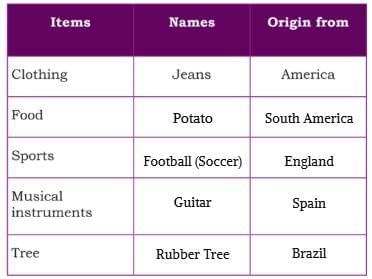
Page No. 173
Activity 5
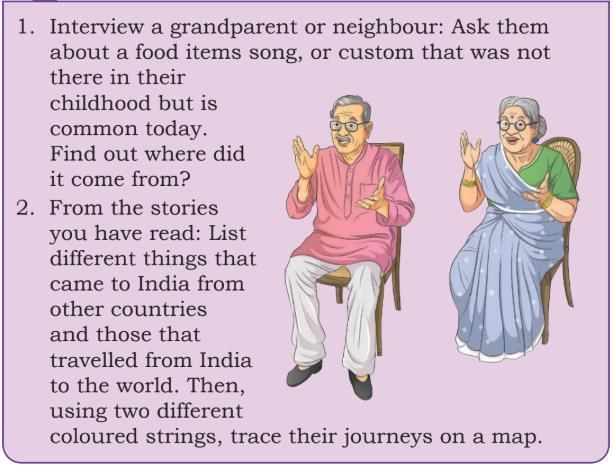
Example answer 1:
Grandmother said pizzas weren't available when she was young. They came from Italy and are now very popular in India.
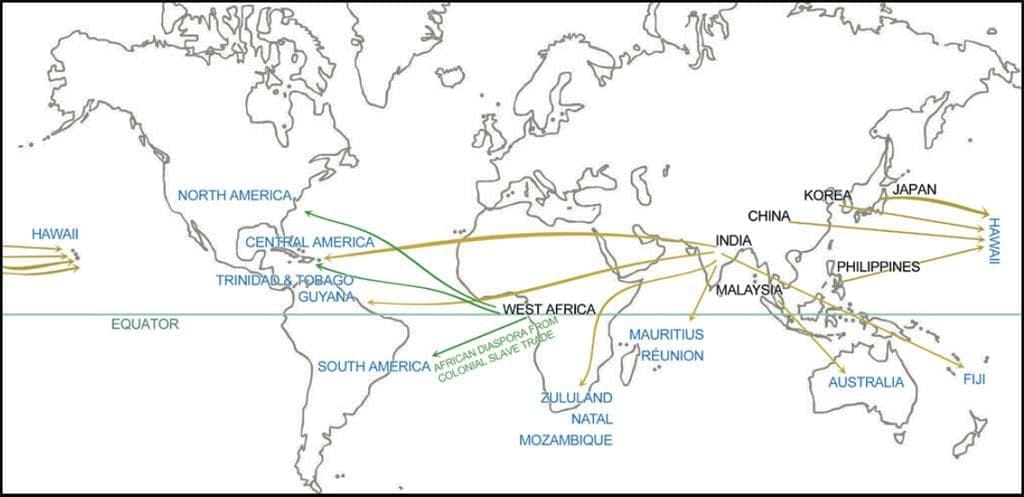
Ans: To India: Chillies (South America), Potatoes (South America), Dates (Arabia)
From India: Sugar (India → World), Yoga (India → World), Indian cows (India → Brazil)
Pages No. 176
Write
Q1. What does Vasudhaiva Kutumbakam teach us?
Ans: It teaches that the whole world is like one big family which includes all people, animals, plants and nature. We should respect one another, help those in need and take care of the Earth.
Q2. Write the meaning of Vasudhaiva Kutumbakam in your own words.
Ans: It means that the entire Earth and everyone on it are members of a single family.
Q3. How can we live like one big family, even when we are different?
Ans: By respecting different beliefs and customs, helping each other, sharing what we have and protecting our environment so that everyone can live well.
Let us reflect
Q1. Pick one of the ideas. Write a short story about how this idea might have travelled from one place to another long ago. Think about how it helped people change their lives or the way they think.
Ans: Long ago, people lived in small groups, moving slowly and carrying heavy loads on their backs or with animals. One day, in a faraway land, someone noticed how a round log could roll more easily than being dragged. This idea led to the invention of the wheel.
The wheel slowly travelled from that place to others through traders, travellers and explorers. As it reached new lands, people used wheels to build carts and wagons, making it easier to carry goods and travel longer distances. The wheel changed how people worked and traded by allowing faster movement of food, tools and other things. It even helped invent other machines and later vehicles.
The wheel changed the way people think about transportation and work - it showed how a simple idea can solve big problems and connect communities.
Q2. Write one way you can care for the Earth.
Ans: You can care for the Earth by reducing waste. This includes reusing items, recycling paper and plastic, and composting kitchen waste. Small actions like these reduce pollution and save natural resources and avoiding throwing away items that can be repaired or repurposed.
Q3. Identify one item that can travel from India to other parts of the world and write about it.
Ans: Indian spices such as turmeric, cardamom and pepper have travelled from India to many countries over centuries through trade routes. They have helped people in other places add flavour to food, preserve some foods and use spices for traditional medicines. These spices changed cooking styles and health practices worldwide, connecting cultures and enriching diets everywhere.
FAQs on NCERT Solutions: Earth-Our Shared Home
| 1. What is the importance of Earth as our shared home? |  |
| 2. How can we contribute to saving the Earth? | |
| 3. What are some major environmental issues facing Earth today? | |
| 4. Why is it essential to learn about Earth and its features? | |
| 5. What role do plants and animals play in maintaining the health of the Earth? | |