Short and Long Answer Questions: Our Home: Earth, a Unique Life-Sustaining Planet

Short Answer Questions
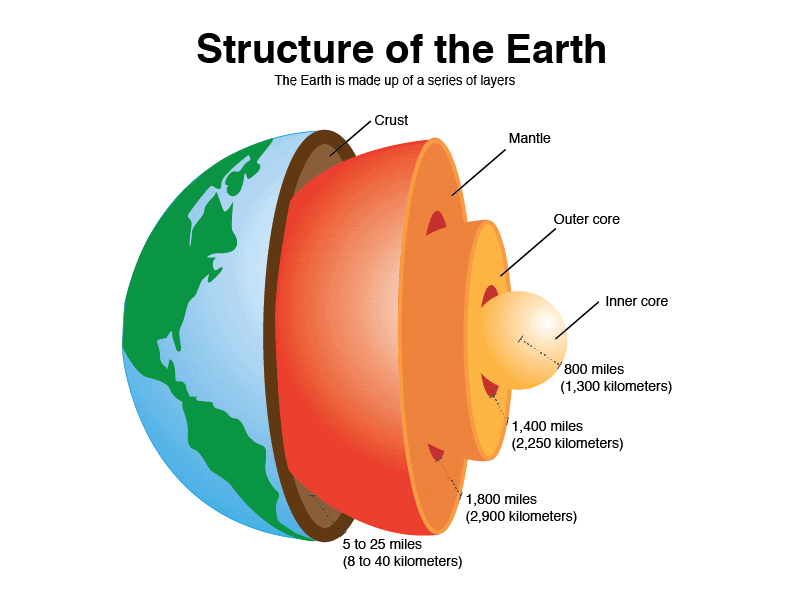
Q1. Why is the Earth's crust important for life despite being so thin?
Ans: The Earth's crust holds the soil, fresh water, minerals and gases that all living things need. It is the surface where plants grow, where animals live and where humans build shelters and grow food. The crust also supplies timber, rocks and metals used for tools and buildings. Without this thin layer, life could not find the resources and conditions needed to survive.
Q2. How do false colour satellite images help scientists?
Ans: False colour images assign colours to features that may be hard to see with the eye, so scientists can tell land, water, vegetation and built areas apart more easily. They help to spot plant health, changes in land use, water pollution and soil moisture over large areas. This makes it faster and clearer to study environmental changes and plan actions.
Q3. How does the greenhouse effect on Earth differ from that on Venus?
Ans: On Venus a very thick carbon dioxide atmosphere traps a huge amount of heat, making the surface extremely hot. On Earth the greenhouse effect is much milder: greenhouse gases trap enough heat to keep the planet warm for life, but not so much as to make it uninhabitable. Human activities, however, can increase Earth's greenhouse gases and cause extra warming.
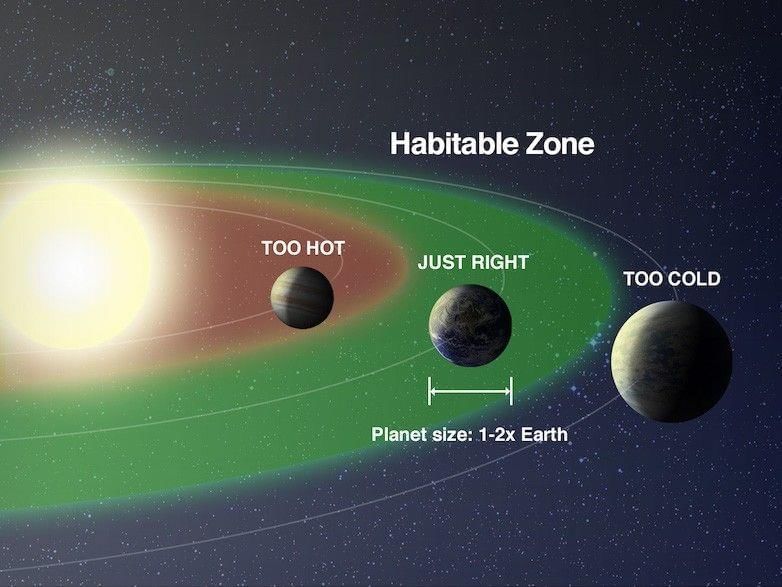
Q4. Why is the Earth's position in the Solar System called the "Goldilocks Zone"?
Ans: Earth is at a distance from the Sun where temperatures are neither too high nor too low, so liquid water can exist on the surface. This "just right" distance-called the Goldilocks Zone-makes conditions suitable for life as we know it.
Q5. What makes Earth's size suitable for life?
Ans: Earth is large enough to have a gravity strong enough to hold an atmosphere but not so large that gravity would make life difficult. This gravity keeps gases and water near the surface, allowing a stable atmosphere and protection from space. If Earth were much smaller, it could lose its air; if much larger, high gravity could affect living organisms.
Q6. What was the purpose of India's Mangalyaan mission?
Ans: Mangalyaan (Mars Orbiter Mission) was sent to study Mars' atmosphere and surface from orbit. It collected data about the planet's atmosphere, looked for signs of past water and demonstrated India's ability to design and operate an interplanetary mission at a low cost.
Q7. How does the Earth's magnetic field protect life?
Ans: The magnetic field deflects charged particles from the Sun and space, such as the solar wind, preventing many of them from stripping away the atmosphere or damaging living cells. It also helps preserve the ozone layer and creates phenomena like auroras when particles are guided toward the poles.
Q8. How do air, water, and sunlight work together to support life?
Ans: Plants use sunlight, water and carbon dioxide from air to make food by photosynthesis; they release oxygen as a by-product. Animals breathe that oxygen and drink water for their needs. This cycle of sunlight enabling plants to provide food and oxygen, and water supporting bodily functions, keeps ecosystems functioning.
Q9. Why is soil considered an active part of life on Earth?
Ans: Soil is more than broken rock: it contains nutrients, water and millions of tiny organisms that help plants grow. It stores and releases nutrients that plants need, supports root systems and is home to worms, fungi and bacteria that decompose dead material and keep the nutrient cycle going.
Q10. How are plants, animals, and microorganisms connected in the biosphere?
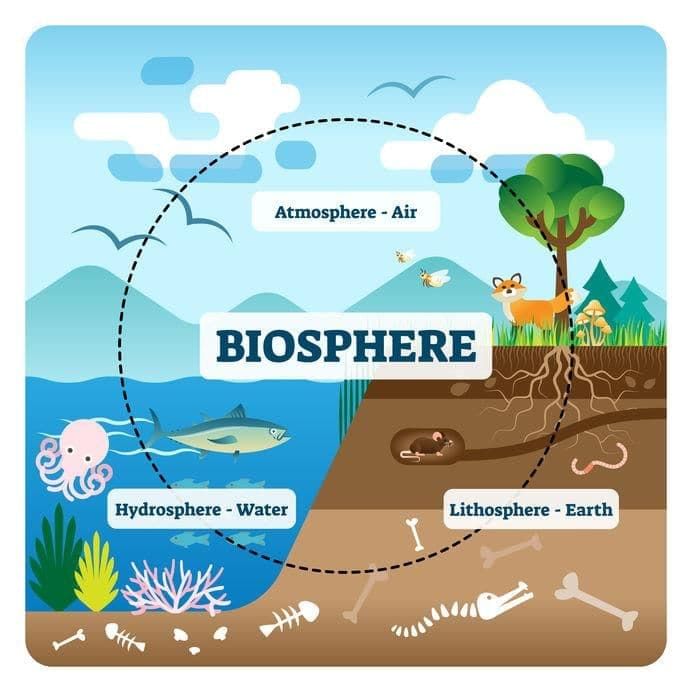
Ans: Plants (producers) make food using sunlight. Animals (consumers) eat plants or other animals for energy. Microorganisms (decomposers) break down dead plants and animals and return nutrients to the soil. Together they form food chains and webs that keep ecosystems balanced.
Q11. What human actions are causing biodiversity loss?
Ans: Human activities such as cutting down forests, draining wetlands, destroying natural habitats for farming or building, polluting air and water, over-hunting or overfishing, and introducing invasive species all reduce the number and variety of plants and animals. These actions break food chains and weaken ecosystems, causing biodiversity to decline.
Q12. How can local communities help protect the environment?
Ans: Local communities can protect water sources, plant and manage trees, prevent pollution, use resources sensibly, and conserve soil. They can adopt sustainable farming, recycle waste, protect local wildlife habitats and raise awareness so that natural resources are used without damaging ecosystems.
Long Answer Questions
Q1. Explain how the thin crust of Earth supports life and why it is compared to the skin of an apple.
Ans:
- The Earth's crust is the outermost and thinnest layer where all known life exists. Although it is thin compared with the planet's interior, it contains soil, fresh water, air and minerals needed by plants, animals and humans. The living layer of soil and the surface waters provide places for plants to grow and for animals to live.
- Just like the thin skin of an apple protects and covers the fruit, the crust supports and protects life on Earth. Beneath the crust are hotter layers (the mantle and core) that cannot support life. The crust also supplies timber, metals and building materials that humans use to survive and develop. Without this layer, life as we know it could not exist.
Q2. Describe the difference between rocky planets and gas giants in our Solar System.
Ans:
- The Solar System's planets fall into two main groups-rocky planets (Mercury, Venus, Earth and Mars) and gas giants (Jupiter, Saturn, Uranus and Neptune). Rocky planets are smaller, have solid surfaces and are made mainly of rock and metal. They are denser and lie closer to the Sun.
- Gas giants are much larger and are made mostly of gases such as hydrogen and helium, with small solid cores if any. They have thick atmospheres, lower average density and are found farther from the Sun. These differences affect temperature, atmosphere and the possibility of life on each planet.
Q3. Why is Earth's orbit shape important for maintaining suitable living conditions?
Ans:
- Earth orbits the Sun in a nearly circular path, which keeps the amount of sunlight reaching the planet fairly steady through the year. This prevents extreme swings in temperature that would make life difficult across large regions.
- A relatively stable orbit helps maintain regular seasons and a climate in which plants and animals can adapt and thrive. Large changes in orbital shape would cause parts of the planet to become extremely hot or very cold, upsetting ecosystems and agriculture.
Q4. How does the magnetic field of Earth act as a shield for life?
Ans:
- Earth's magnetic field is produced by the movement of molten iron in its core. This invisible field surrounds the planet and deflects many charged particles from the Sun (the solar wind) and from space (cosmic rays).
- By diverting these particles, the magnetic field prevents much of the solar wind from stripping away the atmosphere and reduces radiation that would harm living cells. It also helps protect the ozone layer and produces auroras when particles are guided toward the poles.
Q5. Discuss how water in different forms supports life on Earth.
Ans:
- Water covers about 70% of Earth's surface and is found as liquid in oceans, rivers and lakes; as groundwater beneath the soil; as ice in glaciers and polar caps; and as vapour in the atmosphere. Liquid water provides habitats for aquatic life, supplies drinking water for animals and people, and is essential for plant growth and agriculture.
- Water vapour forms clouds and brings rain and snow that refill rivers and groundwater. Ice and snow reflect sunlight and help regulate climate. The continuous movement of water through the hydrological cycle-evaporation, condensation and precipitation-keeps ecosystems supplied with fresh water and supports life everywhere.
Q6. Explain the role of microorganisms in maintaining life on Earth.
Ans:
- Microorganisms such as bacteria and fungi are small but vital to ecosystems. They act as decomposers, breaking down dead plants and animals and returning nutrients to the soil for reuse by plants.
- Certain bacteria also carry out processes like nitrogen fixation that make important nutrients available to plants. Microorganisms form part of food chains and help with digestion in many animals. Without them, wastes would accumulate and nutrient cycles would fail, harming all forms of life.
FAQs on Short and Long Answer Questions: Our Home: Earth, a Unique Life-Sustaining Planet
| 1. What makes Earth a unique life-sustaining planet compared to other planets in the solar system? |  |
| 2. How does the water cycle contribute to sustaining life on Earth? | |
| 3. What are the key factors that influence climate and weather patterns on Earth? | |
| 4. What role do ecosystems play in maintaining Earth's environmental balance? | |
| 5. Why is it important to conserve Earth's natural resources, and what are some methods to achieve this? | |