Unit Test (Solutions): Keeping Time with the Skies

Time: 1 hour
M.M. 30
Attempt all questions.
- Question numbers 1 to 5 carry 1 mark each.
- Question numbers 6 to 8 carry 2 marks each.
- Question numbers 9 to 11 carry 3 marks each.
- Question numbers 12 & 13 carry 5 marks each.
- 1-mark questions include MCQs.
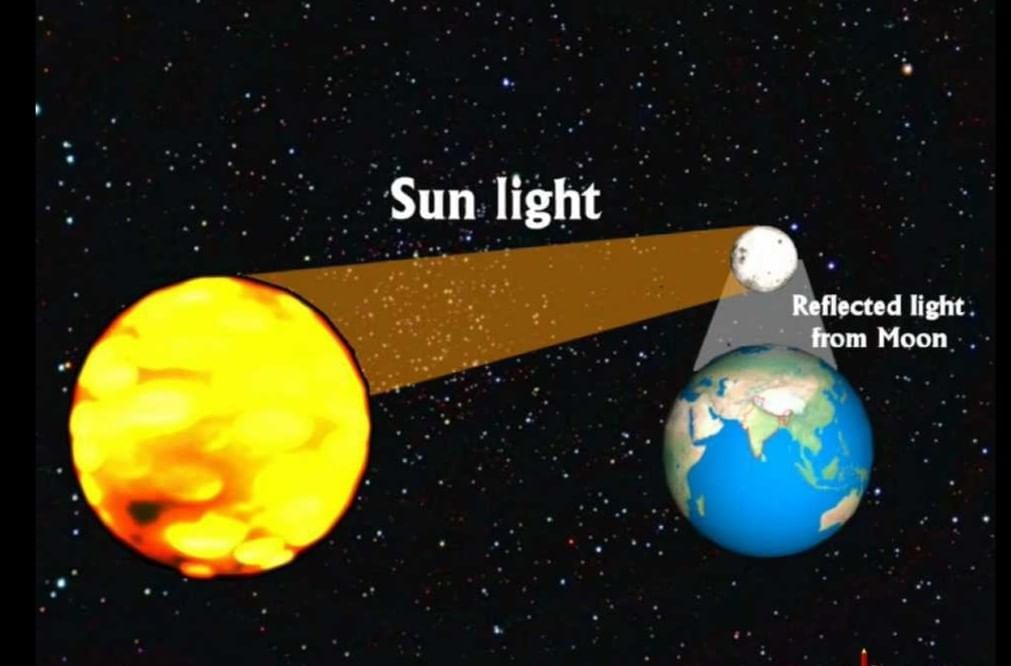
Q1: The Moon shines in our sky because it (1 Mark)
(i) emits its own light
(ii) reflects sunlight
(iii) glows due to heat from Earth
(iv) shines only during night
Ans: (ii)
Explanation: The Moon does not produce its own light. Sunlight falls on the half of the Moon facing the Sun and that illuminated part reflects light towards Earth. We see only the portion of the Moon that is lit and faces us.
Q2: The changing visible shapes of the Moon as seen from Earth are called (1 Mark)
(i) eclipses
(ii) seasons
(iii) phases of the Moon
(iv) lunations
Ans: (iii)
Explanation: As the Moon moves around Earth, the angle between the Sun, Moon and Earth changes. This changes how much of the Sun-lit half of the Moon we see, producing different shapes known as the phases of the Moon.
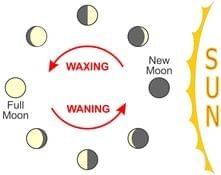
Q3: The period when the bright part of the Moon decreases day by day is called (1 Mark)
(i) waxing (Shukla Paksha)
(ii) waning (Krishna Paksha)
(iii) eclipse season
(iv) tropical period
Ans: (ii)
Explanation: The waning period, or Krishna Paksha, runs from full Moon to new Moon. During this time the visible bright part of the Moon becomes smaller each day. By contrast, waxing (Shukla Paksha) is when the bright part grows from new Moon to full Moon.
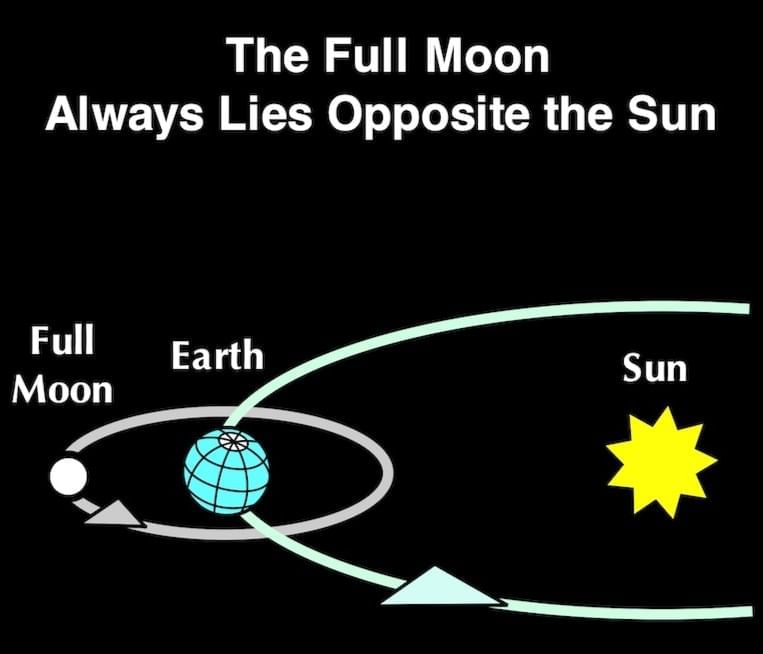
Q4: On a full Moon day, the Moon is positioned nearly (1 Mark)
(i) between Earth and Sun
(ii) in the same direction as the Sun
(iii) opposite the Sun in the sky
(iv) at the Earth's North Pole
Ans: (iii)
Explanation: At full Moon the Sun, Earth and Moon are roughly in one line with Earth between the Sun and Moon. The Moon appears nearly opposite the Sun in the sky, so when the Sun sets in the west the full Moon is rising in the east.
Q5: The mean solar day (used to define 24 hours) is the average time between (1 Mark)
(i) two consecutive sunrises
(ii) Sun's highest position (noon) on successive days
(iii) two moonrises
(iv) two midnights
Ans: (ii)
Explanation: The mean solar day is the average interval from the Sun reaching its highest point in the sky (local noon) one day to the Sun reaching its highest point the next day. This average is taken because Earth's orbit is not perfectly uniform, and it is approximately 24 hours.
Q6: Why do we see the Moon in different positions at the same clock time on successive days? (2 Marks)
Ans: The Moon moves eastward along its orbit around Earth, advancing about 13° each day. While Earth rotates once in about 24 hours, the Moon's motion means Earth must rotate roughly an extra 50 minutes for the Moon to return to the same position in the sky. As a result, moonrise and the Moon's position shift later by about 50 minutes each successive day.
Q7: State two observational differences between waxing and waning periods of the Moon that help locate it in the sky. (2 Marks)
Ans:
- Waxing (Shukla Paksha): The illuminated part grows each night. Waxing phases are easiest to see in the evening; the Moon appears farther from the Sun in the sky each evening until full Moon.
- Waning (Krishna Paksha): The illuminated part shrinks each night. Waning phases are easiest to see in the early morning; the Moon is closer to the Sun each morning and appears later in the night or near sunrise as it approaches new Moon.
Q8: The phases of the Moon are NOT caused by Earth's shadow. Explain briefly. (2 Marks)
Ans: The phases are caused by the changing geometry of the Sun, Moon and Earth. The Sun always lights half the Moon; as the Moon orbits Earth we see more or less of that lit half, producing phases. Earth's shadow falls on the Moon only during a lunar eclipse, which happens rarely and only at full Moon; it is not responsible for the daily sequence of phases.
Q9: In Activity 11.2 (ball, lamp, observer), identify which ball positions correspond to full Moon and new Moon. Justify. (3 Marks)
Ans:
Full Moon: Ball placed opposite the lamp (position analogous to A). The side facing the observer is fully illuminated because the lamp (Sun) is behind the observer relative to the ball, so the observer sees the fully lit hemisphere.
New Moon: Ball placed toward the lamp (position analogous to E). The side facing the observer is dark because the lamp lights the far side of the ball; the bright half faces away, making the Moon essentially invisible from the observer's viewpoint.
Q10: Define Shukla Paksha and Krishna Paksha. Approximately how long is each and how do the visible shapes change? (3 Marks)
Ans:
- Shukla Paksha (waxing): The fortnight from new Moon to full Moon, about 14-15 days. The visible bright part grows each night: thin crescent → first quarter (half Moon) → gibbous → full Moon.
- Krishna Paksha (waning): The fortnight from full Moon to new Moon, about 14-15 days. The visible bright part decreases each night: full Moon → gibbous → last quarter (half Moon) → thin crescent → new Moon.
Q11: A student claims, "The Moon always rises when the Sun sets." Is this correct? Explain with an example. (3 Marks)
Ans: This is not always correct. The Moon's rise time changes by about 50 minutes later each day. Only near full Moon does the Moon rise around sunset. For example, at full Moon the Moon rises close to sunset, but during waxing gibbous phases the Moon may rise in the afternoon, and during waning phases the Moon may rise after midnight or close to sunrise. Thus moonrise does not always match sunset.
Q12: Calendars and timekeeping. (5 Marks)
(a) Name and define the natural cycles that underpin a day, a month, and a year.
(b) Why does a Gregorian leap year occur and what special century rule is followed?
(c) State one key difference between lunar and solar calendars in aligning with seasons.
Ans:
(a) Day: The period of one rotation of Earth on its axis; measured from the Sun's highest point one day to the next (mean solar day ≈ 24 hours). Month: The average time for the Moon to complete its phase cycle (new Moon to new Moon or full to full), about 29.5 days. Year: The time Earth takes to complete one orbit around the Sun, producing the cycle of seasons (about 365¼ days).
(b) A Gregorian leap year adds one extra day every four years to make up for the almost ¼ extra day each year (≈0.25 day). The century rule corrects for the slight overcompensation: years divisible by 100 are not leap years unless they are also divisible by 400. For example, 2000 was a leap year but 1900 was not.
(c) A lunar calendar uses months based on the Moon's phases (12 lunar months ≈ 354 days) so, without correction, its months move through the seasons. A solar calendar keeps months tied to Earth's position around the Sun (≈365 days) so seasons remain fixed; lunar calendars need extra months (intercalation) to stay in step with seasons.
 Indian National Calendar
Q13: Luni-solar practice, national calendar, and festivals. (5 Marks)
(a) What is a luni-solar calendar and how does it keep in step with seasons?
(b) State two features of the Indian National Calendar (Shaka Era) structure and its start date relative to the Gregorian calendar.
(c) Why do many Indian festivals fall on different Gregorian dates each year? Give one lunar and one solar-based example.
Ans:
(a) A luni-solar calendar uses lunar months based on Moon phases but also adjusts with the solar year by adding an extra lunar month (an intercalary or adhika month) every 2-3 years. This intercalation keeps the calendar aligned with the seasons determined by Earth's orbit around the Sun.
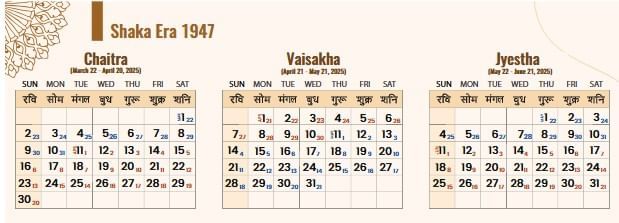
(b) Two features of the Indian National Calendar (Shaka Era): it is a solar calendar with a year of 365 days and a leap-day system; the New Year begins near the day after the spring equinox (usually 22 March, or 21 March in a Gregorian leap year). Its months have fixed lengths (mostly 30 or 31 days) to match the solar year.
(c) Many Indian festival dates follow lunar phases or local luni-solar rules, so their Gregorian dates shift each year. For example, Diwali (tied to a new Moon in the month of Kartika) changes date in the Gregorian calendar (lunar/luni-solar). Eid-ul-Fitr follows the purely lunar Islamic calendar and moves through the seasons over the years. A solar-based festival like Makar Sankranti is tied to the Sun's position and therefore falls near the same Gregorian date each year.
FAQs on Unit Test (Solutions): Keeping Time with the Skies
| 1. What are the main ways in which ancient civilizations kept track of time using the skies? |  |
| 2. How did the development of the astrolabe contribute to timekeeping in history? | |
| 3. Why is the concept of a 24-hour day significant in the context of timekeeping? | |
| 4. What role did the invention of mechanical clocks play in the evolution of timekeeping? | |
| 5. How did the introduction of time zones impact society and communication? | |