Important Questions: Electricity: Magnetic and Heating Effects

Short Answer Questions
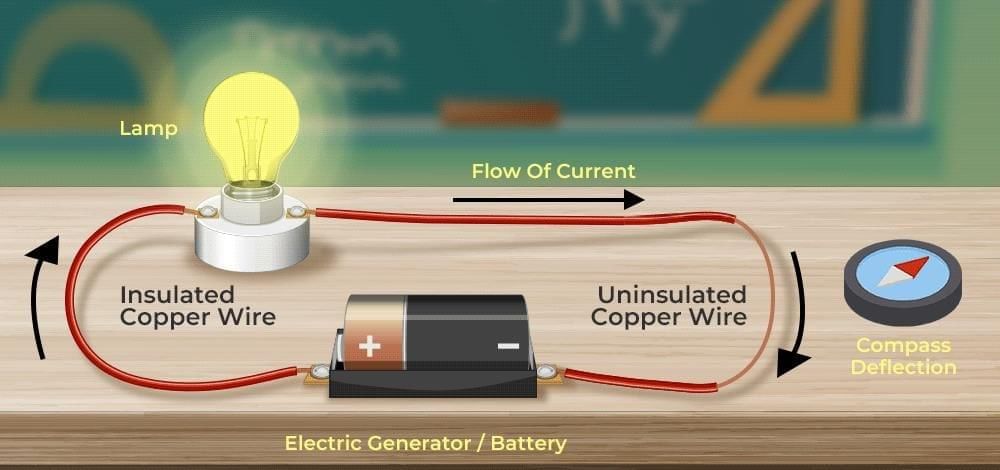
Q1: Why does the magnetic compass needle deflect only when the switch is ON?
Answer: When the switch is ON, electric current flows through the wire, producing a magnetic field that deflects the compass needle. When the switch is OFF, the current stops, and the magnetic field disappears, so the needle returns to its original north-south position.
Q2: How would you describe the characteristics of an electromagnet made from a coil and an iron nail?
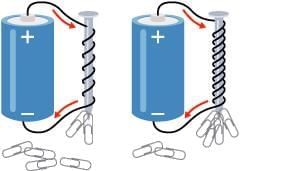
Answer: An electromagnet is a temporary magnet that generates a magnetic field when current flows through the coil. Its strength depends on the current and the number of coil turns, and an iron nail core enhances its magnetism.
Q3: How can the magnetic poles of an electromagnet be reversed?
Answer: The magnetic poles of an electromagnet can be reversed by changing the direction of the electric current through the coil. This reverses the magnetic field, making the north pole become the south pole and vice versa.
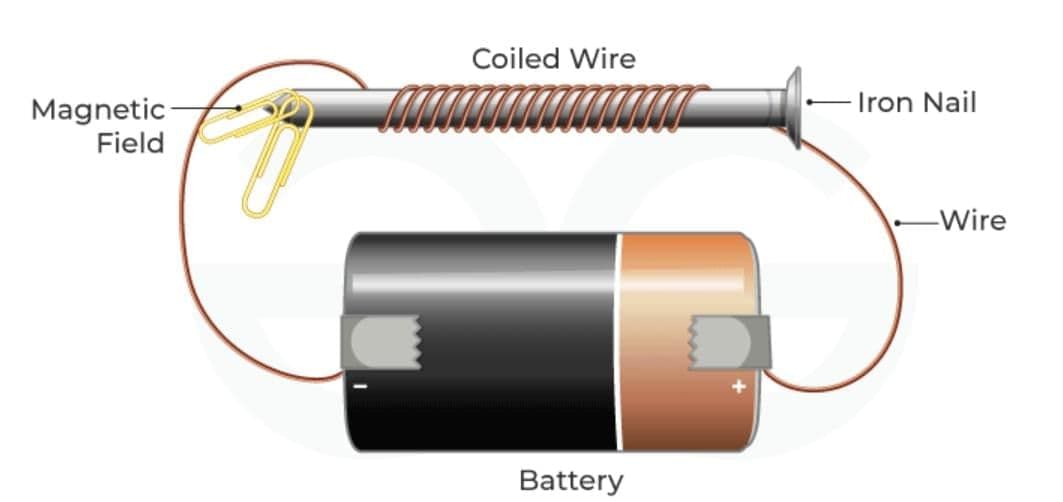 Electromagnet
Q4: Why does a lifting electromagnet on a crane drop metal objects when the switch is opened?Answer: When the switch is opened, the electric current stops, causing the magnetic field of the electromagnet to disappear. Without the magnetic field, the electromagnet can no longer hold the metal objects, so they drop.
Q5: Why does a nichrome wire heat up when electric current flows through it?
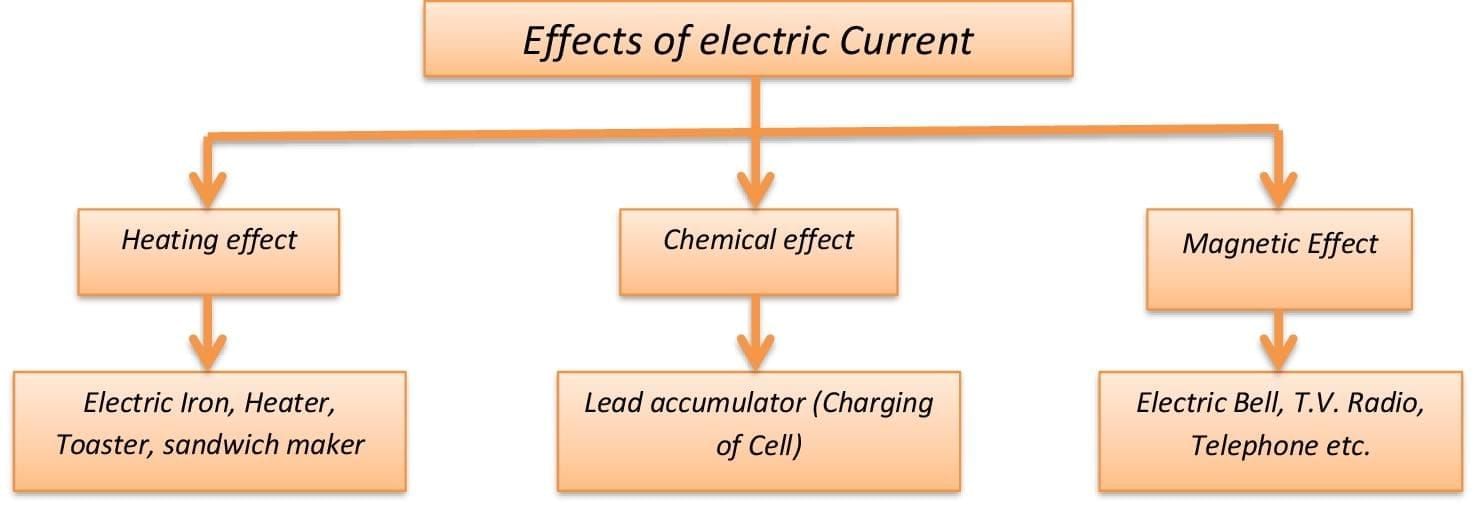
Answer: When electric current flows through a nichrome wire, its high resistance converts electrical energy into heat energy, causing the wire to warm up. This is known as the heating effect of electric current. The heat generated depends on the wire's material, thickness, and the current's magnitude.
Multiple Choice Questions (MCQs)
Question 1:
Why does the nichrome wire get warm while a similar copper wire warms less for the same setup?
Option A: Nichrome has higher electrical resistance than copper
Option B: Copper is an insulator of electricity
Option C: Nichrome reflects heat better
Option D: Copper emits cold
Question 2:
Which change will most strongly increase the strength of an electromagnet, keeping other factors same?
Option A: Replacing the iron core with cardboard
Option B: Decreasing the number of turns
Option C: Increasing the current by using more cells in series
Option D: Using thinner cardboard tape
Question 3:
Which observation best proves the magnetic effect of electric current?
Option A: The wire becomes shiny
Option B: The compass needle deflects only when current flows
Option C: The cell gets heavier
Option D: The cardboard vibrates continuously
Question 4:
Which device primarily exploits the heating effect of electric current?
Option A: Electric bell
Option B: Room heater
Option C: Loudspeaker
Option D: Electric motor
Question 5:
Which statement about a simple Voltaic cell is correct?
Option A: It uses two identical metal electrodes
Option B: It generates electricity via chemical reactions at two dissimilar electrodes in an electrolyte
Option C: It is rechargeable by reversing current
Option D: It has only solid components, no electrolyte
Question 6:
Which statement about dry cells (common torch cells) is accurate?
Option A: The zinc can is the negative terminal and the central carbon rod is the positive terminal
Option B: They contain only pure water as electrolyte
Option C: They are designed to be recharged indefinitely
Option D: Both terminals are on the zinc can
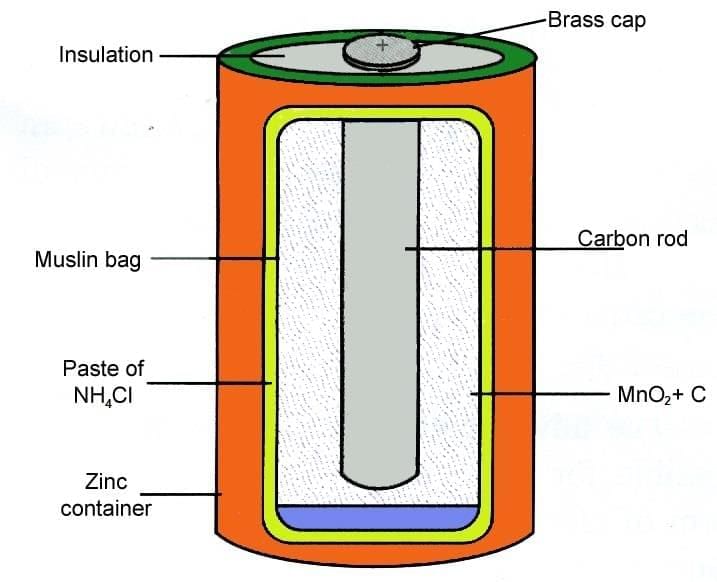 Dry Cell
Question 7:
Which is the most environment-friendly practice for used batteries?
Option A: Throw in regular trash once "dead"
Option B: Burn them to recover energy
Option C: Dispose at e-waste recycling facilities for safe handling and material recovery
Option D: Bury them in soil to prevent fires
Question 8:
Which change will increase the heat produced in the wire for the same time interval?
Option A: Replace nichrome with equal-length copper
Option B: Use two cells in series instead of one
Option C: Reduce the wire's resistance
Option D: Use a thicker low-resistance wire
Question 9:
Which statement about rechargeable batteries is correct?
Option A: They never degrade with use
Option B: Li-ion batteries dominate modern rechargeable applications
Option C: Rechargeable batteries use only solid electrolytes today
Option D: Recharging works by cooling the battery rapidly
Question 10:
Four coils (iron core, copper core, aluminium core, nichrome core) are each connected to the same cell and compass placement is identical. Where will the compass deflect when current flows?
Option A: Only with iron core
Option B: With iron and copper cores only
Option C: With iron, copper, and aluminium cores only
Option D: In all four cases
FAQs on Important Questions: Electricity: Magnetic and Heating Effects
| 1. What are the basic principles of electricity that relate to its magnetic and heating effects? |  |
| 2. How do electromagnets work and what are their applications? | |
| 3. What is the significance of Joule's Law in understanding the heating effect of electric current? | |
| 4. What safety precautions should be taken when working with electrical circuits to prevent hazards? | |
| 5. What are some common misconceptions about electricity and its effects? | |