MCQ (Solution) - Light: Mirrors and Lenses

Question 1:
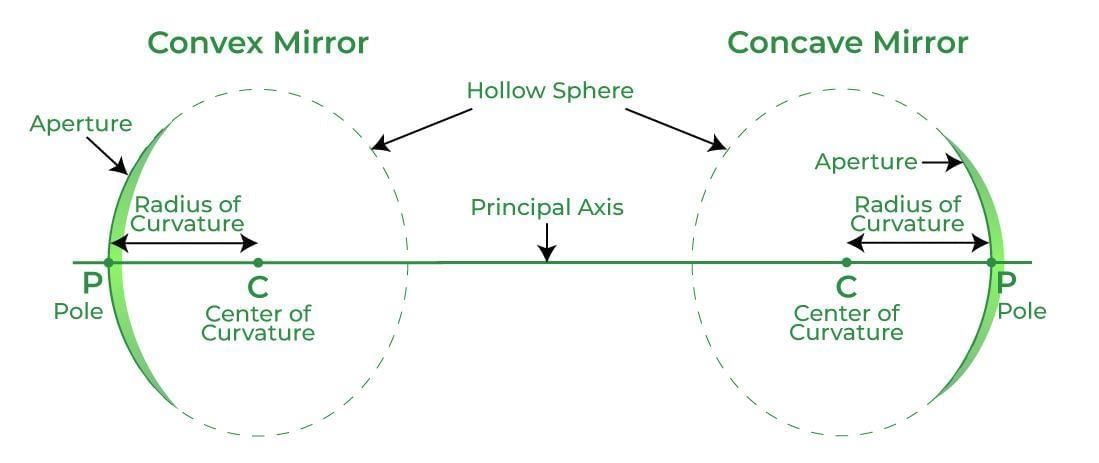
Which statement correctly distinguishes concave and convex spherical mirrors?
Option A: Concave mirrors curve outward; convex mirrors curve inward
Option B: Concave mirrors curve inward; convex mirrors curve outward
Option C: Both concave and convex mirrors are flat
Option D: Concave mirrors never form inverted images
Question 2:
A convex mirror used as a vehicle's side-view mirror shows:
Option A: Always erect and diminished images with a wider field of view
Option B: Sometimes inverted, sometimes erect images with same size
Option C: Always inverted and enlarged images
Option D: Erect and same-sized images with narrow field of view

Question 3:
When an object is placed close to a concave mirror, the image seen is typically:
Option A: Erect and enlarged
Option B: Erect and diminished
Option C: Inverted and diminished for all distances
Option D: Inverted and same-sized
Question 4:
Which pair correctly matches device and the mirror type used?
Option A: Dentist's mouth mirror - convex mirror
Option B: Road intersection safety mirror - concave mirror
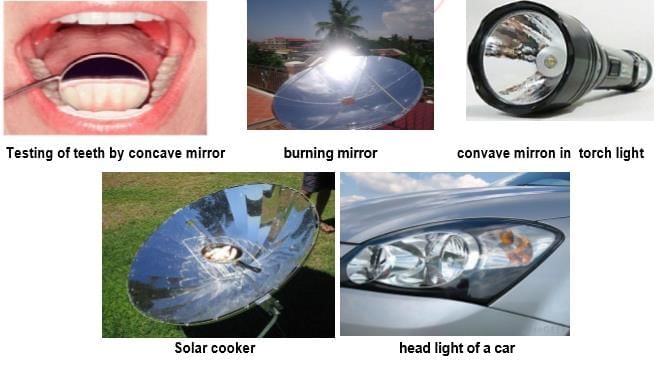
Option C: Torch reflector - concave mirror
Option D: Side-view mirror of a car - concave mirror
 Uses of Concave Mirrors
Question 5:
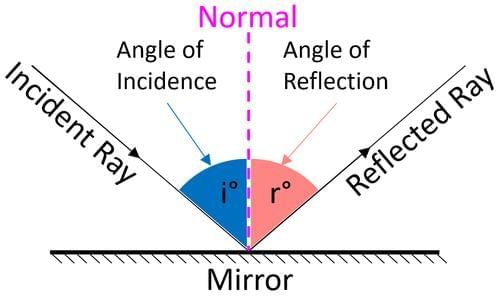
The first law of reflection states that:
Option A: Angle of incidence equals angle of reflection
Option B: Incident ray equals reflected ray
Option C: Incident and reflected rays are perpendicular
Option D: Reflection occurs only on plane mirrors
Question 6:
The second law of reflection states that the incident ray, normal, and reflected ray:
Option A: Lie in different planes
Option B: Lie in the same plane
Option C: Are all parallel
Option D: Coincide for any angle
Question 7:
Multiple parallel light rays fall on a concave mirror. After reflection, the rays:
Option A: Remain parallel
Option B: Converge
Option C: Diverge
Option D: Disappear
Question 8:
A convex lens is placed in front of text at a small distance. The text appears:
Option A: Erect and enlarged
Option B: Inverted and enlarged
Option C: Erect and diminished
Option D: Inverted and same-sized
Question 9:
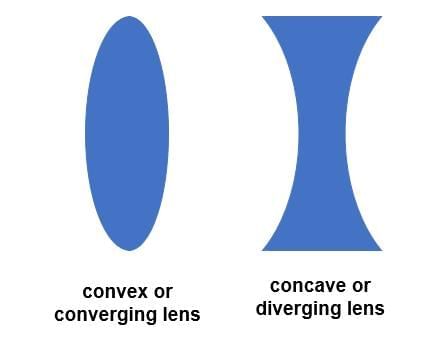
Which statement about a concave lens is always true for real objects?
Option A: It always forms an erect and diminished image
Option B: It always forms an inverted and enlarged image
Option C: It can form an erect enlarged image
Option D: It produces no image
Question 10:
Why can a concave mirror or a convex lens burn paper when used with sunlight in the right setup?
Option A: They absorb light and convert it to electricity
Option B: They converge sunlight to a small bright spot, concentrating energy and heating the paper
Option C: They block infrared rays
Option D: They create light from darkness
Question 11:
Looking through a thin, flat glass plate at text produces what change compared to looking through a convex lens?
Option A: Flat glass enlarges; convex lens leaves size unchanged
Option B: Flat glass leaves size unchanged; convex lens can enlarge for close objects
Option C: Both always diminish
Option D: Both always invert
Question 12:
Which pairing is correct for "optical element → beam behavior" with parallel incident rays?
Option A: Plane mirror → diverge
Option B: Concave mirror → converge
Option C: Convex mirror → remain parallel
Option D: Concave lens → converge
Question 13:
If a light ray falls on a plane mirror along the normal, then:
Option A: Angle of incidence is 0° and the ray reflects back on itself
Option B: Angle of incidence is 90° and no reflection occurs
Option C: The reflected ray is perpendicular to the incident ray
Option D: The ray gets absorbed completely
Question 14:
Why do convex mirrors give a larger field of view than plane mirrors of the same size?
Option A: They magnify everything
Option B: Their outward curvature allows them to capture rays from a wider angular region
Option C: They focus light to a point
Option D: They block peripheral rays
Question 15:
Which matching of lens type with consistently observed image property for real objects is correct?
Option A: Convex lens - always erect and enlarged
Option B: Concave lens - always erect and diminished
Option C: Convex lens - always inverted and diminished
Option D: Concave lens - sometimes inverted and enlarged
FAQs on MCQ (Solution) - Light: Mirrors and Lenses
| 1. What are the basic principles of reflection and how do they apply to mirrors? |  |
| 2. How do convex and concave mirrors differ in terms of their images? | |
| 3. What is the role of lenses in focusing light and how do they differ from mirrors? | |
| 4. How do we determine the focal length of a lens or mirror? | |
| 5. What practical applications do mirrors and lenses have in everyday life? | |





