NCERT Solutions: Verghese Kurien — I Too Had A Dream


Let us do these activities before we read (Page 82)
I. Arrange the worldwide means of communication given below in the timeline provided. Share your answers with your classmates and teacher.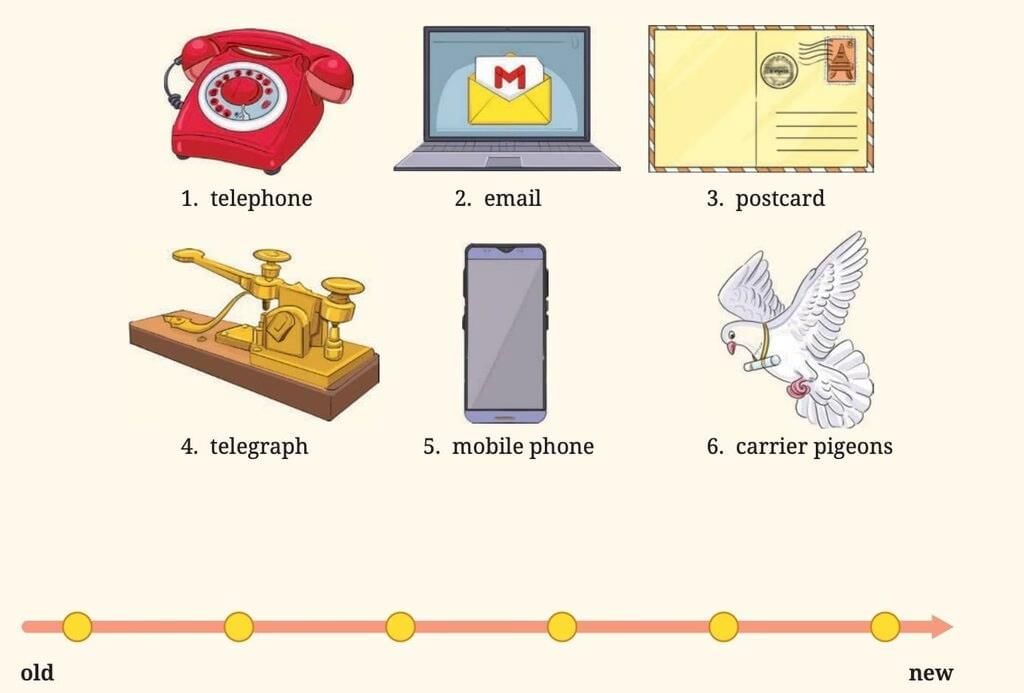
Ans: Carrier pigeons → Postcard → Telegraph → Telephone → Mobile phone → Email
II. Work in pairs and discuss the following things. Share your answers with your classmates and teacher.
1. The reasons for the change in the means of communication over the years.
Ans: Over time, technology improved and people wanted faster, more reliable ways to connect. New inventions made communication quicker, easier, and able to reach farther distances, so older methods like carrier pigeons and postcards were gradually replaced by telephones, mobile phones and email.
2. The means of communication that you prefer to use and the reason for your choice.
Ans: I prefer mobile phones because they are fast, easy to use and allow calls, messages and video chats instantly; they also let me share photos and information quickly.
3. Communication through social media: its benefits and precautions that one should take against its misuse.
Ans: Social media helps people stay connected, share ideas and learn about current events. Precautions include not sharing personal details publicly, checking information before believing or forwarding it, using privacy settings, and being careful about accepting or talking to strangers online.
Let us discuss (Page 85)
A fact is something that can be proven true or false. A fact is not based on people's beliefs. An opinion, on the other hand, is a belief, feeling or judgement, and can vary from one person to another. An opinion cannot be proven.I. Identify which of the following statements are facts and which are opinions. Share your answers with your classmates and teacher.
1. But speaking on the telephone only gives us an immediate but fleeting joy.
Ans: Opinion (expresses a personal view)
2. I started my working life soon after our country became independent.
Ans: Fact (verifiable event)
3. To be quite honest, service to our nation's farmers was not the career I had envisioned for myself.
Ans: Opinion (personal thought)
4. I knew I could make a more meaningful contribution by working here in Anand, Gujarat.
Ans: Opinion (personal belief)
5. ... values that I saw in my mentor and supporter here in Anand-Tribhuvandas Patel.
Ans: Fact
6. Life is a privilege, and to waste it would be wrong.
Ans: Opinion (personal belief)
7. I hope that you, too, will discover, as I did, that failure is not about not succeeding.
Ans: Opinion (personal perspective)
8. ... the magnificent ceremony in which the President awarded me the Padma Vibhushan in 1999?
Ans: Fact (verifiable event)
Let us think and reflect (Page 86)
I. Read the given extracts and answer the questions:
1. In today's fast-paced world, we have become so addicted to instant communication that we prefer to use a telephone. But speaking in today's fast-paced world, we have become so addicted to instant communication that we prefer to use a telephone. But speaking on the telephone only gives us immediate yet fleeting joy. Writing is different. Writing-even if it is a letter-not only conveys our present concerns and views of the events taking place around us, but it also becomes a possession that can be treasured and re-read over the years, providing great, abiding pleasure. The telephone only gives us an immediate but fleeting joy. Writing is different. Writing-even if it is a letter-not only conveys our present concerns and views of the events taking place around us, but it becomes a possession that can be treasured and re-read over the years, with great, abiding pleasure.
(i) Fill in the blank given below by selecting the correct option from the brackets.
When the writer refers to a 'fast-paced world', he is speaking of a world where _________________. (Communication happens quicklybut lacks depth/people have more time to write and reflect)
Ans: Communication happens quickly but lacks depth
(ii) Select the option that applies correctly to both Assertion (A) and Reason (R).
(A): Writing letters can be treasured and re-read over the years.
(R): Speaking on the telephone provides long-lasting joy.
A. Both (A) and (R) are true, and (R) is the correct explanation of (A).
B. Both (A) and (R) are true, but (R) is not the correct explanation of (A).
C. (A) is true, but (R) is false.
D. Both (A) and (R) are false.
Ans: C
Explanation:
(i) Assertion: Writing letters can be treasured and re-read over the years.
(ii) Reason: Speaking on the telephone provides long-lasting joy.
(iii) Justification: (A) is true because letters can be kept and re-read, giving lasting pleasure. (R) is false because the extract describes telephone conversations as giving only fleeting, immediate joy rather than long-lasting joy.
(iii) Identify whether the statement given below is true or false. The writer feels that letter-writing is a class apart from other kinds of writing.
Ans: True
Explanation: The extract emphasises the unique, lasting value of letters and how they can be treasured and re-read over the years.
(iv) Which of the following is the most appropriate title for the given extract?
A. The Rise of Instant Communication
B. The Fleeting Delight of Phone Calls
C. The Lasting Joy of Written Words
D. Living in a Fast-paced World
Ans: (C)
Explanation: The extract focuses on how written words, especially letters, provide lasting joy and can be treasured over time, so this title best captures the passage's main idea.
2. Your grandmother, too, made an important choice. She knew, in those early days, life in Anand could not offer even the simple comforts that we take for granted today. However, she ardently supported my choice to live and work in Anand. That choice of your grandmother to stand by me has given me an everlasting strength, always ensuring that I shouldered my responsibilities with poise.
(i) How can we say that the grandmother shared her husband's dedication to a greater cause?
Ans: She supported his choice to work in Anand despite the lack of comforts, which shows her commitment to his mission and to a cause greater than personal comfort.
(ii) Complete the following with the correct option from the two given in brackets. The fact that the writer (grandfather) praises his wife tells us that he _____________________ (truly values/quietly accepts) her role in his life.
Ans: The fact that the writer praises his wife tells us that he truly values her role in his life.
(iii) Complete the following sentence with the correct option from those given below. Based on the information in the extract, we can infer that the grandmother had all of the following traits EXCEPT ____________.
A. encouraging
B. understanding
C. comforting
D. thoughtful
Ans: (C)
Explanation:The extract shows she encouraged and supported him and behaved thoughtfully and with understanding; it does not explicitly describe her as a source of comfort, so "comforting" is not directly supported.
(iv) Select the phrase that conveys- 'showed grace under pressure and carried out my duties with dignity and confidence'.
Ans: The phrase that conveys "showed grace under pressure and carried out my duties with dignity and confidence" is "shouldered my responsibilities with poise".
II. Answer the following questions.
Q1. What event does Dr. Kurien refer to when he mentions receiving the Padma Vibhushan?
Ans: Dr. Kurien refers to the occasion when he was honoured with the Padma Vibhushan, India's second-highest civilian award, in recognition of his major contributions to the White Revolution and the development of the dairy industry. He also recalls how his grandson proudly wore the medal and asked if he could keep it.
Q2. How did Dr. Kurien's decision to join the cooperative in Anand affect his life?
Ans: Dr. Kurien's decision to join the small dairy cooperative in Anand transformed his life. He chose service to farmers over other career options, which led to national recognition, a life of purpose and large-scale improvements in rural livelihoods and milk production across India.
Q3. Dr. Kurien's decision to work in Anand reveals his values and sense of duty. Explain.
Ans:Dr. Verghese Kurien's choice to remain in Anand shows his strong sense of responsibility, social commitment and empathy for farmers. He put service above personal gain, believing in grassroots development. By working with the cooperative, he helped millions and demonstrated honesty, humility and dedication to the common good.
Q4. Why did Dr. Kurien write the letter to his grandson?
Ans: Dr. Kurien wrote the letter to his grandson Siddharth to share his life lessons, values and experiences. He wanted to inspire and teach the importance of service, hard work, honesty and making meaningful choices that help others.
Q5. According to Dr. Kurien, "life is a privilege and it is wrong to waste it".What is your opinion on this?
Ans: (Example opinion - you can personalise it) I agree with Dr. Kurien. Life offers chances to learn, help others and grow. Wasting these opportunities for selfish or careless choices means missing the chance to make a real difference. True satisfaction often comes from using our abilities to benefit others.
Q6. What message does Dr. Kurien want to convey about selfless service and its long-term impact on society?
Ans: Dr. Kurien stresses that selfless service leads to lasting positive change. By working honestly for others, especially farmers, one can strengthen communities, improve livelihoods and set an example that benefits future generations.
Let us learn (Page 88)
I. Replace the underlined words in each sentence with the correct synonym from the box. You may refer to a dictionary.

2. I felt a fleeting joy when I received the appreciation for my song.
3. With today's instant communication, we can share information across the world in seconds.
4. Our school focuses on the core values-collaboration, innovation, and unity.
5. My teacher's advice on time management is a valuable reminder of the importance of planning.
6. Reading books and listening to music can give abiding pleasure that will last forever.
Ans:
1. Magnificent → Splendid
He received the award in a splendid ceremony.
2. Fleeting → Momentary
I felt a momentary joy when I received the appreciation for my song.
3. Instant → Swift
With today's swift communication, we can share information across the world in seconds.
4. Core → Essential
Our school focuses on the essential values-collaboration, innovation, and unity.
5. Valuable → Useful
My teacher's advice on time management is a useful reminder of the importance of planning.
6. Abiding → Lifelong
Reading books and listening to music can give lifelong pleasure that will last forever.
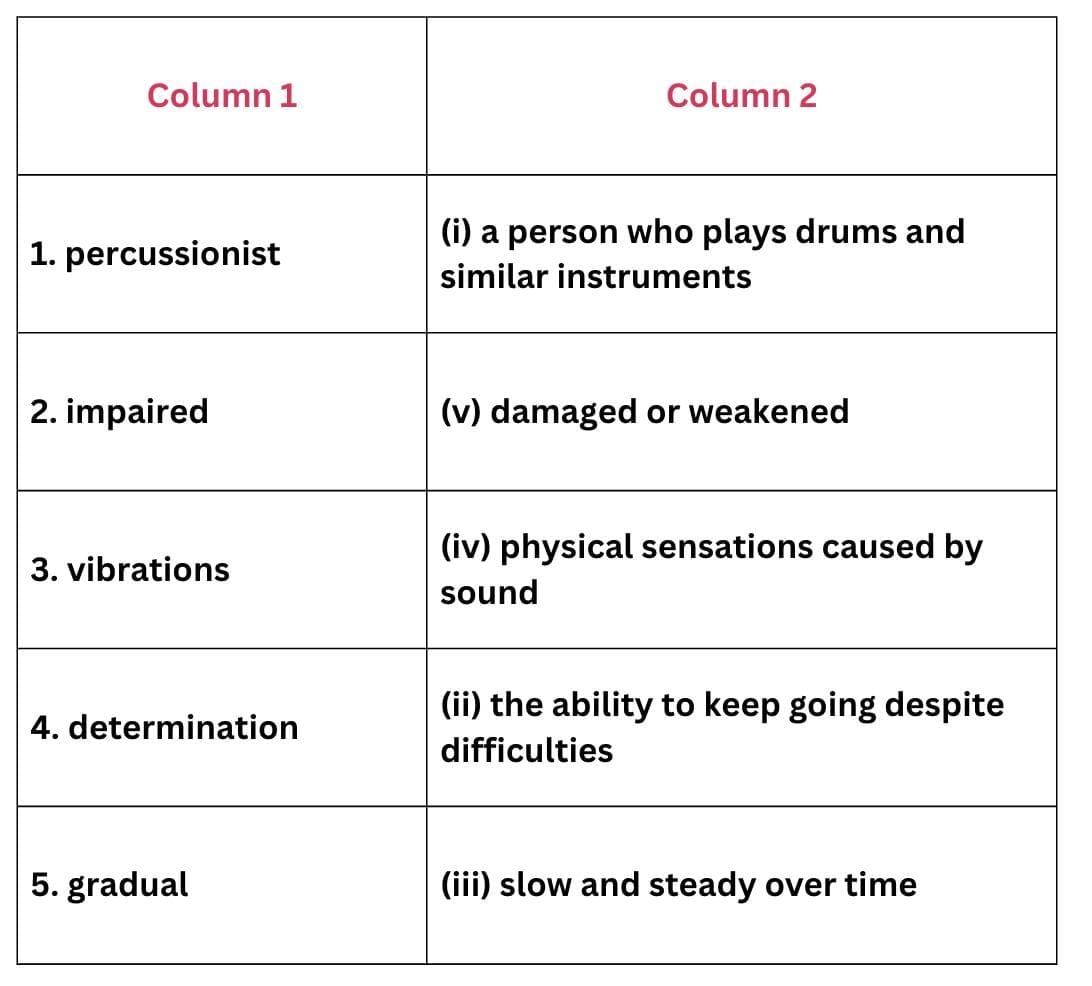
II. Match the expressions from the text in Column 1 with their meanings in Column 2.
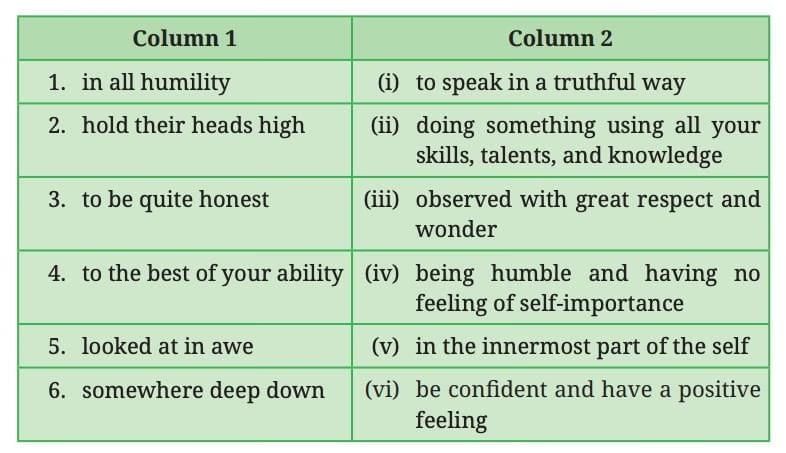
Ans:
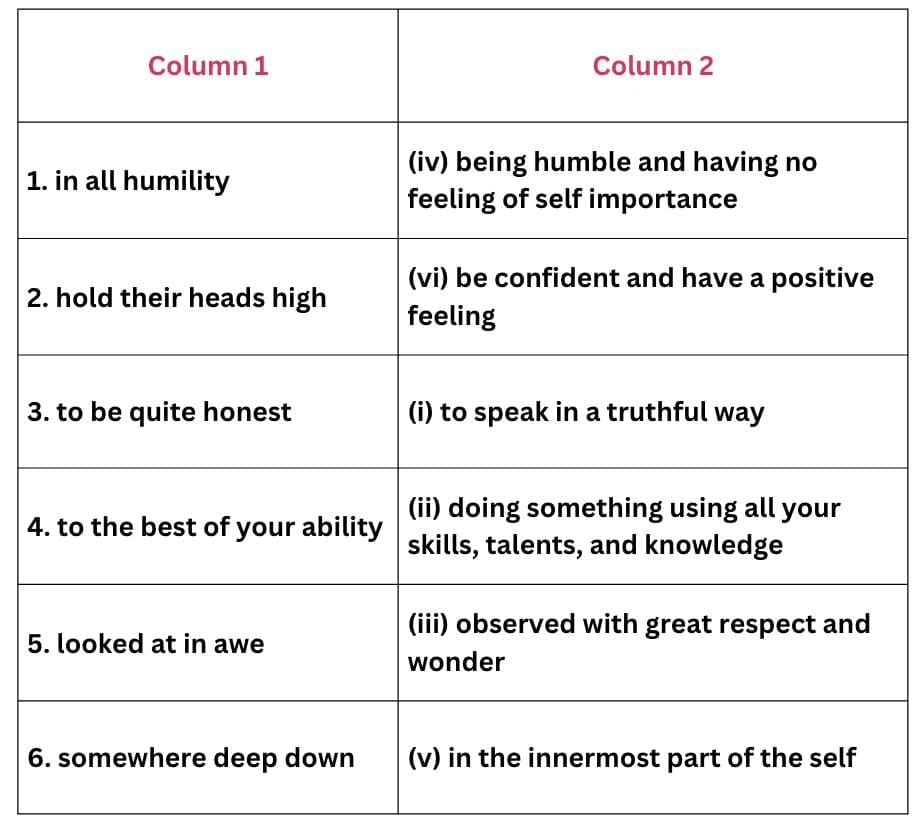
III. Make as many words as you can out of the following words. One example has been done for you
1. community - city, toy, tune, unity, mutiny, cot
2. important
3. magnificent
4. satisfied
5. generation
6. achievement
Ans:
1. community → city, toy, tune, unity, mutiny, cot
2. important → part, port, ant, rant, tip, trap
3. magnificent → gift, neat, fan, cane, cent, game
4. satisfied → sad, fade, side, date, site, idea
5. generation → gate, rate, near, tone, rent, giant
6. achievement → achieve, name, time, heat, team, event
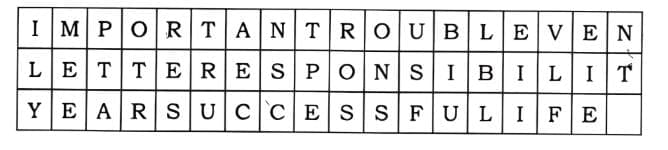
IV. Let us play a word game-antakshari.
1. Write the synonym of the word according to the clues given below.
2. For example, the synonym of the first word, 'IMPORTANT', ends with the letter 'T'. The synonym of the second word begins with 'T', 'TROUBLE'.Then write the synonym of the third word starting with the letter 'E'.
3. Now, continue with the word game.

(i) major (synonym)
(ii) problem (synonym)
(iii) uneven (antonym)
(iv) related to post office
(v) our moral duty
(vi) related to time
(vii) prosperous (synonym)
(viii) related to being alive
Ans:
V. Study the highlighted punctuation marks in the following sentences from the text.
1. ... but that you should not be satisfied in merely keeping my awards-the challenge before you was to earn your rewards for the work that you did in your lifetime.
2. Writing-even if it is a letter-not only conveys our present concerns and views of the events taking place around us, but it becomes a possession.
The highlighted punctuation is a long dash that can be used to link words or numbers or to create a pause in a sentence. There are two main types:the shorter en dash (-) and the longer em dash (-).
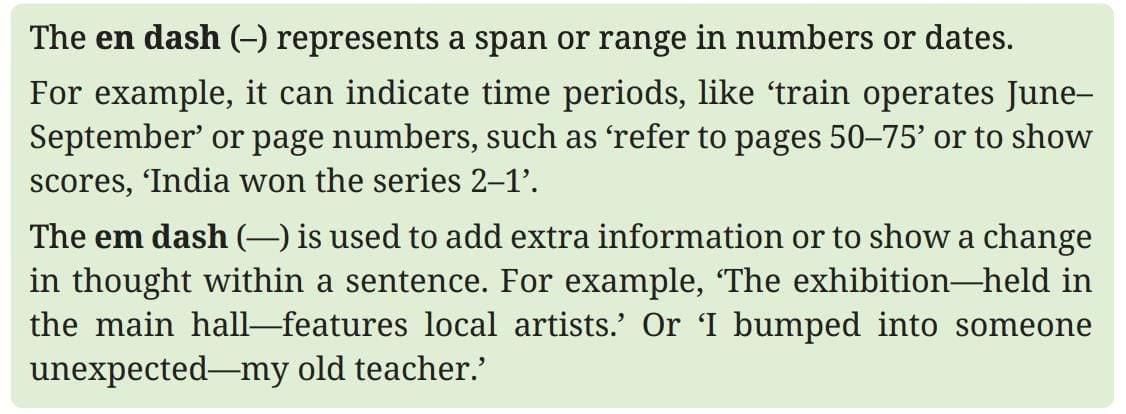
Note: Do not add spaces around the dash and avoid overusing them.
Read the sentences below and insert either an em dash (-) or an en dash (-) suitably.
(i) The conference will be held from March 15 March 20.
Ans: The conference will be held from March 15-March 20.
(en dash for range)
(ii) I have lived in Kanpur Raipur for five years now.
Ans: I have lived in Kanpur-Raipur for five years now.
(en dash is normally used for connections between places)
(iii) The artist known for her vibrant paintings will be showcasing her work in Guwahati.
Ans: The artist-known for her vibrant paintings-will be showcasing her work.
(em dash for extra information)
(iv) The scores for the final match were 2 3.
Ans: The scores for the final match were 2-3.
(en dash for scores)
(v) My favourite snacks, samosas, pakoras, and jalebis are all from India.
Ans: My favourite snacks-samosas, pakoras, and jalebis-are all from India.
(em dash for extra information)
(vi) The train journey from Belagavi Bengaluru takes less than ten hours.
Ans: The train journey from Belagavi-Bengaluru takes less than ten hours.
(en dash is normally used for connections between places)
(vii) I just finished reading the book it was absolutely amazing!
Ans: I just finished reading the book-it was absolutely amazing!
(viii) The event will take place on September 1 September 5.
Ans: The event will take place on September 1-September 5.
(en dash for range)
VI. Study the highlighted words in the following sentences from the text.
1. We told you that, of course, this medal was yours as much as it was mine...
2. ...who were trying to gain control over their lives.
3. I have always emphasised that it's a recognition of the achievements of many people...
In the given sentences, 'yours' and 'theirs' indicate possession-something belonging to you and them, respectively. But, 'it's' does not indicate possession rather is the contracted form of 'it is'.
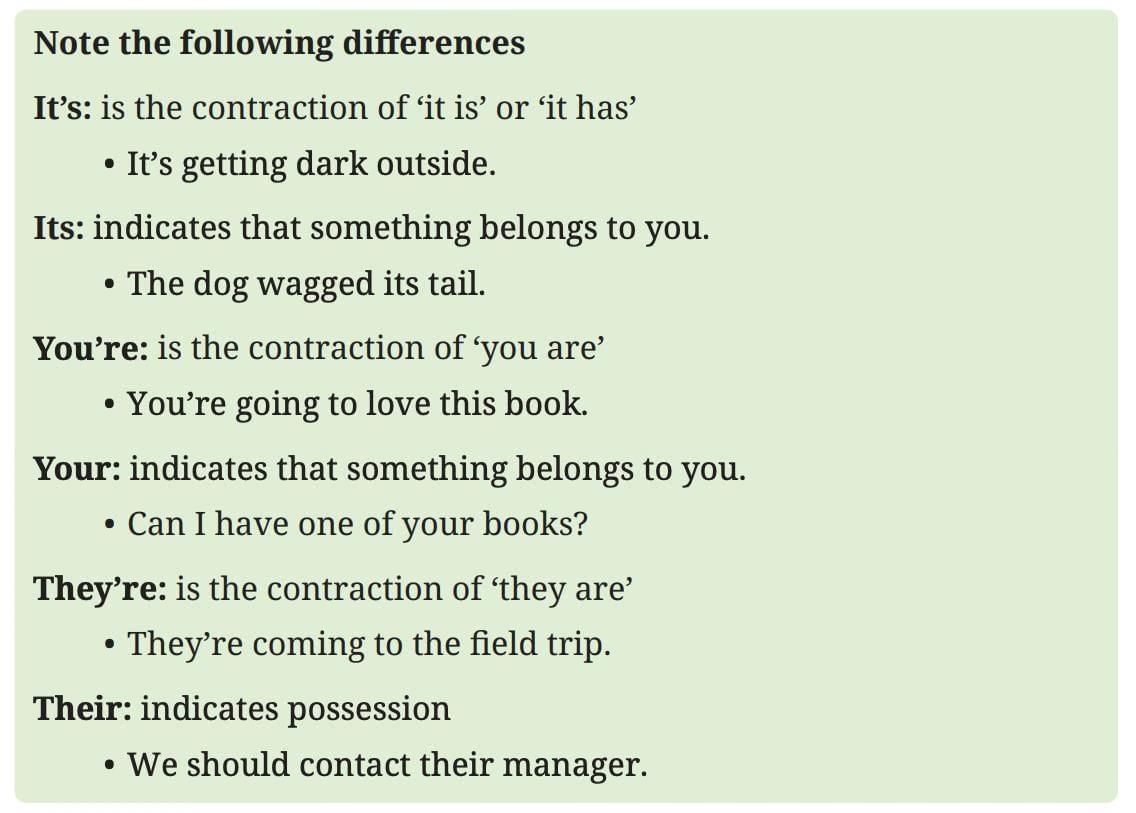
Fill in the blanks by choosing the correct word from the options given in the brackets.
(i) Please remember to bring ___________ (your/you're) assignment book.
(ii) The team celebrated ___________ (their/they're) victory after the match.
(iii) ___________ (its/it's) important to stay hydrated during the hot summer days.
(iv) I can't believe ___________ (your/you're) going to the mango festival today.
(v) The students said ___________ (they're/their) excited for the field trip tomorrow
(vi) The tree lost ___________ (its/it's) leaves in the winter.
Ans:
(i) Please remember to bring your assignment book.
(ii) The team celebrated their victory after the match.
(iii) It's important to stay hydrated during the hot summer days.
(iv) I can't believe you're going to the mango festival today.
(v) The students said they're excited for the field trip tomorrow.
(vi) The tree lost its leaves in the winter.
VII. Read the following phrases from the text.
1. In today's fast-paced world
2. On the telephone
3. With great, abiding pleasure
4. In the chapters that follow
5. At a certain time
6. With equal respect and love
The given phrases are Prepositional Phrases.
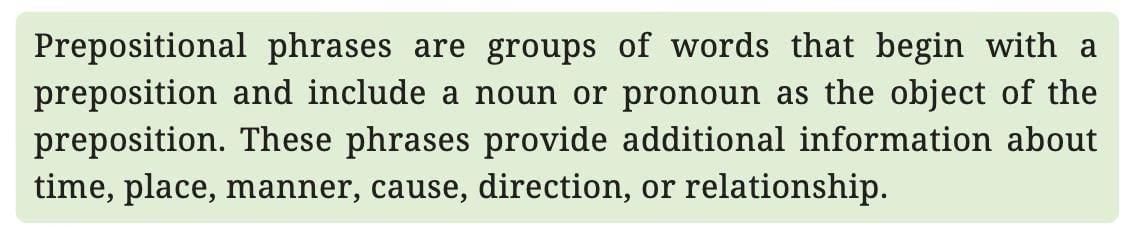
Now, complete the following sentences with suitable prepositional phrases.
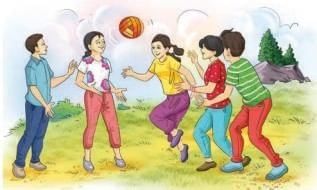
(i) The children played happily in _______________________.
Ans: The children played happily in the park.
(ii) Nisha placed the vase on _______________________.
Ans: Nisha placed the vase on the table.
(iii) We discussed the project in _______________________.
Ans: We discussed the project in the classroom.
(iv) Preethi found the lost book under _______________________.
Ans: Preethi found the lost book under the bed.
(v) The cat slept on _______________________.
Ans: The cat slept on the mat.
VIII. Rearrange the following jumbled words and phrases into meaningful sentences.
1. barked/at the strangers/the dog/loudly/the house/walking by
Ans: The dog barked loudly at the strangers walking by the house.
2. wrote/my classmate/during the/a story/summer vacation
Ans: My classmate wrote a story during the summer vacation.
3. enjoyed/under the trees/they/by the lake/a picnic
Ans: They enjoyed a picnic under the trees by the lake.
4. in his/grandfather's room/hung/he/the painting
Ans: He hung the painting in his grandfather's room.
5. studied/with great determination/for/students/the/exam
Ans: The students studied with great determination for the exam.
Let us listen (Page 93)
I. You will listen to the passage about Evelyn Glennie's journey in overcoming her hearing loss through music and turning a physical disability into a success story. After listening, match the words given in Column 1 with their meanings given in Column 2.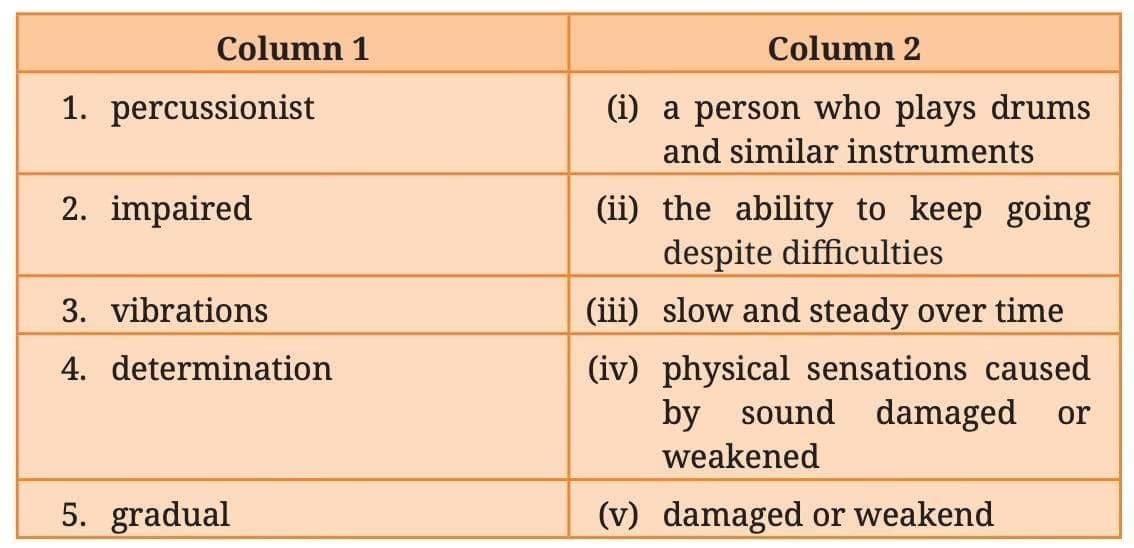
Ans:
II. Listen to the passage once again and state whether the statements given below are true or false.
1. Evelyn Glennie became deaf suddenly.
Ans: False
Explanation: Her hearing loss developed gradually rather than occurring suddenly.
2. Her headmistress ignored the signs of her hearing loss.
Ans: False
Explanation: Teachers often notice early signs; in Evelyn's case, the issue was recognised and addressed rather than ignored.
3. Ron Forbes was a percussionist who helped Evelyn.
Ans: True
Explanation: Ron Forbes acted as a mentor and percussionist who supported her musical development.
4. Evelyn used her skin and bones to sense music.
Ans: True
Explanation: She learned to feel vibrations through her body, which helped her experience music despite hearing loss.
5. She gave up on music after her diagnosis.
Ans: False
Explanation: She continued with music and went on to build a successful career as a percussionist.
III. Answer the following questions in one or two words.
1. How did Evelyn turn her disability into a strength?
Ans: By sensing vibrations
2. What role did Ron Forbes play in her life?
Ans: Mentor / Percussionist
3. What lessons can we learn from Evelyn's story about how to treat others who have different abilities or challenges?
Ans: Show empathy and give support
Let us speak (Page 94)
I. Read the highlighted word in the following sentence from the text.
That common good will present itself to you in many forms every day.
The highlighted word is pronounced with the stress on the second syllable.
PreSENT (verb) the stress is on the second syllable.
PREsent (noun), the stress is on the first syllable.
Now, read aloud the given words with the correct syllable stress according to the part of speech given in the brackets.
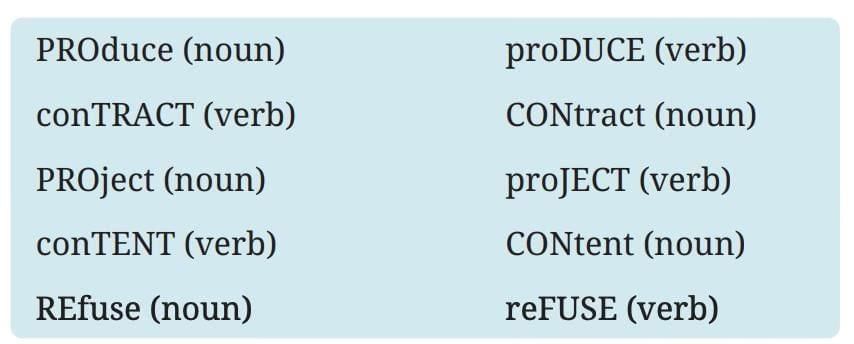
Ans: 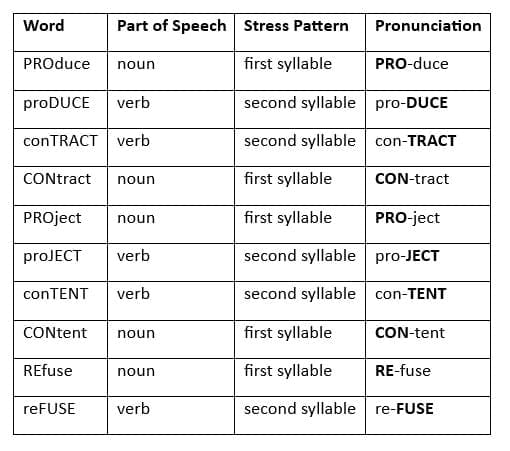
II. Read the highlighted words in the following sentence from the text.
...but it becomes a possession that can be treasured and re-read over the years, with great, abiding pleasure.
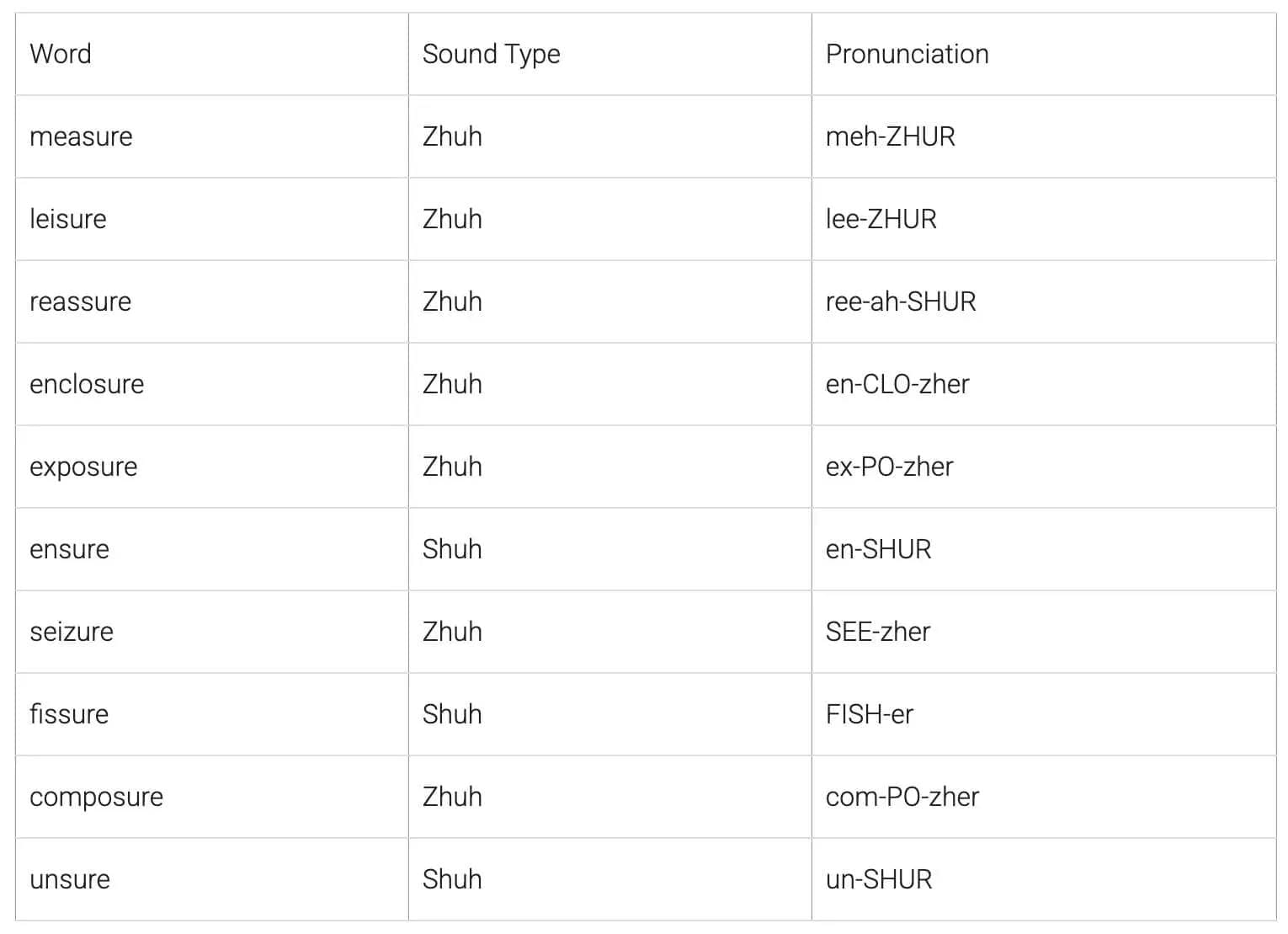
treasure [treh-Zhuh]
pleasure [pleh-Zhuh]
In the highlighted words, -sure has a 'Zhuh' sound.
There are some words which end in -sure, but have a 'shuh' sound as in pressure [preh-shuh].
Now, read aloud the words given below with the 'shuh' or 'zhuh' sound.

"zuhh" sound: measure, leisure, reassure, seizure
"shuh" sound: pressure, exposure, ensure, enclosure, fissure, unsure
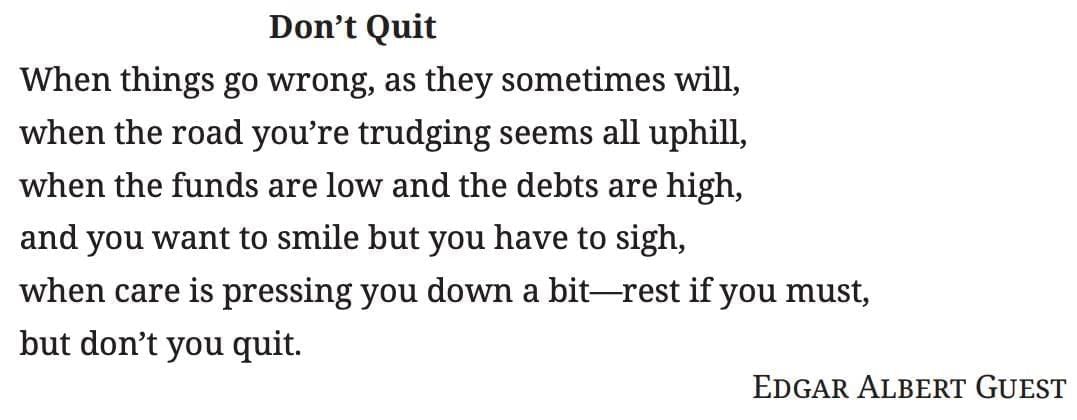
III. Pausing and chunking are techniques used when speaking to organise information for the listener. Speakers can split what they say into smaller segments-either individual words or groups of words-to convey ideas or emphasise key points clearly.
Ans:
When things go wrong,/as they sometimes will,//
when the road you're trudging/seems all uphill,//
when the funds are low/and the debts are high,//
and you want to smile/but you have to sigh,//
when care is pressing you down a bit/
-rest if you must,/
but don't you quit.//
Q2. Chunk the stanzas with (/) or (//) and read it aloud.
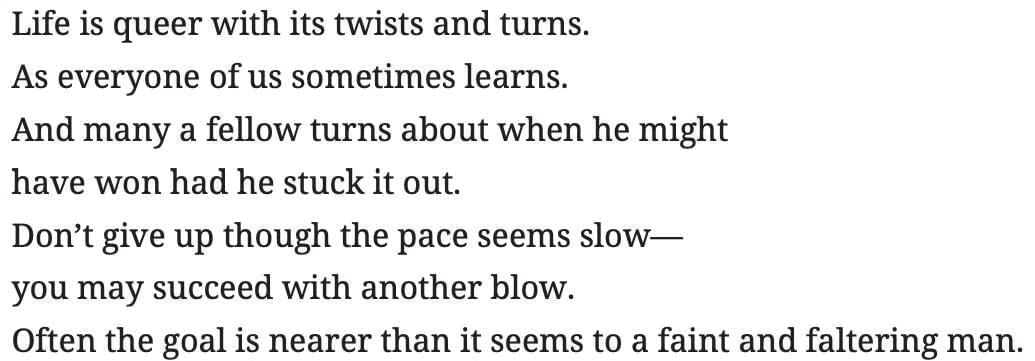
Life is queer with its twists and turns, /
As everyone of us sometimes learns. //
And many a fellow turns about /
when he might have won /
had he stuck it out. //
Don't give up / though the pace seems slow- /
you may succeed / with another blow. //
Often the goal is nearer than it seems /
to a faint and faltering man. //
Let us write (Page 95)
I. Write a letter to your grandparents thanking them for the valuable lessons they have taught you. Include how their wisdom has shaped your values and behaviour in life.
1. Thank them for teaching you important lessons, sharing stories, or helping others in the neighbourhood.
2. Share how their actions inspire you to contribute to the betterment of the society.
Ans:
Your Address
[City, State, ZIP Code]
1 August 2025
Dear Grandparents,
I hope you are both doing well. I want to thank you for all the lessons you have taught me. Grandpa, your honesty and responsibility inspire me to always do what is right. Grandma, your kindness and patience show me how to care for others.
Because of you, I have learned the value of hard work, humility, and helping those in need. I try to follow your example by respecting my teachers, being kind to my friends, and helping in my community, like when we clean the park.
Thank you for guiding me and making me a better person.
With love,
[Your Name]
Let us explore (Page 96)
I. The White Revolution led to an increase in milk production in India primarily due to the efforts of Dr. Verghese Kurien. Therefore, he is known as 'the Milkman of India'.
The Green Revolution in India introduced high-yielding varieties of wheat and rice. It was initiated by Dr. M.S. Swaminathan. He was awarded the Padma Shri in 1967, Padma Bhushan in 1972, Padma Vibushan in 1989, and Bharat Ratna in 2024.
The Blue Revolution focused on increasing fisheries production and productivity in India. This initiative was led by Dr. Hiralal Chaudhuri.
In groups of four, research more information about these revolutions. Share your findings with your classmates and teacher.
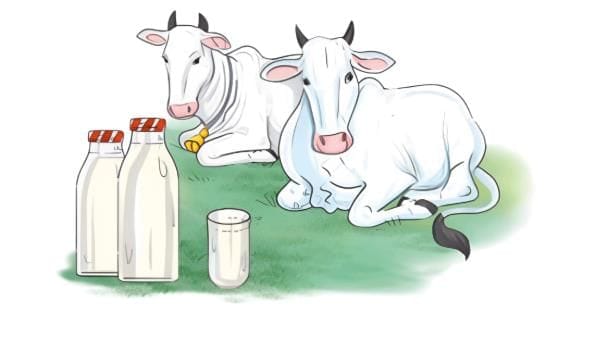
Ans: White Revolution (Operation Flood)
- Leader: Dr. Verghese Kurien (Milkman of India).
- Period: Started in 1970.
- Key Idea: Increase milk production through a nationwide dairy development program.
- Impact:
1. India became the largest producer of milk in the world.
2. Improved income for rural farmers, especially women.
3. Strengthened cooperative societies like Amul.
4. Helped reduce dependence on milk imports.
Green Revolution
- Leader: Dr. M.S. Swaminathan (Father of Green Revolution in India).
- Period: Mid-1960s.
- Key Idea: Use of high-yielding variety (HYV) seeds, chemical fertilizers, pesticides, and modern irrigation.
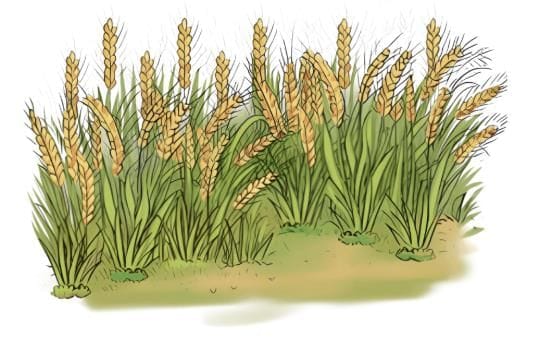
- Impact:
1. Boosted production of wheat and rice, reducing food shortages.
2. Helped India move from food-deficient to self-sufficient in grains.
3. Created surplus stocks in the Food Corporation of India (FCI).
4. Awards to Swaminathan: Padma Shri (1967), Padma Bhushan (1972), Padma Vibhushan (1989), Bharat Ratna (2024). - Challenges: Regional imbalance (benefited Punjab, Haryana, and western UP more), overuse of fertilizers and water, environmental concerns.
Blue Revolution
- Leader: Dr. Hiralal Chaudhuri (Father of Induced Breeding in Fish).
- Period: Started in 1970s, expanded in 1980s.
- Key Idea: Improve fish production and aquaculture.
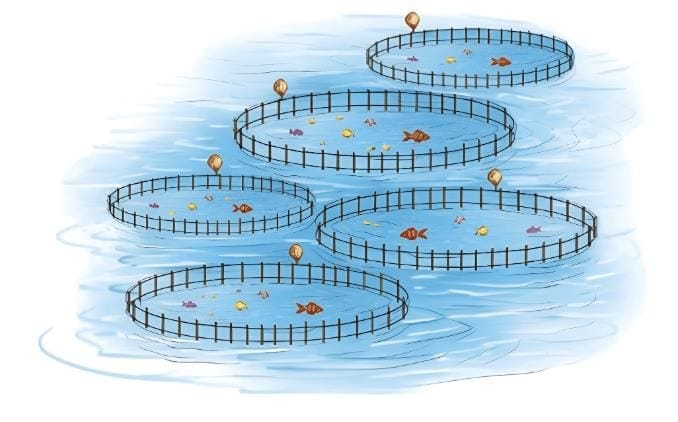
- Impact:
1. Increased inland and marine fish production.
2. Popularised aquaculture techniques like induced breeding.
3. Boosted rural employment and nutrition (fish as protein source).
4. Helped India become one of the world's largest producers of fish.
II. Vocational training for people in rural regions is provided by the JanShikshan Sansthan (JSS), under the Ministry of Skill Development and Entrepreneurship, Government of India. The objective of JSS is to economically uplift the rural population by imparting essential skill-based training. This enables local trades to grow and creates new opportunities for the people in the region.
Find out more about JSS with the help of the link given: https://jss.gov.in/staticPage
Ans: JSS provides skill-based training in areas such as tailoring, farming, handicrafts and basic trades. These programmes help people earn a living, develop local trades and create small business opportunities in rural areas.
III Financial Literacy
Read the passage and discuss the questions given below. Financial literacy is an essential lifelong skill that should be taught to children from an early age. Preparing children with financial literacy skills is an investment in their future well-being. By imparting an understanding of money, saving, budgeting, and wise spending, we empower them to navigate the financial world with confidence as they grow up. Whether it is managing a cooperative society, a start-up, or a household budget, financial literacy is an ongoing learning process that evolves as children grow and their understanding deepens. An introduction to concepts of saving, budgeting, investing, and responsible spending equips them with essential life skills. Children learn best through practical examples. Real-life situations help them understand the value of money and the importance of making wise financial choices. Thinking critically before spending helps cultivate responsible habits. The concept of saving and investing can be explained through relatable examples, such as planting seeds that grow into trees bearing fruit. As children grow older, they will learn to differentiate between needs and wants, compare prices before making a purchase and understand the importance of financial literacy.
Discuss in groups.
1. The importance of learning about money and saving from a young age. Share one example of it.
2. Imagine you received some money as a gift. How would you decide whether to save it, spend it, or invest it? What factors would you consider?
3. If you were in charge of planning a small event at school with a limited budget, how would you manage the money?
4. Why is financial literacy important for everyone?
Ans:
1. Learning about money early
It builds good habits like saving and budgeting. For example, saving pocket money teaches patience and helps buy something useful later.
2. Gift money - save, spend, or invest?
I would save some for future needs, spend a little on something I enjoy, and invest the rest. My choice would depend on needs, goals and how much I have already saved.
3. Planning a school event on a budget
List essentials, spend only on priorities, look for cost-saving options (borrow, reuse, donations), and keep a record of expenses. Keep a small contingency fund for emergencies.
4. Why financial literacy matters
It helps everyone manage money wisely, avoid debt, save for the future and make informed financial choices for a secure life.
FAQs on NCERT Solutions: Verghese Kurien — I Too Had A Dream
| 1. Who was Verghese Kurien and what did he contribute to India's dairy industry? |  |
| 2. What is the main message of "I Too Had A Dream" by Verghese Kurien? | |
| 3. How did Verghese Kurien's cooperative model change rural farming in India? | |
| 4. What challenges did Verghese Kurien face while building the dairy cooperative movement? | |
| 5. Why is Verghese Kurien's story important for Class 8 NCERT English students? | |





