NEET PG Exam > NEET PG Notes > Gynaecology and Obstetrics > Mind Map: Ethical dilemmas in obstetrics and gynaecology - 2
Mind Map: Ethical dilemmas in obstetrics and gynaecology - 2

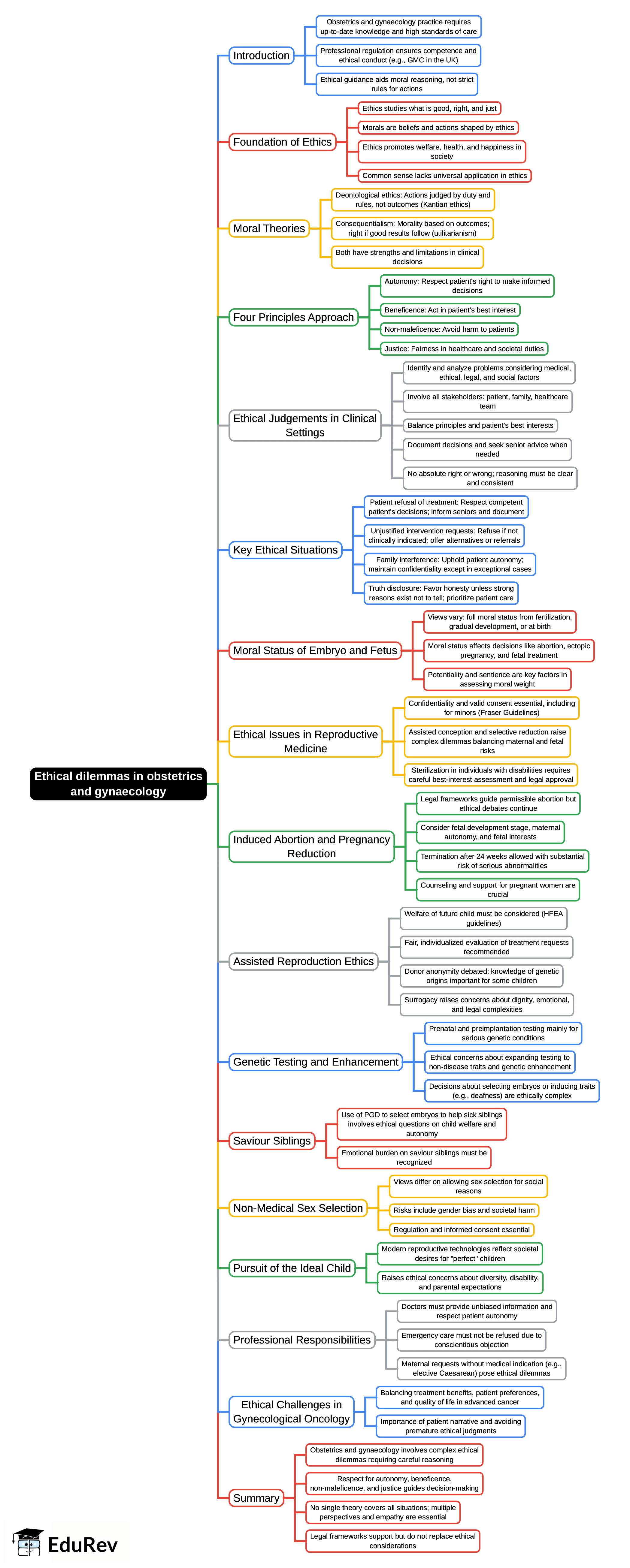
The document Mind Map: Ethical dilemmas in obstetrics and gynaecology - 2 is a part of the NEET PG Course Gynaecology and Obstetrics.
All you need of NEET PG at this link: NEET PG
FAQs on Mind Map: Ethical dilemmas in obstetrics and gynaecology - 2
| 1. What are the common ethical dilemmas faced in obstetrics and gynaecology? |  |
Ans. Common ethical dilemmas in obstetrics and gynaecology include issues related to informed consent, maternal-fetal conflict, reproductive rights, and the management of high-risk pregnancies. These dilemmas often arise when balancing the rights and health of the mother against that of the fetus, as well as navigating complex decisions regarding abortion and assisted reproductive technologies.
| 2. How does informed consent play a role in obstetrics and gynaecology? | |
Ans. Informed consent is crucial in obstetrics and gynaecology as it ensures that patients are fully aware of the risks, benefits, and alternatives of medical procedures. It empowers patients to make informed decisions about their care, particularly in situations involving invasive procedures, prenatal testing, and labour management. Failure to obtain proper informed consent can lead to ethical and legal issues.
| 3. What is the significance of maternal-fetal conflict in ethical decision-making? | |
Ans. Maternal-fetal conflict refers to situations where the interests of the mother and fetus may diverge, leading to ethical dilemmas. For example, a mother may refuse a medical intervention that is deemed necessary for the health of the fetus. Ethical decision-making in these cases requires careful consideration of the autonomy of the mother, the rights of the fetus, and the potential outcomes of either decision.
| 4. How do reproductive rights influence ethical considerations in gynaecology? | |
Ans. Reproductive rights, encompassing the right to access contraception, abortion, and fertility treatments, significantly influence ethical considerations in gynaecology. Healthcare providers must navigate the ethical implications of respecting a patient’s autonomy while also considering societal, legal, and medical guidelines, which may vary across different regions and cultures.
| 5. What role do guidelines and policies play in addressing ethical dilemmas in obstetrics and gynaecology? | |
Ans. Guidelines and policies provide a framework for healthcare professionals to address ethical dilemmas in obstetrics and gynaecology. They offer evidence-based recommendations and best practices that help clinicians navigate complex situations. Adhering to these guidelines can improve patient outcomes and ensure ethical standards are maintained in clinical practice.
About this Document

4.65/5 Rating

Apr 26, 2026 Last updated
Related Exams
Document Description: Mind Map: Ethical dilemmas in obstetrics and gynaecology - 2 for NEET PG 2026 is part of Gynaecology and Obstetrics preparation. The notes and questions for Mind Map: Ethical dilemmas in obstetrics and gynaecology - 2 have been prepared according to the NEET PG exam syllabus. Information about Mind Map: Ethical dilemmas in obstetrics and gynaecology - 2 covers topics like and Mind Map: Ethical dilemmas in obstetrics and gynaecology - 2 Example, for NEET PG 2026 Exam. Find important definitions, questions, notes, meanings, examples, exercises and tests below for Mind Map: Ethical dilemmas in obstetrics and gynaecology - 2.
Introduction of Mind Map: Ethical dilemmas in obstetrics and gynaecology - 2 in English is available as part of our Gynaecology and Obstetrics for NEET PG & Mind Map: Ethical dilemmas in obstetrics and gynaecology - 2 in Hindi for Gynaecology and Obstetrics course. Download more important topics related with notes, lectures and mock test series for NEET PG Exam by signing up for free. NEET PG: Mind Map: Ethical dilemmas in obstetrics and gynaecology - 2
Description
Mind Map: Ethical dilemmas in obstetrics & gynaecology of Gynaecology & Obstetrics provides you one-page visual summary of the chapter covering all the important topics. Download the PDF from EduRev.
Information about Mind Map: Ethical dilemmas in obstetrics and gynaecology - 2
In this doc you can find the meaning of Mind Map: Ethical dilemmas in obstetrics and gynaecology - 2 defined & explained in the simplest way possible. Besides explaining types of Mind Map: Ethical dilemmas in obstetrics and gynaecology - 2 theory, EduRev gives you an ample number of questions to practice Mind Map: Ethical dilemmas in obstetrics and gynaecology - 2 tests, examples and also practice NEET PG tests



Related Searches
mock tests for examination, study material, ppt, Summary, Viva Questions, Mind Map: Ethical dilemmas in obstetrics and gynaecology - 2, Sample Paper, Previous Year Questions with Solutions, Important questions, Semester Notes, past year papers, practice quizzes, Extra Questions, Objective type Questions, Mind Map: Ethical dilemmas in obstetrics and gynaecology - 2, video lectures, Mind Map: Ethical dilemmas in obstetrics and gynaecology - 2, Free, pdf , shortcuts and tricks, Exam, MCQs;