Mechanical Engineering Exam > Mechanical Engineering Notes > Design of Machine Elements > Mind Map: Shafts
Mind Map: Shafts

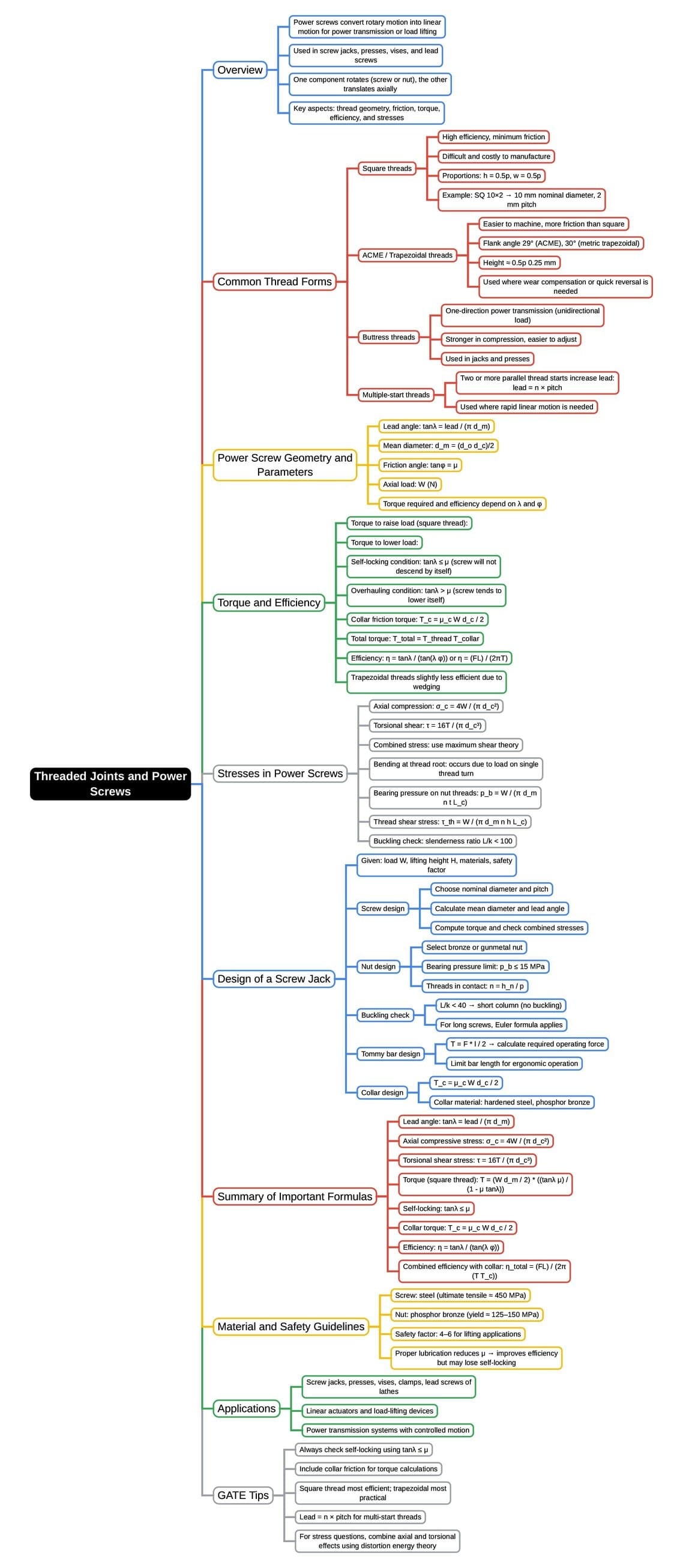
The document Mind Map: Shafts is a part of the Mechanical Engineering Course Design of Machine Elements.
All you need of Mechanical Engineering at this link: Mechanical Engineering
FAQs on Mind Map: Shafts
| 1. What are the primary functions of shafts in mechanical engineering? |  |
Ans. Shafts are rotating elements that transmit power and torque in mechanical systems. Their primary functions include supporting rotating components, providing a pathway for power transmission from one part of a machine to another, and enabling the conversion of rotational motion into linear motion in some applications.
| 2. What materials are commonly used for manufacturing shafts, and why? | |
Ans. Shafts are typically made from materials such as steel, aluminum, and composite materials. Steel is favored for its high strength and durability, aluminum for its lightweight properties and resistance to corrosion, and composites for their high strength-to-weight ratio, making them suitable for specialized applications where weight reduction is critical.
| 3. How do you determine the appropriate diameter of a shaft for a given application? | |
Ans. The appropriate diameter of a shaft can be determined using the formula for torsional stress, which considers the torque transmitted and the material properties. Additionally, factors such as the length of the shaft, the type of loading (static or dynamic), and safety factors must be taken into account to ensure that the shaft can withstand operational stresses without failure.
| 4. What is the significance of shaft alignment in machinery? | |
Ans. Shaft alignment is crucial for the efficient operation of machinery. Misalignment can lead to increased wear on bearings and seals, vibration, energy loss, and ultimately, premature failure of components. Proper alignment helps ensure that the shafts rotate smoothly and evenly, reducing maintenance costs and improving the overall lifespan of the equipment.
| 5. What are some common failure modes of shafts, and how can they be prevented? | |
Ans. Common failure modes of shafts include fatigue failure, torsional failure, and buckling. These can be prevented through proper material selection, regular maintenance, ensuring correct alignment, and using appropriate safety factors in design. Additionally, monitoring operating conditions and load variations can help identify potential issues before they lead to failure.
About this Document

4.94/5 Rating

Apr 19, 2026 Last updated
Related Exams
Document Description: Mind Map: Shafts for Mechanical Engineering 2026 is part of Design of Machine Elements preparation. The notes and questions for Mind Map: Shafts have been prepared according to the Mechanical Engineering exam syllabus. Information about Mind Map: Shafts covers topics like and Mind Map: Shafts Example, for Mechanical Engineering 2026 Exam. Find important definitions, questions, notes, meanings, examples, exercises and tests below for Mind Map: Shafts.
Introduction of Mind Map: Shafts in English is available as part of our Design of Machine Elements for Mechanical Engineering & Mind Map: Shafts in Hindi for Design of Machine Elements course. Download more important topics related with notes, lectures and mock test series for Mechanical Engineering Exam by signing up for free. Mechanical Engineering: Mind Map: Shafts
Description
Mind Map: Shafts of Design of Machine Elements provides you one-page visual summary of the chapter covering all the important topics. Download the PDF from EduRev.
Information about Mind Map: Shafts
In this doc you can find the meaning of Mind Map: Shafts defined & explained in the simplest way possible. Besides explaining types of Mind Map: Shafts theory, EduRev gives you an ample number of questions to practice Mind Map: Shafts tests, examples and also practice Mechanical Engineering tests



Related Searches
pdf , Previous Year Questions with Solutions, video lectures, Exam, Viva Questions, mock tests for examination, Objective type Questions, Summary, Mind Map: Shafts, MCQs, Free, Mind Map: Shafts, past year papers, ppt, shortcuts and tricks, practice quizzes, Semester Notes, study material, Important questions, Extra Questions, Sample Paper, Mind Map: Shafts;