History, Art and Culture - 1


Deciphering the Indus Script: A Gateway to Understanding Ancient Civilizations
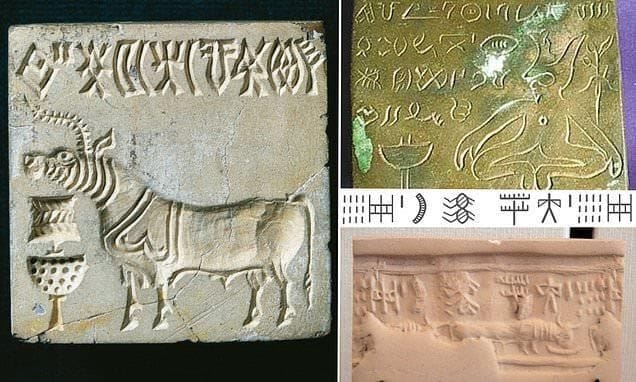
Why in News?
The Indus Valley Civilization (IVC), renowned as one of the earliest urban cultures, thrived between 3000-1500 BCE across parts of modern-day India, Pakistan, and Afghanistan. Despite its historical importance, the Indus script remains undeciphered, posing challenges to our understanding of the civilization's social, political, and cultural dynamics. Recently, Tamil Nadu's Chief Minister M.K. Stalin announced a $1 million reward for decoding this ancient script, highlighting its significance and potential links to Dravidian heritage.
Key Takeaways
- The Indus script's undeciphered status limits insights into Harappan society.
- Recent studies suggest possible connections between the Indus script and proto-Dravidian languages.
- Challenges include the lack of bilingual texts and limited data from inscriptions.
Additional Details
- Understanding Harappan Culture: The inability to interpret the Indus script restricts scholars from gaining a full understanding of governance, societal structures, and daily life within the IVC.
- Cultural and Linguistic Connections: Scholars propose links between the Indus script and proto-Dravidian languages, evidenced by the existence of the Brahui language and Dravidian loanwords in ancient texts.
- Potential Historical Insights: Deciphering the script may reveal details about trade routes, religious practices, and social hierarchies, as well as connections to other civilizations such as those in Mesopotamia and Egypt.
- Morphological Study in Tamil Nadu: A study from the Tamil Nadu State Department of Archaeology indicates that 90% of pottery graffiti marks share similarities with the Indus script.
- Cultural Exchange Hypothesis: The presence of trade items like carnelian and high-tin bronze objects in South Indian graves suggests cultural exchanges with the Indus Valley.
- Dravidian Hypothesis: This theory posits that the Indus script is an early form of Dravidian language, supported by structural similarities and evidence of Dravidian influence on later languages.
- The absence of bilingual texts, unlike those for Egyptian hieroglyphs, complicates the decipherment process.
- Further archaeological excavations and advancements in technology, such as AI and computational linguistics, are essential for progressing research on the Indus script.
- Multidisciplinary collaboration among historians, archaeologists, linguists, and data scientists will enhance methodologies for deciphering the script.
Disintegration of the Soviet Union

Why in News?
Recently, December 25 marked the anniversary of the day when the Soviet flag was taken down from the Kremlin, signifying the end of the Soviet Union.
Key Takeaways
- The Soviet Union, or the Union of Soviet Socialist Republics (USSR), was a socialist federation from 1922 to 1991.
- It consisted of multiple republics governed by the Communist Party, with Russia as the dominant power.
What Led to the Formation of the Soviet Union?
- Historical Context: The roots of the Soviet Union trace back to the Russian Revolution of 1917, which ended the Romanov dynasty's reign.
- February Revolution 1917: Protests led to Tsar Nicholas II's abdication, ending the monarchy.
- October Revolution 1917: Lenin and Trotsky led the Bolsheviks to overthrow the Provisional Government, establishing Soviet rule.
- Russian Civil War (1918-1922): The Red Army fought against anti-Bolshevik forces, consolidating Bolshevik power.
- Formation of the USSR (1922): Officially declared on December 30, 1922, becoming the world's first communist state.
World War II and Expansion
- The Baltic states (Estonia, Latvia, and Lithuania) were incorporated into the Soviet Union in the 1940s following the Molotov-Ribbentrop Pact.
- Post-war, the USSR emerged as a superpower, dominating Cold War geopolitics.
Challenges Leading to Dissolution
- Economic Stagnation: By the 1970s, the economy lagged in productivity, leading to consumer shortages.
- Gorbachev's Reforms: Policies like glasnost and perestroika weakened the Communist Party's authority.
- Nationalist Movements: Rising nationalism in republics like Ukraine and Lithuania called for independence.
- USSR Collapse: By December 1991, the USSR dissolved into independent states, ending a bipolar global order.
Impact on Global Power Dynamics
- Emergence of a Unipolar World: The collapse of the USSR left the United States as the sole superpower.
- Capitalism's Dominance: Western institutions promoted economic transitions in former socialist states.
- Regional Power Shifts: Countries like China and India gained prominence in global geopolitics.
Contemporary Conflicts Influenced by the Collapse
- Nationalism and Territorial Disputes: Unresolved disputes, such as Crimea and Eastern Ukraine, have led to ongoing conflicts.
- Armenia-Azerbaijan Conflict: Ethnic tensions stem from historical decisions made during the Soviet era.
- NATO Expansion: Perceived by Russia as a threat, this has exacerbated geopolitical tensions.
Effects on India
- Economic Diversification: The collapse led India to liberalize its economy and seek new trade partners.
- Defense Ties: India adapted its defense strategy, engaging in joint production agreements and diversifying partners.
- Geopolitical Realignment: India balanced relations with both Russia and the US, joining various multilateral groups.
Harvest Festivals in India
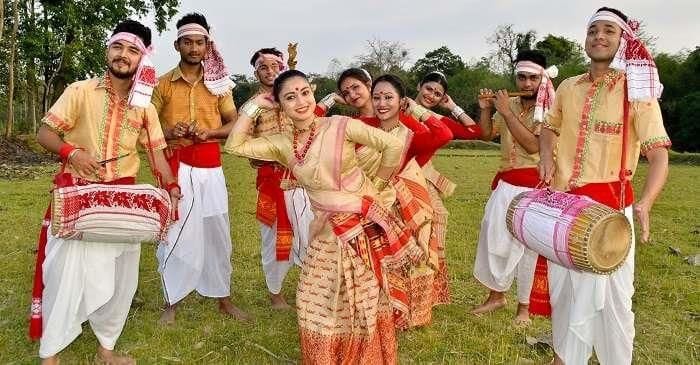
Why in News?
The President of India has extended his greetings to the citizens on the occasion of Lohri, Makar Sankranti, Pongal, and Magh Bihu. These festivals are celebrated as harvest festivals in various forms across different regions of India.
Key Takeaways
- Harvest festivals mark the end of the harvesting season in India.
- They include notable celebrations such as Makar Sankranti, Pongal, Magh Bihu, and Lohri.
Additional Details
- Astronomical Significance: These festivals signify the transition of the Sun into the Capricorn (Makara) zodiac sign and the commencement of the Sun's northward journey known as Uttarayan. This indicates a change from winter to warmer months, symbolizing the end of dormancy.
- Cultural Practices: Rituals associated with Sankranti include bathing, offering Naivedhya (food) to Lord Surya, giving charity, performing Shraddha, and breaking fast. Devotees often bathe in sacred rivers such as the Ganga, Yamuna, Godavari, Krishna, and Cauvery.
- Regional Celebrations:
- Tamil Nadu (Pongal): A four-day festival celebrating the rice harvest, where homes are adorned with traditional kolams made from rice powder.
- Karnataka: Locals share a sesame and jaggery mixture symbolizing harmony, while farming communities adorn their cattle for a display known as 'Kicchu Haisodu'.
- Punjab (Lohri): Celebrated with bonfires, folk songs, and offerings like groundnuts and popcorn to the fire.
- Bihar: Known for the 'Khichdi' festival, where rice and lentils are prepared, and sesame and jaggery ladoos are distributed.
- Rajasthan and Gujarat: Marked by kite-flying competitions, including the International Kite Festival in Ahmedabad, and the evening is celebrated with sky lanterns.
- Assam (Magh Bihu): Celebrates the annual harvest and the beginning of the Assamese new year.
In summary, harvest festivals in India are a vibrant celebration of the agricultural cycle, reflecting the cultural diversity and rich traditions across various regions. They not only signify the end of the harvesting period but also embody festivities that bring communities together.
Sanskrit Inscription Found in POK
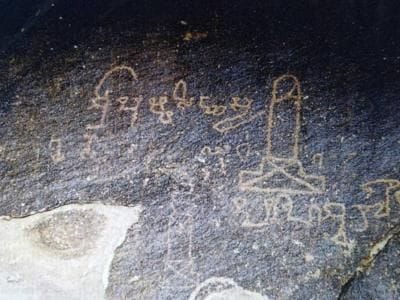
Why in News?
Recently, a Sanskrit inscription dating back to the 4th century CE was discovered near Gilgit in Pakistan-Occupied Kashmir (POK). This inscription is written in Brahmi script and references an individual named "Pushpasingha," who installed a Mahesvaralinga for the merit of his guru, although the guru's name is partially lost.
Key Takeaways
- A significant 4th-century CE Sanskrit inscription was found in POK.
- The inscription is written in Brahmi script and mentions Pushpasingha.
- It highlights the cultural and historical relevance of inscriptions in ancient India.
Additional Details
- Importance of Historical Inscriptions: Inscriptions serve as primary historical sources, crucial for reconstructing ancient Indian history. They provide authentic evidence that is free from later alterations and biases.
- Political Insights: Inscriptions deliver valuable information about ancient rulers, dynasties, conquests, treaties, and administrative systems, allowing historians to understand political dynamics.
- Administrative Systems: Many inscriptions contain details about revenue systems, land grants, taxation, and judicial frameworks. For example, the Junagarh Inscription by Rudradaman discusses the construction and repair of the Sudarshana Lake dam, showcasing administrative priorities in water management.
- Linguistic Evolution: They document the development of languages, scripts, and literary styles. The Ashokan Edicts, inscribed in languages such as Prakrit, Greek, and Aramaic, illustrate the linguistic diversity of the time.
- Socio-Economic Structures: Inscriptions reveal insights into trade practices, societal norms, caste systems, and economic transactions, as well as details about ancient religions and temple constructions.
162nd Birth Anniversary of Swami Vivekananda
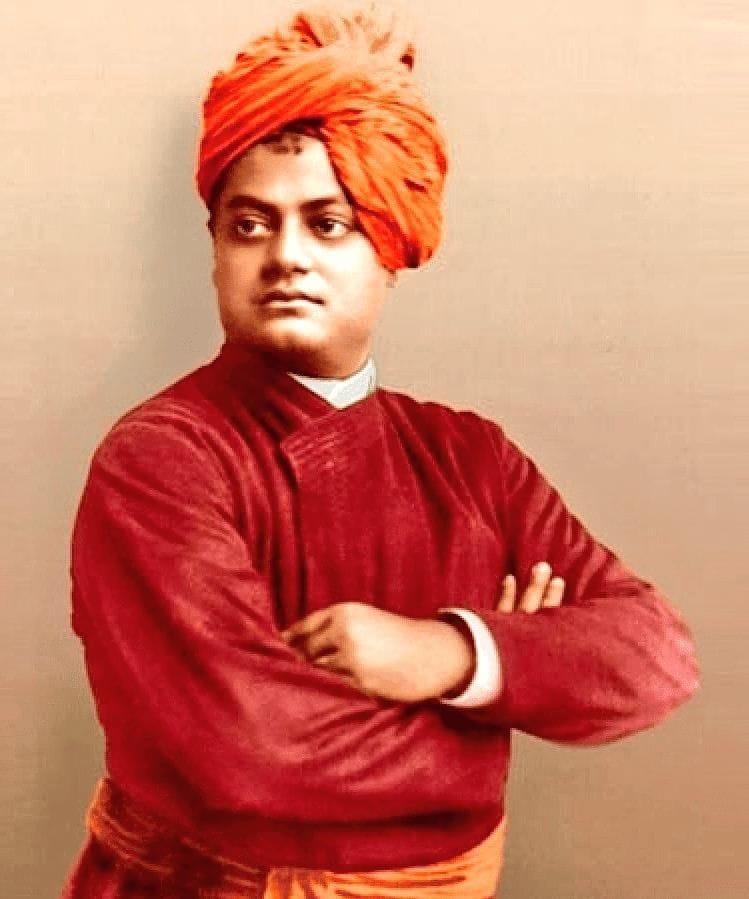
Why in News?
On National Youth Day, which marks the 162nd birth anniversary of Swami Vivekananda, the Prime Minister participated in the Viksit Bharat Young Leaders Dialogue 2025. This day is celebrated on 12 January to honor the contributions of the great spiritual leader, philosopher, and thinker Swami Vivekananda. According to the National Youth Policy 2014, youth are defined as individuals in the age group of 15-29, which constitutes nearly 40% of India's total population.
Key Takeaways
- The Viksit Bharat Young Leaders Dialogue is a platform for engaging youth in nation-building.
- It aims to involve 1 lakh youth in politics without political affiliations.
- The event selected 3,000 dynamic youth through a merit-based process called the Viksit Bharat Challenge.
- Young leaders will present ideas on ten thematic areas critical to India's development.
Additional Details
- What is the Viksit Bharat Young Leaders Dialogue? It is designed to foster youth engagement in nation-building efforts, aligning with the Prime Minister's vision.
- Key Areas for Discussion: Participants will focus on themes such as technology, sustainability, women empowerment, manufacturing, and agriculture.
- Swami Vivekananda: Born as Narendra Nath Datta in January 1863, he was a monk and the chief disciple of Ramakrishna Paramhansa. He took the name 'Vivekananda' in 1893 at the request of Maharaja Ajit Singh.
- Enlightenment: In 1892, Vivekananda meditated on a rock in the Indian Ocean, now called Vivekananda Rock Memorial, which led to his enlightenment.
- Philosophical Contributions: He introduced Vedanta and Yoga to the world and advocated a blend of spirituality with material progress.
- Core Values: Vivekananda stressed the importance of youth commitment, ethics, education, and rationality, encouraging self-reliance and mental strength.
National Mission on Cultural Mapping
Why in News?
The Ministry of Culture has initiated the National Mission on Cultural Mapping (NMCM) to safeguard and promote India's vast cultural heritage. This mission is a significant step towards recognizing and documenting the diverse cultural elements that define the nation.
Key Takeaways
- NMCM was launched in 2017 to create a comprehensive cultural map of India.
- It aims to document both tangible and intangible cultural assets, such as stories, rituals, arts, languages, heritage, and cuisines.
- The mission covers geographical, demographic, and creative capitals of 6.5 lakh villages, with 4.5 lakh villages already mapped.
Additional Details
- Objectives:The main objectives of NMCM include:
- Documenting India's cultural assets.
- Utilizing cultural potential to foster self-reliance in rural areas.
- Emphasizing the connection between heritage, development, and identity.
- Mission Components:Key components of the mission are:
- Cultural Awareness Programme: Such as "Hamari Sanskriti Hamari Pahchan" (Our Culture, Our Identity).
- Grading of Artists: Introduction of a Unique Cultural-ID (UCID) for artists.
- Cultural Infrastructure: Development of cultural hubs (Kala Grams) and knowledge centers.
- Artist Welfare: Implementation of welfare schemes and grants for artists, particularly veterans.
- Implementation: NMCM is overseen by the Ministry of Culture and carried out under the Indira Gandhi National Centre for the Arts (IGNCA).
- Mera Gaon Meri Dharohar (MGMD): This initiative aims to document the cultural heritage across India, categorizing information into seven broad areas, such as Arts and Crafts Village and Ecologically Oriented Village.
- The National Mission on Cultural Mapping is a vital initiative that underscores the importance of cultural heritage in shaping the identity and development of communities across India.
- By documenting and promoting these rich cultural narratives, the mission seeks to foster a deeper appreciation and understanding of India's diverse cultural landscape.
Birth Anniversary of Swami Dayanand Saraswati
Why in News?
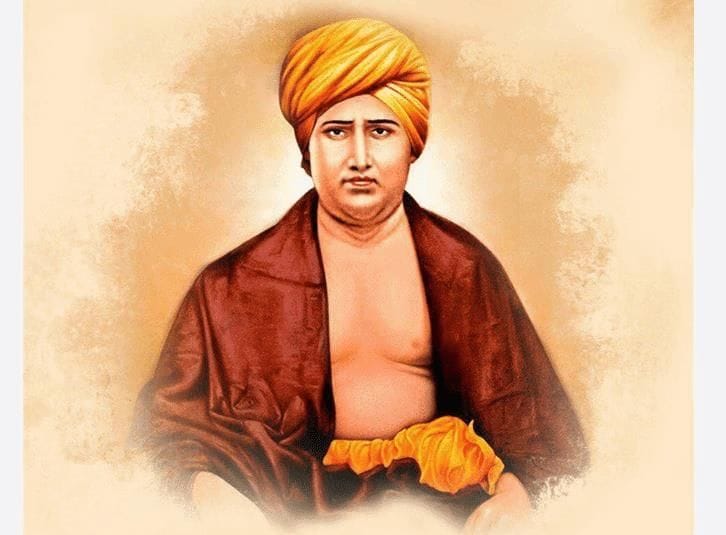
Recently, the Prime Minister of India addressed a programme on the 200th birth anniversary of Swami Dayananda Saraswati.
- Swami Dayanand Saraswati was born as Mool Shankar Tiwari on 12th February 1824 in Tankara, Gujarat.
- He wandered as an ascetic for fifteen years (1845-60) in search of truth.
- The DAV (Dayanand Anglo Vedic) schools came into existence in 1886 to realise the vision of Swami Dayanand Saraswati.
- The first Arya Samaj Unit was formally set up by Swami Dayanand Saraswati at Mumbai in 1875 and later the headquarters of the Samaj were established at Lahore.
- He took inspiration from the Vedas and considered them to be 'India's Rock of Ages', the infallible and the true original seed of Hinduism.
- He gave the slogan "Back to the Vedas".
Amir Khusrau and Sufism
 Why in News?
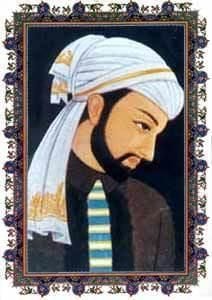
The Prime Minister praised Amir Khusrau, highlighting him as a symbol of India's pluralistic heritage.
Key Takeaways
- Amir Khusrau was a 13th-century Sufi poet and musician.
- He was known as Tuti-yi-Hind, meaning 'Parrot of India'.
- His contributions greatly influenced Indian classical music and literature.
Additional Details
- Who is Amir Khusrau: Born as Abu'l Hasan Yamin ud-Din Khusrau in Patiali, Uttar Pradesh, he made lasting contributions to Sufi qawwali and Persian literature.
- Literary Contributions: His works include Divans (poetry collections), Mathnawis (narrative poetry), and treatises that blended Persian, Arabic, and Indian traditions.
- Musical Influence: He created new ragas and developed musical forms such as Khayal and Tarana.
- Role in the Delhi Sultanate: He served under five Sultans and was honored for his literary excellence.
- Sufi Influence: As a disciple of Nizamuddin Auliya, his poetry and music were deeply inspired by Sufi teachings.
What is Sufism?
Sufism is the mystical and spiritual dimension of Islam that focuses on inner purification, love, and a direct connection with God (Allah). It emerged in the 9th and 10th centuries CE as a response to the rigidity of institutionalized religion.
Core Practices of Sufism
- Sufis organized themselves into communities around khanqahs (hospices), led by a master (shaikh or pir).
- They established silsilas (Orders of Sufi) that linked disciples to Sufi tombs (dargahs), which became pilgrimage sites.
- Practices include self-mortification, zikr (remembrance of God), sama (musical recitals), and Fana-o-Baqa (dissolution of self for union with God).
Sufism in India
- Al-Hujwiri was one of the earliest prominent Sufis in India, and his work Kashf-ul Mahjub is significant.
- By the 12th century, Sufis were organized into various orders or Silsilas, including the Chishti, Suhrawardi, and Naqshbandi Orders.
Impact of Sufism
- Religious: Emphasized personal devotion and equality, fostering Hindu-Muslim coexistence.
- Social: Attracted marginalized groups and weakened caste hierarchies.
- Cultural: Influenced Indian music and enriched vernacular literature.
- Political: Inspired policies of religious tolerance, particularly under Akbar.
Amir Khusrau's contributions to literature, music, and Sufism reflect India's pluralistic and syncretic traditions. His works bridged Persian and Indian cultures, while Sufism, alongside the Bhakti movement, played a crucial role in shaping India's composite cultural and religious ethos.
Ambedkar and Gandhi: Ideological Similarities & Differences

Why in News?
As India commemorates the 135th birth anniversary of Dr. B.R. Ambedkar, reflecting on his perspectives regarding caste, democracy, and social reform provides crucial insights into the creation of an inclusive and equitable society. Although Ambedkar and Mahatma Gandhi shared a common goal of uplifting the marginalized, their methodologies diverged significantly.
Key Takeaways
- Both leaders rejected violent revolution and communism, advocating instead for non-violent approaches to social justice.
- They emphasized the importance of human dignity and social justice, albeit through different frameworks.
- While both believed in the role of ethics in public life, their approaches to morality in politics differed.
Additional Details
- Rejection of Violent Revolution: Both Ambedkar and Gandhi opposed the violent methods associated with communism. Gandhi criticized Bolshevism for its reliance on violence, advocating instead for non-violence and moral persuasion. Similarly, Ambedkar emphasized the necessity of a sustained, non-violent struggle for justice, prioritizing Buddha's message of compassion.
- Human Dignity and Social Justice: Gandhi championed Sarvodaya (upliftment of all), while Ambedkar focused on Bahujan Hitay (welfare of the majority), reflecting their respective approaches to achieving social justice.
- Caste and Varna System: Ambedkar called for the complete annihilation of caste and criticized Hindu texts like Manusmriti for justifying caste oppression. Gandhi, on the other hand, recognized the flaws in the caste system but did not entirely reject Manusmriti, viewing it as a text with both positive and negative elements.
- Separate Electorates for Dalits: Ambedkar advocated for separate electorates to ensure political representation for the Depressed Classes, while Gandhi opposed this, fearing it would further divide Hindu society. Their disagreements led to the Poona Pact, which replaced separate electorates with reserved seats for Dalits.
- Religion and Social Reform: Ambedkar converted to Buddhism, viewing Hinduism as inherently discriminatory, whereas Gandhi treated religion as a moral compass, advocating for equal respect among all religions.
- Means of Social Transformation: Ambedkar emphasized legal reforms and constitutional measures for social equality, contrasting with Gandhi's focus on personal morality and non-violence.
- Role of the State and Constitution: Ambedkar supported state-led initiatives to address historical injustices, asserting that democracy should facilitate social organization, whereas Gandhi favored minimal state intervention and community self-reliance.
In conclusion, despite their differing ideologies, both Gandhi and Ambedkar aimed for a just and inclusive India. Their fundamental disagreements in methodology-Gandhi's moral appeals versus Ambedkar's push for state-led reforms-reflect their unique contributions to India's constitutional and social vision.
Jyotiba Phule Jayanti 2025
Why in News?
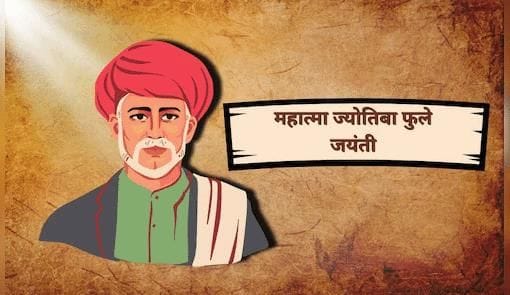
Jyotiba Phule Jayanti 2025 is a momentous occasion to honor the life and legacy of one of India's foremost social reformers, Jyotirao Govindrao Phule. Observed annually on April 11, this day marks his birth anniversary, providing an opportunity for individuals and institutions to reflect on his substantial contributions towards creating a just and equitable society. This year, the celebrations will recognize his relentless fight against social injustices and his commitment to promoting equality, especially in education and caste reform.
Key Takeaways
- Jyotiba Phule was a pioneer in advocating for women's education and the upliftment of marginalized communities.
- His legacy continues to inspire movements for social justice and equality in contemporary India.
- On April 11, 2025, various events will pay tribute to his contributions, including seminars and cultural programs.
Additional Details
- Event Name: 199th Birth Anniversary of Jyotirao Phule.
- Date: April 11, 2025, which falls on a Friday.
- Place of Birth: Katgun, Maharashtra, India.
- Significance: This day promotes values of equality, education, and social justice.
As we commemorate Jyotiba Phule Jayanti 2025, it serves not just as a remembrance but as a celebration of his unwavering spirit for reform and justice. His life exemplifies courage in confronting caste discrimination and advocating for the rights of the marginalized. Today, his teachings resonate with the ongoing struggles against social inequalities.
Who Was Jyotiba Phule?
Born on April 11, 1827, in Katgun, Maharashtra, Jyotirao Govindrao Phule emerged from a lower caste family and faced numerous societal challenges. He became a prominent advocate for universal education and the abolition of the caste system. His courage and vision were evident in his initiatives, such as establishing India's first girls' school in Pune in 1848, alongside his wife, Savitribai Phule.
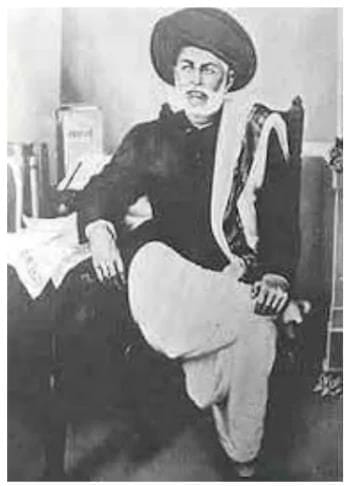
Jyotiba Phule's Contributions
Jyotiba Phule's impact on society was profound, laying the groundwork for modern movements toward social justice, gender equality, and educational reform. His key contributions include:
- Educational Revolution: Pioneered girls' education and provided learning opportunities for the untouchables.
- Social Justice Advocacy: Founded the Satyashodhak Samaj, promoting rational thinking and social awareness among marginalized groups.
- Inspiration for Future Reformers: Influenced leaders like Dr. B.R. Ambedkar in the fight for Dalit rights.
Jyotiba Phule Jayanti 2025 thus serves as a reminder of the ongoing journey toward equality and justice in society. Celebrating this day is not merely about remembering a historical figure; it reinforces our commitment to continue his legacy of reform and advocacy.
Mahavir Jayanti
Why in News?
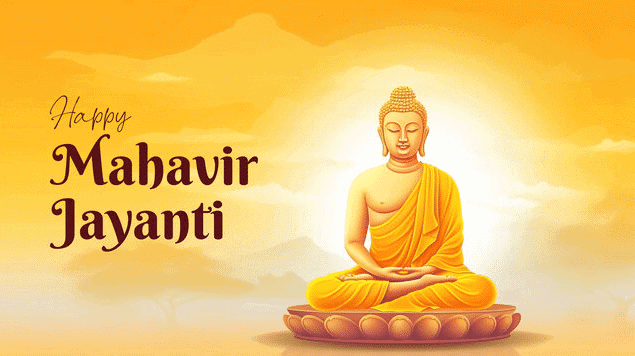
The Prime Minister inaugurated the Navkar Mahamantra Divas on April 10th, 2025, emphasizing that Lord Mahavir's teachings of non-violence, truth, and compassion provide contemporary solutions to global challenges and align with the vision of 'Viksit Bharat'.
Key Takeaways
- Mahavir Jayanti celebrates the birth of Vardhamana Mahavira, the 24th and last Tirthankara of Jainism.
- It is observed on the 13th day of the Chaitra month in the Hindu calendar.
Historical Background
About: Mahavir Jayanti, also known as Mahaveer Janma Kalyanak, is a significant religious festival in Jainism. It commemorates the birth of Vardhamana Mahavira, who is revered as a great spiritual teacher and reformer. He succeeded the 23rd Tirthankara, Parshvanatha.
Contemporary Relevance of Teachings of Lord Mahavira
- Ahimsa (Nonviolence): Advocates for the cessation of all forms of violence, promoting compassion towards all living beings. This principle is crucial in addressing global issues like armed conflicts and terrorism.
- Aparigraha (Non-possessiveness): Encourages a sustainable lifestyle and minimalism, which aligns with environmental goals such as Mission LiFE and SDG 12.
- Anekantavada: Teaches that truth has multiple dimensions, fostering respect for diverse perspectives and reducing intolerance and societal divisions.
- Satya (Truth) and Asteya (Non-stealing): Promote honesty and integrity, essential for combating corruption and unethical business practices.
- Brahmacharya (Celibacy/Self-restraint): Interpreted as self-discipline, it addresses issues like substance addiction and mental health concerns.
Rongali Bihu
Why in News?
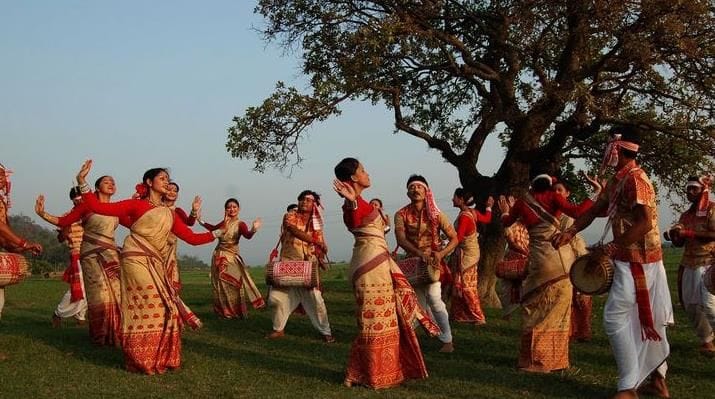
Rongali Bihu, also referred to as Bohag Bihu, is set to be celebrated throughout Assam from April 14 to April 20, 2025. This festival marks the Assamese New Year and the commencement of the harvesting season, making it a significant cultural event.
Key Takeaways
- Rongali Bihu is the most celebrated of the three Bihus in Assam, which also include Kati Bihu in October and Magh Bihu in January.
- The festival signifies the start of the Hindu solar calendar, celebrated as the Assamese New Year.
- Primarily a harvest festival, it symbolizes the beginning of spring and includes prayers for a fruitful agricultural season.
Additional Details
- Etymology: The term 'Rong' translates to joy in Assamese, highlighting the festival's vibrant and cheerful essence.
- Celebrations: The Bihu dance, a lively and energetic folk dance from Assam, is performed alongside traditional folk songs and instruments such as the dhol, pepa, gogona, toka, taal, and hutuli.
- Other Bihus:
- Festival: Timing and Significance
- April (Bohag): Start of sowing season, Assamese New Year
- October (Kati): Mid-crop season, prayers for good harvest
- January (Magh): End of harvest, community feasts
In summary, Rongali Bihu is a festival that not only marks the beginning of a new year but also emphasizes the importance of agriculture and community in Assamese culture. Its celebrations are filled with joy, music, dance, and a deep sense of gratitude for the harvest.
FAQs on History, Art and Culture - 1
| 1. What is the significance of deciphering the Indus Script in understanding ancient civilizations? |  |
| 2. How did the disintegration of the Soviet Union impact global politics? | |
| 3. What are the historical and cultural importance of harvest festivals in India? | |
| 4. What is the historical context of the Sanskrit inscription found in Pakistan-occupied Kashmir? | |
| 5. How did Swami Vivekananda's teachings influence modern Indian society? | |




