GMAT Exam > GMAT Notes > Verbal Reasoning > Mind Map: Bold Face
Mind Map: Bold Face

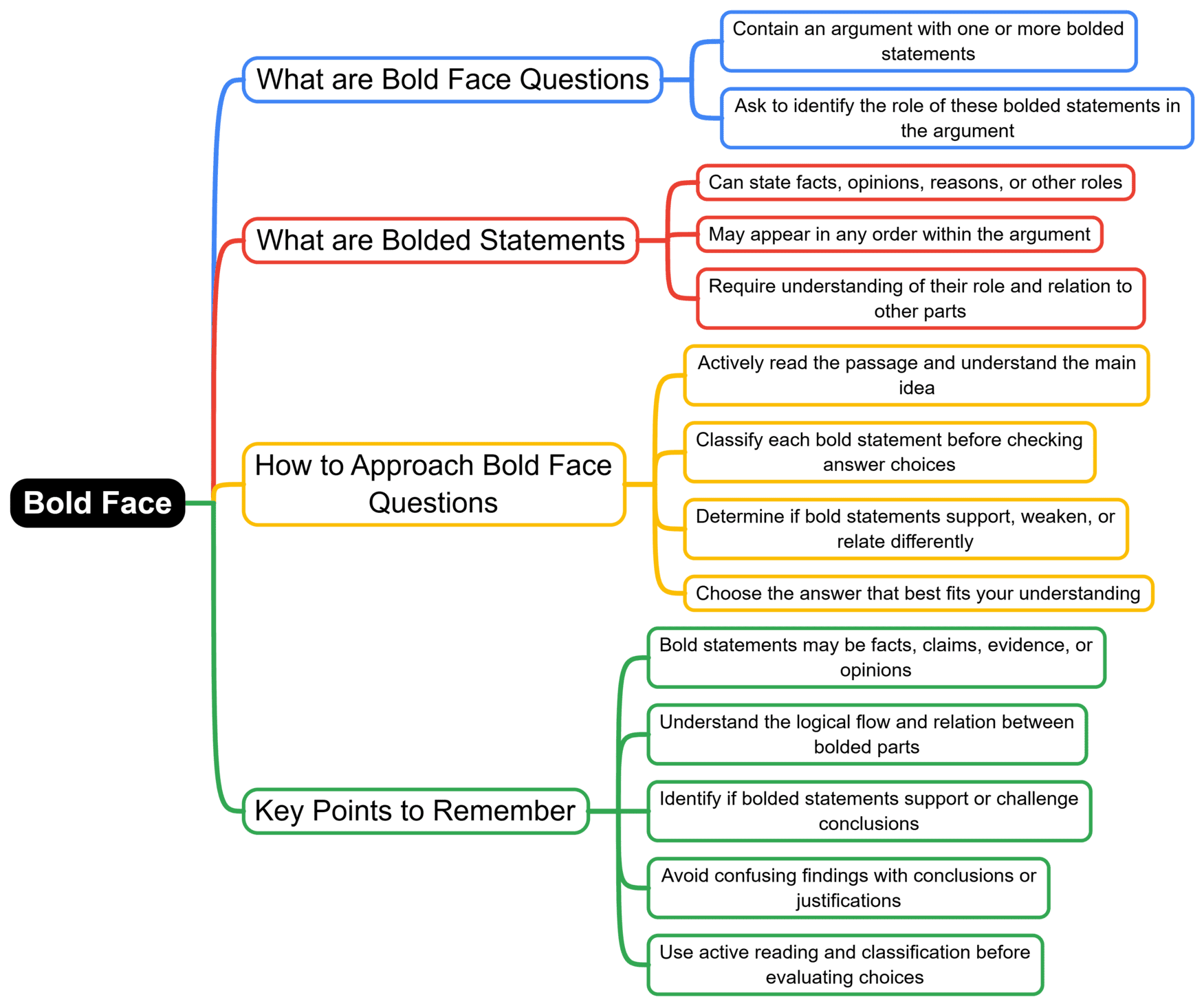
The document Mind Map: Bold Face is a part of the GMAT Course Verbal Reasoning for GMAT.
All you need of GMAT at this link: GMAT
FAQs on Mind Map: Bold Face
| 1. What is the significance of the title "नमस्ते" in Indian culture? |  |
Ans. "नमस्ते" is a traditional Indian greeting that conveys respect and acknowledges the presence of another person. It is often accompanied by the gesture of joining palms together, symbolising the belief that the divine resides in everyone. This greeting reflects the cultural values of humility, respect, and the interconnectedness of individuals.
| 2. How is "नमस्ते" used in various social contexts? | |
Ans. "नमस्ते" can be used in both formal and informal social interactions, making it a versatile greeting. In formal settings, it is often used to greet elders or during religious ceremonies. Informally, it is commonly exchanged among friends and family. The use of "नमस्ते" reinforces social bonds and expresses goodwill.
| 3. Are there variations of "नमस्ते" in different Indian languages? | |
Ans. Yes, "नमस्ते" has several regional variations across different Indian languages. For instance, in Hindi, it is pronounced the same, while in Marathi, it might be expressed as "नमस्कार." Each variation maintains the underlying meaning of respect and greeting, showcasing the linguistic diversity within Indian culture.
| 4. What are the cultural implications of using "नमaste"? | |
Ans. The use of "नमaste" embodies the principles of respect and humility in Indian culture. It signifies the recognition of the other person's presence and worth. This greeting plays a crucial role in social etiquette and fosters positive relationships, enhancing communal harmony and mutual respect in diverse interactions.
| 5. How does "नमस्ते" relate to Indian spirituality? | |
Ans. "नमaste" is deeply rooted in Indian spirituality, as it acknowledges the divine presence within individuals. The term originates from Sanskrit, where it means "I bow to the divine in you." This spiritual aspect enhances the significance of the greeting, as it transcends mere words, promoting a sense of unity and reverence among people.
About this Document

4.98/5 Rating

Apr 18, 2026 Last updated
Document Description: Mind Map: Bold Face for GMAT 2026 is part of Verbal Reasoning for GMAT preparation. The notes and questions for Mind Map: Bold Face have been prepared according to the GMAT exam syllabus. Information about Mind Map: Bold Face covers topics like and Mind Map: Bold Face Example, for GMAT 2026 Exam. Find important definitions, questions, notes, meanings, examples, exercises and tests below for Mind Map: Bold Face.
Introduction of Mind Map: Bold Face in English is available as part of our Verbal Reasoning for GMAT for GMAT & Mind Map: Bold Face in Hindi for Verbal Reasoning for GMAT course. Download more important topics related with notes, lectures and mock test series for GMAT Exam by signing up for free. GMAT: Mind Map: Bold Face
Description
Mind Map: Bold Face of Verbal provides you one-page visual summary of the chapter covering all the important topics. Download the PDF from EduRev.
Information about Mind Map: Bold Face
In this doc you can find the meaning of Mind Map: Bold Face defined & explained in the simplest way possible. Besides explaining types of Mind Map: Bold Face theory, EduRev gives you an ample number of questions to practice Mind Map: Bold Face tests, examples and also practice GMAT tests



Related Searches
past year papers, Mind Map: Bold Face, Previous Year Questions with Solutions, Free, Objective type Questions, Exam, Mind Map: Bold Face, mock tests for examination, Important questions, pdf , Extra Questions, Summary, Viva Questions, video lectures, Semester Notes, shortcuts and tricks, ppt, Mind Map: Bold Face, MCQs, practice quizzes, study material, Sample Paper;