Assignment: The Three Orders

Multiple Choice Questions (MCQs)
Q1: The "three orders" in medieval Europe were
(a) king, nobles, merchants
(b) clergy, nobility, peasants
(c) knights, monks, townsmen
(d) pope, emperor, serfs
Ans: (b) clergy, nobility, peasants
The Church taught that society was divided into those who prayed (first order), those who fought (second order) and those who worked the land (third order).
Q2: Feudalism first emerged as a political system in
(a) ninth-century France
(b) tenth-century Italy
(c) eleventh-century England
(d) twelfth-century Germany
Ans: (a) ninth-century France
After the collapse of the Carolingian Empire, local lords protected land by granting fiefs in return for military service and loyalty.
Q3: The word "abbey" is derived from the Syriac word
(a) abba
(b) avva
(c) abuna
(d) abba
Ans: (a) abba
It means "father" and came to denote a monastery governed by an abbot or abbess.
Q4: The earliest French monasteries followed the rule of
(a) St Augustine
(b) St Benedict
(c) St Columban
(d) St Francis
Ans: (b) St Benedict
Written around 540 CE, the Benedictine Rule prescribed prayer, manual work and study for monks living in community.
Q5: The Domesday Book (1086) was
(a) a census of English manors
(b) a list of church properties
(c) a record of knightly dues
(d) a chronicle of Norman kings
Ans: (a) a census of English manors
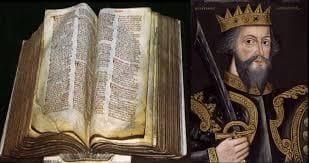
William I ordered a survey of every village, plough, animal and peasant to fix royal taxes and feudal obligations.
Short Answer Questions
Q1: Why did the Church become the richest landowner in Europe by 1100?
Ans: The Church received huge gifts of land from kings and nobles seeking salvation. Monasteries reclaimed marshes, cleared forests and introduced new crops. Pilgrims left offerings; dead lords willed entire villages to abbeys. By 1100 one-third of cultivable land in France and England belonged to bishops and monasteries, making the clergy richer than most secular lords.
Q2: Describe the daily life of a medieval monk.
Ans: A monk rose at 2 a.m. for Matins, prayed eight times daily, copied manuscripts for four hours, worked in fields or gardens for three hours, ate one silent meal of bread, vegetables and water, and slept on a straw mattress by 8 p.m. All activities followed the bell of the abbey, ensuring a life of prayer, study and labour.
Q3: Explain the mutual obligations between a lord and his vassal.
Ans: At the homage ceremony the vassal knelt, placed his hands between the lord's and swore lifelong loyalty. The lord granted a fief (land, mill or village) and promised protection. The vassal gave forty days of military service yearly, attended the lord's court, paid relief on inheriting the fief and offered gifts at the knighting of the lord's son or marriage of his daughter.
Q4: How did the manor become the basic economic unit of medieval Europe?
Ans: A manor was 300-1 000 acres worked by 20-50 peasant families. The lord kept one-third as demesne; the rest was divided into strips for peasants who paid rent in labour (three days a week on demesne fields), produce and money. The manor produced almost everything-grain, wool, tools, leather-making villages self-sufficient and trade unnecessary.
Q5: Why did knights need heavy armour by the eleventh century?
Ans: Stirrups and bred war-horses allowed mounted shock combat; a charging knight hit with the force of a car crash. Chain-mail hauberks and kite-shaped shields protected against lances and arrows. By 1100 full mail from head to knee plus a nasal helmet weighed 30 kg, turning the knight into a human tank able to dominate peasant infantry.
Activity-Based Questions
Q1: Arrange the following events in chronological order. Then write one sentence showing the immediate consequence of each.
- Charlemagne crowned Holy Roman Emperor
- Domesday Book compiled
- Benedictine Rule written
- Norman conquest of England
- First Crusade proclaimed
Ans:
3. c.540 Benedictine Rule written → Monasteries became centres of learning and agriculture.
1. 800 Charlemagne crowned → Kings claimed divine authority over Church and nobles.
4. 1066 Norman conquest → French-speaking knights replaced Anglo-Saxon lords.
2. 1086 Domesday Book → William I fixed taxes and feudal dues on every village.
5. 1095 First Crusade → Knights won Jerusalem and opened eastern trade routes.
Q2: Compare the three orders in a three-column table under the heads: Duties, Privileges, Dress.
Ans:
Research-Based Questions
Q1: Interpreting Historical Evidence
Extract A (1120 charter): "I, Count Baldwin, give the abbey of St Denis the village of Cormeilles forever, free of all service, so my soul may rest."
Extract B (1190 manorial court roll): "Peasant Jean fined three chickens for marrying without lord's leave."
Explain how the same feudal system produced both generosity and oppression.
Ans: Charters show lords donating villages to abbeys to buy prayers and eternal life; St Denis owned 150 villages by 1200. Court rolls reveal lords controlled peasant marriages, inheritance and movement to keep labour on the land. Archaeology at Wharram Percy (Yorkshire) shows 1100 CE stone churches next to sunken huts where families paid 50 % of grain. Generosity bought heaven; oppression secured manpower. Two sides of the same coin.
Q2: Connecting Past and Present
Medieval peasants worked three days for the lord and three for themselves. Compare this with any modern Indian village you know.
Ans: In 12th-century Yorkshire, villeins owed 150 labour days yearly plus boon-work at harvest. In 2024 Rajasthan, marginal farmers lease land on batai (50:50 crop share) and migrate 200 days to Gujarat brick kilns.
Continuity: half the produce still leaves the village.
Change: MGNREGA cards guarantee 100 paid days; WhatsApp groups fix migrant wages; Adani solar pumps replace wooden ploughs. Yet the 50 % extraction logic-half for the powerful, half to survive-echoes across nine centuries.
Q3: Analyzing Change and Continuity
"Knights fought for God and gold." Examine this statement with reference to armour, motives and rewards between 800 and 1300.
Ans:
Continuity:
- Armour: 800 CE - leather jerkin; 1300 CE - full plate costing 300 days' wages.
- Motives: Crusade vows promised salvation; chansons praised bravery.
- Rewards: Fiefs granted for forty days' service yearly.
Change:
- 1099 Jerusalem loot filled 400 ships.
- 1291 Acre fell; salaried garrisons replaced feudal levies.
- 1340 Crécy - English longbowmen killed 1 500 French knights in two hours.
- The mailed horseman remained the ideal, but paid professionals and gunpowder ended his dominance.
FAQs on Assignment: The Three Orders
| 1. What are the three orders in the context of humanities and arts? |  |
| 2. How do the three orders influence artistic expression? | |
| 3. Can you explain the significance of the Order of the Sacred in the arts? | |
| 4. What role does the Order of the Heroic play in shaping cultural narratives? | |
| 5. How does the Order of the Mundane reflect contemporary society? | |