GMAT Exam > GMAT Notes > Crash Course > Quick Revision: Quant Reasoning (Algebra)
Quick Revision: Quant Reasoning (Algebra)


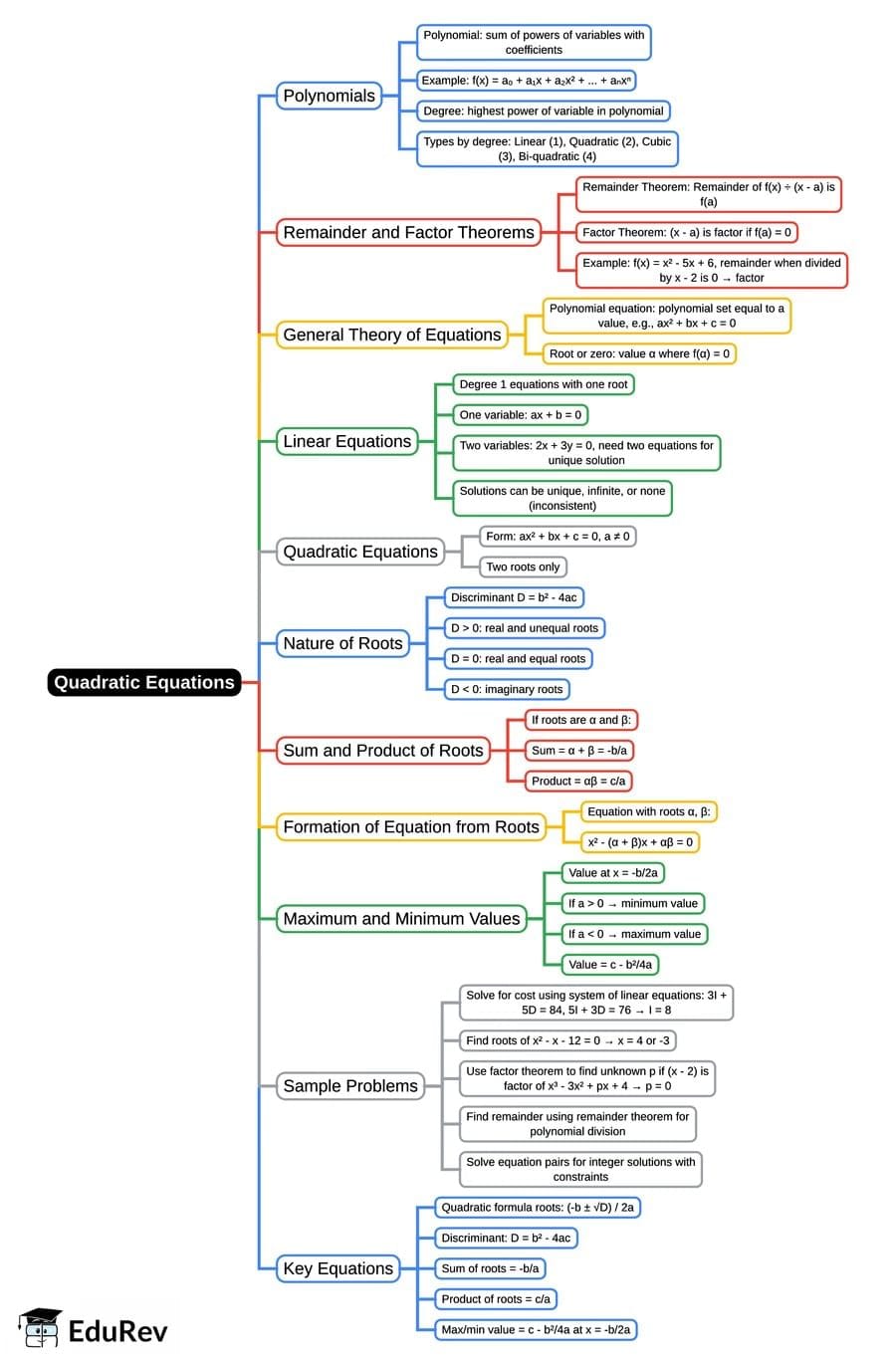
Quadratic Equations
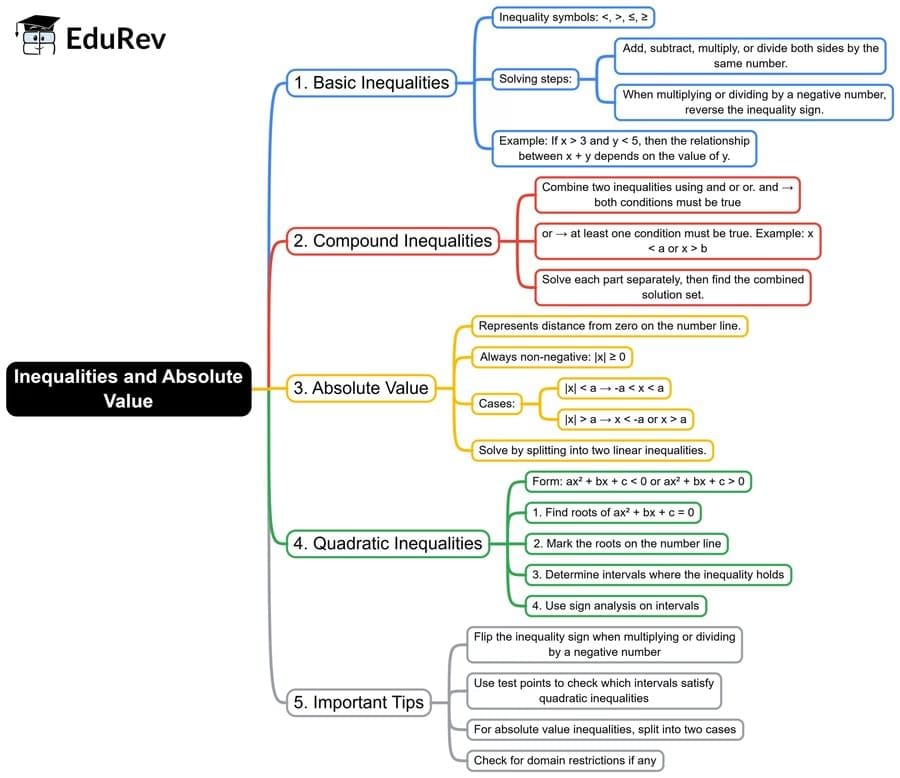
Inequalities and Absolute
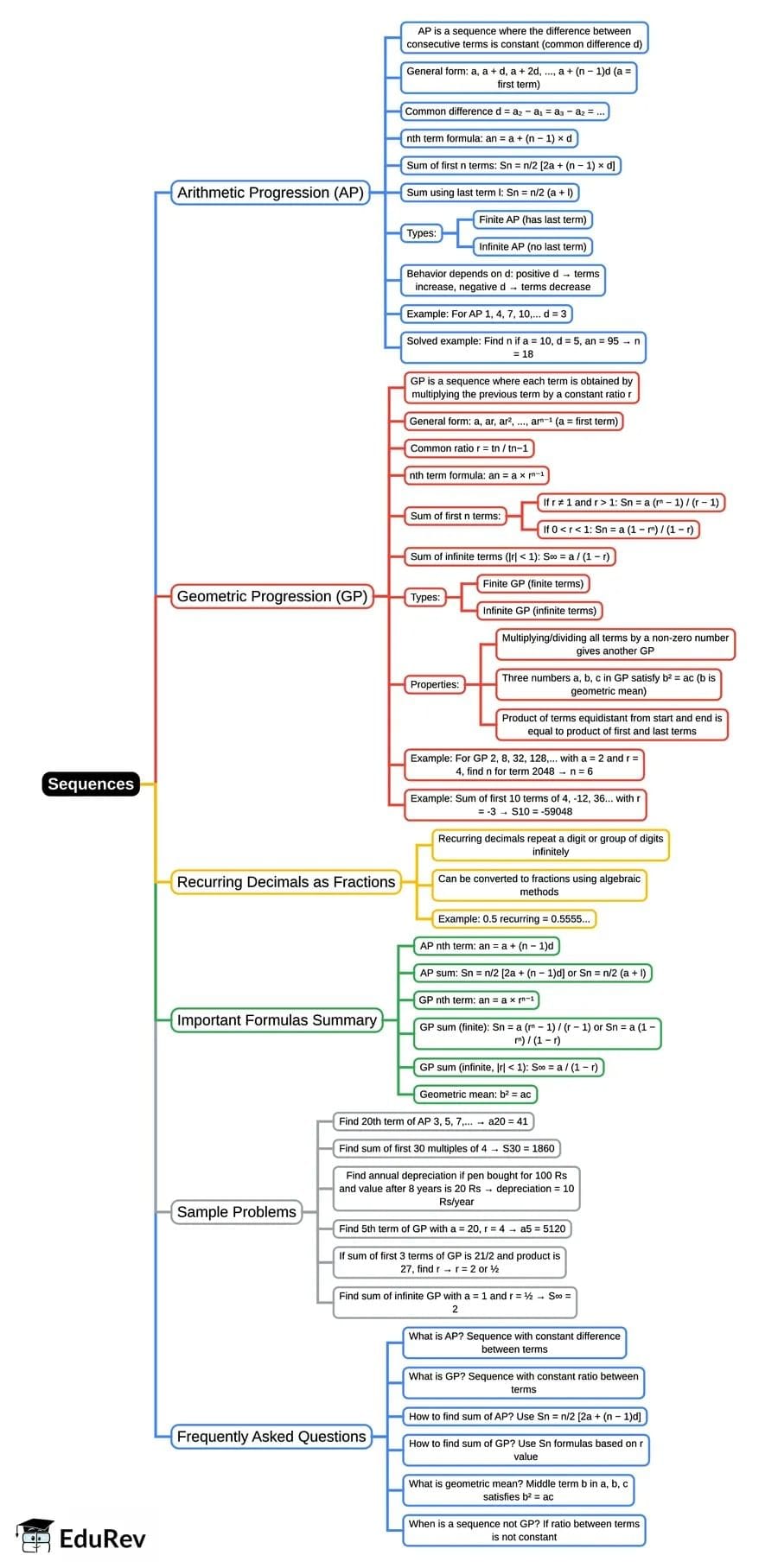
Sequences
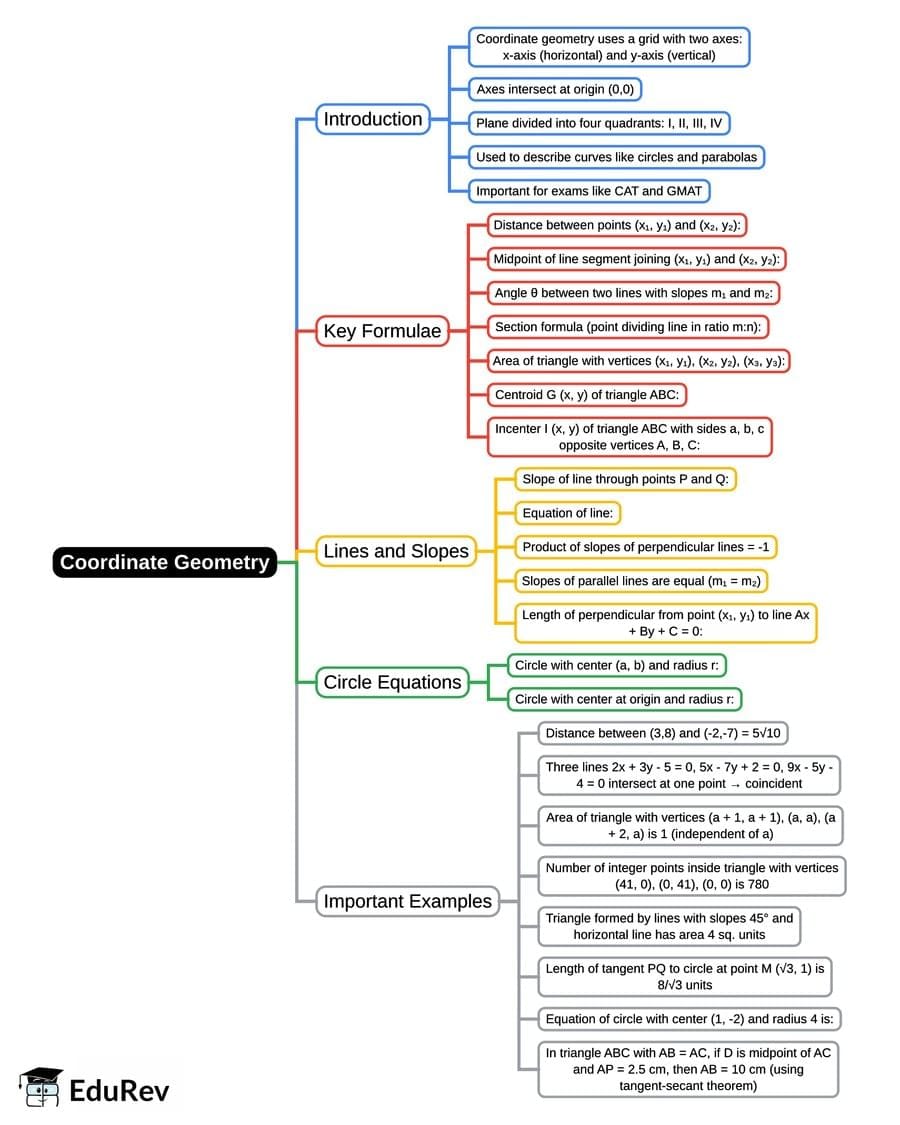
Coordinate Geometry
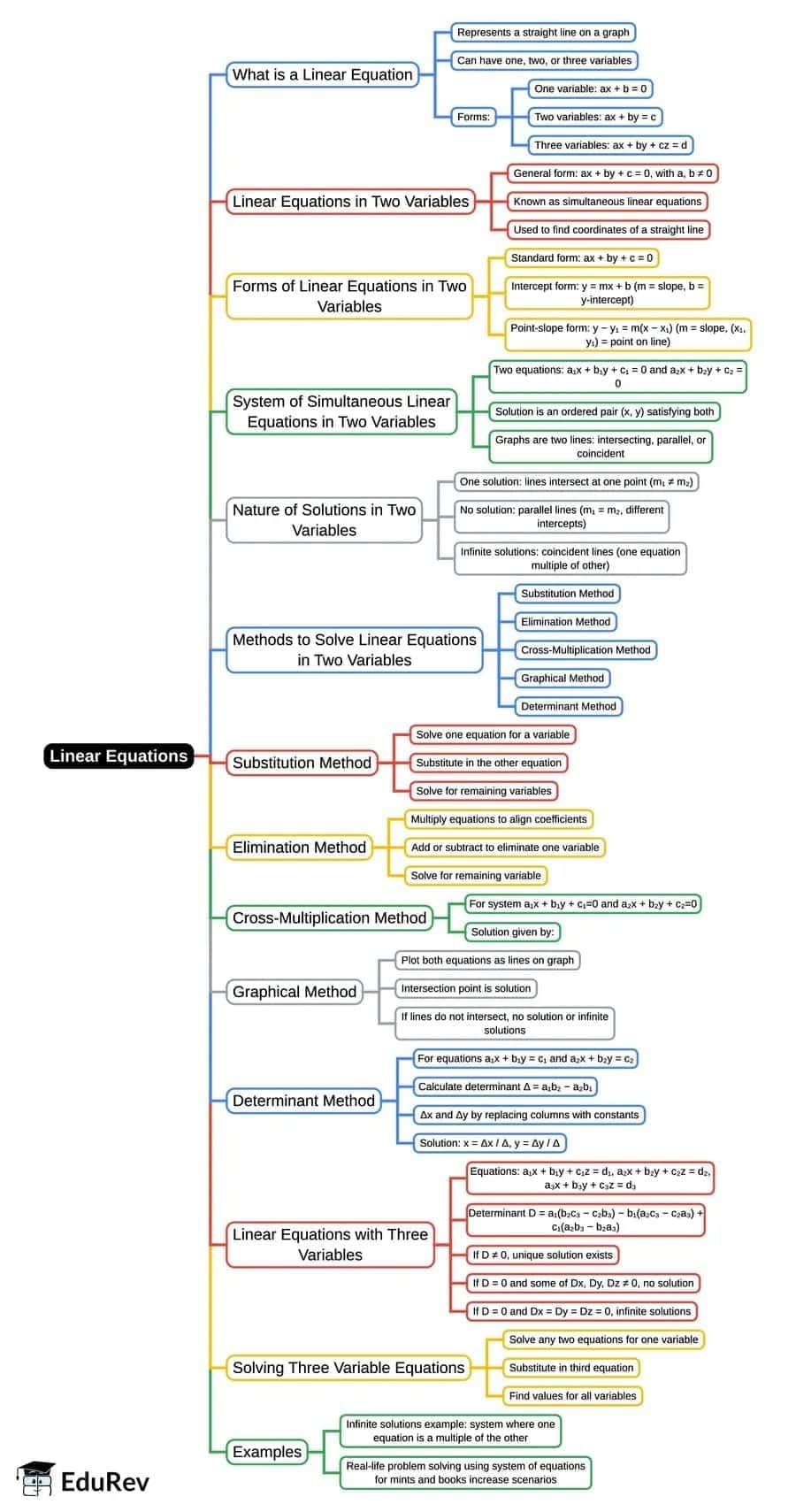
Linear Equations
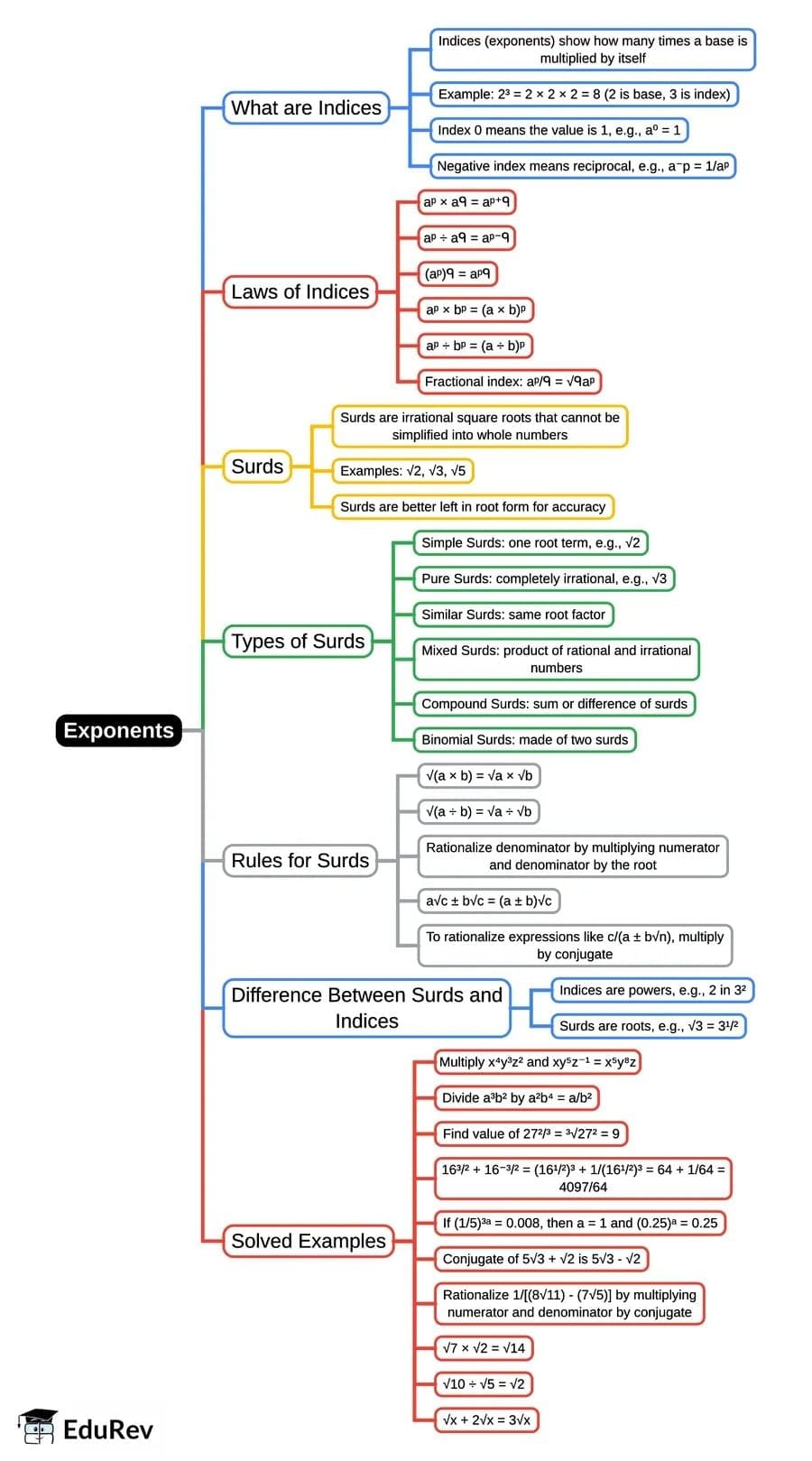
Exponents
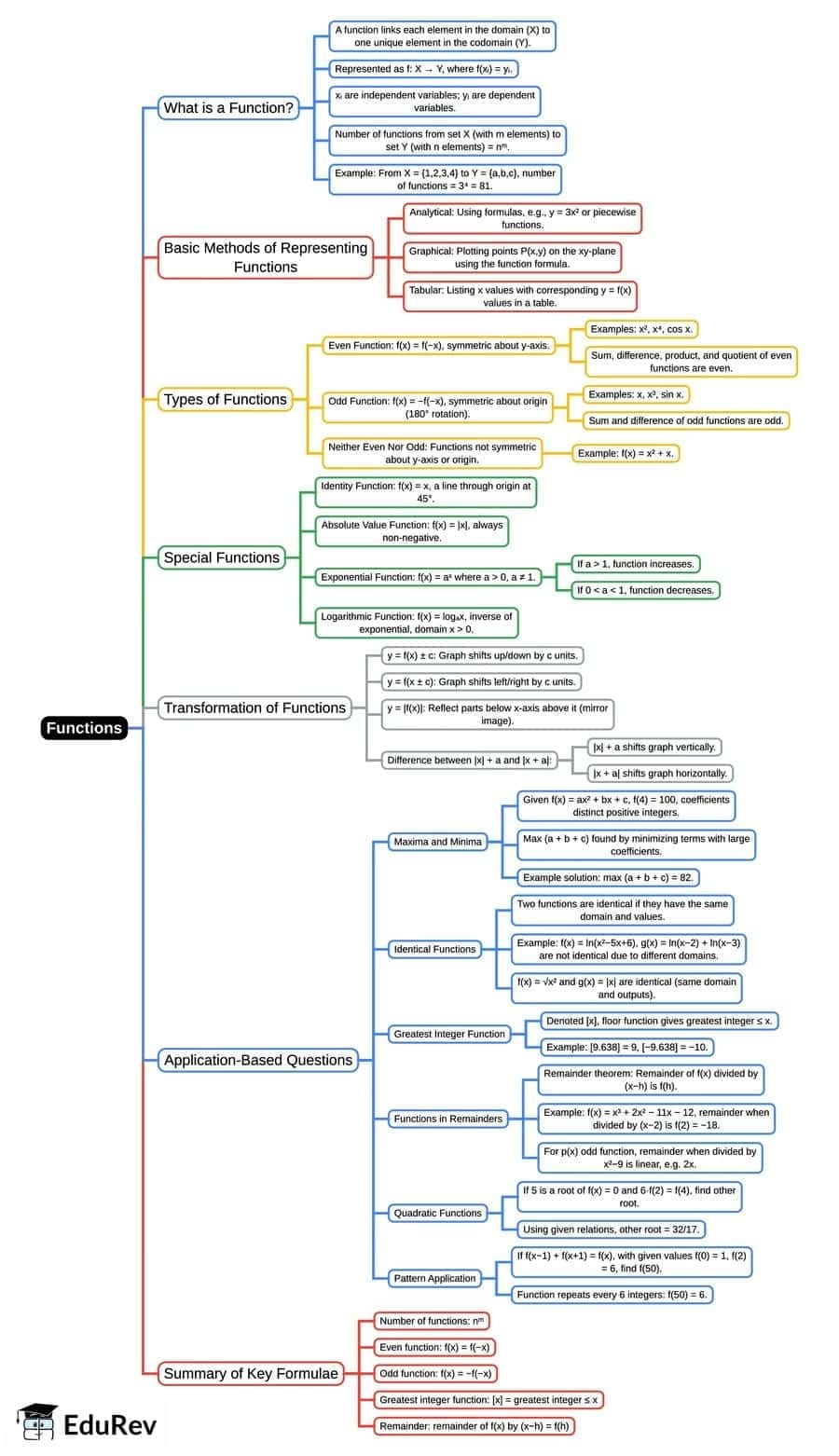
Functions
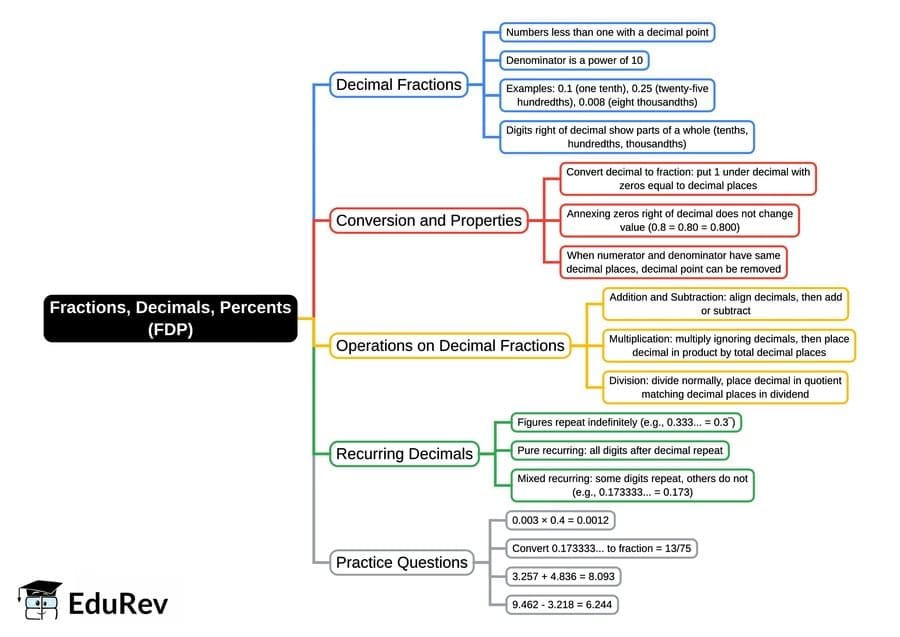
Fractions, Decimals, Percents (FDP)
The document Quick Revision: Quant Reasoning (Algebra) is a part of the GMAT Course Crash Course for GMAT.
All you need of GMAT at this link: GMAT
FAQs on Quick Revision: Quant Reasoning (Algebra)
| 1. What are the key methods for solving quadratic equations? |  |
Ans. Quadratic equations can be solved using several methods: factoring, completing the square, and applying the quadratic formula. Factoring involves expressing the equation in the form (ax + b)(cx + d) = 0. Completing the square transforms the equation into a perfect square trinomial. The quadratic formula, x = (-b ± √(b² - 4ac)) / 2a, provides solutions directly from the coefficients a, b, and c of the equation ax² + bx + c = 0.
| 2. How do you solve linear inequalities? | |
Ans. To solve linear inequalities, first isolate the variable on one side using similar steps as solving linear equations. When multiplying or dividing both sides by a negative number, the inequality sign must be reversed. The solution can be expressed in interval notation or graphically on a number line, indicating the range of values that satisfy the inequality.
| 3. What is the difference between functions and relations? | |
Ans. A function is a special type of relation where each input (or x-value) has exactly one output (or y-value). In contrast, a relation may have multiple outputs for a single input. For example, the equation y² = x represents a relation but not a function, as each x may correspond to two different y values (positive and negative).
| 4. How are fractions, decimals, and percents related? | |
Ans. Fractions, decimals, and percents are three different ways to express the same concept: part of a whole. A fraction represents a part as a numerator over a denominator (e.g., 1/2), a decimal represents the same part in base ten (0.5), and a percent expresses it as a part out of 100 (50%). They can be converted into one another using multiplication or division by 100.
| 5. What role do exponents play in algebra? | |
Ans. Exponents indicate how many times a number, known as the base, is multiplied by itself. In algebra, they are used to simplify expressions, solve equations, and express large numbers in a more manageable form. Understanding the laws of exponents, such as aᵐ × aⁿ = aᵐ⁺ⁿ and (aᵐ)ⁿ = aᵐⁿ, is essential for manipulating algebraic expressions effectively.
About this Document

4.96/5 Rating

Apr 18, 2026 Last updated
Related Exams
Document Description: Quick Revision: Quant Reasoning (Algebra) for GMAT 2026 is part of Crash Course for GMAT preparation. The notes and questions for Quick Revision: Quant Reasoning (Algebra) have been prepared according to the GMAT exam syllabus. Information about Quick Revision: Quant Reasoning (Algebra) covers topics like and Quick Revision: Quant Reasoning (Algebra) Example, for GMAT 2026 Exam. Find important definitions, questions, notes, meanings, examples, exercises and tests below for Quick Revision: Quant Reasoning (Algebra).
Introduction of Quick Revision: Quant Reasoning (Algebra) in English is available as part of our Crash Course for GMAT for GMAT & Quick Revision: Quant Reasoning (Algebra) in Hindi for Crash Course for GMAT course. Download more important topics related with notes, lectures and mock test series for GMAT Exam by signing up for free. GMAT: Quick Revision: Quant Reasoning (Algebra)
Description
Quick Revision: Quant Reasoning (Algebra) of Crash Course covers all the important topics, helping you prepare for the GMAT exam on EduRev. Start for free!
Information about Quick Revision: Quant Reasoning (Algebra)
In this doc you can find the meaning of Quick Revision: Quant Reasoning (Algebra) defined & explained in the simplest way possible. Besides explaining types of Quick Revision: Quant Reasoning (Algebra) theory, EduRev gives you an ample number of questions to practice Quick Revision: Quant Reasoning (Algebra) tests, examples and also practice GMAT tests
Top Courses for GMAT
Related Searches
Quick Revision: Quant Reasoning (Algebra), Summary, Quick Revision: Quant Reasoning (Algebra), Important questions, practice quizzes, pdf , ppt, Exam, Viva Questions, Objective type Questions, Semester Notes, Extra Questions, video lectures, study material, Free, MCQs, Sample Paper, Quick Revision: Quant Reasoning (Algebra), past year papers, Previous Year Questions with Solutions, shortcuts and tricks, mock tests for examination;