Chapter Notes: Exploring Earth


Introduction
Information books help us learn about the world in a clear and interesting way. In this chapter, you will explore how to understand new words by using context clues, how to read a book introduction, and how to find key information in a text. You will also learn about sentences, phrases, verb tenses, alphabetical order, root words, facts and opinions, and how to join ideas using connectives. Fun examples from nature-such as habitats, animals and Earth's environments-will help you practise these skills. By the end of this chapter, you will be able to read information texts confidently, make neat notes, organise facts clearly and even create your own information page.
Words in Context
Understanding Words in Context
- Context means the words and sentences around a new word.
- You can often guess the meaning and pronunciation of a new word by looking at the other words in the sentence.
- When you see an unfamiliar word, read the whole sentence, and sometimes the sentence before and after.
The Preface / Introduction of a Book
- The introduction or preface of an information book tells you what the book is about.
- It explains what you will learn in the book and how it is organised.
Example: A Handy Handbook of Habitats
Introduction
This book takes you into the world of natural habitats. It has clear photographs and interesting facts to help you explore the Earth and its environments.
- Chapter 1
- Introduces Planet Earth.
- Explains why Earth is the only known planet with life like ours.
- Chapters 3-10
- Describe different animal habitats.
- Explain how animals adapt to their surroundings.
- Include habitats like the sea, desert, rainforest, polar regions and even your garden.
- Chapter 11
- Explains natural events such as earthquakes and volcanic eruptions.
- Shows how these events shape the Earth over time.
- Chapter 12
- Talks about extinct and endangered animals.
- Explains how human activities affect animals.
- Gives ideas about how you can help protect animals.
At the back of the book, there is a glossary to explain difficult words. The handbook is a good starting point for a "nature adventure" and encourages you to explore with curiosity.
Key Words, Phrases and Sentences
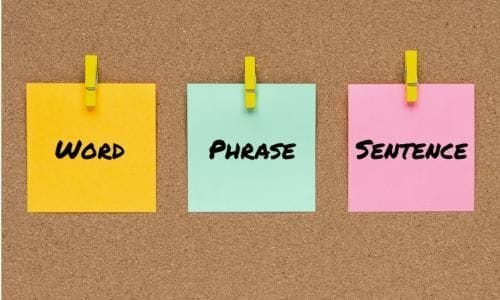
What is a Sentence?
- A sentence is a group of words that has a verb and expresses a complete idea.
- It begins with a capital letter and ends with a full stop (.), question mark (?) or exclamation mark (!).
What is a Phrase?
- A phrase is a group of words that does not have a full verb.
- It does not make a complete sentence on its own.
- Phrases are useful in headings and notes.
- Example: In the desert, on the mountain, deep in the sea.
What is a Key Word?
- A key word is an important word that carries the main meaning in a sentence.
- Key words are often nouns and verbs.
- Example sentence: The camel survives in the hot desert.
Making Notes and Summarising
Skills for Note-Making and Summaries
- Create a mind map to show the main topic and subtopics.
- Use key words and short phrases, not full sentences, for notes.
- Write a short summary in your own words using your notes.
Practice Text: Our Wonderful World
Main idea: Earth is a wonderful planet with many different habitats: sea, land and sky. Many plants and animals are adapted to live in these environments.
(a) The Sea
- The sea covers over 70% of Earth's surface.
- It is a salt-water habitat and is very important for the water cycle and climate.
- Example animal: Colossal Squid
- Lives in deep, dark ocean water.
- Has the largest eyes of any animal, which help it see in low light while hunting.
(b) The Land
- Land is the part of Earth's crust above sea level.
- It is changed by earthquakes, volcanic eruptions, hurricanes, floods and droughts.
- The hottest places are near the equator; the coldest are at the Poles.
- Deserts can be hot or cold and are very dry.
- Example animal: Camel
- Can live a week without water.
- Stores fat in its humps, which gives energy when food is scarce.
(c) The Sky
- The sky includes the atmosphere and outer space above Earth.
- There are about 9 700 species of birds in the world.
- Example bird: Peregrine Falcon
- Lives on every continent except Antarctica.
- Fastest animal in level flight when diving (over 322 kph / 200 mph).
- Has excellent eyesight, a strong beak and powerful talons, making it a very skilled hunter.
(d) Main Point
- Many plants and animals show amazing adaptations to live in the sea, on land or in the sky.
- Each species has its own way of surviving.
- This variety makes our Earth special and wonderful.
Past, Present and Future Tense
What is Tense?
- Tense shows the time of an action.
- We look at three main tenses: past, present and future.
Key Points
- Past tense: actions that have already happened.
- Example: She walked to school.
- Present tense: actions happening nowor things that are always true.
- Example: She walks to school.
- Future tense: actions that will happen later.
- Example: She will walk to school.
The Verb "to be"
The verb to be can be a main verb or a helping verb.
- As a main verb (state of being):
- Past: I was cold.
- Present: I am cold.
- Future: I will be cold.
- As a helping verb (continuous action):
- Past: I was walking.
- Present: I am walking.
- Future: I will be walking.
Organising Information in Books
Contents Page
- A contents page is at the front of a book.
- It lists the chapters or sections in the order they appear.
- It helps you see the structure of the book and find topics quickly.
Index
- An index is at the back of the book.
- It is an alphabetical list of important words or topics.
- Next to each word, there are page numbers.
- This helps you find exact information fast.
Example: Contents (Sea Book - Simplified)
- Planet ocean
- Salty seas
- Undersea landscape
- Tides and waves
- Weather-making sea
- Living history
- Fish rule
- Ocean mammals
- Super sea-birds
- Who eats whom?
- Coral reef
- Kelp jungles
- Frozen feast
- Deep oceans
- Ocean mysteries
- Studying the sea
- All fished out
- What a waste
- Projects
Example: Index (Sample Entries)
- birds 22-23, 38
- coral 26-27
- deep oceans 7, 34-35
- sharks 18, 24, 38
- tides 12-13
- volcanoes 9, 11
Alphabetical Order
- Arrange words from a to z.
- If the first letters are the same, look at the second letter, then the third, and so on.
- Words with the same root and different endings are ordered by the full spelling:
- shine, shines, shining, shiny.
- For two-word names, use the first letter of the first word:
- Asiatic Lion comes before Bengal Tiger.
Alphabetical order is used in dictionaries, glossaries and indexes.
Root Words
- A root word is the main part of a word.
- Other words can be formed from it.
- Example: act → actor, action, activity.
Prefixes
- A prefix is added before a root word.
- It changes the meaning.
- Example: happy → unhappy (un- changes the meaning to "not happy").
Suffixes
- A suffix is added after a root word.
- It can change the tense or word class.
- Example: happy → happiness (-ness turns it into a noun).
Compound Words
- A compound word is made from two root words.
- Examples: bookworm, whiteboard, seahorse.
Recording Facts

Fact vs Opinion
- Fact:
- A statement that can be proved true or false.
- Example: Insects have six legs.
- Opinion:
- A personal feeling, belief or judgement.
- Example: Snakes are creepy.
Examples
- The sky looks like it might rain today. → opinion (a personal guess).
- Insects have six legs and three body parts. → fact.
- I love spiders. → opinion.
- A chameleon can change colour. → fact.
Collector's Cards
Purpose:
- Collector's cards share short, interesting facts about an animal or topic.
- They are neat, colourful and easy to read.
Common Features:
- A bold heading, often a question.
- A small picture or drawing.
- Two or three short factual sentences.
How to Make a Collector's Card:
- Choose an animal or topic.
- Research and write down three key facts as short notes.
- Create a heading as a question.
- Write two or three sentences to answer the question using only facts.
- Add a picture or drawing.
- Check spelling and punctuation.
- Present it neatly; you can share and swap your card with classmates.
Interesting Ocean Facts (Examples)
- Flying fish: can leap out of the water and glide using large fins to escape predators.
- Seahorse: the female lays eggs in the male's pouch; the male protects the eggs until they hatch.
- Ragged-tooth shark: replaces thousands of teeth during its life; considered endangered in some places.
- Coelacanth: a rare fish once thought extinct, rediscovered in 1938; called a "living fossil".
- Deep-sea anglerfish: has a light on a stalk above its head to attract prey in dark water.
Joining Sentences
What are Connectives?
- Connectives (linking words) join ideas and sentences.
- Common connectives: and, but, because, so, however, although, since, if, meanwhile, as well as.
- Pronouns like who, which, that can also join clauses.
Using Connectives
- Do not join too many ideas with just and, but, then; this makes sentences long and confusing.
- Example:
- Simple: I love fish. I do not want a pet fish.
- Joined: I love fish but I do not want a pet fish.
Connectives make your writing smoother and more interesting.
Different Types of Sentences
Statement
- Gives information.
- Ends with a full stop (.).
- Example: I recycle plastic bottles.
Question
- Asks for information.
- Ends with a question mark (?).
- Example: Do you recycle plastic bottles?
Command
- Gives an instruction.
- Usually ends with a full stop, but can use an exclamation mark for strong feeling.
- Example: Recycle plastic bottles.
Exclamation
- Shows strong feeling (surprise, joy, anger).
- Ends with an exclamation mark (!).
- Example: Wow!
Creating an Information Page
Planning and Research
- Choose an animal or habitat.
- Write research questions (What do I want to know?).
- Use books, reliable websites or audio resources to find answers.
- Take notes using key words and short phrases, perhaps on a mind map.
Designing the Page
- Decide on headings and subheadings.
- Plan where to put pictures, diagrams or maps.
- Under each heading, write two or three clear sentences using your notes.
- Use correct tense, punctuation and interesting vocabulary.
Try yourself: What is the first step in creating an information page?
Important Terms
- Habitat: A natural environment where a plant or animal lives.
- Handbook: A small book with useful information about a subject.
- Environment: The air, land, and water where people, animals, and plants live.
- Endangered: In danger of disappearing; at risk of extinction.
- Curiosity: The desire to learn or know more about something.
- Succulent: A plant with thick leaves or stems that store water.
- Thrive: To grow, develop, or be very successful.
- Tsunamis: Very large sea waves caused by sudden movements under the sea, such as earthquakes.
- Inhabit: To live in a place.
- Essential: Very important and necessary.
- Equator: An imaginary line around the middle of the Earth, halfway between the Poles.
- Nourishment: Food that helps living things grow and stay healthy.
- Atmosphere: The layer of gases surrounding the Earth.
- Talons: The strong, sharp claws of birds of prey.
- Skilled: Having the ability to do something well.
- Glossary: A list of difficult words and their meanings, usually at the back of a book.
- Contents Page: A page at the front of a book that lists chapters in order with page numbers.
- Index: An alphabetical list of topics or words at the back of a book with page numbers.
- Sentence: A group of words with a verb that expresses a complete idea.
- Phrase: A small group of words that does not form a full sentence.
- Key Word: An important word that carries the main meaning in a sentence.
- Tense: The form of a verb that shows when an action happens (past, present, future).
- Root Word: The main part of a word from which other words are formed.
- Prefix: A group of letters added to the beginning of a word to change its meaning.
- Suffix: A group of letters added to the end of a word to change its form or meaning.
- Compound Word: A word made by joining two root words (e.g., seahorse).
- Fact: A statement that can be checked and proved true or false.
- Opinion: A personal feeling or belief that cannot be proved.
- Connective: A linking word that joins sentences or ideas (e.g., and, but, because).
- Adaptation: A special feature or behaviour that helps a plant or animal survive.
- Species: A group of living things that are similar and can produce young of the same kind.
FAQs on Chapter Notes: Exploring Earth
| 1. What are root words and why are they important? |  |
| 2. How can connectives be used to join sentences? | |
| 3. What is the difference between facts and opinions? | |
| 4. How do you organise information using a contents page and index? | |
| 5. What is the significance of alphabetical order in organising information? | |