Monitoring & Evaluation of Public Policy


Monitoring and Evaluation: Definition and Purpose
Monitoring is a continuous process of gathering, recording and analysing data on the implementation of a programme or policy to assess its progress against planned activities and outputs.

- Evaluation is a periodic assessment of the relevance, performance, efficiency, effectiveness and impact of a policy, programme or project. Evaluation seeks to answer whether stated objectives have been achieved and why outcomes were or were not realised.
- Monitoring supports programme planning, control and improvement by providing timely information on implementation. Evaluation provides evidence on outcomes and impacts and informs strategic decisions such as policy design, resource allocation and future programme modifications.
- In India there are several challenges in monitoring and evaluation: there are no uniformly enforced minimum requirements for evaluating public programmes, quality and frequency of evaluations vary considerably across states and agencies, and absence of standardisation makes comparison across states and time difficult. This variance also makes it easier to contest or dispute evaluation results, particularly when programmes do not meet expectations.
- There is a need to shift the primary use of evaluations in India from merely confirming programme performance to using evidence actively in budgetary decisions and policy planning.
Accountable Governance in India
Accountability in governance requires that decisions and actions of public authorities be scrutinised to determine whether they are achieving their stated goals and serving the communities for whom they were intended. Accountability is a core component of good governance.
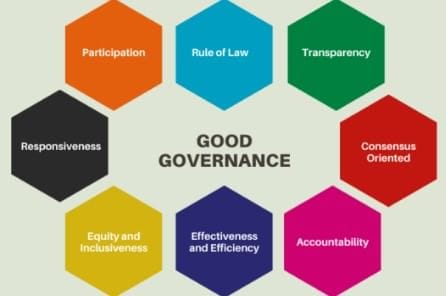
One important mechanism of public accountability is the public hearing or grievance forum. At the federal level, the Development Monitoring and Evaluation Office (DMEO), a division of NITI Aayog, is responsible for promoting evidence-based policymaking by monitoring and evaluating government initiatives and providing analytical inputs.
Public Hearings (Jansunwai)
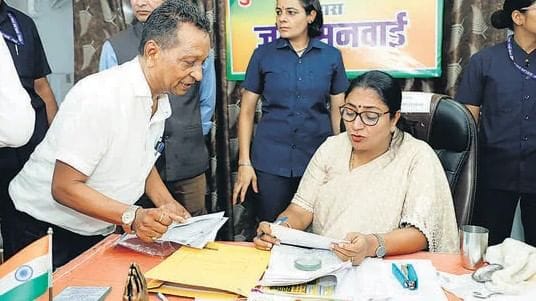
- Jansunwai refers to public hearings held to hold government and administrative authorities accountable and to solicit citizens' views on governance issues. During a Jansunwai, members of the public may present complaints about service delivery or implementation, provide suggestions, and demand accountability.
- Public hearings serve multiple functions: they enable citizens to raise grievances publicly, expose irregularities, and promote transparency and responsiveness in administration.
- The movement led by the Mann Ki Awaaz, Mazdoor Kisan Shakti Sangathan (MKSS) highlighted the importance of access to official records and public documents. By obtaining and analysing official records, activists discovered irregularities such as fake muster rolls, overbilling in procurement and underpayment of wages.
- 2 December 1994 - the first Jansunwai was conducted at Kot Kirana in Pali district.
- The first hearing was followed by two other hearings in Bhim and Vijaypur in the same month.
- January 1995 - a significant public hearing took place in Jawaja (Ajmer District).
- A typical public hearing is organised by a committee led by the District Collector and can include representatives from the State Pollution Control Board (SPCB), taluka level officials and members of the gram sabha. The committee collects complaints, investigates issues raised during the hearing and prepares a report for submission to the responsible ministry or department.
- From this point onward, the administrative machinery is expected to ensure responsibility, follow-up and accountability for redressal of grievances.
- Complaints are channelled directly to the appropriate officials, enabling quicker resolution of issues.
- Public hearings increase public participation and build confidence in democratic governance.
- They make implementation more transparent and can expose corruption or maladministration.
- In the modern information-technology era, online portals expand accessibility and tracking of grievances.
The Jansunwai portal is an example of using information technology to improve public grievance redress. When a complaint is registered on the portal, a distinctive identifying number is sent to the complainant's registered mobile number. This enables complainants to track the status of their grievance and ensures a paper trail for follow-up and accountability.
Social Audit
Social audit is the process by which an organisation or government reports to its constituents on its social performance and seeks to improve it. It is a participatory, transparent process that involves verification of records, public discussion and community scrutiny.

The input names Charles Medawar (1972) as an early contributor to the concept. Social audits help bridge gaps between efficiency and effectiveness, and between an institution's vision and actual ground-level outcomes. They allow the social performance of government initiatives or institutions to be measured, verified, reported and improved.
Since independence, government and non-government agencies in India have invested in human resources and programmes for social development; however, the influence of these investments on delivery and outcomes has often been found insufficient, making social audits a useful corrective mechanism.
Performing Social Audits
Social audits are typically conducted at the grassroots level with active participation from the community. In the context of rural governance, the Gram Sabha is the principal forum for social audits of Panchayati Raj institutions.
The Gram Sabha evaluates and discusses works executed by the Panchayat and the funds expended, with the stated aim of reducing corruption and promoting transparency. The cost associated with conducting the social audit is made public and displayed on the notice board. Discussions are conducted in the local language so ordinary people can participate and understand. All members and employees of the Panchayat are expected to attend the social audit and present records and explanations when required. Residents, including labourers who worked on schemes, are informed in advance so they can attend the meeting and give testimony. Receipts, cash books, bank records and other documents relating to Panchayat expenditures are presented to the Gram Sabha for scrutiny. The Gram Sabha verifies muster rolls by checking the names of persons listed, amounts paid, and employment records against physical verification and testimonies. On-site inspections are carried out to assess the actual work completed and check its quality against stated specifications.
- Public notice of the audit, its scope and schedule to enable community participation.
- Preparation and compilation of all relevant financial and implementation records for the period under review.
- Independent verification of records by auditors or trained local volunteers, including cross-checks with beneficiaries and suppliers.
- Community consultations and oral evidence from workers, beneficiaries and local witnesses.
- On-site physical inspection of completed works and quality checks against specifications.
- Presentation of findings to the Gram Sabha in local language and preparation of a formal report.
- Follow-up by the concerned administration for corrective action, recovery or disciplinary measures as required.
Linking Monitoring, Evaluation and Accountability
Monitoring, evaluation, public hearings and social audits are complementary elements of accountable governance. Together they:
- Provide continuous and periodic evidence on implementation and outcomes.
- Enable citizens to exercise oversight and offer corrective feedback.
- Improve transparency, reduce leakage and corruption, and strengthen public trust.
- Inform policy design and budgeting when evaluation findings are systematically used in decision-making.
Policy Implications and Recommendations
To strengthen monitoring and evaluation in India and make these processes effective instruments of accountable governance, the following measures are important:
- Standardise evaluation methods and minimum requirements so that evaluations are comparable across states and time periods.
- Institutionalise independent evaluation units within ministries, and build capacities in state and local governments for conducting rigorous M&E.
- Ensure open access to official records and data for citizens, researchers and civil society so that independent verification is possible.
- Use evaluation evidence systematically in budgeting and policy formulation rather than only for retrospective assessment.
- Expand use of digital grievance redressal platforms, ensure unique tracking identifiers and timely responses to improve public confidence.
- Promote regular social audits and public hearings as part of routine governance processes, and ensure follow-up action on audit findings.
Effective monitoring and evaluation, combined with participatory instruments such as Jansunwai and social audits, strengthen accountability and improve the delivery and impact of public policies. Institutional reforms that standardise M&E practices, build capacity, and integrate evaluation findings into budgeting and planning will enhance governance and achievement of development objectives.
FAQs on Monitoring & Evaluation of Public Policy
| 1. What is the definition of Monitoring and Evaluation in the context of public policy? |  |
| 2. How does accountable governance function in India? | |
| 3. What role do public hearings (Jansunwai) play in promoting transparency? | |
| 4. What is a social audit and how is it performed? | |
| 5. How are monitoring, evaluation, and accountability linked in the context of public policy? | |