Bhakti Movement and Sufi Movement - 1

Bhakti Movement
Bhakti as a religious concept denotes intense devotional surrender to a personally conceived supreme being with the aim of attaining salvation (moksha). The central idea is the relationship of the atman (soul) with the supreme being expressed in love, loyalty and devotion rather than elaborate ritual performance.
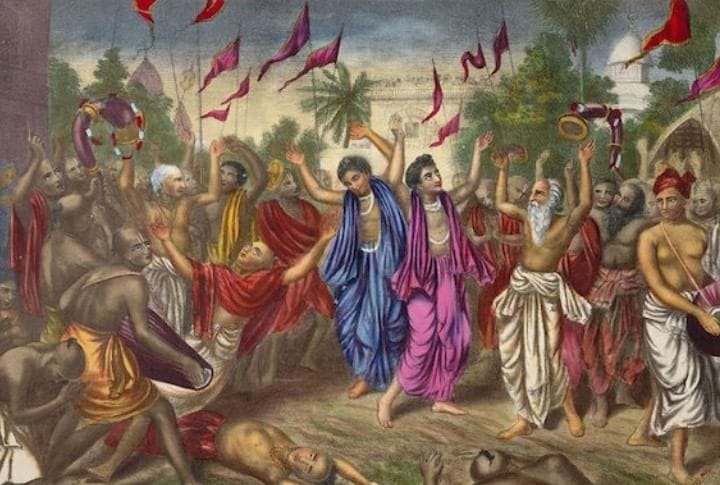
- The roots of bhakti can be traced to ancient Indian religious traditions and texts. References to devotion appear in the Vedas, Upanishads, the great epics and the Puranas; the Bhagavad Gita is an important scriptural source for the idea that devotion (bhakti) is a valid and powerful path to liberation.
- While the doctrinal basis is old, bhakti grew into a broad-based popular movement most visibly in the early medieval period, especially in South India between the 7th and 10th centuries and later across North India (12th-17th centuries).
Bhakti Movement in South India
- The early organised form of bhakti emerged in the Tamil region as a response both to the growing influence of Buddhism and Jainism and as a devotional resurgence within Hinduism.
- Two groups of poet-saints made the movement popular in the Tamil country:
- The Alvars: Vaishnava poet-saints (traditionally 12), whose hymns in praise of Vishnu were later compiled as the Nalayira Divya Prabandham ("Four Thousand Holy Hymns").
- The Nayanmars (Nayanars): Shaiva poet-saints (traditionally 63), whose hymns were collected as the Tevaram and whose biographies were written in works such as the Periyapuranam.
- The saints came from varied social backgrounds - Brahmanas, kings, merchants, artisans and even those regarded as low-caste or untouchable. Their poetry used intimate imagery: the devotee might address the deity as friend, parent, master, teacher or beloved.
- Male saints sometimes adopted the feminine lyric voice of a lover or bride longing for union with God (for example, Manikkavachakar and Nammalvar).
- In the Shaiva tradition the devotee-god relationship was often expressed in master-servant terms; in the Vaishnava tradition it was frequently expressed in lover-beloved terms and also as parent-child.
- The saints' hymns were sung in temples and the poets themselves were often venerable figures, their images placed in temple halls.
Literature, Canons and Hagiography
- Important compiled works and collections include:
- Tevaram (Shaiva hymns) and the Tirumurai (the twelve-book Shaiva canon including the Periyapuranam).
- Nalayira Divya Prabandham (the Alvar hymns collected by Nathamuni).
- Hagiographies contain miraculous and legendary material, so historians often distinguish between devotional memory and strict historicity.
- The saints, however, did not typically withdraw from social life; many were householders and married, unlike ascetic renouncers.
Social Composition and Significance
- The bhakti saints represented diverse social backgrounds: Brahmanas, kings, merchants, artisans and many from lower social strata (for example a cowherd, washerman, weaver, potter, toddy-tapper, hunter, fisherman and even a robber).
- Two prominent figures associated with marginalised status are the Shaiva saint Nandanar and the Vaishnava saint Tiruppan Alvar, often described in tradition as 'untouchables'.
- Scholars have debated bhakti's social role. D. D. Kosambi suggested bhakti suited the needs of a feudal polity, while others stress its egalitarian and popular appeal.
- Temples acquired economic and social influence in this period; some historians argue that temples became integrated into regional power structures, though the precise relationship between bhakti, temples and feudalism remains contested.
- The early bhakti movements did not consistently oppose Brahmanical authority, nor did they always reject the varna (caste) system at the social level.
- Brahmanical rituals (idol worship, recitation of Vedic mantras, pilgrimages) continued alongside devotional practices.
- South Indian bhakti saints frequently criticised Buddhism and Jainism and, over time, the bhakti movement was largely assimilated into mainstream Brahmanical Hinduism.
Other Tamil Devotional Systems
- Shaiva Siddhanta: Shaiva Siddhanta accepted the authority of the Vedas and considered three realities as eternal: God, the universe and the soul. Its scriptural canon includes the Tirumurai, the Shaiva Agamas and Siddhanta shastras.
- Siddhas: Siddhas practised unorthodox sadhana to attain salvation through yogic practices and tapasya (austerities). Their methods emphasised transformative spiritual disciplines often outside conventional ritual frameworks.
Philosophical Developments Connected with Bhakti
The early medieval period saw major philosophical activity in Vedanta and related schools - the debates and syntheses of this period shaped bhakti traditions too.
- Shankara (late 8th-early 9th century), born in Kerala, is the principal exponent of Advaita Vedanta (non-dualism). Drawing on the Upanishads, the Brahma Sutra and the Bhagavad Gita, Shankara taught that Brahman is the sole, changeless reality and that plurality is due to maya (illusion) and ignorance (avidya). He wrote authoritative commentaries (bhashyas), notably on the Brahma Sutras.
- Shankara distinguished conventional (vyavaharika) and absolute (paramarthika) levels of reality and used accessible analogies (rope mistaken for snake) to explain illusion and knowledge.
- He is traditionally associated with the founding of the Dashanami order and with four mathas (monastic centres) although the institutional history is debated.
- Ramanuja (1017 CE, Sriperumbudur) opposed Shankara's mayavada and propounded Vishishtadvaita (qualified non-dualism). For Ramanuja, Brahman is saguna (with attributes) and personal (identified with Vishnu).
- The world and souls are real and are attributes or modes of Brahman - the relation of part to whole (analogy: sea and waves).
- Ramanuja advocated prapatti (self-surrender) and popular bhakti accessible to all, including non-Brahman communities, and composed important works including Sribhashya, Gita Bhasya and others.
- Madhva (13th century, Udupi) founded Dvaita (dualism), asserting a fundamental distinction between jiva (individual souls) and paramatma (God, Vishnu).
- The world is real and independent of illusion; worship and devotion to Vishnu are central. Madhva established the Brahma sampradaya and influenced later Vaishnava traditions.
Nimbarka propounded Bheda-Abheda (difference and non-difference) or Dvaitadvaita, a formulation that sees the world as both distinct from and inseparable from Brahman - analogous metaphors include sun and sunbeam.
Bhakti Movement in North India
- The bhakti movement in North India (roughly 12th-17th centuries) drew inspiration from South Indian Vaishnava traditions but developed local shapes and emphases.
- It included both Vaishnava and monotheistic trends; some movements emphasised saguna devotion (God with attributes), others nirguna devotion (formless God).
Similarities and differences between North and South
- Both regions emphasised devotion and religious equality and contributed to the growth of vernacular literatures.
- Neither movement uniformly attacked caste or Brahmanical textual authority; many bhakti leaders accepted some Brahmanical norms while critiquing ritualism.
- Regional and doctrinal differences were significant: e.g., Marathi bhakti, Bengali Gaudiya Vaishnavism and the North Indian monotheistic stream (Kabir, Guru Nanak) had distinct teachings and practices.
- Some monotheistic streams rejected image worship, incarnation theory and scriptural authority - for example, Kabir and certain nirguna poets.
Factors contributing to the rise of the Bhakti Movement
- The political changes with the advent of Turkic rule and the Delhi Sultanate altered social and patronage structures; some scholars suggest that decline in Brahmanical political patronage opened space for new religious expressions.
- Rapid urbanisation and the growth of artisan, merchant and service classes created social groups receptive to devotional movements.
- Intellectual cross-currents with Islam and Sufi ideas of monotheism, equality and service influenced some bhakti thinkers; historians debate the extent and direction of influence.
- Internal developments within Hinduism - the continuing appeal of the Bhagavata Purana and South Indian bhakti traditions - also provided religious resources for renewal.
Monotheistic and Syncretic Movements in North India
- Kabir (c. 1440-1518): Kabir was a weaver-poet traditionally associated with the disciples of Ramananda. Brought up by a Muslim weaving family near Benares, he combined Hindu and Islamic devotional ideas. He denounced idolatry and ritual, emphasised inner purity and ethical conduct, doubted scriptural exclusivity and criticised both Hindu and Muslim orthodoxy. Kabir's verses are included in Sikh scriptures and his followers are known as Kabirpanthis. The Bijak is an important compilation of his poems.
- Guru Nanak (1469-1539) and Sikhism: Guru Nanak, born at Talwandi, preached the oneness of God, the rejection of idol worship, and social equality. His teachings combined elements drawn from both Hindu bhakti and Sufi monotheism. He stressed truthful living, honest earning, charity and remembrance of God. His hymns were later included in the Adi Granth (compiled by the fifth Guru, Guru Arjun, in 1604). Guru Nanak laid the foundation of Sikhism; the Sikh tradition continued through ten Gurus culminating in Guru Gobind Singh who formed the Khalsa.
Other Monotheistic and Reform Figures
- Ramananda (15th century): Regarded as a bridge between South and North Vaishnava bhakti, preached bhakti in local languages and attracted disciples from varied castes including Kabir and Raidas.
- Vallabhacharya: Founder of Shuddhadvaita (pure monism) and the Pushtimarg tradition, emphasised Krishna worship.
- Tulsidas (1532-1623): Composed Ramcharitmanas in Awadhi, popularised Rama devotion and Ramlila theatrical traditions.
- Surdas: Celebrated for devotional songs on Krishna (Sur Sagar).
- Mira Bai: Rajasthani princess and Krishna-devotee; composed bhajans in Braj Bhasha and is remembered as a model of personal devotion.
Regional Streams of Bhakti
Bengal
- Jayadeva (12th century) - Sanskrit poet of the Gita Govinda, influential in Vaishnava devotion and later bhakti poetry.
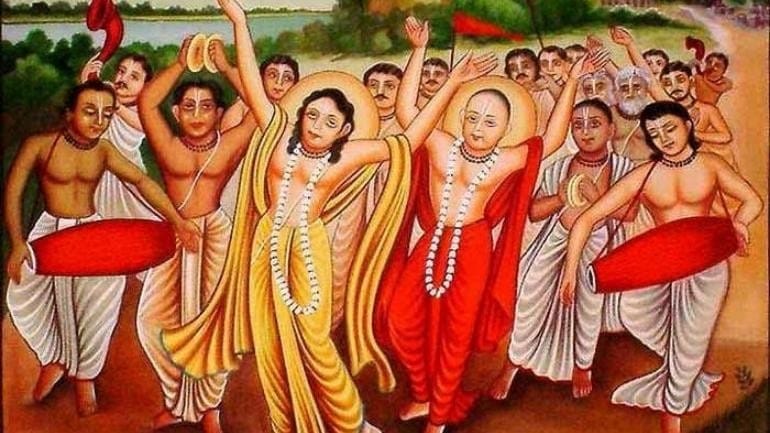
- Chaitanya Mahaprabhu (1486-1533) - founder of the Gaudiya Vaishnava movement in Bengal, popularised ecstatic kirtan/sankirtan practices and devotional congregations. He taught achintya-bheda-abheda (inconceivable simultaneous oneness and difference) and accepted disciples from all castes, though he did not directly challenge Brahmanical scripture as an institution.
- Sahajiya and Vidyapati influenced devotional expressions that emphasised inner experience and the beloved-lover imagery of Radha-Krishna.
Maharashtra
The Varkari movement, centred on Vithoba (Vitthal) of Pandharpur, produced major saints such as:
- Jnanesvara (Jnanadeva): 13th century, author of the Jnanesvari (Bhavartha Dipika), opposed caste distinctions and emphasised bhakti.
- Namdev: 13th-14th century, a popular Varkari poet-saint whose abhangs (devotional hymns) reached diverse social groups; tradition links some of his songs with the Sikh scripture.
- Tukaram: 17th century, composed abhangs and kirtans devoted to Vitthala and contributed to Marathi devotional literature; associated with mass devotional gatherings.
- Ramdas: Spiritual guide of Shivaji and author of Dasabodha, combining spiritual and practical counsel.
Gujarat, Karnataka, Assam, Kashmir and other regions
- Jayadeva (12th century): Sanskrit poet of the Gita Govinda, influential in Vaishnava devotion and later bhakti poetry.
- Chaitanya Mahaprabhu (1486-1533): Founder of the Gaudiya Vaishnava movement in Bengal, popularised ecstatic kirtan/sankirtan practices and devotional congregations. He taught achintya-bheda-abheda (inconceivable simultaneous oneness and difference) and accepted disciples from all castes, though he did not directly challenge Brahmanical scripture as an institution.
- Sahajiya and Vidyapati influenced devotional expressions that emphasised inner experience and the beloved-lover imagery of Radha-Krishna.
Women Saints in the Bhakti Tradition
Women played an important role and many became exemplary devotional figures, often subverting conventional gender expectations. Prominent women saints include:
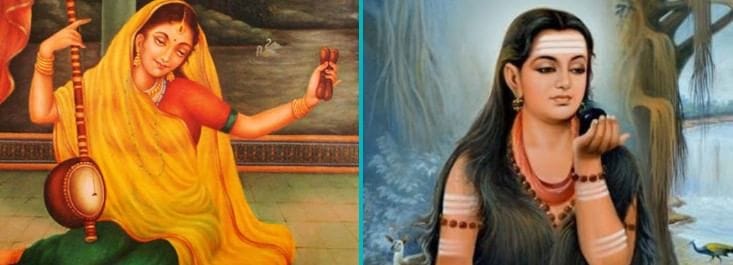
- Akka Mahadevi: 12th century Kannada vachana poet of the Lingayat tradition who renounced social conventions.
- Mirabai: 16th century Rajput princess and Krishna devotee, famed for bhajans in Braj Bhasha and for rejecting the social role expected of her.
- Bahinabai: Varkari saint of Maharashtra who combined household life with deep devotion; remained married yet pursued spiritual life.
- Vinabai: Disciple of Ramdas and a Brahmin widow who became a noted bhakta in the Ramdas lineage.
Sufi Movement: Origin, Ideas and Practices
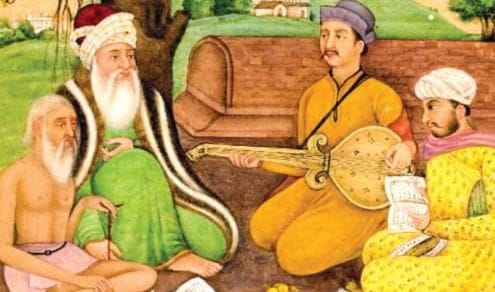
Sufism is the mystical or esoteric dimension of Islam emphasising direct experience of God through love, remembrance (dhikr), asceticism, ethical transformation and spiritual discipline. As Islam spread across South Asia from the 11th century onwards, Sufism became an important vehicle for religious engagement with diverse populations.
Origins and spread
- Sufi orders (tariqas) developed across the Islamic world. Major Sufi orders active in South Asia included the Chishti, Suhrawardi, Qadiri, and Naqshbandi orders.
- These orders established khanqahs (sufi hospices) and khanqahs functioned as centres of spiritual instruction, charity and community interaction.
Key teachings and practices
- Love and devotion: God-centred love (ishq) and the cultivation of a heart devoted to God.
- Remembrance (dhikr): Repetition of God's names, silent or vocal recitations, and sometimes musical sessions (sama) to induce spiritual states.
- Asceticism and ethical reform: Simplicity, humility and inner purification.
- Shrines and urs: Sufi saints' tombs became focal points for public devotion and communal gatherings (the urs commemorates a saint's union with God).
- Social service: Khanqahs provided food, shelter and medical help; Sufi pirs often mediated local disputes and offered spiritual counsel.
Prominent Sufi saints in South Asia
- Khwaja Moinuddin Chishti (c.1141-1236) - founder of the Chishti tradition in India and associated with the shrine at Ajmer; emphasised love, tolerance and service to the poor.
- Baba Farid (1173-1266) - Chishti saint of Punjab whose verses appear in the Sikh scripture (Adi Granth) and who influenced devotional language and practice across communities.
- Nizamuddin Auliya (1238-1325) - prominent Chishti mystic of Delhi, known for his accessibility to all social classes, teaching by example and musical assemblies (sama).
Interactions between Sufism and Bhakti
In South Asia, Sufi and bhakti traditions often converged in practice, language and social outreach.
Shared features included:- Emphasis on direct, personal experience of the divine rather than ritual or doctrinal scholasticism.
- Use of vernacular music, poetry and congregational worship to reach broad audiences.
- Teaching of social equality and compassion; many Sufi pirs and bhakti saints accepted disciples from diverse social backgrounds.
Social and cultural impact of Sufism
- Sufi shrines contributed to communal interaction across religious lines; people of different faiths visited shrines for blessings and social help.
- Sufi orders fostered vernacular literary production and musical traditions.
- They often aided conversion to Islam in a manner that accommodated local cultural forms and emphasised moral reform.
- Sufism faced critique from orthodox Islamic scholars (ulema) for practices such as visitation of shrines, sama and saint veneration.
- At times political authorities and reform movements contested shrine power and perceived excesses, but shrines remained important centres of popular religion.
Comparing Bhakti and Sufi Movements
Though emerging in different religious traditions, Bhakti and Sufi movements in South Asia shared important convergences:
- Both privileged personal devotion and love of God over ritual formalism.
- Both used vernacular idioms, poetry and music to reach wide audiences.
- Both challenged certain social hierarchies and welcomed followers across caste and class lines, though the extent of social reform varied.
- Both produced long-lasting institutions (temples, mathas, khanqahs, shrines) that shaped local religious life.
- The Bhakti and Sufi movements left a durable legacy: rich vernacular literatures, devotional musical traditions, communal forms of worship and popular religious institutions.
- They broadened access to spiritual practice, influenced social attitudes, and produced a shared cultural vocabulary that continued to shape South Asian religious life into the early modern and modern periods.
Conclusion
The medieval Bhakti and Sufi movements were parallel, overlapping currents that emphasised love, personal devotion and direct experience of the divine. They transformed religious expression by popularising vernacular devotion, creating new literary and musical forms, and by extending religious participation to wide social groups. Their impact was significant culturally and socially, even if their challenge to established religious hierarchies was partial and uneven.
FAQs on Bhakti Movement and Sufi Movement - 1
| 1. What is the meaning and origin of Bhakti? |  |
| 2. What are the key features of the Bhakti Movement in South India? | |
| 3. How did literature and hagiography contribute to the Bhakti Movement? | |
| 4. What were the limitations of the early Bhakti movement? | |
| 5. How did the Bhakti Movement in North India differ from its counterpart in South India? | |