APPSC (Andhra Pradesh) Exam  >  APPSC (Andhra Pradesh) Notes  >  APPSC State Specific Preparation Course  >  Cheat Sheet: Ancient History of Andhra Pradesh

Cheat Sheet: Ancient History of Andhra Pradesh

The history of Andhra Pradesh stretches from the Stone Age to the rise of great dynasties like the Satavahanas and Ikshvakus. The term 'Andhra' is one of the earliest regional names mentioned in ancient Indian texts such as the Aitareya Brahmana and Mahabharata. This region served as a bridge between North and South India, playing a key role in trade, Buddhism, and linguistic evolution.
Cheat Sheet: Ancient History of Andhra Pradesh

Prehistoric Period

Prehistoric Period

Note: The Kurnool caves contain animal fossils and evidence of early human habitation.

Megalithic Culture (Iron Age)

  • Emerged around 1000 BCE.
  • Known for megalithic burials (dolmens, cists, menhirs).
  • People used iron tools and practiced agriculture and animal domestication.
  • Sites: Utnur, Warangal, Amravati, Kuppalakonda.

Quick Fact: The Megalithic period of Andhra coincides with the Vedic period of North India.

Mauryan Period (4th-3rd Century BCE)

  • The region came under Ashoka's rule.
  • Ashokan edicts found at Erragudi (Kurnool), Maski, and Amaravati.
  • Promoted Buddhism and built stupas.
  • After Mauryas, local dynasties rose, the most notable being the Satavahanas.

Quick Fact: The 13th Rock Edict of Ashoka refers to Andhras and Kalingas.

Satavahana Dynasty (1st Century BCE - 3rd Century CE)
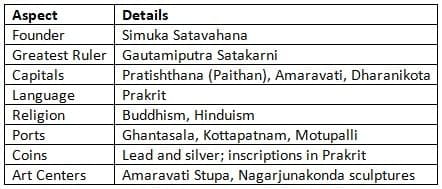
Satavahana Dynasty (1st Century BCE - 3rd Century CE)

Key Points

  • Gautamiputra Satakarni defeated Sakas and revived Satavahana power.
  • The dynasty encouraged overseas trade with Rome.
  • Their rule marked the golden age of early Andhra history.

Quick Fact: The Amaravati School of Art developed during Satavahana rule - known for Buddhist relief sculptures.

Ikshvaku Dynasty (3rd - 4th Century CE)

  • Succeeded the Satavahanas in the Krishna-Guntur region.
  • Capital: Vijayapuri (Nagarjunakonda).
  • Rulers:
    • Chamtamula (Founder)
    • Virapurushadatta (Patron of Mahayana Buddhism)
  • Built stupas and monasteries at Nagarjunakonda.
  • The Buddhist monk Nagarjuna is believed to have lived here.

Quick Fact: Nagarjunakonda was a major center of Mahayana Buddhism.

Vishnukundins (5th - 7th Century CE)
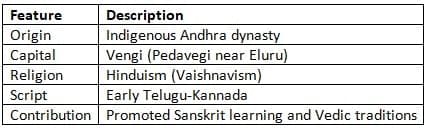
Vishnukundins (5th - 7th Century CE)

Note: Their rule strengthened Hindu cultural identity and Telugu script development.

Buddhism & Jainism in Andhra Pradesh

  • Andhra Pradesh became a Buddhist heartland during 3rd century BCE - 3rd century CE.
  • Important Sites:
    • Amaravati: largest stupa and center of Buddhist art.
    • Nagarjunakonda: monasteries and universities.
    • Bhattiprolu: earliest Brahmi inscriptions in proto-Telugu script.
  • Jainism also spread under early dynasties like the Satavahanas and Ikshvakus.

Quick Fact: The Bhattiprolu Stupa is one of the earliest Buddhist stupas in South India.

Scripts and Inscriptions

  • Ashokan Brahmi script introduced in Andhra.
  • Gradual evolution into Proto-Telugu by 3rd century BCE.
  • Languages used: Prakrit, Sanskrit, and Telugu.
  • Major inscriptions: Nanaghat, Nasik, Bhattiprolu, Amaravati.

Major Dynasties

Major Dynasties

The document Cheat Sheet: Ancient History of Andhra Pradesh is a part of the APPSC (Andhra Pradesh) Course APPSC State Specific Preparation Course.
All you need of APPSC (Andhra Pradesh) at this link: APPSC (Andhra Pradesh)

FAQs on Cheat Sheet: Ancient History of Andhra Pradesh

1. What are the key characteristics of the Megalithic Culture during the Iron Age in Andhra Pradesh?
Ans. The Megalithic Culture in Andhra Pradesh is marked by the construction of large stone structures, known as megaliths, which served as burial sites and memorials. This culture is characterised by the use of stone tools, pottery, and iron implements. Archaeological findings indicate a strong connection to ritual practices and community gatherings, reflecting social organisation and belief systems prevalent during this period.
2. What significant contributions did the Mauryan Period make to the history of Andhra Pradesh?
Ans. The Mauryan Period is significant for the establishment of a vast empire that included parts of Andhra Pradesh. It is renowned for the promotion of Buddhism, with notable figures like Emperor Ashoka, who played a crucial role in spreading Buddhist teachings and values across the region. The period also saw advancements in administration, trade, and the use of inscriptions to convey royal edicts, particularly in promoting dharma and ethical governance.
3. How did the Satavahana Dynasty influence the cultural landscape of Andhra Pradesh?
Ans. The Satavahana Dynasty, ruling from the 1st Century BCE to the 3rd Century CE, significantly influenced the cultural landscape of Andhra Pradesh through the patronage of art, literature, and trade. They played a pivotal role in the development of the Andhra region as a centre for trade and commerce, fostering connections with other regions. The dynasty is also known for its support of Buddhism, resulting in the construction of stupas and rock-cut caves, such as those at Amaravati and Nagarjunakonda.
4. What role did the Ikshvaku Dynasty play in the development of Buddhism and Jainism in Andhra Pradesh?
Ans. The Ikshvaku Dynasty, which ruled from the 3rd to the 4th Century CE, was instrumental in the promotion of Buddhism and Jainism in Andhra Pradesh. They were known for their support of Buddhist institutions and the construction of stupas, which facilitated the growth of Buddhist communities. Additionally, the dynasty's embrace of Jainism contributed to the religious diversity and cultural richness of the region, exemplifying a harmonious coexistence of multiple faiths.
5. What is the significance of inscriptions and scripts found in ancient Andhra Pradesh?
Ans. Inscriptions and scripts from ancient Andhra Pradesh are significant as they provide vital historical information regarding political, social, and cultural aspects of the time. They serve as primary sources for understanding governance, administration, and religious practices. Notable inscriptions include those from the Mauryan and Satavahana periods, which offer insights into the languages, scripts, and royal decrees, helping historians reconstruct the region's rich history and heritage.
Explore Courses for APPSC (Andhra Pradesh) exam
Get EduRev Notes directly in your Google search
Related Searches
practice quizzes, Extra Questions, Viva Questions, Cheat Sheet: Ancient History of Andhra Pradesh, Sample Paper, Previous Year Questions with Solutions, MCQs, Cheat Sheet: Ancient History of Andhra Pradesh, Summary, shortcuts and tricks, mock tests for examination, Objective type Questions, Cheat Sheet: Ancient History of Andhra Pradesh, Semester Notes, study material, Free, ppt, Important questions, Exam, video lectures, past year papers, pdf ;