Cheat Sheet: Ancient History of Haryana


Haryana, derived from "Hari" (Vishnu) and "Ayana" (abode), literally means "The Abode of God." It holds a prominent place in Indian ancient history due to its association with Vedic culture, Mahabharata, and early settlements along the Saraswati River. It was one of the cradles of ancient Indian civilization, witnessing transitions from the Indus Valley Civilization (IVC) to Vedic culture and Mahajanapada era.
Prehistoric Period
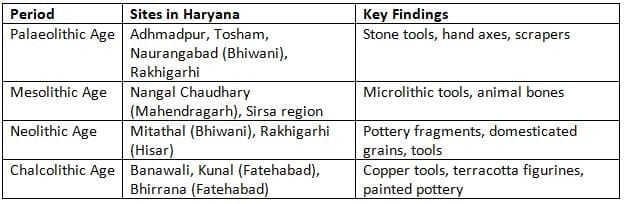
Quick Fact: Bhirrana (Fatehabad) is considered one of the oldest sites of the Indus Valley Civilization, dating back to 7500 BCE-older than Harappa and Mohenjodaro.
Indus Valley Civilization (Harappan Phase)
Major Harappan Sites in Haryana
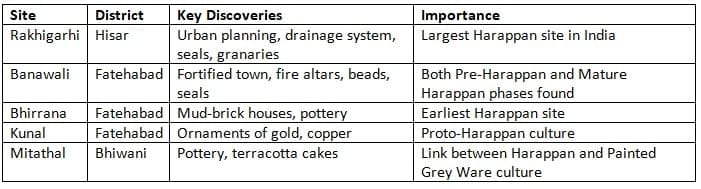
Quick Facts
- River Saraswati (now extinct) flowed through Haryana and sustained many Harappan settlements.
- Evidence of early farming and animal domestication (cattle, sheep, goat) found.
- The civilization here transitioned gradually into Vedic culture.
Vedic Age (1500-600 BCE)
Haryana in Vedic Literature
- The Rigveda mentions the Saraswati River multiple times - many scholars identify its course through Kurukshetra, Kaithal, and Hisar.
- Kurukshetra known as "Dharmakshetra" - the land of righteousness and the scene of the Mahabharata war.
- Panchala, Kuru, Matsya kingdoms covered parts of modern Haryana.
- Vedic yajnas (sacrifices) and ashrams flourished in the region.
Quick Fact: The Battle of Ten Kings (Dasarajna Yuddha)-a major Rigvedic conflict-was fought on the banks of the Ravi or Saraswati River, in the region identified as modern-day Haryana.
Epic Age - Mahabharata Period
Importance of Kurukshetra
- Kurukshetra = Central to the Mahabharata epic.
- The war between Kauravas and Pandavas took place here.
- The Bhagavad Gita was preached by Lord Krishna to Arjuna on this land.
Other Related Sites
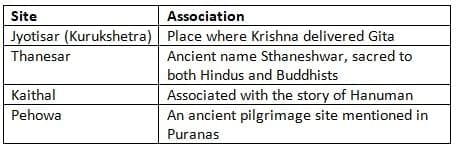
Quick Fact: Kurukshetra is also known as "Land of Dharma" - it is believed that performing religious acts here grants 100 times more virtue.
Later Vedic & Mahajanapada Period (600-321 BCE)
- Haryana was part of the Kuru Mahajanapada, with Indraprastha (Delhi) and Thanesar/Kurukshetra as major centers.
- Rise of iron usage and settled agriculture in the plains of Haryana.
- Emergence of small republican clans (Janapadas) and monarchies.
- Trade routes connecting Taxila-Mathura-Patliputra passed through Haryana.
Mauryan Period (321-185 BCE)
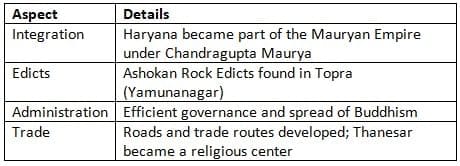
Quick Fact: The Topra Ashokan Edict Pillar was later transported by Firoz Shah Tughlaq to Delhi, where it still stands at Firoz Shah Kotla.
Post-Mauryan Period (2nd Century BCE - 3rd Century CE)
- Successive control of Shungas, Kushanas, and Indo-Greeks.
- Mathura and Thanesar became major centers of art and religion.
- Buddhism and Jainism flourished.
- Kanishka, the great Kushana ruler, possibly extended influence up to Haryana.
Archaeological Finds: Terracotta figurines, coins of Indo-Greek kings, Buddhist relics - mainly from Kurukshetra and Hisar.
Gupta Period (4th-6th Century CE)
- Haryana was part of the Gupta Empire, known as the "Golden Age of India."
- Trade and learning flourished - centers at Thanesar and Kurukshetra.
- Temples and sculpture saw major development.
- Skandagupta's inscriptions found near Kurukshetra show political and religious importance.
Pushyabhuti (Vardhana) Dynasty (6th-7th Century CE)

Quick Fact
- Harsha's court poet Banabhatta wrote Harshacharita and Kadambari.
- Chinese traveler Hiuen Tsang visited Thanesar, describing it as a prosperous and sacred city.
Decline and Legacy
- After Harsha's death, the empire disintegrated.
- Haryana saw invasions by Arabs, Turks, and later Ghaznavids.
- The region remained a strategic gateway to north India - leading to its importance in Medieval Indian history.
Key Historical Periods and Sites of Haryana
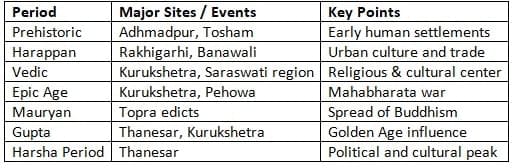
Quick Facts
- Oldest Harappan site in India → Bhirrana (Fatehabad)
- Largest Harappan site in India → Rakhigarhi (Hisar)
- Vedic River of Haryana → Saraswati
- Mahabharata Battlefield → Kurukshetra
- Ashokan Edict found at → Topra (Yamunanagar)
- Capital of Harsha → Thanesar (later Kannauj)
- Chinese traveler visited Haryana → Hiuen Tsang
FAQs on Cheat Sheet: Ancient History of Haryana
| 1. What were the key features of the Indus Valley Civilization? |  |
| 2. What significant developments occurred during the Vedic Age? | |
| 3. What is the importance of the Mahajanapada Period in ancient Indian history? | |
| 4. How did the Mauryan Period influence the Indian subcontinent? | |
| 5. What legacy did the Gupta Period leave for future generations? | |