Important Diagrams: Pressure, Winds, Storms, and Cyclones

Q1. a) What is pressure? Draw or describe with a diagram how pressure depends on force and area.
Answer: Pressure is defined as force applied per unit area. If the same force acts over a smaller area, the pressure is higher; if the force is spread over a larger area, the pressure is lower. 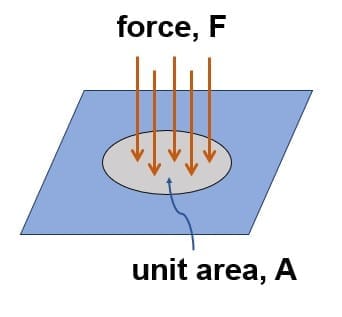
b) Explain using a diagram why atmospheric pressure acts on everything on Earth's surface.
Answer: The atmosphere - the envelope of air around Earth - exerts pressure on all objects because air molecules push in all directions on surfaces. That pressure is called atmospheric pressure. 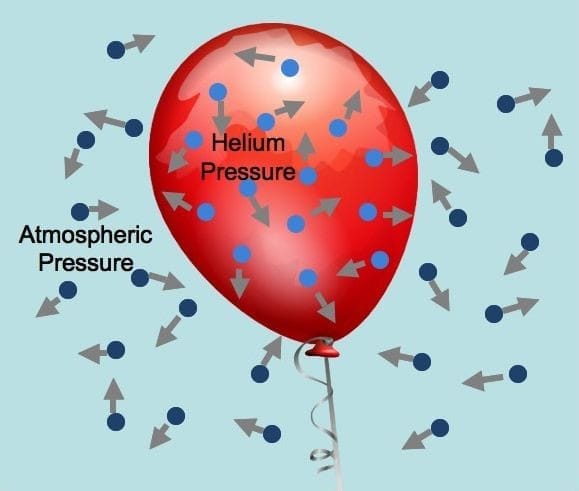
Q2. a) Using a diagram, show how wind is formed due to pressure differences.
Ans: Wind is formed because air moves from a region of higher pressure to a region of lower pressure. Differences in pressure (pressure gradient) cause air to flow - that flow is wind.
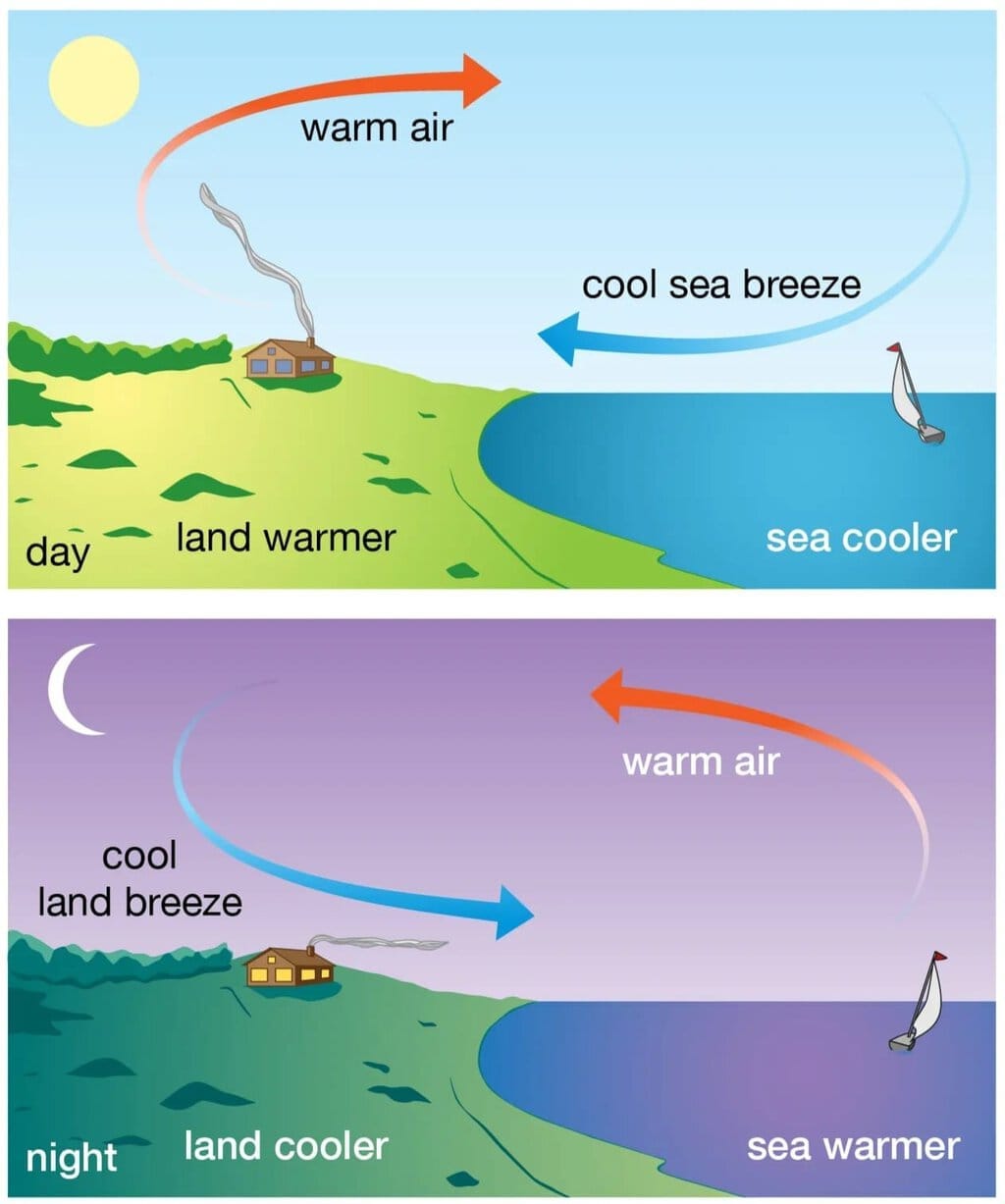
b) Sketch and explain the difference between a "sea breeze" and a "land breeze."
Ans:
Sea breeze (daytime): Land heats more quickly than sea; air over land becomes warmer, rises (creating low pressure). Cooler air from sea moves toward land → sea breeze.
Land breeze (night): After sunset, land cools faster than sea; air over sea is warmer and rises; cooler air from land moves toward sea → land breeze.
Q3. What will happen to the two identical balloons A and B as shown in Figure when water is filled into the bottle up to a certain height? Will both the balloons bulge? If yes, will they bulge equally? Explain your answer.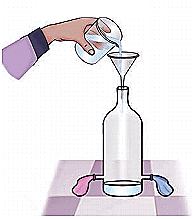 Ans: When water is filled into the bottle up to a certain height (sufficiently above the level of the entry points of water from the bottle) both the balloons will bulge. The entry points of water from the bottle to the balloons are at the same height. The balloons, being elastic, exert some force on the water. Assuming that the balloons are equally elastic, both balloons will bulge equally.
Q4. Describe an activity to show that air flows from a region of high pressure to a region of low pressure.
Ans: Activity to show that air flows from a region of high pressure to a region of low pressure.
Materials required: Two similar balloons made of thin rubber, a drinking straw, and some thread.
Procedure: Insert one end of the straw into one balloon and secure it with the thread.
Inflate the second balloon and insert the free end of the straw into the neck of the inflated balloon, and secure it with the thread. (Ensure that the air from the inflated balloon does not leak.)
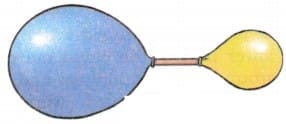
Observations: Some air moves from the inflated balloon to the uninflated balloon, and the sizes of both balloons change. After some time, both the balloons attain almost the same size, and the flow of air stops.
Conclusion: The inflated balloon has higher pressure inside it, and the uninflated balloon has low pressure inside. When the two balloons are connected through a straw, air moves from the high-pressure area (inside the inflated balloon) to the low-pressure area (inside the uninflated balloon).
FAQs on Important Diagrams: Pressure, Winds, Storms, and Cyclones
| 1. What are the main factors that influence wind patterns? |  |
| 2. How do cyclones form? | |
| 3. What is the relationship between pressure and weather conditions? | |
| 4. What are the characteristics of a tropical cyclone? | |
| 5. How do pressure diagrams help in understanding weather patterns? | |