Q1: A beggar wrapped himself with a few layers of newspaper on a cold winter night. This helped him to keep himself warm because (a) friction between the layers of newspaper produces heat (b) air trapped between the layers of newspaper is a bad conductor of heat (c) newspaper is a conductor of heat (d) newspaper is at a higher temperature than the temperature of the surroundings
Solution:
Ans: (b) air trapped between the layers of newspaper is a bad conductor of heat
The beggar used layers of newspaper to keep warm on a cold winter night due to the following reasons: The air trapped between the layers of newspaper acts as an insulator, preventing heat loss. Newspaper itself is not a good conductor of heat, which helps maintain warmth.
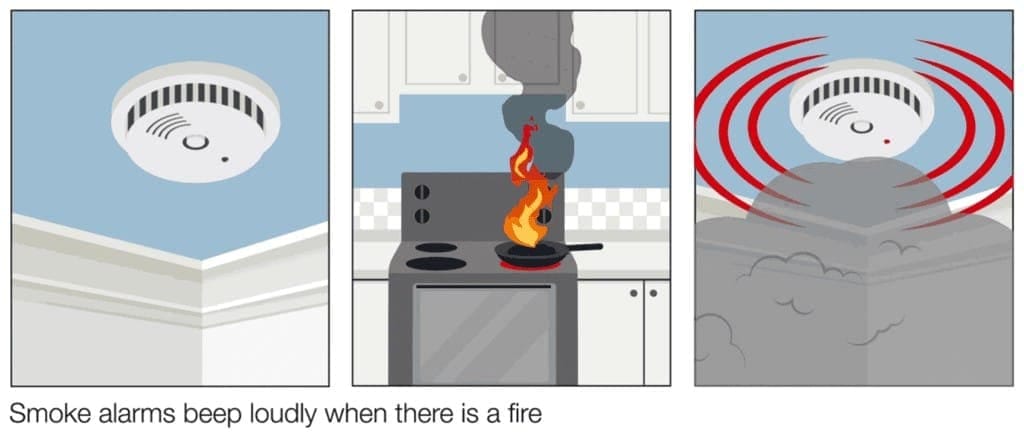
Q2:A smoke detector is a device that detects smoke and sounds an alarm. Where should it be placed in a room? (a) Near the floor (b) In the middle of a wall (c) On the ceiling (d) Anywhere in the room
Solution:
Ans: (c) On the ceiling Explanation: Smoke from a fire or burning material rises because the hot air and smoke are less dense than the cooler air around them; this movement is due to convection. Therefore, a smoke detector should be placed on the ceiling or high on a wall so that it detects the rising smoke quickly. It is best placed centrally on the ceiling away from corners or obstructions so the alarm activates as soon as smoke reaches the detector.
Q3:Ventilators are situated close to the ceilings and not near the floor. Why?
Solution:
Ans:Ventilators are placed near the ceilings rather than the floor for several reasons:
Warm air is lighter than cool air, causing it to rise.
As warm air rises, it creates a vacuum that pulls in cooler air from below.
Ventilators at the top help to circulate fresh air effectively.
This design enhances overall air quality in the room.
Q4: How does the heat from the sun reach us?
Solution:
Ans: Heat from the sun reaches us by radiation, which does not require a medium to transfer heat. Unlike conduction (which occurs in solids) and convection (which occurs in liquids and gases), radiation can transfer heat even through the vacuum of space
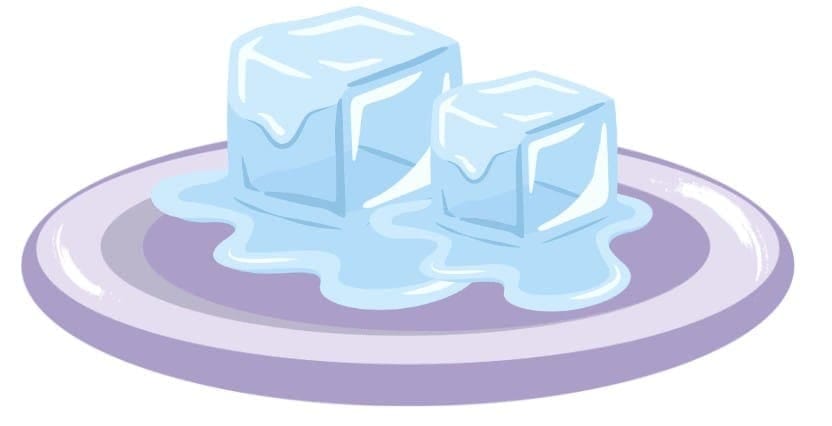
Q5:Some ice cubes placed in a dish melt into water after some time. Where do they get heat for this transformation?
Solution:
Ans: When ice cubes are placed in a dish, they start to melt and turn into water. For this transformation to happen, the ice needs to absorb heat energy.
The ice cubes get heat from the surrounding air.
They also absorb heat from the surface of the dish and from the table on which the dish is placed.
This incoming heat increases the energy of the ice particles and causes the solid ice to change into liquid water.
Q6: State similarities between the laboratory thermometer and the clinical thermometer.
Solution:
Ans: Similarities between laboratory thermometer and clinical thermometer are :
Both are used to measure temperature.
Both typically use mercury or digital technology to display readings.
Both require careful handling to ensure accurate readings.
Both thermometers have a scale marked in degrees Celsius.
Q7:How does water seep through the surface of the Earth and get stored as groundwater?
Solution:
Ans: Water soaks into the ground and moves down through soil and rock layers by a process called infiltration. As it moves down, it fills the spaces between particles of soil and cracks in rock. Eventually the water reaches permeable underground layers called aquifers, where it is stored as groundwater. This stored water can later be used by wells, springs, and plant roots.
When it rains, water falls on the ground and starts to move through the soil and gaps in rocks - this is infiltration.
The water continues downward, filling the pores and spaces between soil particles and rock layers.
Eventually it reaches underground layers that can hold water - these are called aquifers. The water stored there is called groundwater.
Thus, water seeps through soil and rocks into the ground and gets stored as groundwater, which helps supply wells and maintain rivers during dry periods.
Q8:The water cycle helps in the redistribution and replenishment of water on the Earth. Justify.
Solution:
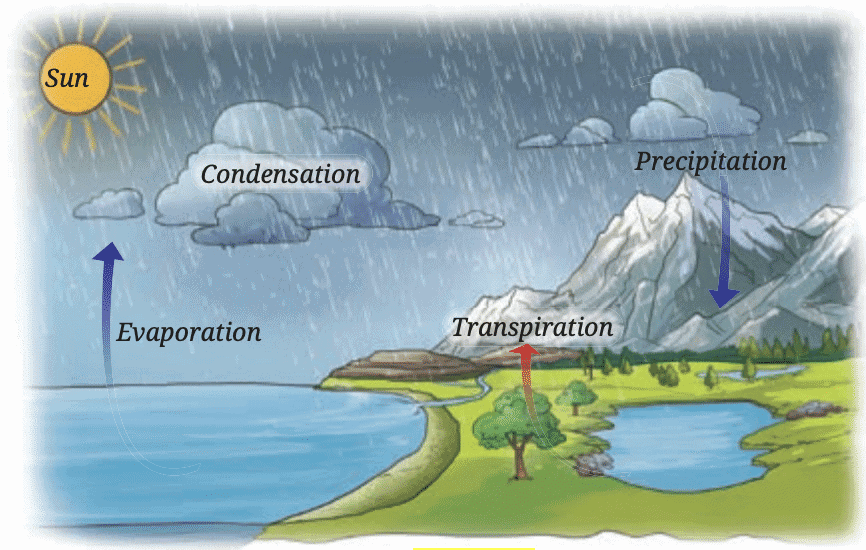
Ans: The water cycle (also called the hydrological cycle) continuously moves water around the Earth and refills water sources. It does this by the following steps:
1. Evaporation and Transpiration: Water from oceans, lakes and rivers turns into water vapour because of the Sun's heat. Plants also release water vapour from their leaves (transpiration). This vapour rises into the atmosphere.
2. Condensation: As water vapour rises, it cools and changes back into tiny droplets to form clouds.
3. Precipitation: When cloud droplets join and grow heavy, they fall as rain, snow, or hail, returning water to the land and oceans.
4. Infiltration and Runoff: Some of the water that reaches the ground soaks into the soil and replenishes groundwater; the remaining water flows over the surface as runoff into rivers, lakes and seas.
All these steps together move water around the planet and refill water sources such as rivers, lakes and aquifers. This continuous circulation ensures that fresh water is redistributed and replenished, making it available for plants, animals and human use.
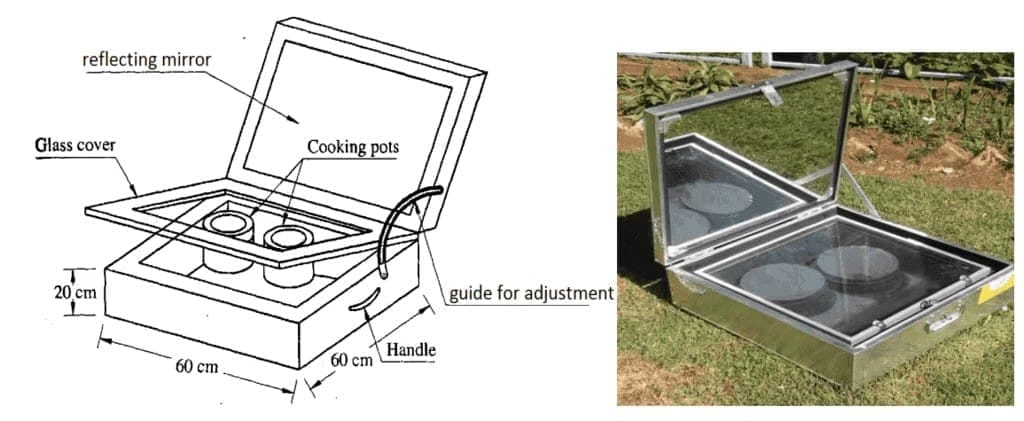
Q9. Why are the pipes of the solar heater and the containers of the solar cooker painted black?
Solution:
Ans: The pipes of the solar heater and the containers of the solar cooker are painted black because:
Black colour absorbs more heat than other colours.
This helps to keep the pipes and containers warm.
Q10. Explain the reason for the following statement, "When heat is applied at the bottom of the water vessel, then it gets heated more quickly than when it is heated at the top."
Solution:
Ans: The reason for the statement is related to the movement of water particles when heated:
When heat is applied at the bottom of the vessel, the water particles near the heat source become lighter and rise.
As the hot water rises, the colder and heavier water from the sides moves down to replace it.
This creates convection currents, allowing the water to heat up more efficiently.
Conversely, when heat is applied at the top, only the upper layer of water heats up, while the hot water remains at the surface.
FAQs on Sure Shot Questions: Heat Transfer in Nature
1. What are the three methods of heat transfer?
Ans. The three methods of heat transfer are conduction, convection, and radiation. Conduction occurs when heat is transferred through direct contact between materials, such as when a metal spoon gets hot from being in a pot of boiling water. Convection involves the movement of heat through fluids (liquids and gases) due to the movement of the fluid itself, as seen in boiling water where hot water rises and cooler water descends. Radiation is the transfer of heat in the form of electromagnetic waves, which can occur in a vacuum, such as the heat from the Sun reaching the Earth.
2. How does conduction work in everyday life?
Ans. Conduction works in everyday life through direct contact between materials. For instance, when you touch a hot stove, heat is transferred from the stove to your hand, causing you to feel warmth. This happens because the particles in the hot stove are vibrating quickly and collide with the particles in your hand, transferring energy and increasing the temperature of your skin.
3. Can you explain the process of convection with an example?
Ans. Convection is the process where heat is transferred through the movement of fluids. An example of convection can be observed when heating a pot of water on a stove. As the water at the bottom heats up, it becomes less dense and rises to the top, while the cooler, denser water descends to the bottom. This movement creates a convection current, leading to the even heating of the water throughout the pot.
4. What is the role of radiation in heat transfer?
Ans. Radiation plays a crucial role in heat transfer by allowing energy to be transmitted through electromagnetic waves without needing a medium. A common example of radiation is feeling the warmth of the sun on your skin, even though space is a vacuum. The sun emits infrared radiation, which travels through space and heats objects it encounters, including the Earth.
5. How does heat transfer affect weather patterns?
Ans. Heat transfer significantly affects weather patterns through processes such as convection in the atmosphere. Warm air rises, cools, and then descends, creating wind and influencing weather systems. For example, when the sun heats the Earth's surface, it warms the air above it. This warm air rises, and as it cools, it can lead to cloud formation and precipitation, thus playing a vital role in weather changes.
Sure Shot Questions: Heat Transfer in Nature, Semester Notes, MCQs, Extra Questions, ppt, study material, Sure Shot Questions: Heat Transfer in Nature, practice quizzes, past year papers, mock tests for examination, shortcuts and tricks, Sure Shot Questions: Heat Transfer in Nature, Objective type Questions, Sample Paper, Summary, Free, Exam, Previous Year Questions with Solutions, video lectures, pdf , Important questions, Viva Questions;