CLAT Exam > CLAT Notes > Legal Reasoning > Legal Current Affairs for CLAT (November 2025)
Legal Current Affairs for CLAT (November 2025)


National Current Affairs
India's Deepest Underwater Research Laboratory
- India has announced plans to build the world's deepest underwater laboratory in the Indian Ocean.
- The project is expected to shape the country's deep-sea scientific presence over the next 25 years.
About the Project
- The habitat is designed to operate at 6,000 metres depth to allow long-duration stays, advanced experiments, and direct monitoring of one of Earth's least explored zones.
- The National Institute of Ocean Technology (NIOT), Chennai, will lead the project under its Vision 2047 roadmap.
- The first phase will test technologies with a smaller station at 500 metres depth.
- Three scientists will be able to remain in the initial station for more than 24 hours.
- The facility will include an advanced life-support system and a docking arrangement for deep-sea vehicles.
- The final planned station at 6,000 metres would be far deeper than any existing underwater laboratory.
Global Context
- The Aquarius Reef Base in the United States operates at 19 metres and is the only currently functioning underwater laboratory of its kind.
- China is developing a deepwater station in the South China Sea, expected around 2030.
- A British firm, DEEP, is working on long-term seafloor habitats with a deployment target near 2027.
Design Features and Engineering
- The habitat will have transparent panels offering 360-degree visibility for direct observation of marine life.
- It will provide regulated oxygen supply, temperature control, research instruments, and a docking system for routine surface travel.
- At 6,000 metres, water pressure is roughly 600 times surface pressure and can crush ordinary metals.
- Engineers plan to use titanium alloys, advanced carbon composites, and specially designed pressure-resistant structures.
- Communication underwater requires acoustic systems and fibre-optic links because radio waves do not travel well through water.
- Power is likely to come from surface-laid cables with backup cells and possibly ocean thermal energy.
Experiments
- The station is conceived as an underwater living module for researchers.
- Scientists will study deep-sea biodiversity, collect chemical and geological samples, and test human physiological responses to prolonged high-pressure exposure.
- Research will include biotechnology, drug discovery, and investigation of rare deep-sea microbes.
India's Deep Ocean Mission
Overview
- India's Deep Ocean Mission (DOM) aims to develop technologies to explore and sustainably use the deep ocean's living and non-living resources.
- The mission was launched on 07.09.2021 by the Ministry of Earth Sciences (MoES).
- India has a coastline of over 7,517 km and an Exclusive Economic Zone (EEZ) of 2.2 million sq. km, offering large oceanic potential.
- NITI Aayog and India's Blue Economy Vision 2030 estimate ocean resources could contribute up to 4% of India's GDP.
- The United Nations Decade of Ocean Science (2021-2030) aligns with India's efforts.
Funding and Goals
- The mission has an overall investment of ₹4,077 crore over five years and is one of nine missions under PMSTIAC.
- DOM aims to add over Rs. 100 billion to India's Blue Economy through exploration in the Central Indian Ocean Basin.
Flagship Programmes
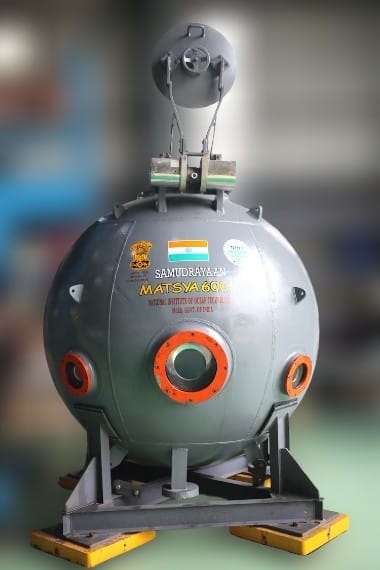
- Samudrayaan, initiated in 2021, aims to take a three-member crew to 6,000 metres in the indigenously developed Matsya6000 submersible.
- The mission involves collaboration with ISRO, NIOT, VSSC, and the International Seabed Authority (ISA).
Key Components
Technology for Deep-Sea Exploration
- Matsya 6000 is a manned submersible designed for three occupants to reach 6,000 metres.
- MATSYA-6000 is described as a fourth-generation scientific submersible.
- It has an operational endurance of 12 hours and an emergency endurance up to 96 hours.
- Systems include a high-density Li-Po battery, underwater acoustic telephone, drop-weight emergency escape, and bio-vests for health monitoring of crew.
- NIOT, Chennai developed the submersible.
- Wet trials were completed at L&T Shipyard, Kattupalli, Tamil Nadu in Jan-Feb 2025, and 500-metre shallow water trials are planned by 2026.
Resource Mapping and Extraction
- DOM supports survey and extraction of polymetallic nodules rich in nickel, cobalt, manganese from the Central Indian Ocean Basin.
- Extraction could reduce dependence on imports of critical minerals used in electronics, batteries, and solar panels.
- The International Seabed Authority has allocated India a 75,000 km2 site for exploring and extracting polymetallic nodules.
Study of Deep-Sea Biodiversity
- DOM supports discovery of new marine species and assesses potential for marine-based biotechnology.
Ocean Climate Services
- DOM contributes to improved climate modelling and disaster forecasting through better knowledge of ocean currents, temperature profiles, and biogeochemical processes.
Infrastructure and Human Resource Development
- DOM includes establishing advanced marine research facilities and training programmes to build deep-sea scientific and engineering expertise.
National Institute of Ocean Technology
- NIOT was established in November 1993 as an autonomous society under the Ministry of Earth Sciences, Government of India.
- Its primary objective is to develop indigenous technologies for harvesting living and non-living resources within India's EEZ.
- NIOT is managed by a Governing Council and headed by a Director; it is headquartered in Chennai.
- Prof. Balaji Ramakrishnan is the Director of NIOT.
GI Tag to Ambaji Marbles
Recent Development
- Ambaji Marble from Banaskantha district, north Gujarat, has been granted a Geographical Indication (GI) tag by the Union government.
- The Geographical Indications Registry under the Ministry of Commerce and Industry issued the tag in the name of the Ambaji Marbles Quarry and Factory Association.
- The Commissioner of Geology and Mining (Dr Dhaval Patel), Banaskantha Collector (Mihir Patel), and the Stone Artisan Park Training Institute (SAPTI) were instrumental in the development.
Marble: Formation and Composition
- Marble is a metamorphic rock formed when limestone undergoes metamorphism.
- It is composed mainly of calcite (CaCO₃) and may include clay minerals, micas, quartz, pyrite, iron oxides, and graphite.
- Metamorphism recrystallises calcite into interlocking crystals, giving marble its smooth texture.
- Dolomitic marble forms when dolostone is subjected to heat and pressure.
About Ambaji Marbles
- Ambaji Marbles, also called Amba White or Ambe White Marble, is known for its pure white colour and distinctive natural patterns.
- The marble is quarried near Ambaji in Banaskantha district, Gujarat.
- Mines in the Ambaji area date back 1,200-1,500 years, roughly contemporaneous with the Dilwara Jain Temple in Mount Abu.
- Characteristics include pristine white colour and subtle grey or beige veining that varies between fine and bold patterns.
- Variations in veining reflect natural mineral impurities present during formation.
- Ambaji marble is valued for lasting shine, strength, durability, and a smooth polished surface.
- The marble is believed to have been used in the Ram Temple in Ayodhya.
- A recent survey found the stone contains silicon oxide and calcium oxide.
- Ambaji marble has been used in temple construction internationally, including Miami, Los Angeles, Boston, New Zealand, and England.
Geographical Indication (GI) Tags
- A Geographical Indication is a sign used on goods that originate from a specific geographic place and have qualities or reputation essentially due to that place.
- A GI tag helps distinguish genuine products from imitations and links quality to origin.
- GIs are collective rights held by authorised users, often producer groups or cooperatives in the region.
- Common GI categories include agricultural products, foodstuffs, wine and spirits, handicrafts, and industrial products.
- WIPO's Standing Committee (SCT) discusses international legal and policy matters on GIs and appellations of origin.
International Treaties and TRIPS
- Relevant WIPO-related treaties include the Paris Convention (1883), Madrid Agreement (1891), and Lisbon Agreement (1958).
- The TRIPS Agreement (1995), administered by the WTO, mandates minimum GI protection standards among member countries.
GI Registration in India
- India's Geographical Indications of Goods (Registration and Protection) Act, 1999, governs GI registration and protection; it came into force in 2003.
- GI registration in India is initially valid for 10 years and renewable for further 10-year periods.
- The first product in India to receive a GI tag was Darjeeling tea in 2004-05.
- GI tags are issued by the Geographical Indications Registry in Chennai under the Ministry of Commerce and Industry.
Protection Mechanisms
- Four main approaches protect GIs: sui generis systems, collective or certification marks, business practice-based methods, and unfair competition laws.
- Sui generis and collective/certification mark systems typically provide collective rights for producers who meet specified standards.
- Countries often combine methods for effective protection.
- The EU primarily uses a sui generis system; the United States relies more on certification marks under trademark law.
Gati Shakti Transport Planning and Research Organisation
Recent Change
- The central government plans to replace the Network Planning Group (NPG) with a new centralised body to coordinate transport infrastructure strategy.
About the Transport Planning and Research Organisation
- The proposed GatiShakti Transport Planning and Research Organisation (GTPRO) will operate under the Cabinet Secretariat.
- GTPRO will prepare medium- and long-term roadmaps for transport ministries, including roads, railways, shipping, and aviation.
- The framework aims to increase integration and long-term vision in transport planning.
- Integrated five-year and ten-year plans will link each ministry's strategy to the government's infrastructure vision.
- DPIIT under the Ministry of Commerce and Industry is expected to seek Cabinet approval soon.
- The government intends GTPRO to be operational by the next financial year.
- The entity will be led by a secretary-level officer rather than a joint secretary-level official.
- GTPRO will evaluate projects above Rs 500 crore, monitor progress, and analyse overall impacts.
PM Gati Shakti
- PM Gati Shakti, launched in 2021, is the national master plan for multi-modal connectivity to reduce logistics costs and boost the economy.
- It subsumed the Rs 110 lakh crore National Infrastructure Pipeline launched in 2019.
- Plans include 11 industrial corridors and two defence corridors-one in Tamil Nadu and another in Uttar Pradesh.
- PM Gati Shakti brings 16 infrastructure-related ministries together for integrated planning and implementation.
- The initiative identifies seven engines of economic growth: roads, railways, airports, ports, mass transport, waterways, and logistics infrastructure.
- Its objective is to reach a sustained $5 trillion economy and a $20 trillion economy by 2040.
Institutional Framework
- The rollout, implementation, and monitoring follow a three-tier system: Empowered Group of Secretaries (EGOS), Network Planning Group (NPG), and Technical Support Unit (TSU).
Network Planning Group (NPG)
- NPG comprises heads of network planning divisions of connectivity ministries and departments to coordinate unified planning.
- It assists EGOS, which is chaired by the Cabinet Secretary and includes secretaries of ministries and the Head of Logistics Division (DPIIT) as convenor.
- NPG's role is to integrate networks, optimise through modification or expansion, avoid duplication, and reduce logistics costs through micro-planning.
India's Third Cheetah Reintroduction Site
Recent Decision
- The Government of India and the National Tiger Conservation Authority (NTCA) approved Nauradehi Wildlife Sanctuary in Madhya Pradesh as the third site under India's Cheetah Reintroduction Programme.
- India and Botswana announced the translocation of eight cheetahs from Botswana during President Droupadi Murmu's state visit.
Project Cheetah
- Project Cheetah is the first intercontinental large-carnivore translocation effort in the world.
- The project formally began in India on 17 September 2022 to reintroduce cheetahs, extinct in India since 1952.
- NTCA is the implementing agency; it is a statutory body under the Ministry of Environment, Forests and Climate Change established under the Wildlife (Protection) Act, 1972 (amended 2006).
- NTCA set up a Cheetah Project Steering Committee in 2023 to oversee and advise on implementation.
Progress So Far
- Twenty cheetahs were translocated to Kuno National Park in Sept 2022 and Feb 2023 as the initial phase.
- Kuno National Park was declared a National Park in 2018 and is being developed as a potential habitat for the Asiatic lion.
- The project provides up to 100,000 km2 of legally protected habitat and an additional 600,000 km2 of suitable landscape.
- Gandhi Sagar Wildlife Sanctuary in Mandsaur district became a secondary site when three cheetahs were shifted there from Kuno.
- Currently, India has 27 cheetahs (16 born locally) across Kuno and Gandhi Sagar sanctuaries.
- Kuno has 24 cheetahs including adults and cubs; Gandhi Sagar has three cheetahs.
About Nauradehi Wildlife Sanctuary
- Nauradehi is the largest wildlife sanctuary in Madhya Pradesh, covering nearly 1,197 km2 across Sagar, Damoh, and Narsinghpur districts.
- The sanctuary sits on a plateau in the upper Vindhyan range and connects eastwards to Veerangana Durgawati Sanctuary and onwards toward Bandhavgarh National Park.
- It lies in the Deccan peninsula biogeographic region and spans parts of the Ganga and Narmada basins.
- Nauradehi acts as a corridor linking Panna and Satpura tiger reserves and indirectly connects to Bandhavgarh via Rani Durgawati Wildlife Sanctuary.
- Since 2018, tiger numbers increased to six after introduction of orphaned individuals.
Recent Developments at Nauradehi
- Madhya Pradesh has approved Nauradehi as the state's third cheetah site.
- Cheetahs from Namibia will be translocated to Nauradehi.
- Officials report reasonable prey densities and considered the site favourable for reintroduction.
- Ungulate density is 15.83 animals per sq km.
- The prey base recorded in the 2020 census includes 4,788 nilgai, 1,796 chital, and 1,556 chinkara.
- Current prey density could support 25 cheetahs; with improved management and reduced human pressure, that may rise to 52 in the 750 sq km core area.
- A tender has been floated to build cheetah enclosures to house the first batch before release into the wild.
- Planned facilities include a veterinary care unit, animal rehabilitation centre, a tiger and cheetah monitoring centre, and staff quarters.
- Relocation of villages supports infrastructure: of 93 villages in the core area, 44 have been relocated and 10 are in process.
- The sanctuary requested Rs 8 crore from the Centre and received Rs 5.2 crore for these works.
- A proposal seeks to fill 30 vacant forest guard posts to address staffing shortages.
Concerns and Criticism
- Wildlife experts note that while Nauradehi is not wholly unsuitable, it may not be an ideal cheetah habitat.
- Some scientists call the reintroduction plan scientifically flawed.
- Earlier plans underestimated Kuno's capacity and did not foresee cheetahs dispersing into adjoining states like Rajasthan.
- Introducing African cheetahs into densely populated India creates higher risks than in source countries such as Namibia.
- Human-cheetah conflict has occurred, including cheetahs leaving enclosures, preying on livestock, and facing retaliation.
- Cheetahs require very large, open, prey-rich, conflict-free areas-estimates suggest 10,000-20,000 km2 for long-term viability.
- Experts question whether Nauradehi can provide the truly wild conditions required for natural survival and reproduction.
About the Cheetah
- The cheetah is one of seven big cats native to Africa, central Iran, and historically to India.
- It is the fastest land animal, capable of 80-98 km/h.
- Archaeological evidence includes a Neolithic cave painting in Mandasur, Madhya Pradesh depicting a spotted feline being hunted.
- The name 'cheetah' likely originates from Sanskrit chitrak, meaning "the spotted one."
- In India, cheetahs became extinct in the mid-20th century; the last recorded Asiatic cheetahs were shot in 1947 and the species was declared extinct in India in 1952.
- Since the 1940s, the cheetah has gone extinct in 14 other countries including Jordan, Iraq, Israel, Morocco, and Pakistan.
150th Anniversary of Arya Samaj
Recent Events
- Prime Minister Narendra Modi released commemorative coins marking Maharshi Dayanand Saraswati's 200th birth anniversary and Arya Samaj's 150 years of service.
- PM Modi addressed the International Arya Mahasammelan in New Delhi and praised the organisation's role in the freedom struggle.
- The International Arya Mahasammelan 2025 is part of the Jyana Jyoti Festival commemorating Maharshi Dayanand Saraswati's 200th birth anniversary and Arya Samaj's 150 years.
What Is Arya Samaj?
- Arya Samaj is a monotheistic Hindu reform movement that advocates values and practices based on the authority of the Vedas.
- The term "Arya Samaj" combines arya (a morally upright person) and samaj (a social group), implying a community of high moral character.
- Swami Dayanand Saraswati founded Arya Samaj in April 1875 in Bombay with initial principles finalised in Lahore in 1877.
- The movement emphasises karma, samsara, cow sanctity, Vedic fire rituals (havan/yajna), and samskaras (sacraments).
- Dayanand established Gurukulas to teach Vedic values and provide alternate education to the British system.
Historical Context and Influence
- Arya Samaj emerged partly from schisms in the Adi Brahmo Samaj and grew especially in the Punjab.
- Swami Dayanand engaged with figures like Rajnarayan Bose and Debendranath Tagore during his travels.
- The main disagreement with Adi Dharma concerned the authority of the Vedas; Arya Samaj held the Vedas as divine revelation.
- Despite differences, relations between Brahmo Samaj members and Dayanand remained cordial.
- Dayanand was assassinated in 1883; the movement continued to expand, notably in Punjab.
Key Figures and Developments
- Important figures include Swami Virajanand Dandeesha, Shri Shraddhanand (founder of Gurukul Kangri University), and Pandit Lekh Ram.
- In 1893, Arya Samaj divided over meat-eating versus vegetarianism and on Anglicised versus Sanskrit-based education.
- Lala Hansraj promoted the Gurukul system blending Vedic education with modern learning; Lala Lajpat Rai supported English-based Dayanand Anglo-Vedic (DAV) institutions.
- In the early 1900s the Samaj campaigned against caste discrimination, supported widow remarriage, and promoted women's education.
- Arya Samaj established branches in many countries with Indian diaspora communities, including South Africa, Fiji, Mauritius, Suriname, Guyana, and Trinidad and Tobago.
Maharshi Dayanand Saraswati
- Maharshi Dayanand Saraswati (born Mool Shankar Tiwari) was a 19th-century reformer who sought to revive Vedic purity and eradicate social evils.
- He was born on 12 February 1824 and renounced worldly life at 19, living as an ascetic for nearly 15 years (1845-1860).
- Influenced by Swami Virjanand in Mathura, he opposed idol worship, untouchability, caste discrimination, polygamy, child marriage, and gender inequality.
- He promoted modern scientific education along with Vedic teachings and opposed the British educational model.
- His work Satyarth Prakash (The Light of Truth) criticised social evils and advocated Vedic wisdom.
- He inspired the founding of Gurukulas and DAV institutions; the first DAV school began in Lahore under Mahatma Hansraj.
- Dayanand was the first to call for "Swaraj" in 1876, influencing leaders like Bal Gangadhar Tilak and Lala Lajpat Rai.
Vedas: Structure and Content
- The Vedas are a large body of ancient religious texts composed in Vedic Sanskrit and form the oldest layer of Sanskrit literature.
- The word véda means "knowledge" and derives from the root vid- "to know".
- There are four Vedas: Rigveda, Yajurveda, Samaveda, and Atharvaveda.
- Each Veda has four subdivisions: Samhitas, Brahmanas, Aranyakas, and Upanishads; some scholars add Upāsanās (worship).
- The Samhitas and Brahmanas are meant for the Brahmacharya and Gr̥hastha stages; Aranyakas and Upanishads are for Vānaprastha and Sannyasa stages respectively.
- Vedas are śruti ("what is heard"), distinguishing them from smr̥ti ("what is remembered").
Rigveda
- The Rigveda is the oldest Veda and mainly contains hymns (Suktas) dedicated to deities such as Agni, Indra, and Varuna.
- It comprises 10 books (Mandalas) with about 1,028 hymns used in rituals and sacrifices.
Yajurveda
- Yajurveda contains prose mantras and verses for rituals and sacrifices.
- It is divided into Shukla (White) Yajurveda and Krishna (Black) Yajurveda; the latter mixes mantras with explanations.
Samaveda
- Samaveda mostly consists of melodies and chants derived from Rigveda hymns and is organised to be sung during rituals.
- It serves as the Veda of melodies, used primarily by Udgatri priests during sacrifices.
Atharvaveda
- Atharvaveda contains hymns, spells, and incantations for daily life, healing, and protection, with about 730 hymns.
- It deals with practical aspects like health and longevity rather than focusing solely on rituals.
Centre-Judiciary Tribunal Dispute
Context
- The Supreme Court recently heard petitions challenging the Tribunals Reforms Act, 2021, leading to sharp exchanges and highlighting a long-standing judiciary-executive conflict over tribunal control.
What Are Tribunals?
- Tribunals are quasi-judicial bodies created to provide speedy, specialised dispute resolution in areas such as taxation, corporate law, and administrative matters.
- The Supreme Court has held that tribunals should enjoy the same independence from the executive as the judiciary.
- Key independence factors include member selection, tribunal composition, and terms and tenure of service.
Judicial Recommendations
- The Supreme Court recommended administrative control of tribunals be vested in the law ministry rather than subject ministries.
- The Court also suggested creating an independent National Tribunals Commission; these recommendations remain unimplemented.
Evolution of the Tribunal System
- The tribunal system grew over the last eight decades to relieve court caseloads; the Income Tax Appellate Tribunal began in 1941.
- The First Administrative Reforms Commission (1969) proposed civil services tribunals at national and state levels.
- The Sixth Law Commission (1974) recommended separate tribunals and commissions for High Court matters.
- The Swaran Singh Committee (1976) proposed administrative tribunals, an all-India appellate tribunal for labour matters, and sector-specific tribunals.
- Articles 323A and 323B were inserted by the 42nd Amendment (1976) empowering legislatures to constitute tribunals for administrative and specified subject matters.
- Many tribunals were established from the 1980s to the 2010s under these provisions.
Types of Tribunal Arrangements
- Some tribunals substitute for High Courts, with appeals directly to the Supreme Court; others are subordinate to High Courts with appeals to the respective High Court.
- In 2010 the Supreme Court clarified that Article 323B subjects are not exclusive, permitting tribunals across legislative domains.
- In 2017, the Finance Act reorganised tribunals, reducing their number from 26 to 19 and empowering the central government to frame rules on appointments and conditions of service.
- The Tribunals Reforms (Rationalisation and Conditions of Service) Bill, 2021, led to an ordinance in April 2021 that abolished nine tribunals and transferred functions to existing judicial bodies.
Independence of Tribunals
- The Supreme Court has emphasised that judicial insulation from executive interference is a constitutional essential.
- Empowering the central government to appoint tribunal chairpersons undermines tribunal independence when tribunals substitute for High Courts.
- The Court has identified selection processes, tribunal composition, and terms of office as core elements determining independence.
- In November 2020 the Court recommended selection committees include the Chief Justice of India (or nominee with casting vote), the presiding officer or a retired senior judge, Secretary to the Ministry of Law and Justice, a non-parent Ministry secretary, and a parent Ministry secretary without a vote.
Term of Office
- The Supreme Court observed in 2019 that short tenures such as three years with reappointment provisions increase executive influence.
- In 2020 the Court advised five-year terms subject to maximum ages: 70 for chairpersons and 67 for other members.
The Tussle and Legal Challenges
- The Tribunals Reforms Act's provisions have sparked litigation, delaying tribunal appointments nationwide.
- The Madras Bar Association challenged the Act's constitutionality in Sept 2021, arguing it re-enacts provisions the Court previously struck down.
- Contentious provisions included fixing tribunal member terms at four years and a minimum appointment age of 50 years.
- Petitioners argued these provisions undermine judicial independence and exclude younger qualified candidates.
- The Union government defended the Act as parliamentary policy within legislative domain.
Fallout
- Vacancies across key tribunals have caused operational delays and reduced tribunal effectiveness.
- Examples from Dec 2022 government data: 24 vacancies in the National Company Law Tribunal (sanctioned strength 32) and 24 vacancies in the Armed Forces Tribunal (sanctioned strength 34).
- Other tribunals showed significant unfilled posts, and the Supreme Court has observed tribunals were left "virtually defunct" due to appointment delays.
Contempt of Court
Recent Incident
- Alleged contemptuous and derogatory remarks against the Chief Justice of India and the Supreme Court led to calls for contempt proceedings.
- Such statements are seen as undermining judicial dignity and public trust in the judiciary.
What Is Contempt of Court?
- Contempt of court protects the dignity and authority of the judicial system and is governed in India by the Contempt of Courts Act, 1971.
- High Courts and the Supreme Court are courts of record vested with inherent contempt powers under Articles 129 and 215 of the Constitution.
- The 1971 Act codified civil and criminal contempt following recommendations of the H.N. Sanyal Committee.
Types of Contempt
- Civil contempt is wilful disobedience of court orders or breach of an undertaking (Section 2(b)).
- Criminal contempt (Section 2(c)) covers acts or publications that scandalise the court, prejudice judicial proceedings, or obstruct the administration of justice.
Punishments and Procedure
- Punishment for civil and criminal contempt can include simple imprisonment up to six months, a fine up to ₹2,000, or both.
- The court exercises discretion and may remit punishment if a satisfactory apology is tendered in good faith.
- Civil contempt aims to secure compliance; courts may order civil detention for compliance but not beyond six months.
- Criminal contempt proceedings can be initiated suo motu by superior courts, or on motion by the Advocate-General or any person with the Advocate-General's written consent.
- The Contempt of Courts (Amendment) Act, 2006 clarified that contempt penalties apply only when an act substantially interferes with the administration of justice.
Defences
- Innocent publication under Section 3 protects publication made without reasonable knowledge of a pending judicial proceeding.
- Section 4 shields fair and accurate reports of judicial proceedings from contempt charges.
- Section 5 allows fair criticism of judicial acts.
- Section 6 protects good-faith complaints against presiding officers of subordinate courts.
- Section 13 permits truth as a defence if disclosure is in the public interest and bona fide.
- An apology that satisfies the court may lead to discharge or remission under the proviso to Section 12(1).
Constitutional Provisions
- Article 129 recognises the Supreme Court as a court of record with power to punish for contempt.
- Article 142(2) authorises the Supreme Court to issue necessary orders for attendance, production of documents, or punishment for contempt.
- Article 215 grants High Courts similar powers as courts of record.
Recent Controversy
- On 6 October 2025, lawyer Rakkesh Kashor attempted to throw an object at Chief Justice B.R. Gavai during a court session, allegedly angered by remarks he deemed anti-Sanatan and anti-Hindu.
- The Chief Justice chose not to file charges or initiate contempt proceedings at that time, showing restraint.
- The Supreme Court Bar Association and the Attorney General urged the Court to act to protect judicial dignity.
- The Court indicated a preference to let the matter "die a natural death," but it remains under consideration.
- The incident reignited debate over free speech limits, the scope of contempt law, and safeguarding judicial integrity from personal or politicised attacks.
Landmark Cases
- Baradakanta Mishra v. Registrar of Orissa High Court (1973): The Supreme Court affirmed contempt powers as essential to uphold the rule of law.
- P.N. Duda v. P. Shiv Shanker (1988): The Court held contempt powers should be used sparingly only when there is a real and present danger to the administration of justice.
- Prashant Bhushan case (2020): The Court found him guilty of criminal contempt for tweets undermining the dignity of the Court and the CJI's office.
- Vijay Kurle case (2020): The Court stressed that criticism of judges must be responsible and not defamatory.
Women's Cricket World Cup 2025
Recent Result
- India's women's cricket team won the ICC Women's Cricket World Cup 2025, their first world title, by defeating South Africa in the final.
- The victory was a landmark in Indian cricket history and showcased the team's talent and determination.
Tournament History
- The Women's Cricket World Cup began in 1973 in England, predating the men's tournament.
- It was initiated by Rachael Heyhoe Flint and funded by Jack Hayward; matches were 60 overs in a round-robin format with no final in 1973.
- India hosted in 1978 with only four teams due to South Africa's boycott; Australia won that edition.
- The 1982 edition in New Zealand introduced a knockout stage for the first time.
- In 2000 the World Cup adopted the 50-over format; in 2005 the IWCC merged with the ICC making women's cricket fully under ICC administration.
- The Women's T20 World Cup began in 2009.
India's Journey in Women's Cricket
- The Women's Cricket Association of India (WCAI) was founded in Lucknow in 1973 by Mahendra Kumar Sharma.
- The WCAI organised the first interstate national competition in Pune in 1973.
- India played its first Test in 1976 against the West Indies in Bangalore; that series included India's first Test win.
- Players in earlier decades faced funding shortages, poor infrastructure, and low recognition; Indian Railways provided jobs and support.
- In 2006 WCAI merged with BCCI following an ICC mandate, bringing improved infrastructure and support.
- Mithali Raj led India to ODI World Cup finals in 2005 and 2017, enhancing visibility for the sport.
- The 2017 final at Lord's spurred a new generation of players in India.
- In 2020 India reached the T20 World Cup final in Australia.
- In 2022 the BCCI introduced Pay Equity Policy ensuring equal match fees for men's and women's international players.
- In 2023 the Women's Premier League (WPL) launched, providing a professional domestic platform and strengthening the talent pipeline.
Current Indian Team and Notable Performances
- Team composition balances experienced players and emerging talent.
- Captain (all formats): Harmanpreet Kaur; Vice-captain: Smriti Mandhana; Head Coach: Amol Muzumdar; Chief Selector: Amita Sharma.
- Deepti Sharma was Player of the Tournament at the 2025 ODI World Cup.
- Shafali Verma was Player of the Match in the 2025 final, scoring 87 and taking 2 wickets.
- Jemimah Rodrigues scored a century in the 2025 semi-final.
- Renuka Singh Thakur is a key pace bowler; Amanjot Kaur was named Best Fielder in the final.
Women's World Cup 2025 Specifics
- The final was played on 2 November 2025 at DY Patil Stadium, Navi Mumbai; India beat South Africa by 52 runs.
- Each of the eight teams selected a 15-player squad; reserves were allowed for contingencies.
- Injury replacements required ICC approval; Shafali Verma replaced Pratika Rawal mid-tournament.
- India batted first and scored 298/7 in 50 overs.
- Shafali Verma and Smriti Mandhana shared a 100-run opening partnership.
- South Africa's Laura Wolvaardt scored 101, but South Africa collapsed from 209/5 to 246 all out.
- Deepti Sharma took five wickets including Wolvaardt and became the first cricketer to score 200+ runs and take 20+ wickets in a single World Cup.
- Deepti Sharma was Player of the Tournament; Shafali Verma was Player of the Match.
- BCCI announced a ₹51 crore cash prize for the team in addition to $4.48 million ICC prize money.
International Current Affairs
BRICS Challenge to SWIFT
What Is BRICS?
- BRICS began as BRIC in 2001, a term coined by Jim O'Neill for Brazil, Russia, India, and China; South Africa joined in 2010 to form BRICS.
- Goldman Sachs projected that the BRIC economies could dominate the global economy by 2050.
- The first BRIC summit was held in Yekaterinburg, Russia, on 16 June 2009.
- BRICS lacks a formal charter, fixed secretariat, or central financing mechanism and focuses on promoting economic growth and development among members.
- The bloc represents about 41% of the global population, 24% of global GDP, and 16% of global trade.
- Chairmanship rotates annually among members; India chaired in 2012, 2016, and 2021 and is set to host the 18th BRICS Summit in 2026.
- Brazil chaired the 17th BRICS Summit in 2025.
- BRICS expanded membership recently to include Egypt, Ethiopia, Iran, Saudi Arabia, and the UAE and welcomed Indonesia in January 2025.
- The 17th Summit in Rio de Janeiro (6-7 July 2025) adopted the theme "Strengthening Global South Cooperation for More Inclusive and Sustainable Governance."
BRICS Initiatives
- The New Development Bank (NDB) was established at the Sixth BRICS Summit in Fortaleza (2014), headquartered in Shanghai.
- BRICS countries set up a Contingent Reserve Arrangement in 2014.
- They are exploring a payments system alternative to SWIFT, including interoperability among national systems.
- A remote-sensing satellite constellation includes six satellites contributed by BRICS members.
Evolution of Payments
- BRICS has advanced currency cooperation including swaps, local currency settlements, and direct investment.
- The BRICS Payments Task Force was formed to develop systems facilitating inter-member transactions.
- At the Kazan Summit in 2024 leaders emphasised correspondent banking and local currency settlement in line with the BRICS Cross-Border Payments Initiative.
What Is SWIFT?
- SWIFT (Society for Worldwide Interbank Financial Telecommunication) is a global secure messaging network for financial institutions established in 1973 and based in Belgium.
- SWIFT does not move money but provides secure payment instructions and messaging to over 11,000 banks in 200+ countries.
- Before SWIFT, Telex was used to confirm international fund-transfer messages.
- SWIFT codes uniquely identify participating banks and branches.
- Major banks in Russia were disconnected from SWIFT in Feb 2022 as part of sanctions; Iran was previously cut off in 2012.
BRICS Pay
- The BRICS Cross-Border Payments Initiative (BRICS Pay) aims to reduce dependency on SWIFT and increase financial sovereignty.
- Inclusion of countries under sanction, such as Iran, strengthened the motivation to develop an alternative.
- A BRICS prototype and symbolic banknote were unveiled in Moscow in Oct 2024; discussions continued at the Rio Summit.
- Interoperability among national systems such as Russia's SPFS, China's CIPS, India's UPI, and Brazil's Pix is essential for BRICS Pay to function effectively.
- India's UPI is accepted in nine countries but had not yet achieved BRICS-wide acceptance; Brazil's Pix is used across parts of Latin America.
- A BRICS Pay prototype demonstration took place in Moscow in Oct 2024.
- A BRICS currency remains unlikely due to divergent national ambitions and the macroeconomic coordination required, as in the Euro example.
Pakistan-Afghanistan Border and TTP Issue
Recent Developments
- Pakistan's ties with Afghanistan deteriorated with border clashes despite a Doha agreement.
- Pakistan attributes the core problem to Tehreek-e-Taliban Pakistan (TTP) being sheltered by elements within Afghanistan.
The Durand Line and Border Context
- The Durand Line, the 2,430 km border demarcated in 1893, divides Pashtun lands and has long been contested by Afghanistan.
- The line was drawn during the Great Game as a buffer, splitting tribes and families without their consent.
- After 1947 Afghanistan questioned the treaty's legitimacy and made territorial claims, deepening bilateral tension.
- Pakistan insists it inherited the Durand Line as the legitimate boundary from British India.
- Regional geopolitics, Cold War alignments, the Soviet-Afghan War, and later US involvement shaped the border's contestation and instability.
- Pakistan began fencing the Durand Line in 2017; parts were resisted and dismantled by Afghan forces and later by the Taliban.
- Following the Taliban takeover in 2021, TTP attacks inside Pakistan escalated and Pakistan accused Kabul of harbouring the group.
- From 2023 Pakistan initiated large-scale deportations of Afghan nationals, further straining relations.
- In October 2025 clashes included Pakistani airstrikes inside Afghanistan targeting alleged TTP bases.
The Tehreek-e-Taliban Pakistan (TTP)
- The Taliban originated in the early 1990s as a Sunni Islamist movement in Afghanistan; its name means "students" in Pashto.
- TTP formed in 2007 as an alliance of militant networks opposing the Pakistani state and seeking implementation of strict sharia across Pakistan.
- TTP has historical ties to al-Qa'ida and has claimed responsibility for attacks including attempted attacks beyond the region.
- Leadership changes over the years included Baitullah Mehsud and Hakimullah Mehsud; Mullah Fazlullah was appointed in 2013 and advocated harsh tactics.
Recent Clashes and Diplomacy
- TTP claimed responsibility for deadly attacks that killed Pakistani security personnel and civilians, including a suicide bombing near an Islamabad district court.
- Pakistan demanded a Taliban-issued fatwa declaring TTP attacks unlawful; the Taliban team declined, citing their chief was not a mufti and that fatwas fall under a separate department.
- Peace talks in Doha and Turkey produced temporary ceasefires and monitoring mechanisms, but mistrust persisted.
- Border clashes in Oct-Nov 2025 were the worst since 2021; Qatar and Turkey brokered talks that produced limited, fragile truce extensions.
COP30 and Global Climate Action
About COP
- COP (Conference of the Parties) is the decision-making body of the UN Framework Convention on Climate Change (UNFCCC).
- COP meetings have been held annually since 1995 and assess Nationally Determined Contributions (NDCs).
- NDCs are five-year climate action plans submitted under the Paris Agreement.
- The COP Presidency rotates among five UN regions and meetings often shift venue among those regions.
COP30 Highlights
- COP30 took place in Belém, Brazil, with about 50,000 participants from over 190 countries.
- Discussions focused on the climate crisis, extreme weather, and measures to mitigate impacts.
- New initiatives launched included the Tropical Forests Forever Facility (TFFF), the Open Planetary Intelligence Network (OPIN), and the Global Ethical Stocktake (GES).
- TFFF is a permanent, results-based mechanism to compensate countries for preserving tropical forests, reserving 20% of funds for indigenous peoples; India joined as an observer.
- OPIN aims for data interoperability to accelerate climate transformation through unified digital technologies.
- GES seeks to integrate ethical and civil society perspectives into climate action; its Asia edition met in New Delhi in September.
- Negotiations at COP30 focused on adaptation, mitigation, means of implementation, just transition, and the global stocktake (GST).
- GST is a mandatory review process to assess progress on Paris Agreement goals and guide future action.
India at COP30
- India spoke for the BASIC group and Like-Minded Developing Countries, endorsing multilateralism, equity, and climate justice.
- New Delhi called for a clear global definition of climate finance, scaling up climate finance flows, and implementation of Article 9.1 of the Paris Agreement.
- India highlighted the need for much larger adaptation finance-an estimated 15 times current flows.
- India stressed the principle of common but differentiated responsibilities and respective capabilities (CBDR-RC).
- India claimed to have met its 2030 NDC target of 50% installed capacity from non-fossil sources five years early in July 2025.
- India's target to reduce emission intensity of GDP by 43-45% (vs 2005) is expected to be achieved ahead of 2030; emission intensity fell 36% between 2005 and 2020.
- India leads or supports several climate alliances such as the International Solar Alliance (ISA) and the Coalition for Disaster Resilient Infrastructure (CDRI).
- India launched the National Green Hydrogen Mission in 2023 targeting 5 million metric tonnes of green hydrogen capacity by 2030.
- India developed a taxonomy for green steel.
ICJ Advisory Opinion of July 2025
- The International Court of Justice issued an advisory opinion that states have a legal obligation to reduce greenhouse gas emissions.
- The opinion arose from a 2022 UN General Assembly resolution seeking clarity on state climate responsibilities.
- The ICJ considered multiple treaties including the UNFCCC (1994), Kyoto Protocol (1997), and Paris Agreement (2015), along with other environmental laws and human rights instruments.
- The Court held climate action is a legal obligation and failure to act can amount to an internationally wrongful act with legal consequences.
- Industrialised countries have leading responsibilities to reduce emissions and provide technology and finance to developing countries.
- States can be liable for climate-related harm and may be required to provide full reparation, including compensation.
- States must regulate businesses within their jurisdiction, including fossil fuel companies, and exercise due diligence.
- The Court affirmed a clean, healthy, and sustainable environment as a human right and linked climate protection to human rights obligations.
- Nationally Determined Contributions must be ambitious, science-based, and progressively strengthened.
World and Regional Reports
Climate Risk Index (CRI) 2026 - Germanwatch
- The Climate Risk Index 2026 by Germanwatch was released at COP30 in Belém on 11 November 2025.
- CRI assesses countries affected by weather-related loss events and visualises impacts for the year before publication and over the preceding 30 years.
- The index measures fatalities and economic losses in both annual and long-term perspectives; a lower rank denotes lesser risk or better management.
Global Highlights
- From 1995 to 2024 over 9,700 extreme weather events caused 832,000+ deaths and USD 4.5 trillion in losses.
- About 40% of the global population lives in the 11 most affected countries, including India and China.
- Countries most affected long-term include Dominica, Myanmar, Honduras, Libya, Haiti, Grenada, Philippines, Nicaragua, India, and the Bahamas.
- In 2024 the most affected were St Vincent and the Grenadines, Grenada, and Chad.
- Heat waves and storms each caused roughly 33% of fatalities from 1995-2024; floods affected nearly half of those impacted.
- Human-caused climate change added 41 dangerous heat days in 2024 for billions of people; the summer of 2024 was the hottest on record.
India Highlights
- CRI 2025 reported India recorded over 80,000 fatalities and nearly USD 170 billion in losses from 430 extreme events over three decades.
- India ranks 9th in the long-term index (1995-2024) and 15th in the 2024 annual index, improving from previous years.
- Recurrent disasters in India include cyclones (Hudhud 2014, Amphan 2020), floods (Uttarakhand 2013, Kerala 2018), and heatwaves.
- Improvements are attributed to the National Action Plan on Climate Change, the Coalition for Disaster Resilient Infrastructure, and strengthened early warning and response systems.
QS University Rankings 2026
QS World University Sustainability Rankings 2026
- QS ranked 2,000 universities across environmental impact, social impact, and governance using indicators such as research, sustainability education, equality, employability, and health and well-being.
- Lund University (Sweden) topped the sustainability ranking in 2026.
- India had 103 universities in the sustainability ranking; none made the top 200 globally.
- IIT Delhi ranked first among Indian institutions at 205th globally with a score of 83.1.
- Other Indian entries included IIT Bombay (235th), IIT Kharagpur (236th), IIT Madras (305th), IIT Kanpur (310th), IIT Roorkee (352nd), and IIT (BHU) Varanasi (672nd).
QS Asia University Rankings 2026
- The Asia rankings covered 1,529 institutions with India featuring prominently but seeing declines for many top institutions.
- The University of Hong Kong, Peking University, Nanyang Technological University, and the National University of Singapore occupied top ranks.
- IIT Delhi fell to 59th in Asia, IIT Bombay to 71st, and several other IITs recorded declines in 2026.
- Citation metrics and internationalisation indicators remained challenging for Indian institutes.
WHO Global Tuberculosis Report 2025
About Tuberculosis
- Tuberculosis (TB) is a contagious airborne disease caused by Mycobacterium tuberculosis and is preventable and curable.
- TB manifests mainly as pulmonary TB (lungs) and extrapulmonary TB (other organs).
- Common symptoms include prolonged cough, chest pain, weakness, weight loss, fever, and night sweats.
- Drug-susceptible TB requires a six-month course of rifampicin, isoniazid, pyrazinamide, and ethambutol.
- Multi-drug-resistant TB (MDR-TB) resists rifampicin and isoniazid and requires longer, costlier regimens with more side effects.
- Elimination of TB as a public health problem is defined as < 1="" notified="" tb="" case="" per="" million="" population="" per="">
Report Highlights
- In 2024 TB affected an estimated 10.7 million people globally and caused over 1.2 million deaths.
- Since 2015 measurable progress includes a 12% net reduction in incidence and a 29% decline in deaths.
- Between 2023 and 2024 incidence fell nearly 2% and deaths fell 3%, reflecting recovery of services after COVID-19 disruptions.
- In 2024, 87% of TB cases occurred in 30 high-burden countries; eight countries accounted for 67% of cases, led by India (25%).
- Rapid testing coverage rose from 48% in 2023 to 54% in 2024; treatment success for drug-susceptible TB remained high at 88%.
- Over 164,000 people with drug-resistant TB received treatment in 2024 with success improving to 71%.
- In 2024, 5.3 million people at high risk received preventive treatment, up from 4.7 million in 2023.
- Global funding for TB has stagnated; in 2024 only US$5.9 billion was available against a US$22 billion annual target for 2027.
- Research funding reached US$1.2 billion in 2023, still short of targets; multiple diagnostics, drugs, and vaccine candidates are in development.
India-Specific Progress
- India reduced TB incidence from 237 per lakh in 2015 to 187 per lakh in 2024-a 21% decline versus the global 12%.
- TB mortality in India fell from 28 per lakh in 2015 to 21 per lakh in 2024.
- Treatment coverage rose from 53% in 2015 to over 92% in 2024 due to expanded diagnostics and community mobilisation.
- India diagnosed 26.18 lakh patients in 2024 against an estimated 27 lakh cases, leaving fewer than 1 lakh missing cases.
- India accounts for 32% of the global MDR-TB burden but saw no significant rise in MDR-TB cases in 2024.
- The TB Mukt Bharat Abhiyan (launched Dec 2024) screened over 19 crore vulnerable people, detecting 24.5 lakh TB patients including 8.61 lakh asymptomatic cases.
- India now has the world's largest TB lab network and 92% of patients receive upfront rifampicin drug-resistance testing.
- New treatment regimens such as BPaLM reduced drug-resistant TB duration from 18-24 months to six months.
- India renamed RNTCP to the National TB Elimination Programme (NTEP) in 2020 and follows the National Strategic Plan (2017-2025) emphasising Detect-Treat-Prevent-Build (DTPB).
Space and Defence
Blue Origin's Mars Mission
The Launch
- Blue Origin launched the New Glenn rocket carrying two NASA spacecraft-Blue and Gold-for the ESCAPADE mission to study Mars's upper atmosphere and its interaction with the solar wind.
- After weather delays and a solar storm the rocket lifted off from Launch Complex 36 at Cape Canaveral Space Force Station.
- The lower booster completed a vertical barge landing in the Atlantic Ocean while the upper stage continued to deploy the spacecraft.
- Rocket Lab-built spacecraft deployment was confirmed shortly after booster recovery.
About ESCAPADE
- ESCAPADE (Escape and Plasma Acceleration and Dynamics Explorers) is NASA-sponsored and managed by UC Berkeley Space Sciences Laboratory.
- The mission comprises two small satellites, Blue and Gold, built by Rocket Lab, to study solar wind interactions with Mars's atmosphere.
- The mission cost is under $80 million.
- The twin orbiters will spend about a year near Earth, then use an Earth gravity assist to reach Mars in 2027.
- Once in Martian orbit, they will map the upper atmosphere and magnetic fields to understand atmospheric escape processes and radiation risks for astronauts.
New Glenn Rocket
- New Glenn is a heavy-lift two-stage rocket named after John Glenn, intended as Blue Origin's orbital workhorse.
- It is 321 feet tall, with a 7-metre diameter fairing and a partially reusable first stage.
- First stage uses seven BE-4 engines (LOX and liquefied natural gas) and the second stage uses a BE-3U engine.
- Payload capacity: up to 45 metric tonnes to LEO and 13 metric tonnes to GTO.
- The inaugural launch was on 16 January 2025; a subsequent mission carried ESCAPADE.
Chang'e 6 Discoveries
About Chang'e 6
- Chang'e 6 is China's sixth robotic lunar mission and the second lunar sample-return mission, and the first to return samples from the Moon's far side.
- Launched on 3 May 2024, the lander and rover touched down in the South Pole-Aitken basin on 1 June 2024.
- After sample collection the return module delivered 1,935.3 grams of lunar material to Earth on 25 June 2024.
Sample Findings
- Far-side samples show lower density and a looser, more porous structure than near-side samples.
- Soil includes more light-coloured particles such as feldspar and glass, suggesting greater delivery of distant materials to the site.
- Basaltic rocks at the site appear mixed with ejecta from non-basaltic regions and contain lower levels of KREEP (potassium, rare-earth elements, phosphorus).
- Researchers expect the samples to inform the Moon's early evolution, volcanic differences between near and far sides, impact history, lunar weathering, and crust-mantle composition.
New Mineral Discovery
- Chinese researchers reported micrometre-sized iron oxide crystals-hematite and maghemite-in lunar soil from the South Pole-Aitken Basin.
- This is the first direct evidence of oxidising iron minerals on the lunar surface, challenging the view that the Moon's environment is too reducing for such minerals to form.
- Scientists propose formation by vapour-phase deposition following massive impacts that produce oxygenated vapour atmospheres; intermediate phases may include magnetite and maghemite.
- These minerals' magnetic properties may explain magnetic anomalies observed around the SPA Basin.
China's Lunar Exploration Programme
- The Chang'e programme advances in four phases: orbiting, soft landing and roving, sample return, and development of a robotic research station near the south pole.
- Phase one (orbit): Chang'e 1 (2007) and Chang'e 2 (2010).
- Phase two (landing/roving): Chang'e 3 (2013) and Chang'e 4 (2019).
- Phase three (sample return): Chang'e 5 (2020) and Chang'e 6 (2024).
- Phase four aims at a robotic research station and crewed landings in the 2030s.
- Planned missions: Chang'e 7 (launch planned 2026) to explore the south pole and Chang'e 8 (planned 2028) to verify in-situ resource utilisation and 3D printing with lunar materials.
Type 076 Amphibious Assault Ship - Sichuan
Recent Trial
- China's first electromagnetic catapult-equipped Type 076 amphibious assault ship, Sichuan (hull number 51), began maiden sea trials on 14 November 2025 from Hudong-Zhonghua Shipyard, Shanghai.
- Trials will test power, electrical, and related systems for reliability and stability.
Vessel Characteristics
- The Sichuan measures about 252 metres in length with a 45-metre flight-deck beam and an estimated displacement around 45,000 tonnes.
- Its size places it among the largest amphibious assault designs globally and comparable to the America-class LHD.
- Features include a well-dock for landing craft, a continuous flight deck, dual-island superstructure, and a single electromagnetic catapult track.
- The ship incorporates arrested recovery gear with three arrestor wires, allowing a CATOBAR configuration.
- Mock-ups of the GJ-11 stealth UAV were observed onboard during construction, indicating an aviation complement that includes crewed and uncrewed aircraft.
Strategic Implications for India
- India will monitor how the Sichuan affects dynamics in the Indian Ocean Region, particularly the Bay of Bengal and Andaman and Nicobar waters.
- The Type 076's amphibious and aviation capabilities enhance China's expeditionary options in littoral environments.
- Electromagnetic catapult technology signals rapid advances in Chinese carrier aviation, narrowing gaps with other naval powers.
Malabar Exercise 2025
Background
- Malabar is a naval exercise that began in 1992 between India and the United States and expanded to include Japan and Australia.
- With Australia's inclusion in 2020, Malabar aligns with QUAD navies: India, the US, Japan, and Australia.
- The 2025 exercise took place in Guam from 10-18 November 2025 and followed a framework for an India-US major defence partnership announced earlier.
- INS Sahyadri, an indigenously built guided-missile stealth frigate, represented India in the 2025 edition.
Exercise Phases
- Harbour phase: operational discussions, planning sessions, familiarisation visits, and social engagements to build interoperability and camaraderie.
- Sea phase: complex naval operations including joint fleet manoeuvres, anti-submarine warfare, gunnery exercises, and flying operations.
About QUAD
- QUAD is a strategic dialogue between Australia, India, Japan, and the United States aimed at security cooperation in the Indo-Pacific.
- Initiated in 2007, the Quad lacks a permanent secretariat, is not a collective-defence alliance, and focuses on practical cooperation and joint exercises.
Ayni Airbase Withdrawal
Recent Move
- India withdrew from Ayni Airbase in Tajikistan, ending nearly 20 years of its strategic presence in Central Asia.
- The base was jointly developed with Tajikistan in the early 2000s.
About Ayni Airbase
- Ayni Air Force Base (Gissar Military Aerodrome) is 10-15 km west of Dushanbe and occupies a strategic location near the Wakhan Corridor.
- India and Tajikistan jointly renovated and operated the base from 2002; India maintained personnel and infrastructure support but no permanent combat squadron.
- The runway extension to 3,200 metres allowed operations of Il-76 transports and Su-30MKI aircraft during joint activity periods.
- The base was useful for operations such as evacuations from Kabul in 2021.
Why India Left
- India's bilateral agreement for joint rehabilitation and operation expired in 2022 and was not renewed.
- Geopolitical pressure from Russia and China influenced Tajikistan's decision not to extend India's lease.
- Following India's withdrawal, Russian forces reportedly resumed a dominant role at Ayni.
Important Days and Observances
World Pneumonia Day 2025
- World Pneumonia Day was observed on 12 November 2025 to raise awareness that pneumonia is curable and to promote advocacy.
- Pneumonia is an inflammatory lung infection that fills air sacs with pus and fluid, impairing oxygen exchange and causing serious respiratory distress.
- Causes include bacteria (Streptococcus pneumoniae), Haemophilus influenzae type b (Hib), and viruses such as respiratory syncytial virus.
- Types include community-acquired, hospital-acquired, ventilator-associated, aspiration, atypical, fungal, and viral pneumonia.
- According to WHO, pneumonia kills about 1.4 million children under five each year, accounting for 18% of child deaths in that age group.
- UNICEF reports a child dies from pneumonia every 39 seconds.
- The 2025 theme is "Child Survival", recognising pneumonia as the leading infectious cause of death in children under five.
National Milk Day 2025
- National Milk Day was observed on 26 November 2025 to mark the 104th birth anniversary of Dr Verghese Kurien, the 'Father of the White Revolution'.
- India is the world's largest milk producer and dairy contributes approximately 5.3% of India's GDP.
- World Milk Day is observed on 1 June each year by the FAO.
- National Gopal Ratna Awards are conferred as part of National Milk Day celebrations.
Dr Verghese Kurien
- Dr Kurien was born on 26 November 1921 and led Operation Flood, launched in 1970, the world's largest dairy development programme.
- Under his leadership India became the largest milk producer in 1998.
- Honours include the Ramon Magsaysay Award (1963), Krishi Ratna (1986), World Food Prize (1989), Padma Shri (1965), Padma Bhushan (1966), and Padma Vibhushan (1999).
- National Milk Day began in 2014 following an initiative by NDDB, IDA, and state-level milk federations.
The document Legal Current Affairs for CLAT (November 2025) is a part of the CLAT Course Legal Reasoning for CLAT.
All you need of CLAT at this link: CLAT
FAQs on Legal Current Affairs for CLAT (November 2025)
| 1. What is India's deepest underwater research lab? |  |
Ans. India's deepest underwater research lab is a part of the Deep Ocean Mission, aimed at exploring the ocean's depths, studying biodiversity, and conducting various scientific experiments. This facility allows researchers to conduct prolonged studies in extreme underwater conditions.
| 2. What are the key components of India's Deep Ocean Mission? | |
Ans. The key components of India's Deep Ocean Mission include deep-sea exploration technology, resource mapping and extraction, and the study of deep-sea biodiversity. These components are designed to enhance understanding and sustainable utilisation of ocean resources.
| 3. What types of experiments are conducted in the underwater research lab? | |
Ans. Experiments conducted in the underwater research lab focus on studying the unique biodiversity of deep-sea ecosystems, assessing the potential for resource extraction, and testing new technologies for deep-sea exploration. These experiments contribute to scientific knowledge and environmental conservation efforts.
| 4. How does technology play a role in deep-sea exploration? | |
Ans. Technology is crucial in deep-sea exploration as it enables the development of submersibles and remotely operated vehicles (ROVs) that can withstand extreme pressures and temperatures. This technology allows researchers to access and study areas of the ocean that were previously unreachable.
| 5. Why is resource mapping and extraction important in the context of the Deep Ocean Mission? | |
Ans. Resource mapping and extraction are essential for identifying and sustainably utilising ocean resources such as minerals and hydrocarbons. This aspect of the Deep Ocean Mission aims to balance economic interests with environmental protection, ensuring that ocean resources are managed responsibly.
About this Document

4.60/5 Rating

Apr 18, 2026 Last updated
Related Exams
Document Description: Legal Current Affairs for CLAT (November 2025) for CLAT 2026 is part of Legal Reasoning for CLAT preparation. The notes and questions for Legal Current Affairs for CLAT (November 2025) have been prepared according to the CLAT exam syllabus. Information about Legal Current Affairs for CLAT (November 2025) covers topics like and Legal Current Affairs for CLAT (November 2025) Example, for CLAT 2026 Exam. Find important definitions, questions, notes, meanings, examples, exercises and tests below for Legal Current Affairs for CLAT (November 2025).
Introduction of Legal Current Affairs for CLAT (November 2025) in English is available as part of our Legal Reasoning for CLAT for CLAT & Legal Current Affairs for CLAT (November 2025) in Hindi for Legal Reasoning for CLAT course. Download more important topics related with notes, lectures and mock test series for CLAT Exam by signing up for free. CLAT: Legal Current Affairs for CLAT (November 2025)
Description
Legal Current Affairs for CLAT (November 2025) provides information related to important recent events for the CLAT exam. You can download free PDF as well.
Information about Legal Current Affairs for CLAT (November 2025)
In this doc you can find the meaning of Legal Current Affairs for CLAT (November 2025) defined & explained in the simplest way possible. Besides explaining types of Legal Current Affairs for CLAT (November 2025) theory, EduRev gives you an ample number of questions to practice Legal Current Affairs for CLAT (November 2025) tests, examples and also practice CLAT tests



Related Searches
Sample Paper, Previous Year Questions with Solutions, Exam, Viva Questions, Legal Current Affairs for CLAT (November 2025), Free, MCQs, practice quizzes, Summary, Extra Questions, Legal Current Affairs for CLAT (November 2025), Important questions, ppt, mock tests for examination, Legal Current Affairs for CLAT (November 2025), past year papers, study material, video lectures, Objective type Questions, pdf , shortcuts and tricks, Semester Notes;