Short Answer Questions: Getting to Know Plants

Q1: Why are plants important for our surroundings?
Ans: Plants give us food, oxygen, shade, and shelter. They help keep our surroundings clean and healthy.
Q2: What are the main types of plants found around us?
Ans: The main types of plants are trees, shrubs, herbs, grasses, climbers, and creepers.
Q3: How are trees different from shrubs?
Ans: Trees are tall and have a thick trunk, while shrubs are medium-sized plants with many woody stems near the ground.
Q4: What are herbs and grasses?
Ans: Herbs and grasses are small plants with soft, green stems. Grasses have long, thin leaves.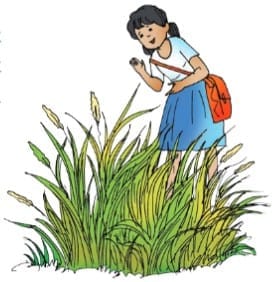
Q5: Why do climbers and creepers need support?
Ans: Climbers and creepers have weak stems, so they need support to grow or they spread on the ground.
Q6: What do we learn by observing plants closely?
Ans: By observing plants, we learn about their leaves, stems, flowers, fruits, and how they grow.
Q7: What are the main parts of a plant?
Ans: The main parts of a plant are roots, stem, leaves, flowers, fruits, and seeds.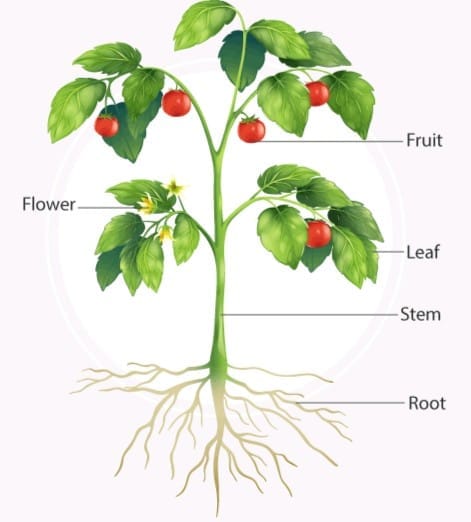
Q8: How does the root help a plant?
Ans: Roots hold the plant firmly in the soil and help it take in water and nutrients.
Q9: What is the role of the stem?
Ans: The stem supports the plant and carries water and food to all its parts.
Q10: Why do leaves have different shapes, sizes, and smells?
Ans: Leaves are different because plants are of many kinds. Different leaves help plants grow in different ways.
Q11: How do fruits change as they grow on a plant?
Ans: Fruits change their colour as they grow. They may be green at first and become red or purple when they are ripe.
Q12: Why should we take care of plants?
Ans: Plants are living beings. Taking care of them helps keep nature balanced and healthy.
Q13: How can children help in caring for plants?
Ans: Children can water plants, protect them, and avoid plucking leaves and flowers.
Q14: What happens if there are no plants on Earth?
Ans: Without plants, there would be no food, oxygen, or shelter, and life would not be possible.
Q15: What values do we learn by studying plants?
Ans: We learn care, respect for nature, patience, and responsibility.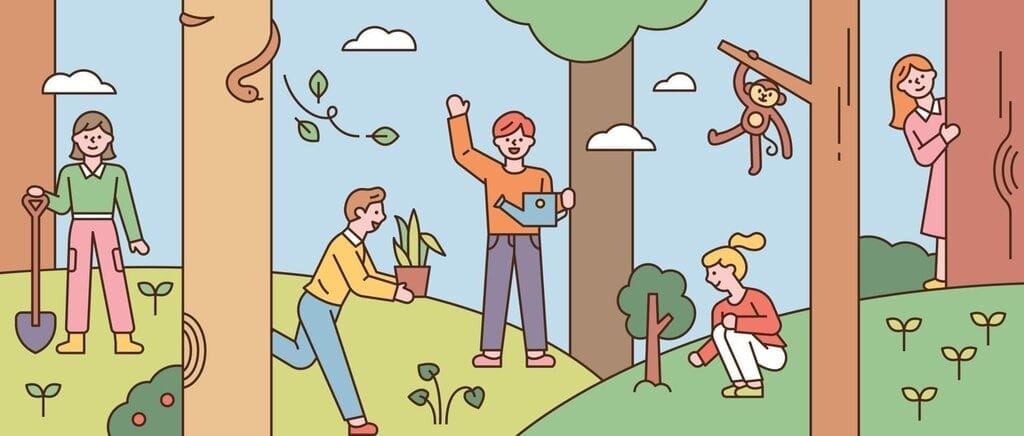
FAQs on Short Answer Questions: Getting to Know Plants
| 1. What are the main parts of a plant? |  |
| 2. How do plants reproduce? | |
| 3. What role do roots play in a plant's life? | |
| 4. Why are flowers important for plants? | |
| 5. What is the significance of photosynthesis in plants? | |