Chapter Notes: The Story of Indian Farming


This chapter explores the journey of Indian farming from ancient times to the present day. It explains how climate, soil, water, and seasons shape agriculture in India. It also discusses traditional wisdom and modern innovations in farming, along with the challenges farmers face today.
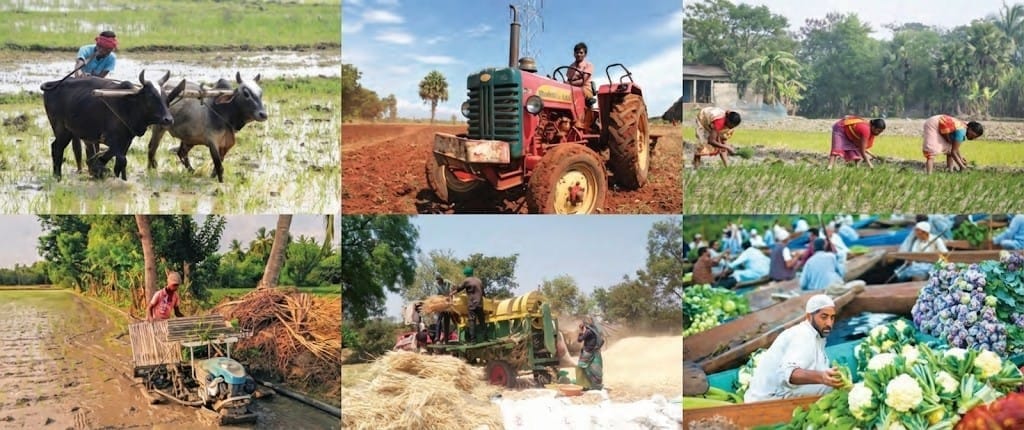
India's Agricultural Landscape
Agriculture means the preparation of soil, the cultivation of plants, and the rearing of livestock. It includes farming, animal husbandry, forestry, and horticulture.
Don't Miss Out
The word "agriculture" comes from Latin words: Agri (field) and Culture (to cultivate).
In India, about 18% of the total value of goods and services comes from agriculture. Around 46% of India's working population depends on agriculture for their livelihood. More than 75% of workers in agriculture are women.
Agricultural Diversity in India
India has diverse agricultural regions:
- Golden wheat fields of Punjab
- Saffron Valley of Kashmir
- Tea gardens of the Northeast and Nilgiris
- Paddy fields of Kerala
Echoes from the Past
Indian farming has a long history dating back to prehistoric times.
Early Cultivation
- Rice grains found in the Ganga Plain from the 7th-8th millennium BCE
- Barley and millets were cultivated at Mehrgarh (7th millennium BCE)
- Harappans grew barley, wheat, rice, millets, and vegetables (3rd millennium BCE)
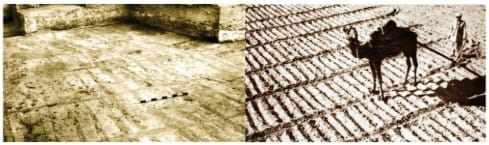
- Intercropping was practised at Kalibangan around 2800 BCE. Intercropping means growing two or more different crops simultaneously in the same field.
- Farmers gradually learned to grow oilseeds: sesame, safflower, linseed, mustard, castor
- They cultivated legumes: green gram, black gram, and fenugreek
- Fibre crops grown included: cotton, hemp, jute
- A variety of fruits were cultivated: grapes, dates, jujube, jackfruit, mango, mulberry, black plum
Don't Miss Out
- The Vedas mention yava (barley), godhūma (wheat), and vrīhi (rice)
- Other crops mentioned include sesame, black gram, and various pulses and legumes
Domestication of Animals
Animals like cattle, sheep, goats, dogs, pigs, and fowl were domesticated from around 3500 BCE during the Sindhu-Sarasvati civilisation.
Ancient Texts on Agriculture
Important ancient texts that mention agriculture:
- Vedas - mention barley (yava), wheat (godhuma), and rice (vrihi)
- Arthashastra by Kautilya - sections on land preparation, seeds, and payment to farmers
- Vrikshayurveda by Surapala - recommendations on seed preparation, soil cultivation, and watering
- Brihatsamhita by Varahamihira describes grafting methods
Grafting is a technique that joins one plant with another to combine desirable traits like resistance to pests or sweetness of fruit.
Try yourself: What is intercropping?
Over centuries, farmers adapted this accumulated agricultural knowledge to India's diverse climates, soils, and seasonal patterns, which explains why different crops came to be grown in different regions and at different times of the year.
Climate, Seasons, and Crops: What Grows Where and When?
- India's diverse geography and climate influence the variety of crops grown
- Different crops are grown in different regions and at different times of the year
- Indian agriculture depends on climatic diversity, cropping seasons, and the monsoon
- Xuanzang (7th-century Chinese pilgrim) noted that differences in climate and soil lead to varied agricultural produce
Types of Climates in India
- Alpine - Himalayas
- Temperate - Lower Himalayas
- Subtropical - Northern plains
- Arid - Thar Desert
- Tropical wet - Western coastal strip
- Semi-arid - Central Deccan Plateau
- Tropical - Eastern India and the southern peninsula
Agroclimatic Zones
India is divided into 15 agroclimatic zones. These zones combine climate factors, soil types, terrain, and vegetation. This helps the government plan agricultural activities.
The Monsoon and Agriculture
- The Indian monsoon is a key factor in agricultural diversity
- Monsoon rainfall is essential for crop growth
- India experiences two monsoons:
- Southwest Monsoon (June to September) - brings rain for kharif crops in northern and central India
- Northeast Monsoon (October to December) - brings rainfall to east and south India - Coastal regions (Malabar-Kerala and Coromandel-Tamil Nadu plains) receive rain from both monsoons
- Southern India can grow crops between monsoon seasons due to rainfall from both monsoons
- Northern India depends on irrigation sources during the dry season: groundwater, rivers, canals and ponds, soil moisture
States like Tamil Nadu, West Bengal, and Andhra Pradesh grow rice throughout the year due to monsoon rains and irrigation.
This close relationship between rainfall patterns and farming led to the development of a seasonal rhythm in Indian agriculture.
The rhythm of seasons and crops: kharif, rabi, and zaid
Indian agriculture is divided into three main seasons:
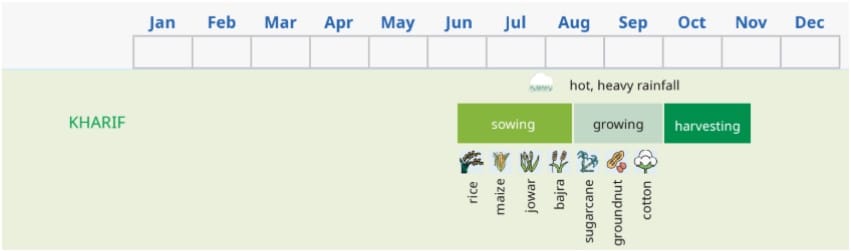
1. Kharif Season (Monsoon Crops)
- Sowing: June-July
- Harvesting: September-October
- Crops: Rice, maize, jowar, bajra, groundnut, sugarcane, cotton
- These crops need hot weather and heavy rainfall
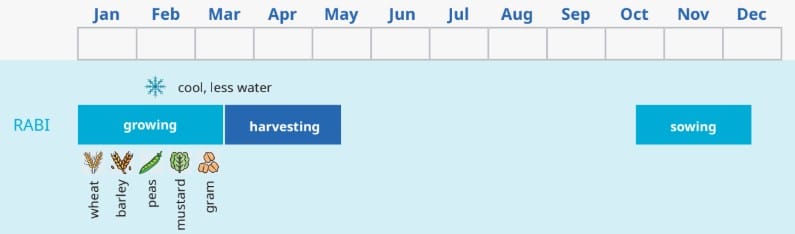
2. Rabi Season (Winter Crops)
- Sowing: October-November
- Harvesting: March-April
- Crops: Wheat, barley, peas, mustard, gram
- These crops need cool weather and less water
3. Zaid Season (Summer Crops)
- Sowing: March-April
- Harvesting: June-July
- Crops: Watermelon, cucumber, muskmelon, pumpkin
- These crops are grown between rabi and kharif seasons

Don't Miss Out
The terms kharif, rabi, and zaid are Arabic words used since Mughal times. Earlier, they were called kedāra (wet crops), haimana (winter crops), and graiṣhmika (summer crops).
- Each crop season has its own challenges.
- Kharif crops depend on the timely arrival of the monsoon.
- Excessive rainfall can destroy crops, and this crop failure causes serious distress to farmers and their families
Soil: The Foundation of Cultivation
Soil is the thin upper layer of Earth's crust that supports plant life. It is formed over millions of years through the breakdown of rocks and the decay of organic matter.
How is Soil Formed?
Soil formation is a slow process that takes centuries to millennia. It happens through: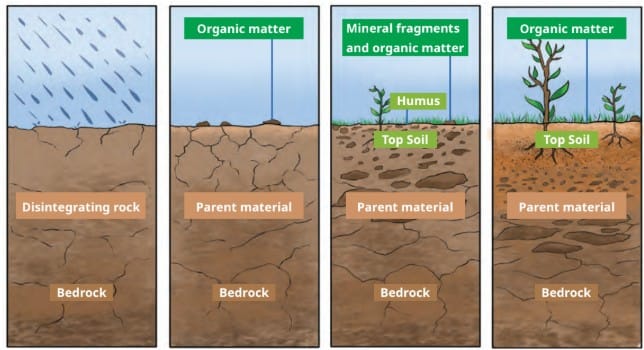 1. Bedrock begins to break down due to weathering
2. Organic materials help in further breakdown
3. Layers of soil are formed with minerals and organic matter
4. Developed soil supports thick vegetation
Humus is the dark organic matter in soil formed by the decomposition of plant and animal matter. It is rich in nutrients and retains moisture.
- India has a wide variety of soils, each with distinct properties
- Ancient texts like the Amarakoṣha describe 12 types of agricultural land based on fertility
- Today, Indian soils are classified into six major types:
- Alluvial soil
- Black soil
- Red soil
- Laterite soil
- Desert soil
- Mountain / alpine soil
Soil-crop linkages
India has six major soil types:
1. Alluvial Soil
- Formed by silt deposits brought by rivers from the mountains
- Found in the northern plains and river valleys
- Very fertile and rich in nutrients
- Crops: Rice, wheat, maize, sugarcane, jute, cotton, vegetables
2. Black Soil (Cotton Soil)
- Formed by the weathering of volcanic rocks
- Found in the Deccan Plateau (Maharashtra, Gujarat, Madhya Pradesh)
- Holds a lot of moisture and is very fertile
- Crops: Cotton, wheat, jowar, sugarcane, tobacco
3. Red Soil
- Formed by the weathering of old rocks
- Red colour due to the presence of iron
- Found in parts of Tamil Nadu, Karnataka, and Odisha
- Not very fertile
- Crops: Rice, ragi, groundnut, vegetables
4. Laterite Soil (Brick Earth)
- Formed by the weathering of rock by rain
- Becomes hard in hot weather
- Reddish colour due to iron and aluminium
- Not fertile
- Crops: Tea, coffee, rubber, cashew nut
5. Desert Soil (Sandy Soil)
- Made up of small grains of sand
- Found in Rajasthan and western Gujarat
- Low fertility
- Crops: Bajra, groundnut (with irrigation)
6. Mountain/Alpine Soil
- Formed by the freezing and melting of ice
- Thin, rough, and rocky
- Found in the Himalayan regions
- Crops: Tea, fruits, vegetables
Weathering means the process by which rocks and minerals are broken down into soil particles through physical, chemical, or biological means.
Since soil type determines crop productivity and regional agriculture, maintaining soil health is essential for sustainable farming.
Nurturing the Soil
Healthy soil is crucial for a good harvest. Soil conservation means managing soil to prevent its degradation and preserve its productivity.
Traditional Methods
- Crop Rotation: Growing different crops in the same field in different seasons to prevent soil from losing specific nutrients
- Multiple Cropping: Growing multiple crops in the same field to reduce pest risk
- Contour Ploughing: Ploughing along natural curves of hill slopes to avoid soil erosion
- Organic Fertilisers: Using cow dung to replenish soil nutrients
- Panchagavya: Fermented mixture of five cow products (dung, urine, milk, curd, ghee) used as biofertilizer
Contemporary Approaches
- Terracing: Creating flat steps in hilly areas to slow down water runoff
- Afforestation: Planting trees to prevent soil erosion
- Mulching: Covering soil with organic material
- Precise Fertiliser Application: Using exact amounts of fertilisers to maintain soil health
Water: Rain-Fed vs. Irrigated Agriculture
Water is a fundamental resource for agriculture. India has two main types of irrigation practices:
a. Rain-fed agriculture
Farming that relies entirely on rainfall. Common in areas with sufficient monsoon rain. Farmers face challenges like droughts and unpredictable monsoons. They use drought-resistant crops and traditional water-harvesting techniques.
b. Irrigated agriculture
- Uses artificial methods to supply water to crops. Reduces dependence on monsoon rains and enhances farm productivity.
- India has many traditional water structures like kull, kund, ahar, pokhar, khadin, arakere, kolam, surangam, tadagam, and eri.
Traditional Irrigation Systems
- Phad Systems: Community-based irrigation in Maharashtra using small canals to divert river water
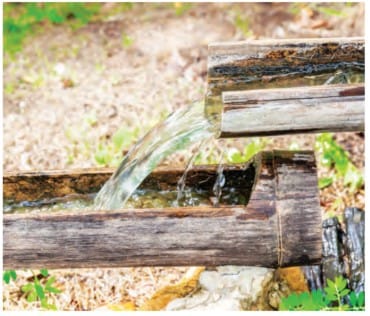
- Bamboo Drip Irrigation: Used in Northeast India, where bamboo pipes channel water from springs to fields
Modern Irrigation Techniques
- Drip Irrigation: Delivers water slowly and directly to plant roots through tubes and emitters. Uses water efficiently
- Sprinkler Irrigation: Sprays water into air, which falls over crops like artificial rain
Seeds
- Seeds are a key component of farming. Traditionally, high-yielding seeds were carefully selected and preserved for next planting season.
- Seeds were passed down in families and shared at the community level.
- The Indian Council for Agricultural Research (ICAR) has developed a method called Beejamrit, which is a paste made of cow dung and urine, used to coat seeds before planting. It protects seeds and reduces germination time.
Don't Miss Out
Indian Seed Drill was an ancient invention that combined soil preparation, seed planting, and closing of furrow in one operation.
Today, many farmers buy seeds from companies. These seeds provide higher yields and are pest-resistant. However, the seeds produced by these plants are often not suitable for next season, creating dependency on seed companies.
Try yourself: What type of agriculture relies on rainfall?
Agricultural Practices: Traditional Wisdom and Modern Innovations
Traditional farming systems
Traditional agriculture considers the plant and soil as a complete system. Soil is the primary source of nutrients, along with farmyard manure.
- Soil organisms (bacteria, fungi, etc.) convert nutrients into usable forms. Plants support soil organisms by providing energy through their roots
- Terrace Farming: A Method used on hilly slopes where farmers cut steps into the hillside to create flat land
- Kulaagar: Traditional homestead farming in Konkan Plains (Goa), where families cultivatea variety of crops around their homes
- Gokrishi: Holistic method where cows provide manure and bullocks plough fields
ICAR has documented almost 5000 traditional practices. Over 85% of tested practices were validated by modern science.
Contemporary agriculture
Contemporary agriculture uses modern technology, machinery, and techniques.
Green Revolution (1960s-1970s)
A significant turning point in Indian agriculture was introduced by M.S. Swaminathan. It included:
- High-yielding varieties (HYV) of seeds
- Increased irrigation
- Chemical fertilisers and pesticides
- Mechanised equipment like tractors and harvesters
Impact:
- Significant increase in food grain production, especially wheat and rice. India achieved self-sufficiency in food.
- Use of tractors, harvesters, and machines made farming faster
- Agriculture became the backbone of the Indian economy
Limitations:
- Long-term problems include soil impoverishment, depletion of groundwater, contamination by pesticides and fertilisers, and damage to human and animal health.
These long-term environmental and health concerns led farmers and scientists to rethink farming methods and explore more sustainable alternatives.
Sustainable Pathways
- There has been a growing focus on sustainable agriculture.
- This approach combines modern agricultural productivity with traditional farming wisdom.
- It is inspired by Indian Knowledge Systems (IKS).
- Sustainable agriculture focuses on environmentally friendly and long-term farming practices.
Organic Farming: Avoids chemical fertilisers and pesticides. Uses natural fertilisers like compost, seed cake, and manure
Neem-based Pesticides are natural and less harmful to the environment than chemical pesticides
Don't Miss Out
Sikkim is the World's first 100% organic state. Banned chemical fertilizers and pesticides in 2014
Traditional vs Modern Agriculture
- Modern farming methods produce high yields quickly but cause long-term environmental damage.
- Chemical use pollutes water and harms ecosystems, including pollinators like bees.
- Traditional farming is more sustainable and nature-friendly but usually gives lower yields.
- The key challenge is to balance modern productivity with traditional sustainability.
Don't Miss Out
Recognized by Food and Agriculture Organisation (FAO):
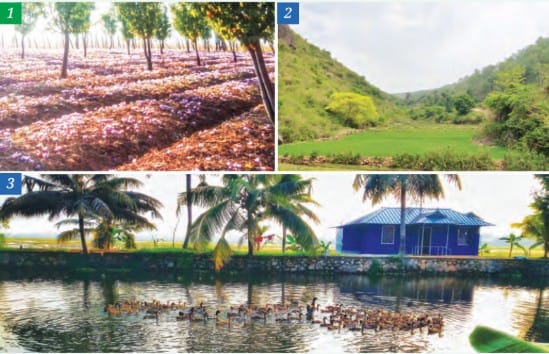
- Saffron farming in Kashmir
- Traditional agricultural systems of Odisha integrating forest management
- Below-sea-level agricultural methods in Kerala
To support farmers in managing this transition, the government plays an important role through policy, technology, and financial support.
Role of the Government
The government provides support to farmers through:
- Access to seeds, fertilisers, and pesticides
- Weather forecast information
- Research and training on new farming practices
- Lower electricity prices for irrigation
- Pradhan Mantri Fasal Bima Yojana: Crop insurance scheme
- Purchasing important crops to ensure fair prices
- Promotion of cold storage
- Digital technology for better market access
- Special radio and TV programs for farmers
Don't Miss Out
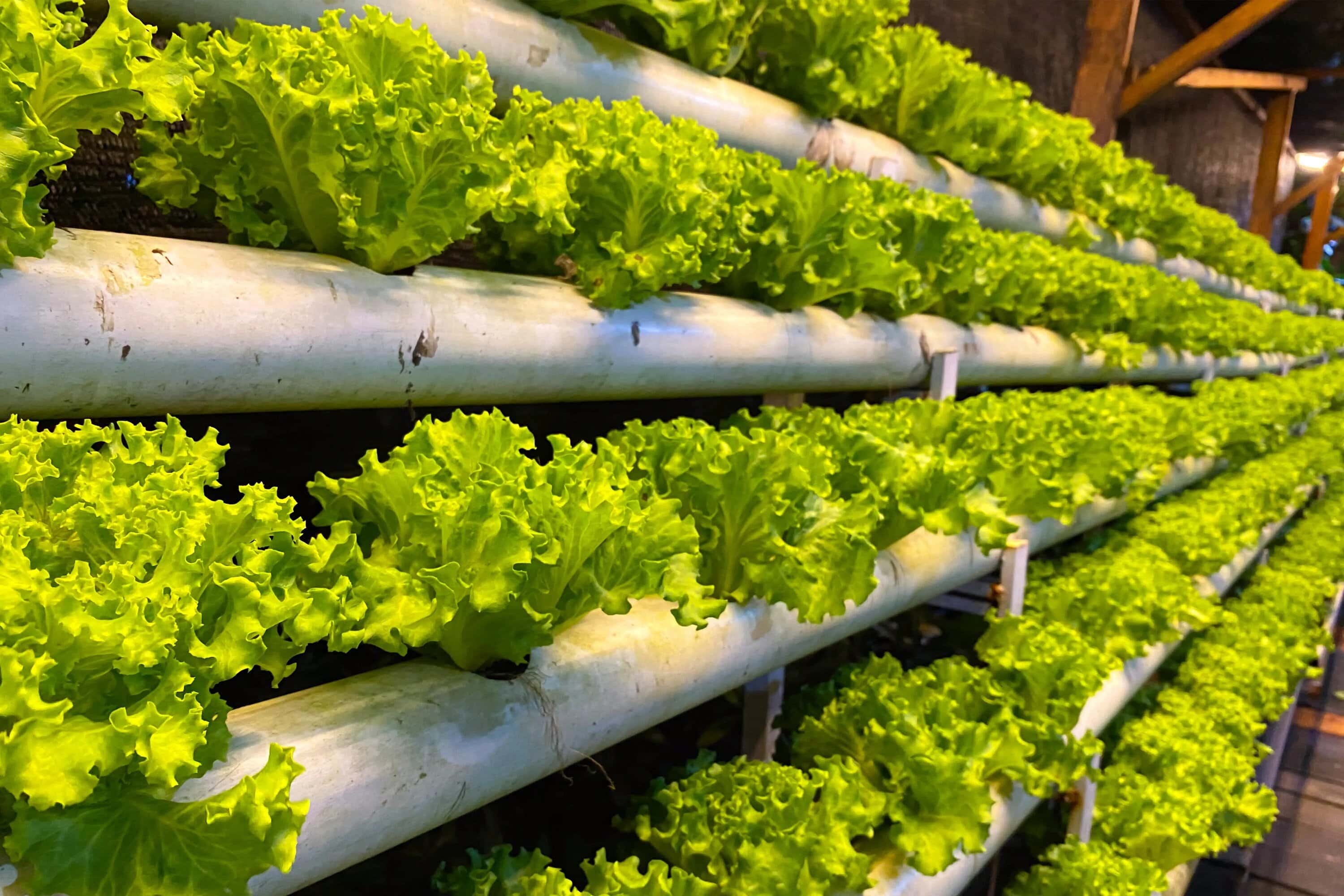
Hydroponics is a method where plants are grown in nutrient-rich water solutions without soil. Essential minerals are given directly to the roots. Used in urban farming and areas with poor soil quality.
Challenges Faced by Farmers
1. Small Landholdings
- Landholding: Area of land that a person owns
- Average landholding in India is about 3/4 hectare (size of a football field)
- Land gets divided among family members over generations
- Small farms cannot earn much income
- Difficult to use tractors and machines on small farms
Hectare: 1 hectare = 10,000 square meters
2. Climate Change
- Unpredictable weather patterns (untimely rains)
- More frequent extreme events (severe droughts or heavy rainfall)
- Higher risk of crop destruction
- Problem likely to worsen as planet gets warmer
3. Water Stress
Example: Ganga River basin
- Supports over 500 million people
- River is under stress and unable to replenish itself
- Parts not navigable in summer due to low water
- Causes: Global warming, water diverted to irrigation, groundwater pumping, dams interfering with natural flow
- Threatens agriculture and livelihood of millions
4. Debt Trap
- Farmers take loans during hardship
- Difficulty in paying back loans
- Many farmers (about 2,300 per day) abandon agriculture
5. Other Challenges
- Non-affordability of modern equipment
- Market challenges in selling produce
- Inadequate income from diverse sources like livestock, poultry, apiculture
Key Terms
- Agriculture: Preparation of soil, cultivation of plants, and rearing of livestock
- Threshing: Removing edible grain from straw or husk
- Intercropping: Growing two or more different crops simultaneously
- Grafting: A Technique that joins one plant with another to combine desirable traits
- Humus: Dark organic matter in soil rich in nutrients
- Weathering: The Process by which rocks break down into soil particles
- Soil Conservation: Practice of managing soil to prevent degradation
- Greenhouse: A Transparent covered structure for controlled plant growth
- Landholding: Area of land that a person owns
- Hectare: Unit of area equal to 10,000 square meters
FAQs on Chapter Notes: The Story of Indian Farming
| 1. What are the main climatic factors that influence agriculture in India? |  |
| 2. How does soil quality impact agricultural productivity in India? | |
| 3. What are the differences between rain-fed and irrigated agriculture? | |
| 4. What role does the government play in supporting Indian farmers? | |
| 5. What are some challenges faced by farmers in India? | |