Chapter Notes: India, a Home to Many


This chapter explores how India has been a welcoming home for people from different parts of the world. Many communities came to India seeking refuge from persecution or looking for new opportunities. India's cultural values of acceptance and inclusion have allowed these communities to settle, maintain their traditions, and become part of Indian society.
The Story of Indian Jews
Who are Jews?
- Jews are members of a people and cultural community originating from the ancient Hebrews of Israel.
- They are traditionally linked to the religion of Judaism.
- Jewish identity may be defined by religion, culture, history, or ethnicity.
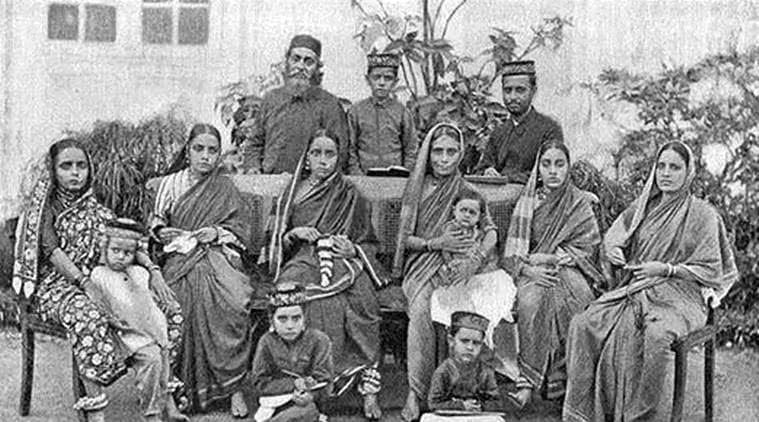 Jew Family (Late 19th century)
The Bene Israel
- The Bene Israel are a Jewish community that historically lived on the Konkan coast, south of Mumbai.
- According to scholars and community tradition, they arrived around 175 BCE from the ancient Kingdom of Israel.
- The story recalls a shipwreck near the Indian coast; survivors settled and began a new life in India.
- Although they lost their holy books, they preserved a prayer tradition remembering one God.
- They became the largest Jewish community in India, numbering over 25,000 after independence.
Cochin Jews
- Several groups of Jews arrived between the 12th and 19th centuries, fleeing persecution in different parts of the world.
- Some of these groups settled near Cochin (present-day Kochi) on the Malabar Coast.
- The Raja of Kochi is said to have granted them land free of cost with the phrase that the grant would remain "as long as the world, sun, and moon endure."
- They built a synagogue (a Jewish place of worship) to practise their faith and community life.
- The Maharaja of Travancore gave valuable gifts to the synagogue, showing royal respect and acceptance.
Swami Vivekananda's Words (1893)
- At the World Parliament of Religions in Chicago, Swami Vivekananda stated:
- "I am proud to belong to a nation which has sheltered the persecuted and refugees of all religions and all nations of the Earth."
- He referred to India giving refuge to Israelites when their holy temple was destroyed and to the shelter offered to the Zoroastrian nation.
The Syriac Christian Community
Who are Syriac Christians?
- From the 4th century CE, some Christian groups used the ancient Syriac language in worship and faced difficulties in West Asia.
- Under the Roman Empire they were sometimes treated as heretics (people holding beliefs contrary to dominant views).
- Under the Persian Empire they often faced persecution, including social and religious pressure.
Coming to India
- To escape persecution, Syriac-speaking Christians travelled eastward along trade routes and reached the Malabar coast (present-day Kerala).
- There they could live and worship freely; in India they are often called Syrian Christians.
- They formed various sects, integrated into local society, and maintained many of their traditions and liturgical practices.
The Legend of the Parsi Wise Man, Milk, and Sugar
Who are Parsis?
- Parsis are followers of Zoroastrianism, one of the world's oldest known religions.
- Zoroastrianism was founded by the prophet Zarathushtra in Central Asia and is based on worship of one God, Ahurā Mazdā.
- Choosing good over evil is a central ethical principle in this faith.
Why Parsis Came to India
- Parsis left Persia (modern-day Iran) to escape religious persecution after the Islamic conquest in the 7th century CE.
- Zoroastrianism had been the state religion of the Sassanid Empire (3rd-7th centuries CE).
- After the Sassanid Empire fell to Arab Muslim forces in the mid-7th century, Zoroastrians faced:
- Forced conversions to Islam.
- Religious taxes such as the jizya.
- Destruction of fire temples and social or legal marginalisation.
- Groups of Zoroastrians sailed across the Arabian Sea and reached India's western coast (Gujarat) between the 8th and 10th centuries.
The Legend of Milk and Sugar
- According to a popular legend, Parsis approached Raja Jadi Rāṇā, king of Sanjān in coastal Gujarat, asking for shelter.
- The Raja showed them a jug full of milk, indicating the kingdom was full and could not accommodate more people.
- A wise Parsi took a spoon of sugar and dissolved it in the milk without spilling it.
- Meaning: Just as sugar dissolves in milk and sweetens it without causing overflow, Parsis would blend into Indian society and enrich it without causing trouble.
- The Raja accepted them and allowed them to settle securely in his territory.
Parsis in India Today
- The ancient sacred fire continues to burn at Udvada (south Gujarat), near where Parsis first settled in India.
- Parsis combined their ancient traditions with local Indian culture while keeping distinct rituals.
- India today has the largest population of Zoroastrians in the world.
- Parsis have made important contributions to Indian business, industry, education, and public life.
Connections Between Zoroastrianism and Vedic Thought
- Both share the concept of a cosmic order holding the universe together.
- Both give importance to fire worship in rituals.
- Similarities in words:
- Soma (Vedic divine drink) = Haoma (Avestan)
- Hotar (Vedic priest) = Haotar (Avestan)
- Yajña (Vedic sacrifice) = Yasna (Avestan) - Interesting differences:
- In Vedas, devas are beneficial gods; in Avesta (Parsi sacred text), daevas are evil gods
- In Avesta, Ahurā is the chief god; in India (after Vedic period), asuras are harmful demons - Old Avestan and Vedic Sanskrit share many word roots and grammatical features.
The Arab Merchant Community
- Arab merchants began coming to India from the 7th century onward.
- Many settled along the west coast in places such as Kerala, Gujarat, and coastal Karnataka.
- They traded spices, textiles and other goods, married local women, and formed new, mixed communities.
- In Kerala many became part of the Mappila Muslim community.
- They helped build early mosques in India, including the Cheraman Juma Masjid.

- These early Arab settlers generally came as peaceful traders, not conquerors.
- They brought new ideas, religious beliefs, language elements and cultural practices, contributing to trade and cultural exchange.
The African Connection
- The Siddis are people of African origin who were brought to India, often as slaves, by Arab, Portuguese and later European traders between the 7th and 19th centuries.
 Young Siddi girl and Siddi Woman from Karnataka
 Siddis in India
- By the 18th century, some Siddis had gained prominence in the armies of Muslim rulers.
- At times they briefly controlled parts of Bengal and other regions.
- Their culture is a fusion of African and Indian traditions, visible in music, dance and religious practices.
- They are known for distinctive dances accompanied by African-style drumming.
- Their languages and dialects adapted to regional Indian influences over time.
- Siddis often blended African religious customs with Hinduism, Islam or Christianity depending on local contexts.
Current Status
- Siddis are recognised as a scheduled tribe in some states.
- Their overall economic condition often remains poor and marginalised.
- Government and NGO efforts aim to improve access to education, skills training and livelihood opportunities.
Hirabai Lobi
- She belonged to the Siddi community in Gujarat.
- She worked for the upliftment of women in her community by connecting them with banking services and educating them on organic farming and livelihood options.
- She was awarded the Padma Shri in 2023 for her service.
The Armenians in India
- Armenia is a small, mountainous country lying between Turkey and Azerbaijan, north of Iran.
- Armenian merchants traded in Indian spices and fine muslins centuries ago and established communities in Indian ports and cities.
Armenian Settlements in India
- Some evidence suggests an Armenian presence on the Malabar coast as early as the 8th century.
- During the Mughal period (from the 16th century), many Armenians from Persia gained imperial patronage.
- The earliest notable Armenian settlement was in Agra, where Emperor Akbar allowed Armenians to build a church and practise their religion.
Roles of Armenians
- Armenians served in various roles in the Mughal royal household, army and administration.
- Abdul Hai is recorded as serving as Chief Justice in Akbar's court.
- Lady Juliana served as a doctor in the Mughal royal palace.
Armenian Settlements in Other Cities
- Armenians later settled in Surat, Kolkata and Chennai, building schools, churches and cemeteries.
- Kolkata became a major Armenian centre with the 18th-century Armenian College and the Mother Mary Church.
- In Chennai (Madras), Armenians arrived around the mid-17th century and engaged in trade in silk, spices and precious stones; Armenian Street and St. Mary's Armenian Church (mid-18th century) recall their presence.
- Although the Armenian population in India has dwindled, several families still preserve their heritage and monuments.
The Baha'i Community in India
- In the mid-1800s, a new faith called the Baha'i religion began in Persia (modern-day Iran) under the leadership of Baha'u'llah.
- The Baha'i message emphasises unity among all people and harmony between religions.
Persecution and Coming to India
- Baha'is were branded heretics by the dominant religious leadership in Iran and faced persecution.
- They migrated to safer regions, and many Baha'is began arriving in India in the late 19th century.
- Over time many Indians joined the faith; the community in India includes both migrants and Indian converts.
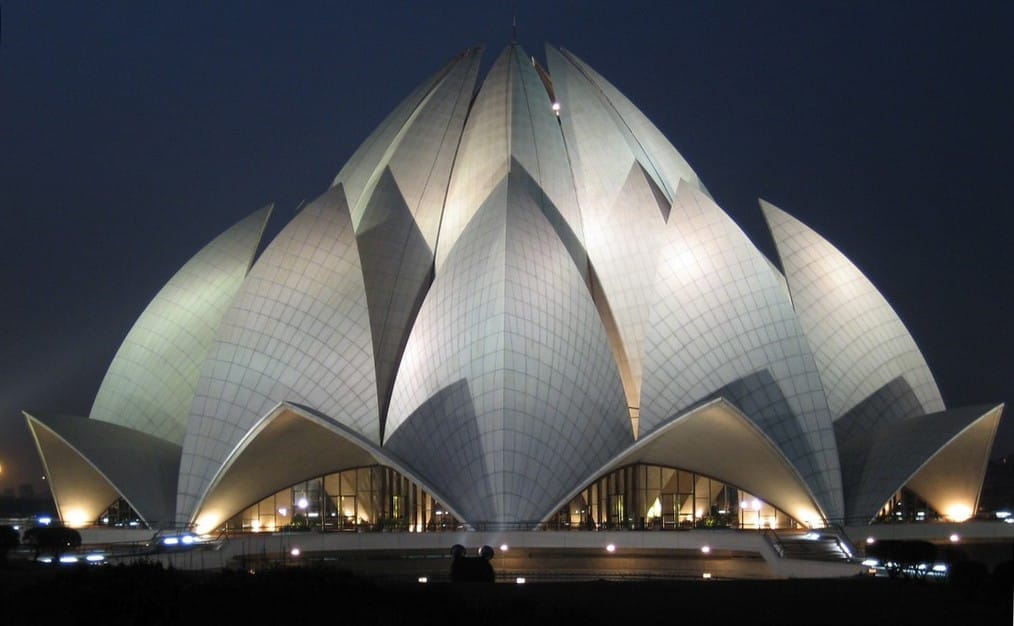
- The Baha'i Lotus Temple in New Delhi is a well-known symbol of the faith's presence in India.
The 'Good Maharaja' and the Polish Children
- During the Second World War (1939-1945), Poland was invaded and thousands of families were torn apart; many children became orphans or refugees.
The Good Maharaja's Help
- Digvijaysinhji Ranjitsinhji Jadeja, the Maharaja of Nawanagar State (present-day Jamnagar), was moved by the plight of the Polish children.
- He worked with the Red Cross and other organisations to rescue these children and bring them to Jamnagar.
- He provided them with a safe place to stay, food and care.
- Between 1942 and 1946 he saved approximately 1,000 Polish orphans and hosted several thousand Polish refugees in his state.
- After the war many returned home; the Maharaja's service was later recognised by the President of Poland, and a monument called "Good Maharaja Square" was built in Warsaw in his honour.

- India thus became a home away from home for these orphaned children during the war.
Tibetan Refugees in India
- Tibet lies north of India across the Himalaya and is often called the "Land of Snows".
- In the 7th century, Tibet became an important centre of Buddhism when its king adopted Buddhist teachings.
- Historical events in the 12th and 13th centuries, including Turko-Afghan invasions, contributed to the decline of major Buddhist learning centres in eastern India such as Nālandā; many monks moved to Tibet with manuscripts.
- From the 15th century onward the Dalai Lamas came to play greater spiritual roles; from the mid-17th century they were both spiritual heads and temporal rulers of Tibet.
Chinese Occupation and Refuge in India
- From 1950 onward, the People's Republic of China asserted control over Tibet in several stages, leading to the effective annexation of Tibet.
- In 1959, following a popular uprising in Lhasa against Chinese policies, the 14th Dalai Lama fled to India and was granted asylum.
- The Dalai Lama has lived in Dharamshala (Himachal Pradesh), and the Central Tibetan Administration (a government-in-exile) is based there.
- India offered shelter and facilitated the settlement of many Tibetan refugees.
The Dalai Lama's Four Commitments
- Promotion of human values such as compassion, forgiveness and tolerance.
- Promotion of religious harmony between different faiths.
- Preservation of Tibetan culture, language and identity.
- Revival of India's civilisational heritage, particularly values like karuṇā (compassion) and ahimsa (non-violence).
Rehabilitation of Tibetan Refugees
- The Indian government and various NGOs supported Tibetan refugees with housing, education and livelihood options.
- Special Tibetan settlements were created to preserve language, culture and religious practices.
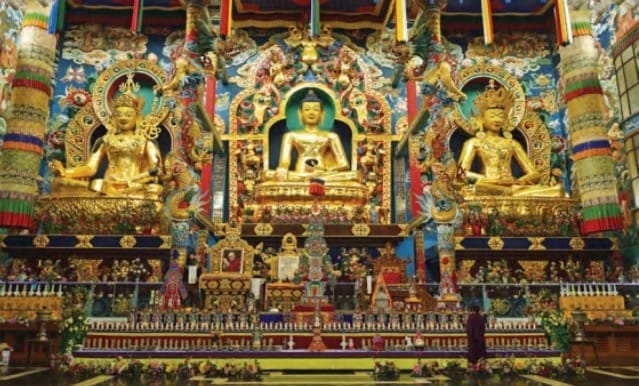
- Many Tibetan monasteries were re-established in India, particularly in Karnataka, creating spaces for spiritual practice and teaching.
- Over time the Tibetan community in India has become an active part of Indian social and cultural life.
Tibetan Medicine - Sowa Rigpa
- Tibetans promoted their traditional medical system called Sowa Rigpa ("Art of Healing") after coming to India in 1959.
- Sowa Rigpa was codified as a formal tradition around the 8th century CE by a medical council near Lhasa.
- It blends principles from Ayurveda and also includes influences from Chinese, Central Asian, Persian and Greek medicine.
- This medical system is popular in Himalayan regions including Nepal and Bhutan.
- In India institutions such as Men-Tsee-Khang in Dharamshala practise Sowa Rigpa, and it is included in the Government of India's AYUSH programme.
"The Whole World is Family"
- These historical examples illustrate India's culture of acceptance and inclusion.
- The idea of vasudhaiva kutumbakam ("the whole world is family") has been expressed and practised in many ways across centuries.
Why India Became a Haven
- India developed many schools of thought with core teachings including:
- Sarve bhavantu sukhinah: "May all creatures be happy"
- Atithi devo bhava: "A guest is like God"
- The value of compassion - The Karaṇīya Mettā Sutta (Buddha's Words on Loving-Kindness) expresses: "Even as a mother protects with her life her only child, so with a boundless heart should one cherish all living beings; radiating kindness over the entire world..."
Indian Values Beyond India
- The Indian expatriate community has carried similar values abroad.
- Wherever there is a sizeable Indian community, it is seen as:
- Peaceful
- Law-abiding
- Progressive and prosperous
- Contributing to the economy
- Integrating well in society - While religious persecution has existed for centuries in many parts of the world, India developed a culture of peaceful coexistence.
- This innate character created a haven for the persecuted.
Many people came intending to conquer India but were "conquered" instead by:
- Diverse culture
- Rich philosophy and knowledge traditions
- Unique geography and climate
- Thriving economy
- Examples: Indo-Greeks and Kuṣhāṇas .
Universal Relevance
- The idea of the fundamental unity of humankind is a long-standing civilisational value in India.
- This value has potential relevance in addressing contemporary global crises such as wars, climate change, and deepening inequality and discrimination.
Important Terms
- Jews: Members of the people and cultural community originating from the ancient Hebrews of Israel, traditionally linked to Judaism.
- Synagogue: A place of worship for Jews where religious services and ceremonies such as weddings and festivals are held.
- Heretic: A person considered to hold beliefs (especially religious) contrary to dominant or established views.
- Persecution: Hostility, discrimination or violence directed at people because of their religion, ethnicity, social or political beliefs.
- Zoroastrianism: One of the world's oldest religions, founded by the prophet Zarathushtra; centres on worship of Ahurā Mazdā and the moral choice of good over evil.
- Vasudhaiva kutumbakam: A Sanskrit phrase meaning "the whole world is family," expressing universal brotherhood and hospitality.
- Atithi devo bhava: A Sanskrit phrase meaning "a guest is like God," reflecting the value of respectful treatment of guests.
- Sarve bhavantu sukhinah: A Sanskrit wish meaning "May all creatures be happy."
- AYUSH: An Indian government programme supporting traditional systems of medicine: Ayurveda, Yoga and Naturopathy, Unani, Siddha, Sowa Rigpa, and Homoeopathy.
Key Takeaways
- India has historically been a haven for people persecuted in their homelands or seeking new opportunities.
- Indian cultural values such as vasudhaiva kutumbakam, atithi devo bhava, and sarve bhavantu sukhinah helped create a social climate of hospitality and inclusion.
- Various communities-including Jews, Syriac Christians, Parsis, Arab merchants, Siddis, Armenians, Baha'is, Polish refugees, and Tibetans-found homes in India while preserving distinct identities.
- These communities integrated into Indian society and made cultural, economic and social contributions while maintaining aspects of their heritage.
- The Indian tradition of peaceful coexistence and acceptance offers lessons of universal relevance for addressing today's global challenges.
FAQs on Chapter Notes: India, a Home to Many
| 1. Who are the Indian Jews and what is their historical significance in India? |  |
| 2. What role has the Syriac Christian community played in India? | |
| 3. Can you explain the significance of the Parsi community in India, especially regarding the legend of the wise man, milk, and sugar? | |
| 4. Who are the Siddis, and what is their connection to India? | |
| 5. What is the significance of the Tibetan refugee community in India? | |