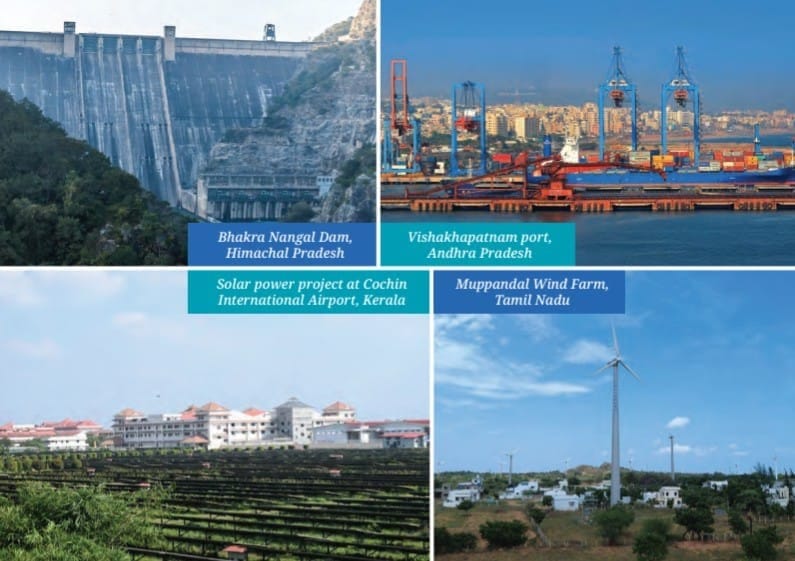
This chapter explores physical infrastructure in India - the network of tangible structures like roads, railways, airports, ports, and communication systems that keep our cities and villages functioning.
Quality infrastructure is essential for connecting people and places, enabling economic activities, improving quality of life, and supporting national development
What is Physical Infrastructure
Physical infrastructure is a vast network of tangible structures built to keep our cities and villages functioning. Components:
Transportation systems: Roads, bridges, railways, metro trains, airports, ports
Utilities: Electricity, water pipelines
Communication networks: Internet, telephone lines, telecom towers
Energy infrastructure: Windmills, solar parks, oil and gas pipelines
Why is Physical Infrastructure Important?
Physical infrastructure is the backbone of the nation.
It makes life easier for people, businesses, and government.
Transport systems (roads, railways, airways, shipping) connect producers to markets.
Infrastructure boosts internal and external trade.
It supports tourism and connects remote areas.
It helps in emergencies like floods and earthquakes.
Strong infrastructure improves national security and defence mobility.
MULTIPLE CHOICE QUESTION
Try yourself: Why is physical infrastructure important?
A
It takes a long time to create
B
It is only for cities
C
It is expensive to build
D
It makes life easier
Correct Answer: D
Physical infrastructure is important because:
It makes life easier for people, businesses, and government.
It connects producers to markets.
It supports tourism and helps in emergencies.
Report a problem
Transportation Infrastructure
a. Road and Highway Network
India has the second-largest road network in the world (after USA) as of 2024.
Types of Roads
Local roads: Near your home; help children reach school, farmers carry crops to markets, ambulances reach hospitals
State highways: Connect towns and districts within a state; built and maintained by states through public works departments
National highways and expressways: Super fast roads that join cities across states; built and maintained by central government; connect with railway stations, airports, and ports
Key Facts About National Highways
As of 2025, India's national highways are around 150,000 km long.
NH44 is the longest national highway at 4,112 km (runs from Srinagar to Kanyakumari).
Golden Quadrilateral: Important highway network connecting Delhi, Mumbai, Chennai, and Kolkata.
Bridges and Tunnels
Highways cannot be built everywhere, especially in difficult terrains (dense forests, wide river beds, steep mountains).
Bridges and tunnels enable ease of access in such areas.
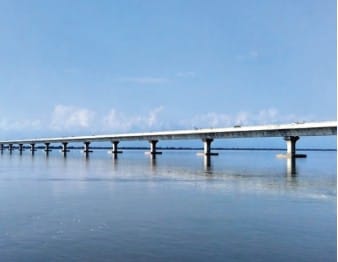
Dhola Sadiya Bridge (Bhupen Hazarika Setu)
Connects Assam and Arunachal Pradesh across the Lohit River (a tributary of Brahmaputra).
At 9.15 km, it is the second longest bridge in India.
Before it was built, people relied on ferries which did not work during floods.
Now provides year-round travel and has cut travel time by four hours.
Farmers can take vegetables and fruits to market before they spoil.
People can access hospitals or medicines faster, even during floods.
Living Root Bridges of Meghalaya
Crafted by indigenous Khāsi and Jaintia tribes using roots of Ficus elastica tree (Indian rubber tree).
Called jingkieng jri in Khasi language.
They guide roots across streams with bamboo and palm trunks.
Over many years, roots grow stronger and twist into natural bridges.
Some take decades or even centuries to mature and can last hundreds of years.
They stand 15-30 m high.
These are living and growing structures nurtured over generations.
They reflect local people's knowledge about Nature and have cultural meaning, connecting one generation to another.
MULTIPLE CHOICE QUESTION
Try yourself: What is transportation infrastructure?
A
Systems for moving people and goods
B
Buildings for housing
C
Parks and recreation areas
D
Stores and shopping centers
Correct Answer: A
Transportation infrastructure refers to the systems that help in moving people and goods. This includes roads, bridges, railways, and airports.
Report a problem
b. Indian Railway Network
History
The British introduced railways in India in 1853. British purposes:
Transport raw materials (cotton, tea) to ports for export to Britain
Help British goods move across India and create a market for them
Exploit resources
Enable quicker movement of troops for tighter control over Indian territory
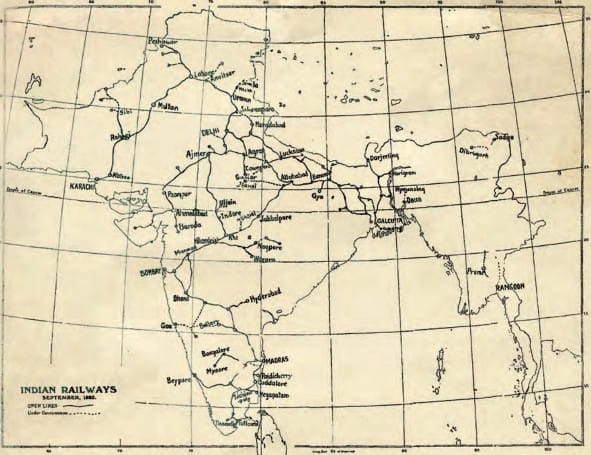
Indian Railway Network (1882)
As railway network expanded:
Trade grew
Major markets developed
New settlements emerged near stations
Railways became the lifeline for moving people and goods.
Indian Railways Today
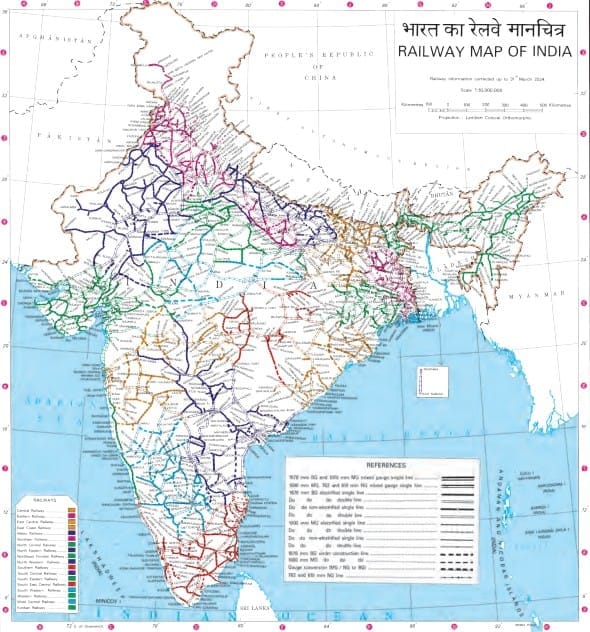
Indian Railway Network (2024)
Fourth-largest railway system in the world.
Carries over 20 million passengers every day.
One of the cheapest train services in the world.
Cargo trains carry coal, grains, textiles, and electronics using 75-90% less energy than road transport.
Earlier used coal and diesel (caused pollution).
India is aiming to have 100% trains running on electricity by 2025 (better for environment).
Employment
Indian Railways is the largest employer with about 1.21 million employees in 2024.
Includes engineers, ticket collectors, and service staff.
Creates many indirect jobs: catering, vending, taxi services.
Evolution of Trains in India
1895: F-734, steam locomotive
1957: WDM-1, diesel locomotive
1970: WAM-4, electric locomotive
2019: Vande Bharat train (electric)
c. Metro Train Systems
Metro trains operate in 23 Indian cities with total length over 1,000 km.
Network is expanding; soon India will have the third-largest metro network in the world (after China and USA).
Benefits
Offer fast and reliable travel
Easier daily commutes
Help reduce road traffic
Run on underground and elevated tracks, cutting travel time
Lower pollution by using cleaner fuels like electricity
Some use solar power (like Delhi Metro)
d. Air Transport
Features
Fastest way to connect people and places within and across countries.
Passenger flights: Carry people
Cargo flights: Move high-value or perishable goods (vaccines, chemicals, seafood)
Particularly helpful in delivering aid during disasters (floods, earthquakes)
Can reach difficult terrains (high mountains, deserts, dense forests, long oceanic stretches)
Don't Miss Out
India has the third-highest domestic air traffic in the world (after USA and China).
Handled around 376 million passengers in 2024-25.
In 2025, India has 159 airports.
Kempegowda International Airport, Bengaluru
Designed based on the concept of 'garden city'.
Adorned with bamboo structures, plants, and vibrant green spaces.
Also adopts latest infrastructure to serve passengers.
e. Shipping and Ports
India's approximately 11,100 km of coastline is connected to regions like West Asia, Africa, and Europe.
Supports trade through shipping.
Cheaper mode of transport for heavy goods (coal, cars, cement) over long distances.
Ports in India
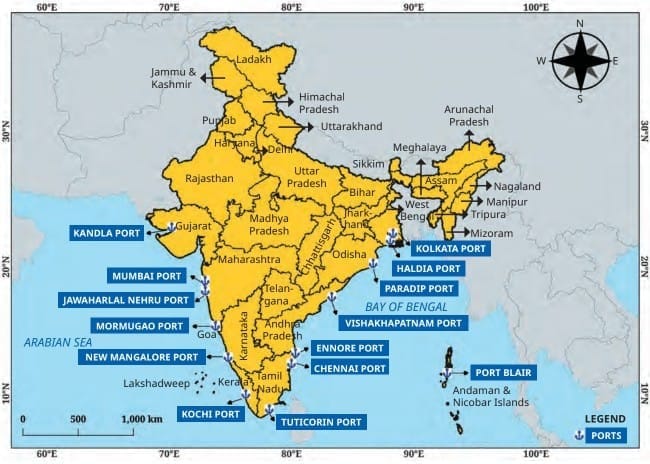
India has 12 major ports and 217 minor ports.
Ships dock at ports where goods are loaded and unloaded.
Volume of cargo handled has increased by 50% in the past decade.
MULTIPLE CHOICE QUESTION
Try yourself: What was one purpose of the British introducing railways in India?
A
Transport raw materials
B
Create parks
C
Improve health care
D
Build homes
Correct Answer: A
The British introduced railways in India to transport raw materials such as cotton and tea to ports for export.
Report a problem
Communications Infrastructure
Technology has transformed how we communicate, making it faster and easier through phones, computers, and tablets.
Communication infrastructure: Includes cables, wireless devices, towers, satellites, and data centres that enable transmitting messages, images, and videos.
How Communication Works: Example When Rani (from a village in Madhya Pradesh) sends a voice note to her cousin in Tamil Nadu: 1. Electricity powers the mobile tower near her village 2. Message zips through fibre cables buried under fields and roads 3. Gets transmitted to satellites in space 4. Travels through giant servers buzzing in distant cities 5. Finally pops up on her cousin's phone
Benefits of Advanced Communication
Education: Students can access online classes, digital libraries, and educational videos, even in remote areas
Emergency response: Quick mobile SMS alerts or apps during natural disasters
Business: Small and large businesses sell products across the world through e-commerce (buying/selling on online platforms or internet)
E-governance: Citizens can apply for documents, file complaints, or get information easily (use of communication technologies by government to deliver services; example: DigiLocker app)
Promotes ease of living for communities
Timeline of Communication Development
Early Methods (200 BCE-1200 CE)
Use of pigeons, runners, and horse couriers
Print Era
1605: First newspaper printed in Germany
1780: India's first printed newspaper, the Bengal Gazette
Telegraph and Telephone
1843: First fax machine invented by Alexander Bain (paved way for sending images)
1844: First electric signal transmitted through telegraph using dots and dashes; invented by Samuel Morse
1930: All India Radio (AIR) broadcasting started in India
1970: Personal computers
1990s: Emails and instant messaging
1993: First version of smartphone developed
1994: Internet; World Wide Web
2000: Advent of social media (Orkut, Facebook, Twitter/now X)
2010s-Now: 5G, cloud communication, and AI-driven chat and voice services
Don't Miss Out
J. C. Bose pioneered wireless communication in India.
In 1895, he demonstrated wireless signals passing through walls.
He invented key wireless devices but did not patent them.
His work influenced later developments in radio communication.
Mobile and Internet Revolution
In the 1990s, mobile calls in India cost up to ₹17 per minute, with charges even for incoming calls.
Today, India has some of the world's cheapest mobile and internet rates.
In 2025, there are 1,160 million wireless telephone subscribers and nearly 900 million internet connections in India.
Social Infrastructure
Social infrastructure includes schools, colleges, training centres, hospitals, health centres, police stations, fire stations, courts, parks, libraries, and community centres.
It supports the wellbeing and development of communities and society.
Collective Responsibility Towards Infrastructure
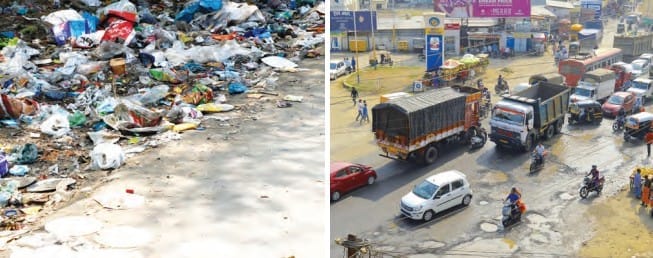
India has developed major infrastructure, but misuse and damage remain challenges.
Littering, defacing buildings, and damaging monuments reduce ease of living.
Protecting public infrastructure is a shared responsibility of government and citizens.
Panchayats and municipalities must improve waste management, sanitation, traffic, and water supply.
Infrastructure should be safe, inclusive, and environmentally sustainable.
Use of clean energy and eco-friendly materials reduces pollution.
Infrastructure design should consider children, elderly, and persons with disabilities.
Citizens must use public facilities responsibly and report damage like potholes or broken lights.
MULTIPLE CHOICE QUESTION
Try yourself: What does collective responsibility refer to?
A
Avoiding responsibilities
B
Delegating work to others
C
Individual tasks only
D
Sharing duties for a common goal
Correct Answer: D
Explanation: Collective responsibility means that everyone works together towards a shared goal. It's about teamwork and supporting each other in completing tasks.
Report a problem
Infrastructure in the Arthaśhāstra
The Arthaśhāstra emphasised planned infrastructure under state supervision.
Roads had fixed widths based on their purpose and traffic.
Damage to public works attracted strict punishments and fines.
FAQs on Chapter Notes: Infrastructure: Engine of India’s Development
1. What is physical infrastructure?
Ans. Physical infrastructure refers to the basic physical systems and facilities that are essential for the functioning of a society and its economy. This includes transportation systems like roads and railways, communications networks such as telecommunication lines and internet connectivity, and social infrastructure like schools and hospitals.
2. Why is physical infrastructure important?
Ans. Physical infrastructure is crucial because it supports economic growth, enhances productivity, and improves the quality of life for citizens. Efficient transportation and communication systems facilitate trade and connectivity, while social infrastructure ensures access to essential services, contributing to overall societal well-being.
3. What are the different types of transportation infrastructure?
Ans. Transportation infrastructure includes various systems designed for the movement of people and goods. This encompasses roads, highways, railways, airports, and ports. Each of these components plays a vital role in ensuring efficient mobility and accessibility within and between regions.
4. How does communications infrastructure impact society?
Ans. Communications infrastructure, which includes telecommunication networks, internet services, and broadcasting facilities, is essential for information exchange and connectivity. It enables individuals and businesses to communicate effectively, access information, and engage in economic activities, thus fostering social and economic development.
5. What is the concept of collective responsibility towards infrastructure?
Ans. Collective responsibility towards infrastructure refers to the shared obligation of government, businesses, and citizens to maintain and improve infrastructure for the benefit of all. This involves collaboration in planning, funding, and sustaining infrastructure projects to ensure they meet the needs of the community and support overall development.
shortcuts and tricks, Sample Paper, Objective type Questions, Viva Questions, practice quizzes, ppt, mock tests for examination, Semester Notes, Chapter Notes: Infrastructure: Engine of India’s Development, Free, Extra Questions, Chapter Notes: Infrastructure: Engine of India’s Development, video lectures, Exam, Chapter Notes: Infrastructure: Engine of India’s Development, past year papers, pdf , Summary, Previous Year Questions with Solutions, Important questions, study material, MCQs;