CBSE Class 7 > Class 7 Notes > Social Science - New NCERT ( Part 1 and Part 2) > Infographics: The Story of Indian Farming
Infographics: The Story of Indian Farming

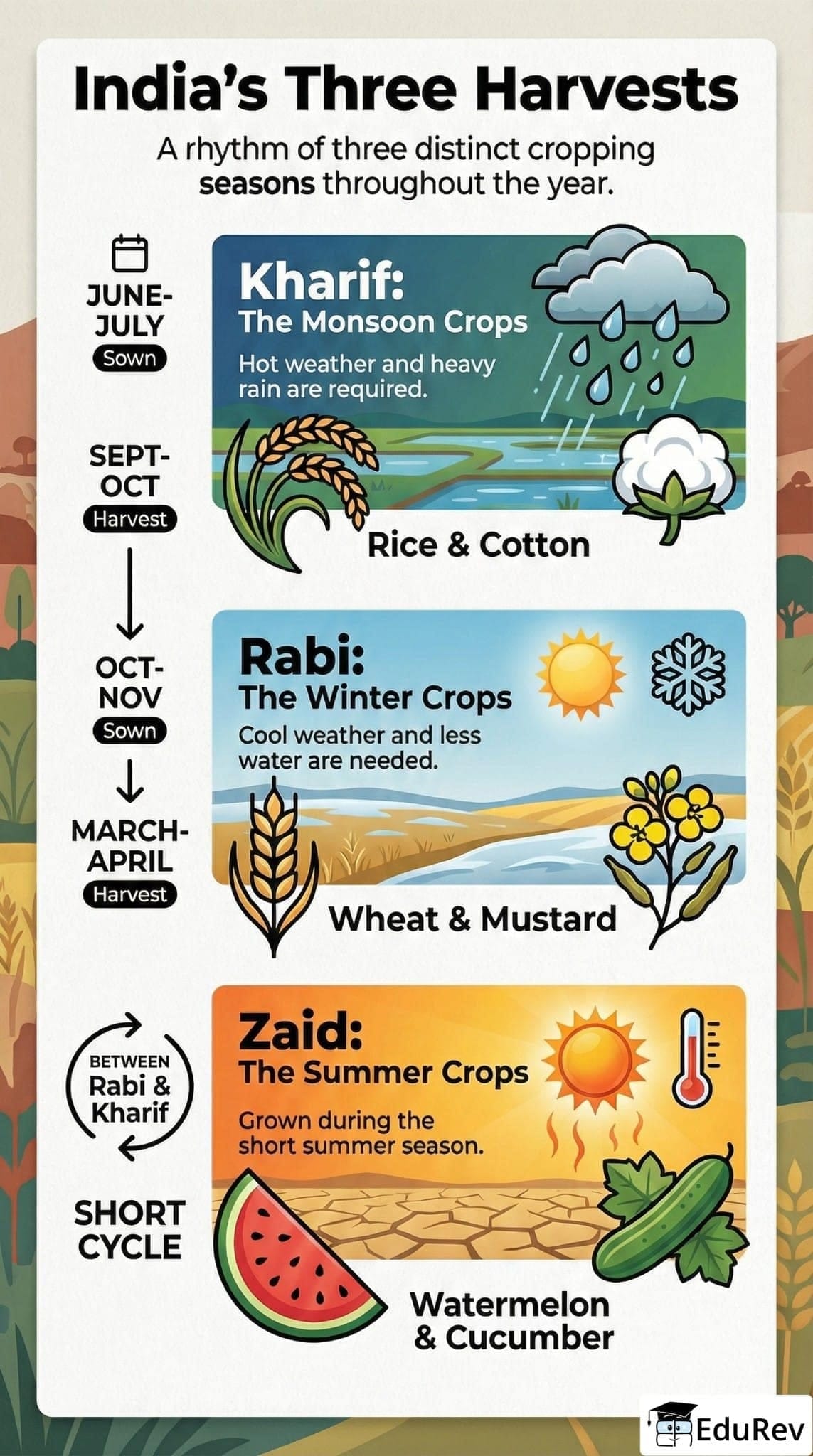
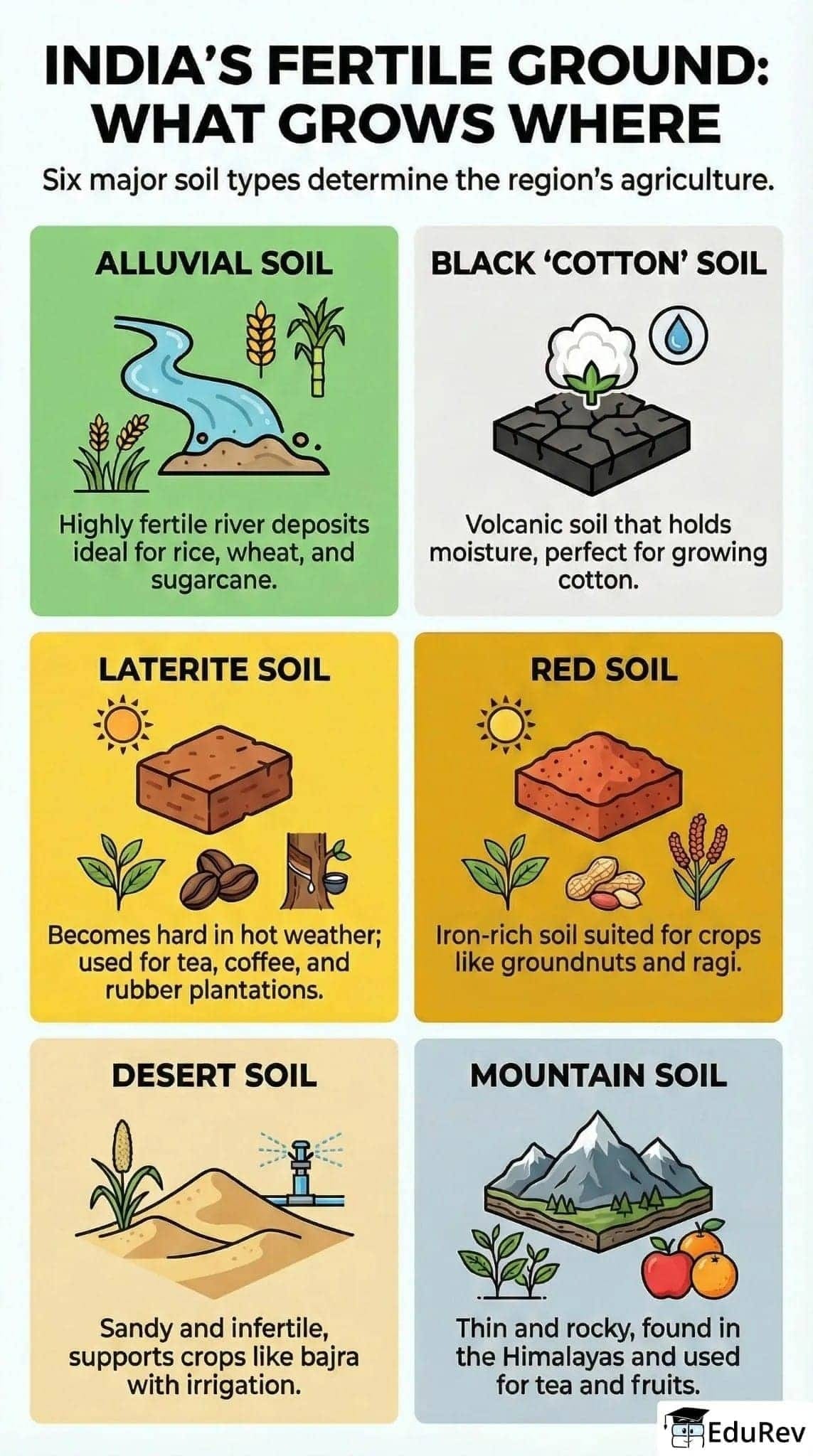
The document Infographics: The Story of Indian Farming is a part of the Class 7 Course Social Science Class 7 - New NCERT ( Part 1 and Part 2).
All you need of Class 7 at this link: Class 7
FAQs on Infographics: The Story of Indian Farming
| 1. What are the main types of farming practised in India? |  |
Ans. The main types of farming practised in India include subsistence farming, where farmers grow food mainly for their own consumption; commercial farming, which focuses on producing crops for sale; and mixed farming, which combines crops and livestock. Additionally, there is also organic farming, which employs natural methods and avoids chemical inputs.
| 2. How has the Green Revolution impacted Indian agriculture? | |
Ans. The Green Revolution significantly transformed Indian agriculture by introducing high-yielding variety (HYV) seeds, chemical fertilizers, and improved irrigation techniques. This led to increased food production, particularly of staple crops like wheat and rice, helping to alleviate food shortages and enhance food security in the country.
| 3. What are the challenges faced by Indian farmers today? | |
Ans. Indian farmers face several challenges, including inadequate access to modern technology, fluctuating market prices, dependence on monsoon rains, and issues related to land ownership and fragmentation. Additionally, climate change poses a growing threat to agricultural productivity and sustainability.
| 4. What role does agriculture play in the Indian economy? | |
Ans. Agriculture plays a vital role in the Indian economy, contributing significantly to the country's Gross Domestic Product (GDP) and providing employment to a large portion of the population. It also supports rural development and is essential for the livelihoods of millions of farmers, influencing various sectors such as food processing and agricultural exports.
| 5. How do traditional farming practices differ from modern farming techniques in India? | |
Ans. Traditional farming practices in India often rely on indigenous knowledge, crop rotation, and natural fertilisers, while modern farming techniques incorporate advanced technologies, synthetic fertilizers, and mechanisation. While traditional methods promote biodiversity and sustainability, modern techniques aim for higher productivity and efficiency, although they may lead to environmental concerns if not managed responsibly.
About this Document

1.1K Views

4.69/5 Rating

Apr 21, 2026 Last updated
Related Exams
Document Description: Infographics: The Story of Indian Farming for Class 7 2026 is part of Social Science Class 7 - New NCERT ( Part 1 and Part 2) preparation. The notes and questions for Infographics: The Story of Indian Farming have been prepared according to the Class 7 exam syllabus. Information about Infographics: The Story of Indian Farming covers topics like and Infographics: The Story of Indian Farming Example, for Class 7 2026 Exam. Find important definitions, questions, notes, meanings, examples, exercises and tests below for Infographics: The Story of Indian Farming.
Introduction of Infographics: The Story of Indian Farming in English is available as part of our Social Science Class 7 - New NCERT ( Part 1 and Part 2) for Class 7 & Infographics: The Story of Indian Farming in Hindi for Social Science Class 7 - New NCERT ( Part 1 and Part 2) course. Download more important topics related with notes, lectures and mock test series for Class 7 Exam by signing up for free. Class 7: Infographics: The Story of Indian Farming
Description
Infographics: The Story of Indian Farming of SST Class 7 provides you one-page visual summary of the chapter covering all the important topics. Download the PDF from EduRev.
Information about Infographics: The Story of Indian Farming
In this doc you can find the meaning of Infographics: The Story of Indian Farming defined & explained in the simplest way possible. Besides explaining types of Infographics: The Story of Indian Farming theory, EduRev gives you an ample number of questions to practice Infographics: The Story of Indian Farming tests, examples and also practice Class 7 tests



Related Searches
Previous Year Questions with Solutions, Semester Notes, ppt, Infographics: The Story of Indian Farming, Infographics: The Story of Indian Farming, shortcuts and tricks, Viva Questions, Sample Paper, Summary, Objective type Questions, mock tests for examination, MCQs, study material, Important questions, pdf , Infographics: The Story of Indian Farming, Extra Questions, video lectures, past year papers, Exam, practice quizzes, Free;