CBSE Class 7 > Class 7 Notes > Social Science - New NCERT ( Part 1 and Part 2) > Infographics: India and Her Neighbours
Infographics: India and Her Neighbours

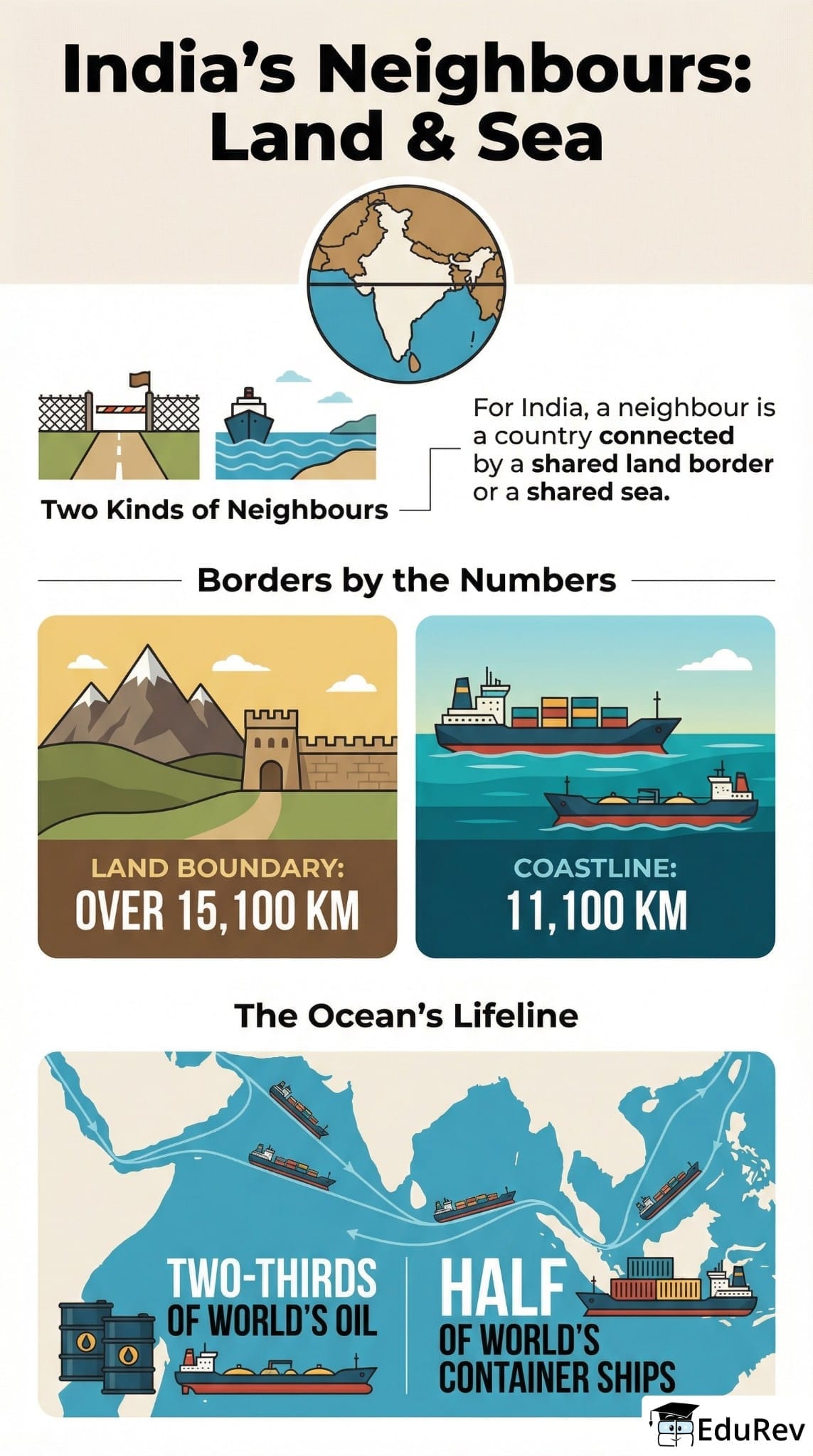
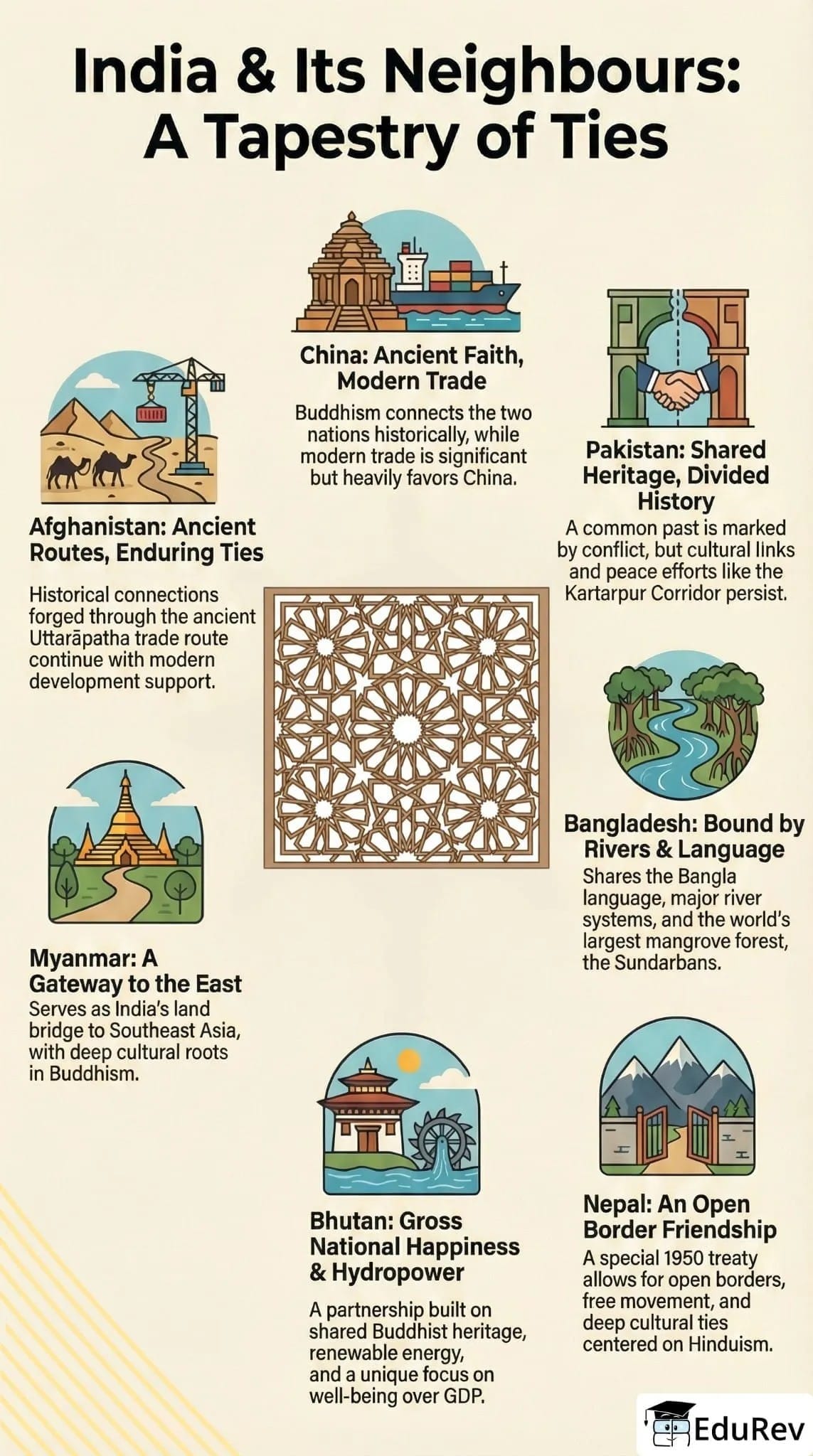
The document Infographics: India and Her Neighbours is a part of the Class 7 Course Social Science Class 7 - New NCERT ( Part 1 and Part 2).
All you need of Class 7 at this link: Class 7
FAQs on Infographics: India and Her Neighbours
| 1. Which countries share borders with India? |  |
Ans. India shares its borders with several countries, including Pakistan to the northwest, China and Nepal to the north, Bhutan to the northeast, and Bangladesh and Myanmar to the east. Additionally, India is separated from Sri Lanka by the Palk Strait and shares maritime boundaries with the Maldives.
| 2. What is the significance of India's geographical position in South Asia? | |
Ans. India's geographical position in South Asia is significant as it acts as a bridge between the East and the West. It has a diverse range of cultures, languages, and religions, which contributes to its rich heritage. Moreover, India's location influences trade routes, cultural exchanges, and strategic alliances with neighbouring countries.
| 3. How does India maintain its relationships with its neighbouring countries? | |
Ans. India maintains its relationships with neighbouring countries through diplomacy, trade agreements, cultural exchanges, and regional cooperation initiatives such as the South Asian Association for Regional Cooperation (SAARC). These efforts aim to promote peace, stability, and mutual development in the region.
| 4. What are some common challenges faced by India and its neighbours? | |
Ans. Common challenges faced by India and its neighbours include territorial disputes, issues related to water sharing, economic disparities, and security concerns. Additionally, socio-political issues such as communal tensions and migration can impact relationships between India and its neighbouring nations.
| 5. How do cultural similarities and differences affect relations between India and its neighbours? | |
Ans. Cultural similarities, such as shared languages, traditions, and religious practices, often foster goodwill and cooperation between India and its neighbours. However, cultural differences can lead to misunderstandings and conflicts. Promoting cultural understanding and dialogue is essential for strengthening ties in the region.
About this Document

4.96/5 Rating

Apr 22, 2026 Last updated
Related Exams
Document Description: Infographics: India and Her Neighbours for Class 7 2026 is part of Social Science Class 7 - New NCERT ( Part 1 and Part 2) preparation. The notes and questions for Infographics: India and Her Neighbours have been prepared according to the Class 7 exam syllabus. Information about Infographics: India and Her Neighbours covers topics like and Infographics: India and Her Neighbours Example, for Class 7 2026 Exam. Find important definitions, questions, notes, meanings, examples, exercises and tests below for Infographics: India and Her Neighbours.
Introduction of Infographics: India and Her Neighbours in English is available as part of our Social Science Class 7 - New NCERT ( Part 1 and Part 2) for Class 7 & Infographics: India and Her Neighbours in Hindi for Social Science Class 7 - New NCERT ( Part 1 and Part 2) course. Download more important topics related with notes, lectures and mock test series for Class 7 Exam by signing up for free. Class 7: Infographics: India and Her Neighbours
Description
Infographics: India & Her Neighbours of SST Class 7 provides you one-page visual summary of the chapter covering all the important topics. Download the PDF from EduRev.
Information about Infographics: India and Her Neighbours
In this doc you can find the meaning of Infographics: India and Her Neighbours defined & explained in the simplest way possible. Besides explaining types of Infographics: India and Her Neighbours theory, EduRev gives you an ample number of questions to practice Infographics: India and Her Neighbours tests, examples and also practice Class 7 tests



Related Searches
Viva Questions, mock tests for examination, Infographics: India and Her Neighbours, Infographics: India and Her Neighbours, ppt, Free, shortcuts and tricks, MCQs, Summary, Objective type Questions, Important questions, Exam, Previous Year Questions with Solutions, past year papers, Extra Questions, video lectures, study material, practice quizzes, Semester Notes, Infographics: India and Her Neighbours, pdf , Sample Paper;