CBSE Class 7 > Class 7 Notes > Social Science - New NCERT ( Part 1 and Part 2) > Infographics: Empires and Kingdoms: 6th to 10th Centuries
Infographics: Empires and Kingdoms: 6th to 10th Centuries

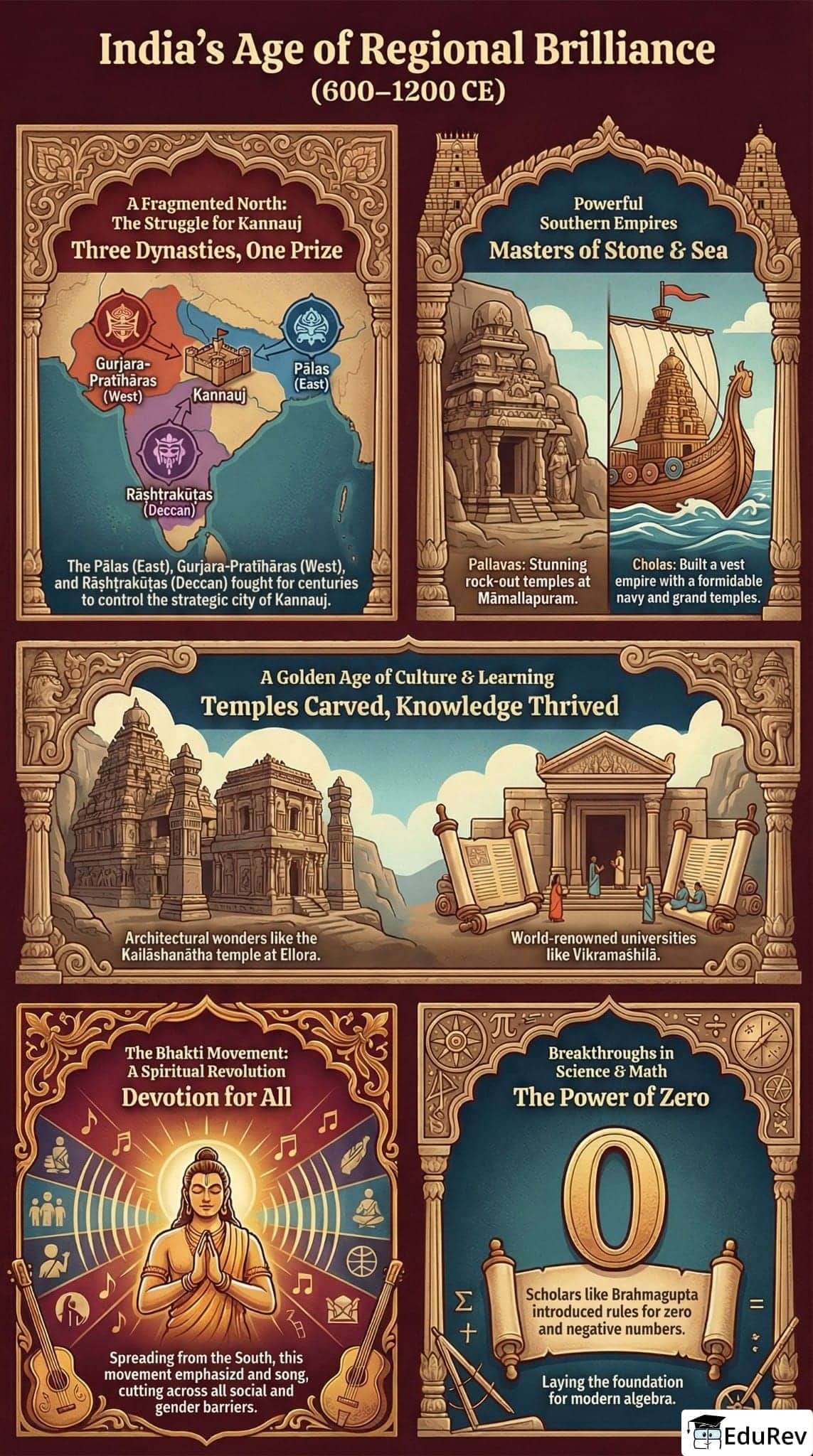
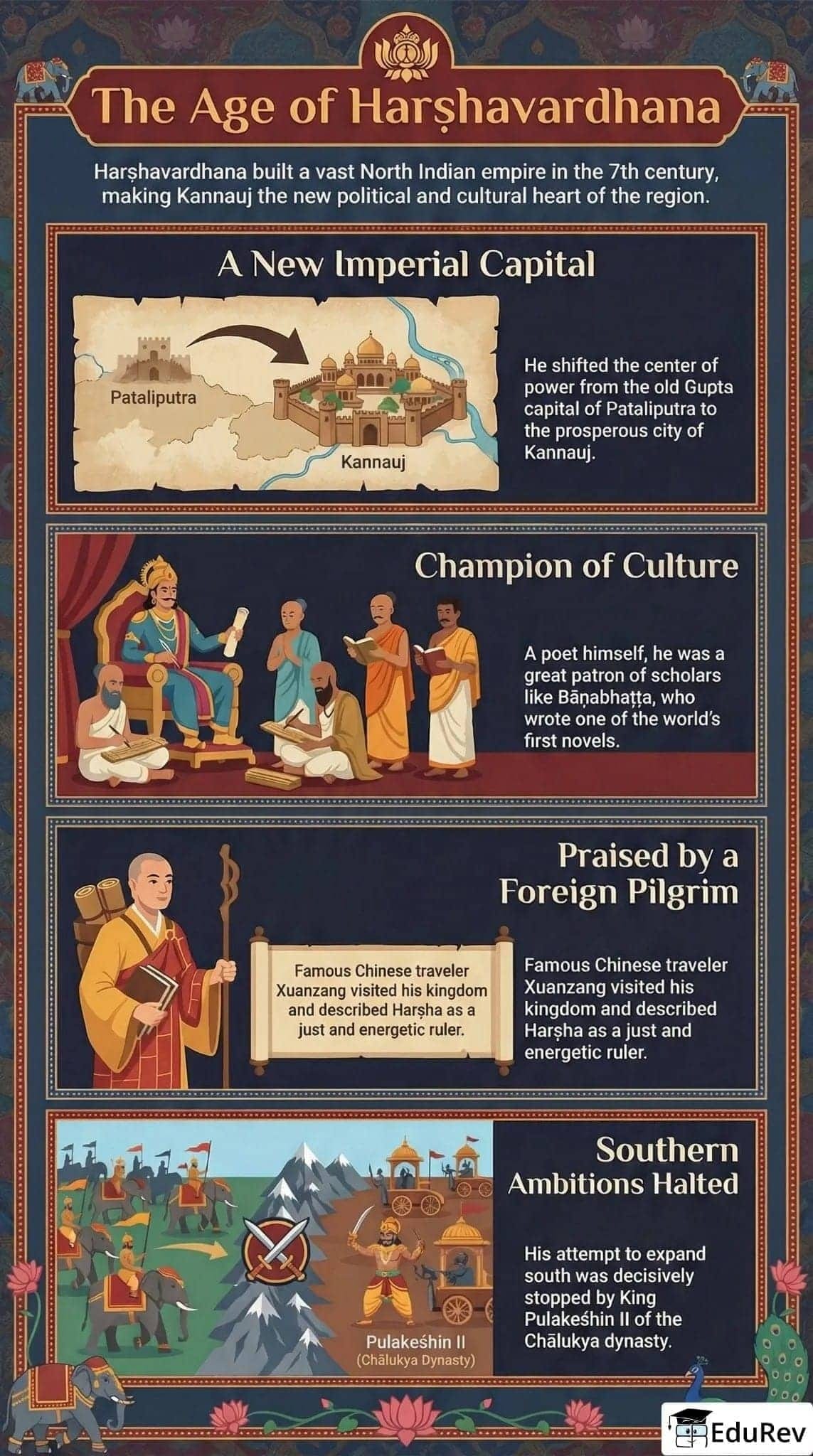
The document Infographics: Empires and Kingdoms: 6th to 10th Centuries is a part of the Class 7 Course Social Science Class 7 - New NCERT ( Part 1 and Part 2).
All you need of Class 7 at this link: Class 7
FAQs on Infographics: Empires and Kingdoms: 6th to 10th Centuries
| 1. What were some prominent empires and kingdoms during the 6th to 10th centuries? |  |
Ans. During the 6th to 10th centuries, several prominent empires and kingdoms emerged, including the Byzantine Empire, which was the continuation of the Roman Empire in the East, the Umayyad and Abbasid Caliphates in the Islamic world, and the Carolingian Empire in Western Europe. Additionally, various regional powers like the Gupta Empire in India and the Tang Dynasty in China played significant roles during this period.
| 2. How did the Byzantine Empire influence trade and culture? | |
Ans. The Byzantine Empire significantly influenced trade and culture through its strategic location at the crossroads of Europe and Asia. It served as a major hub for commerce, facilitating trade routes that connected the East and West. Byzantine culture also blended Greek, Roman, and Christian elements, leading to advancements in art, architecture, and law, which impacted neighbouring regions and future European cultures.
| 3. What role did the Islamic Caliphates play in the spread of knowledge? | |
Ans. The Islamic Caliphates, particularly the Umayyad and Abbasid Caliphates, played a crucial role in the spread of knowledge during this period. They established centres of learning, such as the House of Wisdom in Baghdad, where scholars translated and preserved works from ancient Greece, Rome, and Persia. This period saw advancements in various fields, including mathematics, astronomy, and medicine, which later influenced the European Renaissance.
| 4. What were the key features of the Carolingian Empire? | |
Ans. The Carolingian Empire, established by Charlemagne, was characterised by its efforts to unite much of Western Europe under a single rule. Key features included a strong emphasis on education and culture, the promotion of Christianity, and the establishment of a system of local governance through counts and dukes. The Carolingian Renaissance, a revival of learning and art, was also a notable aspect of this empire.
| 5. How did regional kingdoms in India evolve during the 6th to 10th centuries? | |
Ans. During the 6th to 10th centuries, regional kingdoms in India evolved through a combination of military conquests, trade, and cultural exchanges. The period saw the rise of various dynasties, such as the Chalukyas and the Pallavas, which contributed to advancements in architecture, literature, and art. The decentralised political structure allowed for diverse cultural expressions and interactions among different regions within the subcontinent.
About this Document

4.86/5 Rating

Apr 22, 2026 Last updated
Related Exams
Document Description: Infographics: Empires and Kingdoms: 6th to 10th Centuries for Class 7 2026 is part of Social Science Class 7 - New NCERT ( Part 1 and Part 2) preparation. The notes and questions for Infographics: Empires and Kingdoms: 6th to 10th Centuries have been prepared according to the Class 7 exam syllabus. Information about Infographics: Empires and Kingdoms: 6th to 10th Centuries covers topics like and Infographics: Empires and Kingdoms: 6th to 10th Centuries Example, for Class 7 2026 Exam. Find important definitions, questions, notes, meanings, examples, exercises and tests below for Infographics: Empires and Kingdoms: 6th to 10th Centuries.
Introduction of Infographics: Empires and Kingdoms: 6th to 10th Centuries in English is available as part of our Social Science Class 7 - New NCERT ( Part 1 and Part 2) for Class 7 & Infographics: Empires and Kingdoms: 6th to 10th Centuries in Hindi for Social Science Class 7 - New NCERT ( Part 1 and Part 2) course. Download more important topics related with notes, lectures and mock test series for Class 7 Exam by signing up for free. Class 7: Infographics: Empires and Kingdoms: 6th to 10th Centuries
Description
Infographics: Empires & Kingdoms: 6th to 10th Centuries of SST Class 7 provides you one-page visual summary of the chapter covering all the important topics. Download the PDF from EduRev.
Information about Infographics: Empires and Kingdoms: 6th to 10th Centuries
In this doc you can find the meaning of Infographics: Empires and Kingdoms: 6th to 10th Centuries defined & explained in the simplest way possible. Besides explaining types of Infographics: Empires and Kingdoms: 6th to 10th Centuries theory, EduRev gives you an ample number of questions to practice Infographics: Empires and Kingdoms: 6th to 10th Centuries tests, examples and also practice Class 7 tests



Related Searches
Important questions, Semester Notes, Exam, shortcuts and tricks, Free, mock tests for examination, Objective type Questions, ppt, Extra Questions, video lectures, Previous Year Questions with Solutions, past year papers, Viva Questions, Infographics: Empires and Kingdoms: 6th to 10th Centuries, Sample Paper, Infographics: Empires and Kingdoms: 6th to 10th Centuries, Infographics: Empires and Kingdoms: 6th to 10th Centuries, MCQs, study material, practice quizzes, Summary, pdf ;