CBSE Class 7 > Class 7 Notes > Social Science - New NCERT ( Part 1 and Part 2) > Infographics: Banks and the Magic of Finance
Infographics: Banks and the Magic of Finance

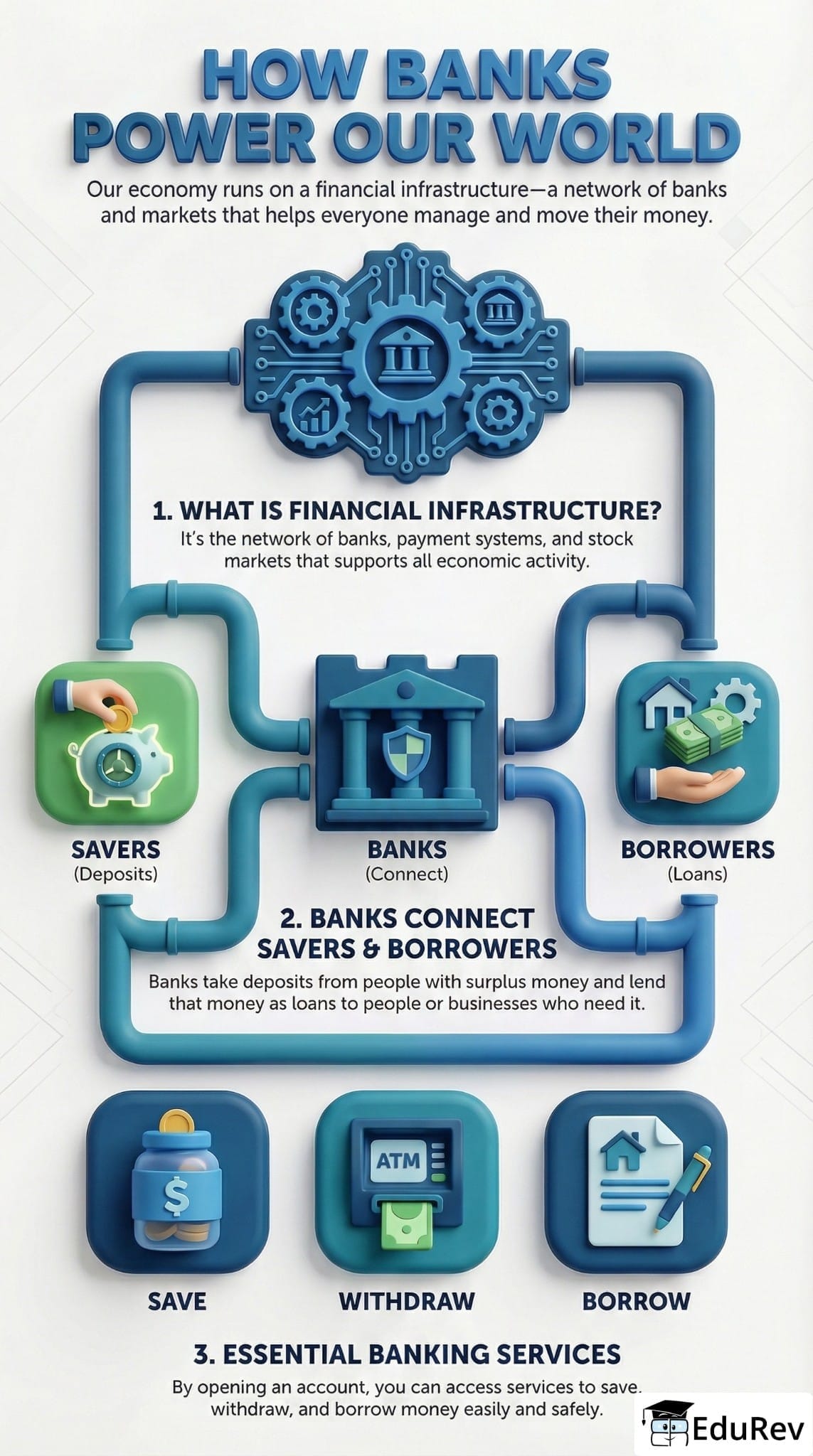
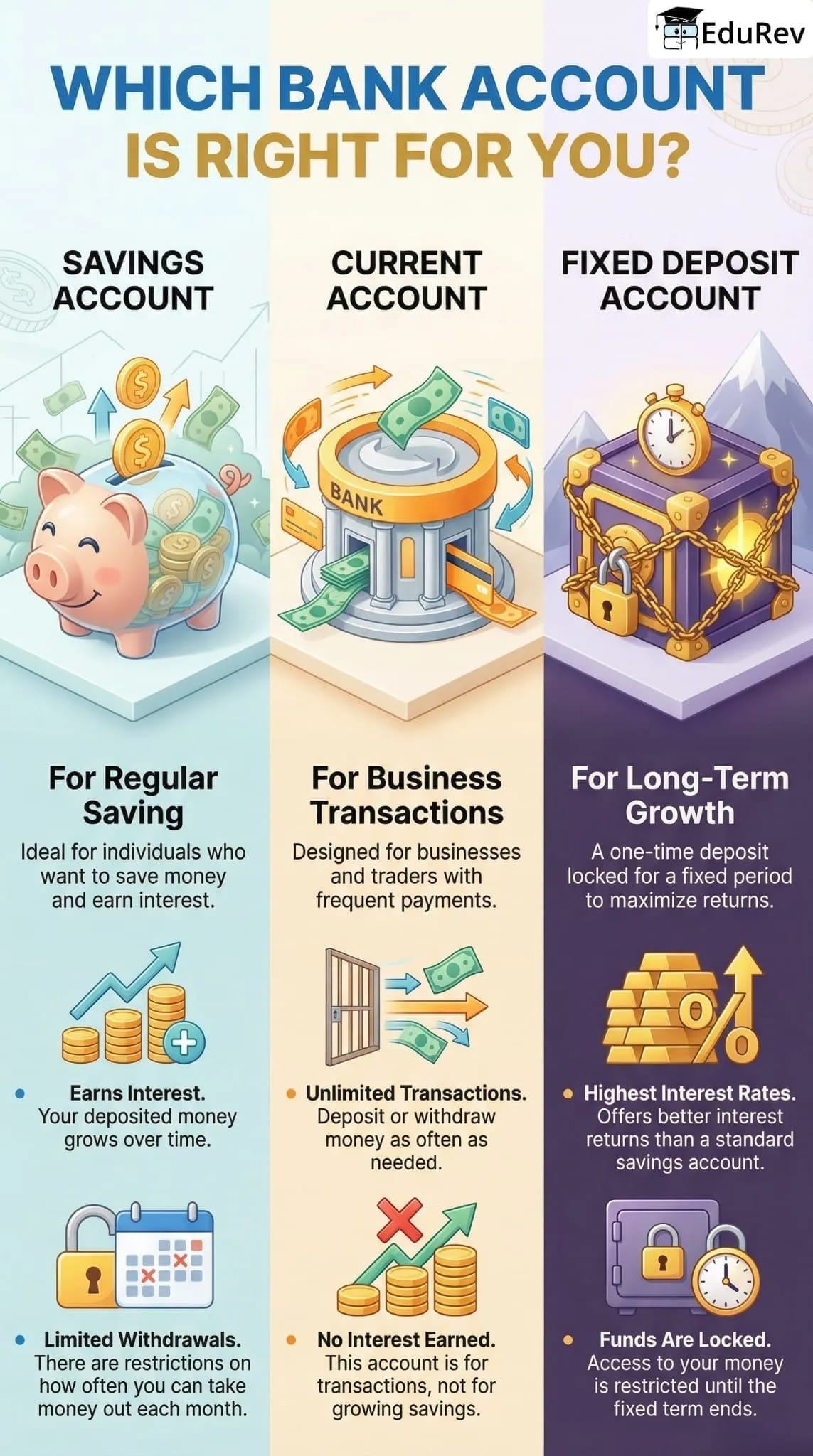
The document Infographics: Banks and the Magic of Finance is a part of the Class 7 Course Social Science Class 7 - New NCERT ( Part 1 and Part 2).
All you need of Class 7 at this link: Class 7
FAQs on Infographics: Banks and the Magic of Finance
| 1. What are the primary functions of banks in the financial system? |  |
Ans. Banks serve several crucial functions in the financial system, including accepting deposits from individuals and businesses, providing loans to borrowers, facilitating payments and money transfers, and offering financial services such as investment advice and wealth management. They play a vital role in promoting economic stability and growth by efficiently allocating resources.
| 2. How do banks create money through the lending process? | |
Ans. Banks create money through a process known as fractional reserve banking. When a bank receives deposits, it is required to keep only a fraction of those deposits in reserve and can lend out the remainder. This lending increases the total money supply in the economy, as the borrowers may deposit the funds they receive, allowing banks to lend out even more money.
| 3. What is the significance of interest rates in banking? | |
Ans. Interest rates are significant in banking as they determine the cost of borrowing and the return on deposits. A higher interest rate typically encourages saving, as individuals earn more from their deposits, while it may discourage borrowing due to higher costs. Conversely, lower interest rates tend to stimulate borrowing and spending, which can boost economic activity.
| 4. What role do central banks play in the financial system? | |
Ans. Central banks play a critical role in the financial system by regulating monetary policy, controlling inflation, and ensuring the stability of the banking system. They set interest rates, manage currency supply, and act as a lender of last resort to commercial banks during financial crises. Their decisions significantly impact economic growth and stability.
| 5. How do banks contribute to economic development? | |
Ans. Banks contribute to economic development by providing access to credit, which enables individuals and businesses to invest in various projects and initiatives. By facilitating savings and investments, banks help drive innovation, create jobs, and improve infrastructure. Their ability to channel funds into productive uses supports overall economic growth and enhances living standards.
About this Document

4.67/5 Rating

Apr 22, 2026 Last updated
Related Exams
Document Description: Infographics: Banks and the Magic of Finance for Class 7 2026 is part of Social Science Class 7 - New NCERT ( Part 1 and Part 2) preparation. The notes and questions for Infographics: Banks and the Magic of Finance have been prepared according to the Class 7 exam syllabus. Information about Infographics: Banks and the Magic of Finance covers topics like and Infographics: Banks and the Magic of Finance Example, for Class 7 2026 Exam. Find important definitions, questions, notes, meanings, examples, exercises and tests below for Infographics: Banks and the Magic of Finance.
Introduction of Infographics: Banks and the Magic of Finance in English is available as part of our Social Science Class 7 - New NCERT ( Part 1 and Part 2) for Class 7 & Infographics: Banks and the Magic of Finance in Hindi for Social Science Class 7 - New NCERT ( Part 1 and Part 2) course. Download more important topics related with notes, lectures and mock test series for Class 7 Exam by signing up for free. Class 7: Infographics: Banks and the Magic of Finance
Description
Infographics: Banks & the Magic of Finance of SST Class 7 provides you one-page visual summary of the chapter covering all the important topics. Download the PDF from EduRev.
Information about Infographics: Banks and the Magic of Finance
In this doc you can find the meaning of Infographics: Banks and the Magic of Finance defined & explained in the simplest way possible. Besides explaining types of Infographics: Banks and the Magic of Finance theory, EduRev gives you an ample number of questions to practice Infographics: Banks and the Magic of Finance tests, examples and also practice Class 7 tests



Related Searches
Free, Infographics: Banks and the Magic of Finance, Sample Paper, Semester Notes, Viva Questions, study material, MCQs, practice quizzes, pdf , Objective type Questions, mock tests for examination, ppt, Important questions, Infographics: Banks and the Magic of Finance, video lectures, Infographics: Banks and the Magic of Finance, Previous Year Questions with Solutions, Exam, shortcuts and tricks, past year papers, Summary, Extra Questions;