Final Exam Paper Science (Solutions): Set 1

Time: 3 Hours
Maximum Marks: 80
General Instructions
The question paper consists of 34 questions divided into four sections: A, B, C, and D.
- All questions are compulsory.
- Section A: Questions 1 to 15 are multiple-choice questions, carrying 1 mark each. Select the most appropriate response.
- Section B: Questions 16 to 22 are short-answer questions, carrying 2 marks each.
- Section C: Questions 23 to 31 are short-answer questions, carrying 4 marks each.
- Section D: Questions 32 to 34 are short-answer questions, carrying 5 marks each.
Syllabus: The Final Exam Question Paper is framed from the following chapters:Temperature and its Measurement, A Journey through States of Water, Methods of Separation in Everyday Life, Living Creatures: Exploring their Characteristics, Nature's Treasures, Beyond Earth
Section A
Q1. What is the SI unit of temperature? (1 mark)
(a) Degree Celsius
(b) Degree Fahrenheit
(c) Kelvin
(d) Joule
Ans: (c) Kelvin
Sol: The SI unit for temperature is kelvin, denoted by K.
Q2. A device that measures temperature is called a: (1 mark)
(a) Barometer
(b) Speedometer
(c) Thermometer
(d) Odometer
Ans: (c) Thermometer
Sol: A device that measures temperature is called a thermometer.
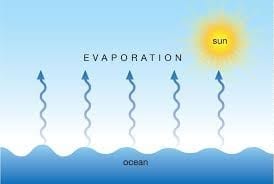
Q3. The process of conversion of water into its vapour state is called: (1 mark)
(a) Condensation
(b) Freezing
(c) Evaporation
(d) Melting
Ans: (c) Evaporation
Sol: The process of conversion of water into its vapour state is called evaporation.
Q4. Which method is used for separating heavier and lighter components of a mixture by wind or by blowing air? (1 mark)
(a) Threshing
(b) Handpicking
(c) Sieving
(d) Winnowing
Ans: (d) Winnowing
Sol: The method of separating lighter husk from heavier grains by wind or blowing air is called winnowing.
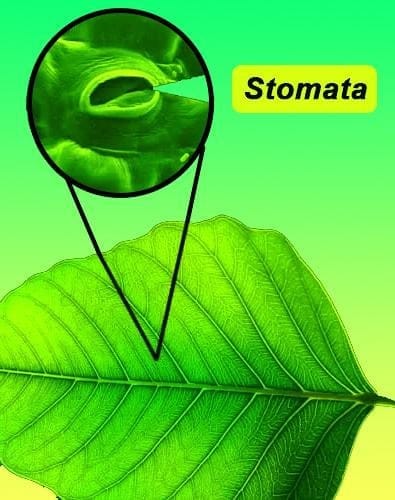
Q5. What are the tiny pores on the surface of leaves that help plants in taking air in and out called? (1 mark)
(a) Gills
(b) Stomata
(c) Lungs
(d) Alveoli
Ans: (b) Stomata
Sol: There are tiny pores called stomata on the surface of leaves that help plants in taking air in and out.
Q6. Which stage in the life cycle of a frog is characterized by having a tail and no legs? (1 mark)
(a) Froglet
(b) Adult frog
(c) Tadpole (early stage)
(d) Embryo
Ans: (c) Tadpole (early stage)
Sol: The tadpole stage includes an early stage with a tail and no legs.
Q7. What is moving air commonly called? (1 mark)
(a) Breeze
(b) Wind
(c) Gas
(d) Vacuum
Ans: (b) Wind
Sol: Moving air is called wind.
Q8. Which of the following is an example of a renewable natural resource? (1 mark)
(a) Coal
(b) Fossil fuels
(c) Air
(d) Petroleum
Ans: (c) Air
Sol: Air, water, and forest are some examples of renewable natural resources because they get renewed, replenished or restored within a reasonable period of time.
Q9. A planet is a large object that is nearly: (1 mark)
(a) Rectangular
(b) Cubical
(c) Spherical
(d) Flat
Ans: (c) Spherical
Sol: A planet is a large, nearly spherical object that revolves around the Sun.
Q10. Rocky and irregular small objects that revolve around the Sun, many of which lie between Mars and Jupiter, are called: (1 mark)
(a) Comets
(b) Dwarf planets
(c) Asteroids
(d) Moons
Ans: (c) Asteroids
Sol: Many small objects in the Solar System which are rocky and irregular in shape are called asteroids. Many revolve around the Sun between the orbits of Mars and Jupiter.
Q11. Why are digital clinical thermometers replacing older mercury thermometers? (1 mark)
(a) Mercury is too cold.
(b) Mercury is too expensive.
(c) Mercury is toxic and difficult to dispose of if broken.
(d) Mercury provides inaccurate readings.
Ans: (c) Mercury is toxic and difficult to dispose of if broken.
Sol: Mercury is an extremely toxic substance and difficult to dispose of if the thermometer breaks accidentally. Digital thermometers pose no such risk.
Q12. The process of conversion of a solid state (e.g., ice) into a liquid state (water) is called: (1 mark)
(a) Condensation
(b) Evaporation
(c) Melting
(d) Freezing
Ans: (c) Melting
Sol: The process of conversion of a solid into liquid state is called melting.
Q13. The process where the heavier insoluble component settles down at the bottom of a liquid is called: (1 mark)
(a) Filtration
(b) Decantation
(c) Sedimentation
(d) Churning
Ans: (c) Sedimentation
Sol: Sedimentation is the process of settling down of heavier insoluble component at the bottom of a liquid.
Q14. When a plant is kept in sunlight only from one direction, the shoot grows: (1 mark)
(a) Downwards
(b) Towards the light
(c) Away from the light
(d) Sideways
Ans: (b) Towards the light
Sol: When the plant gets sunlight only from one direction, the shoot grows in the direction of light.
Q15. How long does the Moon take to complete one revolution around the Earth? (1 mark)
(a) 365 days
(b) About 24 hours
(c) About 76 years
(d) About 27 days
Ans: (d) About 27 days
Sol: The Moon takes about 27 days to complete one revolution around the Earth.
Section B
Q16. Name the three most-used scales of temperature and the unit denoted for each. (2 mark)
Ans: The three most-used scales of temperature are:
- Celsius scale, denoted by °C.
- Fahrenheit scale, denoted by °F.
- Kelvin scale, denoted by K.
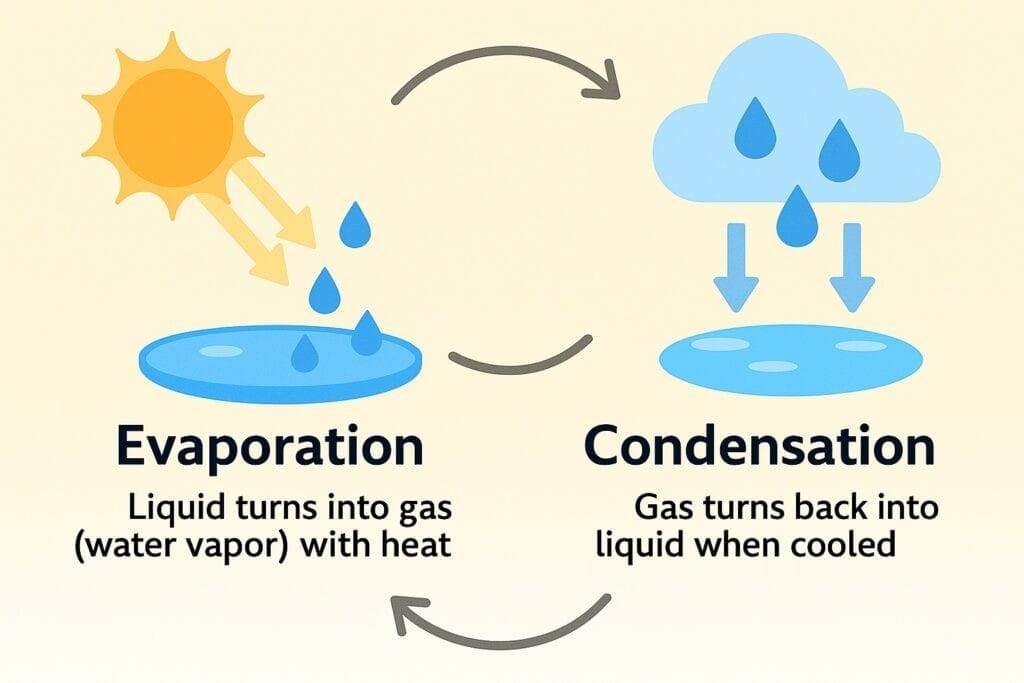
Q17. Define Evaporation and Condensation. (2 mark)
Ans:
Evaporation: This is the process of conversion of water into its vapour state.
Condensation: This is the process of conversion of water vapour into its liquid state (water droplets), occurring when the vapor comes in contact with a cold surface.
Q18. Describe the method of Handpicking and state the conditions when it is a convenient method of separation. (2 mark)
Ans:
- Handpicking is the method of picking undesirable substances from a mixture by hand. It is done based on differences in size, colour, and shape of the particles.
- Handpicking proves to be a convenient method if the particles to be removed are present only in small quantities.
Q19. What two conditions are essential for the germination of most seeds? Explain why water is necessary in this process. (2 mark)
Ans: Essential Conditions: The germination of most seeds requires the right amount of water and air.
Role of Water: Water enables the seeds to carry out the necessary processes for growth. Additionally, water softens the outer covering of the seed, called the seed coat, which allows the tiny embryo inside to develop into a plant.
Q20. State the composition of air, specifying the approximate percentage of its three main components. (2 mark)
Ans: Air is a mixture of gases. The composition includes:
- Nitrogen (∼78%).
- Oxygen (∼21%).
- Argon, carbon dioxide and other gases (∼1%).
Q21. Define Planets and Satellites. Give one example of each. (2 mark)
Ans: Planet: A planet is a large, nearly spherical object that revolves around the Sun. Example: Earth or Mars.
Satellite: Objects that move around planets are commonly called satellites. Example: The Moon (Earth's natural satellite).
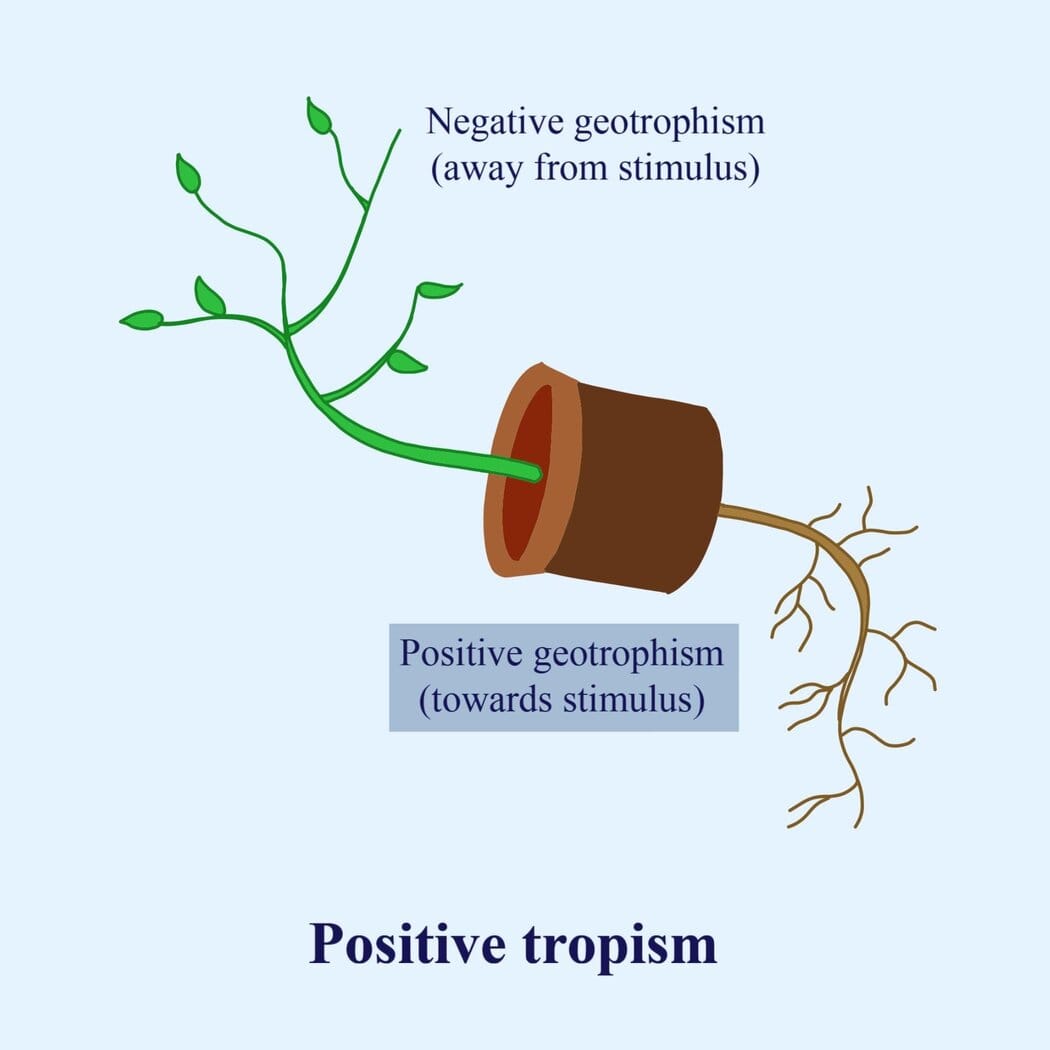
Q22. Explain why the roots of a plant grow downwards and the shoot grows upwards, even if the plant is inverted. (2 mark)
Ans: Root Growth: Roots grow downwards because they respond to gravity, seeking soil and moisture.
Shoot Growth: The shoot grows upwards, responding to sunlight, even when the plant is kept inverted.
Section C
Q23. Describe the clinical thermometer, mentioning its primary use, common temperature scale, and why digital versions are preferred today. (4 mark)
Ans: A clinical thermometer is used primarily for measuring human body temperature. It generally uses the Celsius scale (°C), though some read in Fahrenheit (°F). The normal temperature of a healthy human adult is taken to be 37.0°C or 98.6°F.
Earlier, mercury thermometers were used, but mercury is an extremely toxic substance and is difficult to dispose of if the thermometer breaks. Digital thermometers measure temperature using heat sensors, pose no such risk, and are easier to read.
Q24. Explain how heating affects the three states of water. Describe what happens when
(a) ice is heated, and
(b) water is further heated to form steam. Also state the terms used for these changes of state. (4 marks)
Ans: Water exists in three states: solid (ice), liquid (water), and gas (steam). Heating causes water to change from one state to another.
(a) Ice when heated:
Ice is water in solid form. When heat is supplied to ice, its temperature rises until it begins to melt. The solid ice changes into liquid water. This change of state from solid to liquid is called melting.(b) Water when further heated:
When liquid water is heated continuously, its temperature rises until it begins to boil. At this point, water changes into steam (water vapour), which is its gaseous state.
This change of state from liquid to gas is called evaporation or boiling.
Q25. Define Sedimentation and Decantation. Give one example from everyday life where these two processes are used together. (4 mark)
Ans: Sedimentation: This is the process where the heavier insoluble component settles down at the bottom of a liquid when the mixture is left undisturbed for some time.
Decantation: This is the process where the liquid above the settled component is carefully removed by gently tilting the vessel without disturbing the settled material.
Example: Sedimentation and decantation are used together when washing and cleaning rice and pulses in the kitchen. The heavier rice/pulses settle down (sedimentation), and the dirty water is poured off (decantation).
Q26. List and briefly describe four essential features or characteristics common to all living beings. (4 mark)
Ans: All living beings share common characteristics. Four essential features are:
- Movement: All living beings show movement, even if plants do not move from one place to another (e.g., plants show directional growth or folding of leaves).
- Nutrition (Need Food): Living beings need food for their energy, growth, and development.
- Growth: Living beings increase in size (e.g., a child grows, or a plant grows taller).
- Respiration/Breathing: All living beings respire to release energy from food, which involves the exchange of air (taking air in and out).
Q27. Explain the importance and dual role of forests in relation to soil, and discuss why their conservation is necessary. (4 mark)
Ans:
- Role in Soil Preservation (Physical): The roots of plants and trees hold onto the soil, which prevents the soil from being washed away (preventing erosion).
- Role in Soil Enrichment (Chemical): Leaves that fall from the trees decay and decompose, enriching the soil with necessary nutrients.
- Conservation Necessity: Forest cover has been decreasing mainly due to human activities like large-scale cutting of trees. Since it takes many years to grow or restore lost forests, it is necessary to preserve and use forests responsibly to allow them time to regenerate.
Q28. Explain how ancient navigators used constellations for finding directions. Describe how to locate the Pole Star using the Big Dipper constellation. (4 mark)
Ans: Use in Ancient Navigation: Recognizing star patterns (constellations) was a crucial skill for navigation before modern technology like the magnetic compass existed. This knowledge helped sailors and travelers in finding directions at sea or on land.
Locating the Pole Star:
- The Pole Star (Dhruva tārā), which is part of the Little Dipper constellation, appears stationary in the North direction in the Northern Hemisphere.
- To locate it, first identify the Big Dipper (Saptaṛiṣhi).
- Look at the two stars at the end of the Big Dipper's "cup" and imagine a straight line passing through them toward the north. The Pole Star is found along this line at about five times the distance between those two stars.
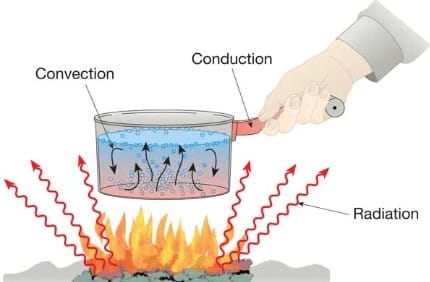
Q29. How does heat transfer by radiation differ from conduction and convection? Provide one example for each mode of transfer. (4 mark)
Ans: Heat can travel in three different ways - conduction, convection and radiation. They are different from each other.
Conduction happens only in solids. In this process, heat passes from the hotter part of an object to the colder part by direct contact.
Example: When one end of a metal spoon is kept in hot tea, the other end also becomes hot.Convection happens in liquids and gases. In this process, the particles of the liquid or gas move and carry heat from one place to another.
Example: When water is heated in a pan, the hot water rises and the cold water sinks, forming a current.Radiation does not need any medium to transfer heat. Heat can travel even through empty space.
Example: We feel the heat of the Sun on Earth even though space has no air.
Q30. Rahul's school is 4.2 km away from his house. He took 21 minutes to reach the school by cycling. Calculate the speed of Rahul's bicycle in meters per second (m/s). (4 mark)
Ans: To calculate speed, we use the formula:
Speed = Distance ÷ TimeStep 1: Convert distance into metres
4.2 km × 1000 = 4200 mStep 2: Convert time into seconds
21 minutes × 60 = 1260 sStep 3: Apply the formula
Speed = 4200 ÷ 1260 = 3.33 m/s (approximately)
Q31. List the eight planets of the Solar System in order of their increasing distance from the Sun. Briefly state the main characteristics of the outer four planets. (4 mark)
Ans: The eight planets of our Solar System, arranged from the closest to the farthest from the Sun, are: Mercury, Venus, Earth, Mars, Jupiter, Saturn, Uranus and Neptune.
The outer four planets-Jupiter, Saturn, Uranus and Neptune-have the following main characteristics:
They are called Gas Giants / Outer Planets: These planets are made mostly of gases like hydrogen and helium, unlike the inner rocky planets.
They are very large in size: Jupiter is the largest planet in the Solar System, followed by Saturn, Uranus and Neptune.
They are very far from the Sun and extremely cold: Because they receive very little sunlight, their temperatures are much lower than those of inner planets.
They have rings around them: Saturn's rings are the most famous and easily seen, but all four outer planets have ring systems made up of ice, dust and rock particles.
They take a very long time to complete one revolution around the Sun: Since they are far away, their orbital paths are huge. For example, Neptune takes about 165 Earth-years to complete one orbit.
These features together make the outer planets very different from the inner rocky planets like Mercury, Venus, Earth and Mars.
Section D
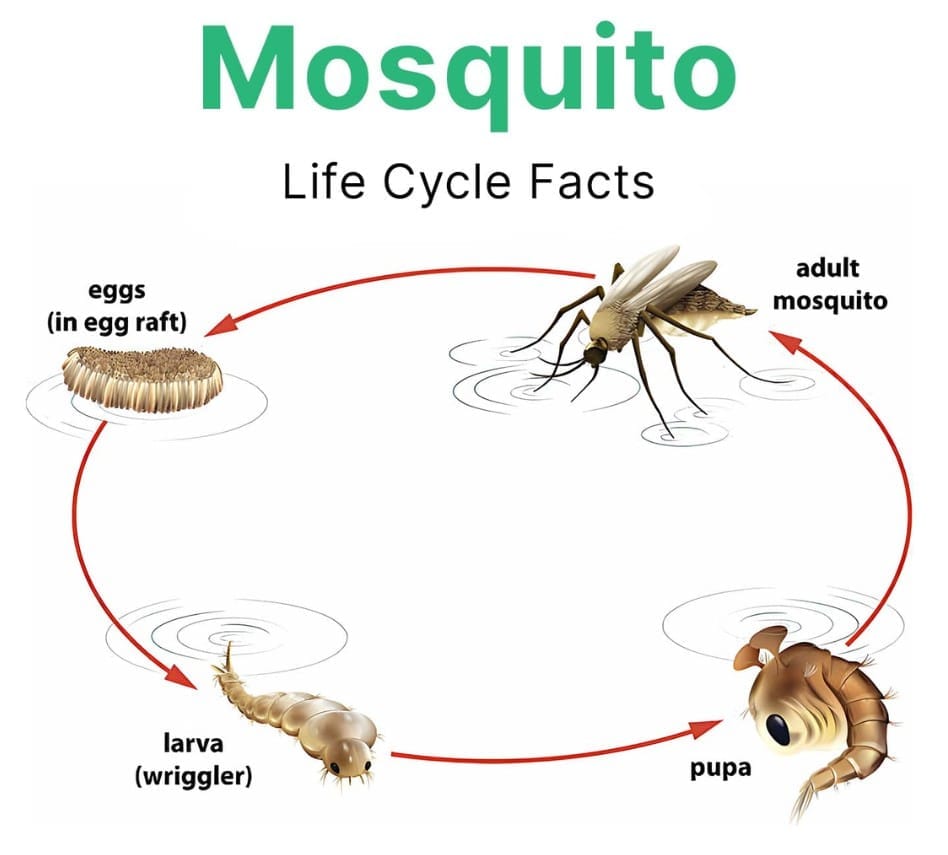
Q32. Describe the four stages of the mosquito life cycle. Explain why preventing stagnant water is crucial for controlling mosquito breeding, including the use of kerosene oil. (5 mark)
Ans: A mosquito has a four-stage life cycle, which happens mostly in water:
1. Egg:
The female mosquito lays eggs on the surface of stagnant water such as puddles, coolers, buckets, or ponds.2. Larva:
Eggs hatch into larvae (called wrigglers) that live in water and feed on microorganisms. They breathe air at the surface.3. Pupa:
Larvae turn into pupae (tumblers). They are inactive and float in water until they become adults.4. Adult Mosquito:
The pupa develops into an adult mosquito, which flies away. Female mosquitoes need blood to develop eggs and may spread diseases like malaria and dengue.Why preventing stagnant water is important:
Mosquitoes cannot breed without standing water, because their eggs, larvae, and pupae grow only in water.
By removing stagnant water from coolers, buckets, and pots, we stop their life cycle early.
When water cannot be removed (like in a pond), a thin layer of kerosene oil may be poured on the surface.
The oil blocks air from reaching larvae and pupae, so they die due to lack of oxygen.
Thus, keeping surroundings free from stagnant water and using kerosene when needed helps control mosquito breeding.
Q33. Explain the Filtration method of separation in detail. What materials can be used as filters, and why is filtration often preferred over decantation? (5 mark)
Ans: Filtration is a method used to separate an insoluble solid from a liquid. In this process, the mixture is poured through a filter, which allows the liquid to pass through while the solid particles remain on it. The clear liquid collected after filtration is called the filtrate, and the solid left on the filter is called the residue.
Materials used as filters:
- Filter paper (most common in laboratories)
- Cotton cloth or muslin cloth (used at home to strain liquids)
- Fine sand layers (used in water filters)
- Sieve (for slightly bigger particles)
These materials have tiny pores that allow only liquid to pass through but trap solid particles.
Why filtration is preferred over decantation:
- In decantation, some solid particles may still remain in the liquid, so the result is not fully clear.
- Filtration gives a clearer and cleaner liquid because it removes even very small particles.
- Filtration is more accurate and reliable, especially when solid particles are very fine.
Thus, filtration is an effective method to separate insoluble solids from liquids and is widely used in homes and laboratories.
Q34. What are natural resources? Explain the difference between renewable and non-renewable natural resources with examples. Why is it important to conserve non-renewable resources? (5 marks)
Ans: Natural resources are the things we get from nature that are useful to us, such as air, water, soil, sunlight, forests, minerals, coal and petroleum.
Renewable natural resources are those resources which can be replaced or replenished naturally in a short time.
Examples: air, water, sunlight, forests.Non-renewable natural resources are those resources which cannot be replaced easily once they are used up. They take millions of years to form.
Examples: coal, petroleum, natural gas, minerals.It is important to conserve non-renewable resources because they are limited in nature and may get exhausted if we keep using them rapidly. Future generations may not get these resources. Also, their excessive use can harm the environment. Therefore, we should use them wisely and avoid wastage.
FAQs on Final Exam Paper Science (Solutions): Set 1
| 1. What are the main topics covered in the Class 6 Science final exam paper? |  |
| 2. How should students prepare for the Science final exam? | |
| 3. What types of questions can students expect in the Science exam? | |
| 4. Why is it important to understand scientific terms and definitions for the exam? | |
| 5. What strategies can students use to manage their time effectively during the exam? | |