Time: 3 Hours
Maximum Marks: 80
General Instructions
The question paper consists of 34 questions divided into four sections: A, B, C, and D.
- All questions are compulsory.
- Section A: Questions 1 to 15 are multiple-choice questions, carrying 1 mark each. Select the most appropriate response.
- Section B: Questions 16 to 22 are short-answer questions, carrying 2 marks each.
- Section C: Questions 23 to 31 are short-answer questions, carrying 4 marks each.
- Section D: Questions 32 to 34 are short-answer questions, carrying 5 marks each.
Syllabus: The Final Exam Question Paper is framed from the following chapters: Temperature and its Measurement, A Journey through States of Water, Methods of Separation in Everyday Life, Living Creatures: Exploring their Characteristics, Nature's Treasures, Beyond Earth.
Section A
Q1. A temperature measured as 37.0 °C on the Celsius scale is equivalent to what temperature on the Fahrenheit scale? (1 mark)
(a) 97.6 °F
(b) 98.6 °F
(c) 100.0 °F
(d) 32.0 °F
Ans: (b) 98.6 °F
Sol: The normal temperature of a healthy human adult, 37.0 °C, is equivalent to 98.6 °F on the Fahrenheit scale.
Q2. How is temperature determined inside a digital thermometer? (1 mark)
(a) Using mercury column
(b) With the help of heat sensors
(c) By measuring pulse rate
(d) By battery voltage
Ans: (b) With the help of heat sensors
Sol: Temperature in a digital thermometer is determined with the help of heat sensors.
Q3. The conversion of water vapour into its liquid state is called: (1 mark)
(a) Evaporation
(b) Melting
(c) Condensation
(d) Freezing
Ans: (c) Condensation
Sol: The process of conversion of water vapour into its liquid state is called condensation.
Q4. The separation of iron nails from sawdust is an example of which method? (1 mark)
(a) Filtration
(b) Handpicking
(c) Magnetic separation
(d) Decantation
Ans: (c) Magnetic separation
Sol: Separation of magnetic substances (iron nails) and non-magnetic substances (sawdust) using a magnet is called magnetic separation.
Q5. Which type of plant folds its leaves when touched? (1 mark)
(a) Drosera
(b) Bean plant
(c) Touch-me-not (chhui-mui)
(d) Grass
Ans: (c) Touch-me-not (chhui-mui)
Sol: Touch-me-not (mimosa, chhui-mui, lajjalu) plants fold their leaves when touched, showing a response to stimuli.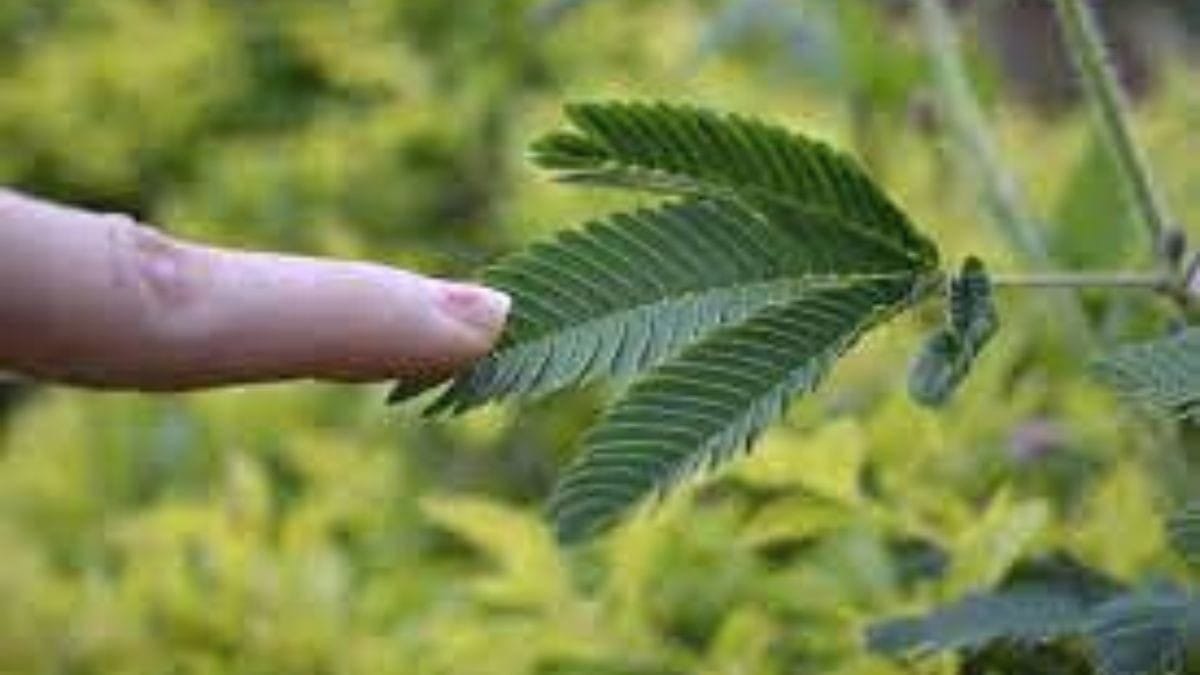
Q6. What is the chemical process in which oxygen helps break down food to release energy, carbon dioxide, and water? (1 mark)
(a) Breathing
(b) Excretion
(c) Digestion
(d) Respiration
Ans: (d) Respiration
Sol: Respiration is a chemical process where oxygen helps break down food (like glucose) to release energy, carbon dioxide, and water.
Q7. Which of the following is manufactured using minerals like gold, silver, or copper? (1 mark)
(a) Wood logs
(b) Electric bulbs
(c) Cosmetic products
(d) Water
Ans: (c) Cosmetic products
Sol: Important metals extracted from minerals are used in the manufacturing of jewelry and cosmetics.
Q8. What approximate percentage of air is occupied by Nitrogen? (1 mark)
(a) 21%
(b) 1%
(c) 78%
(d) 50%
Ans: (c) 78%
Sol: Air contains 78% Nitrogen.
Q9. Which constellation is often represented as a hunter? (1 mark)
(a) Big Dipper
(b) Taurus
(c) Ursa Minor
(d) Orion
Ans: (d) Orion
Sol: The constellation Orion is often represented as a hunter.
Q10. Why is Earth commonly referred to as the Blue Planet? (1 mark)
(a) Its atmosphere is blue.
(b) It is covered mostly by ice.
(c) A large portion of its surface is covered with water.
(d) It reflects blue light intensely.
Ans: (c) A large portion of its surface is covered with water.
Sol: A large portion of the Earth's surface is covered with water, making it appear blue from space, hence it is called the Blue Planet.
Q11. Which of the following statements about a laboratory thermometer is correct? (1 mark)
(a) It is kept upright while reading the temperature
(b) It is shaken before use
(c) Its bulb should touch the bottom of the beaker
(d) It is used to measure body temperature
Ans: (a) It is kept upright while reading the temperature
Sol: A laboratory thermometer must be held upright so that the liquid column inside it can be read correctly. It should not be tilted or allowed to touch the sides or bottom of the container.
Q12. The change in the state of water from liquid into solid is called: (1 mark)
(a) Melting
(b) Boiling
(c) Freezing
(d) Evaporation
Ans: (c) Freezing
Sol: The process of conversion of liquid into solid state is called freezing.
Q13. Which type of material is used to filter impurities from water that remains muddy even after decantation? (1 mark)
(a) Metal sieve
(b) Filter paper
(c) Bamboo tray (soop)
(d) Bare hand
Ans: (b) Filter paper
Sol: If water is still muddy, impurities can be separated using a filter with even smaller holes or pores, such as a filter paper, which has very fine pores in it.
Q14. In a plant that is kept upright, in which direction does the root grow? (1 mark)
(a) Upwards
(b) Towards light
(c) Downwards
(d) Horizontally
Ans: (c) Downwards
Sol: When the plant is kept upright, the root grows downwards.
Q15. The inner four planets (Mercury, Venus, Earth, Mars) are characterized by having: (1 mark)
(a) Large flat rings
(b) Large number of moons
(c) Solid surfaces with rocks
(d) Being mostly made of gases
Ans: (c) Solid surfaces with rocks
Sol: The inner four planets nearest to the Sun are smaller in size and have solid surfaces with rocks on them.
Section B
Q16. Why is a clinical thermometer not used to measure very high temperatures, such as the temperature of boiling water? (2 marks)
Ans: A clinical thermometer is designed to measure only the temperature of the human body, which ranges roughly from 35°C to 42°C. It has a narrow temperature range and may get damaged or break if exposed to very high temperatures like boiling water at 100°C. Therefore, it is not suitable for measuring such temperatures.
Q17. Explain the "cooling effect" observed when water is stored in an earthen pot (matka). (2 marks)
Ans: Water seeps through the surface of the earthen pot (matka). This water then evaporates from the outer surface of the pot. Evaporation causes a cooling effect, which keeps the water inside the pot cold.
Q18. Describe the steps of obtaining salt from seawater, naming the primary process involved. (2 marks)
Ans: The primary process is Evaporation.
Steps:
- Seawater, which is a mixture of salts dissolved in water, is collected and kept in shallow pits.
- The water is exposed to sunlight and air, causing the water to evaporate completely in a few days.
- This leaves behind the solid mixture of salts.
Q19. Describe two key differences between Movement in Animals and Movement in Plants. (2 marks)
Ans: Locomotion: Animals generally move from one place to another (locomotion). Plants, unlike animals, do not move from one place to another.
Type of Movement: Animal movement involves body relocation. Plant movement involves directional growth (shoots grow towards light) or responses to stimuli (flowers opening, Drosera hairs moving to trap insects, touch-me-not leaves folding).
Q20. List two individual actions that can help conserve fossil fuels. Explain why fossil fuel conservation is necessary. (2 marks)
Ans: Two Conservation Actions:
- Walking or cycling to nearby places instead of using motorized vehicles.
- Using public transport.
Necessity of Conservation: Fossil fuels (petroleum, coal, natural gas) are non-renewable resources because they take millions of years to form and are found only in limited quantities. They will get exhausted if current use continues.
Q21. How were constellations useful to sailors and travelers in ancient times? (2 marks)
Ans: Groups of stars formed identifiable patterns (constellations).
Recognizing these patterns was a useful skill for navigation in the olden times. This knowledge helped people find directions at sea or on land before the invention of modern technology or the magnetic compass.
Q22. How does the presence of water and salts in sweat relate to the characteristic of excretion in living beings? (2 marks)
Ans: Sweat consists of water and salts. These substances are waste products removed by the body. The removal of waste products from the body is called excretion, making sweat an example of this essential characteristic of living beings.
Section C
Q23. Explain why water droplets are seen on the outer surface of a cold water bottle taken out from the refrigerator. Name the process involved. (4 marks)
Ans: When a cold water bottle is taken out of the refrigerator, its outer surface becomes much colder than the surrounding air. The air around us always contains water vapour, which is an invisible gas.
When this moist air comes in contact with the cold surface of the bottle, it cools down. As the air cools, it cannot hold the same amount of water vapour. The extra water vapour present in the air loses heat and changes into tiny droplets of liquid water on the bottle's surface.
This change of water vapour into liquid water on cooling is called condensation.
So, the droplets you see on the bottle are not leaking from inside the bottle - they are formed from the water vapour already present in the air.
Q24. Describe the process of sedimentation and decantation with the help of an example. Why are these methods not suitable for separating dissolved substances? (4 marks)
Ans: Sedimentation
When a mixture of water and an insoluble solid (like sand) is left undisturbed, the heavier sand particles settle down at the bottom of the container. This settling down of heavier particles is called sedimentation.
Decantation
After sedimentation, the clear water at the top is carefully poured into another container without disturbing the settled sand. This process is called decantation.
Example
Mixture: Sand + Water
Steps:
Leave the mixture undisturbed.
Sand settles at the bottom (sedimentation).
Clear water is poured off (decantation).
Why not suitable for dissolved substances?If a substance like salt or sugar is dissolved in water, it does not settle down. So sedimentation and decantation cannot separate dissolved substances.
Evaporation is used instead.
Q25. Describe the methods of Threshing and Winnowing. How has modern technology changed these processes? (4 mark)
Ans:
- Threshing: This is the process of beating harvested stalks (of crops like wheat) to separate the grains from them.
- Winnowing: This method separates the lighter components (husk) from the heavier components (grains) of a mixture by using wind or by blowing air.
- Technological Change: Traditionally, farmers performed threshing by beating stalks on a log, and winnowing was done manually using a bamboo tray (soop) on a raised platform, relying on natural wind. Nowadays, threshing machines called threshers are used. These machines simultaneously perform both the tasks of threshing and winnowing.
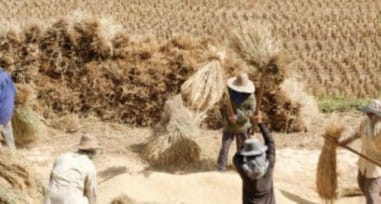 Threshing
Q26. Describe the life cycle of a bean plant, listing the stages and the key events that occur until the plant dies. (4 mark)
Ans: The life cycle of a bean plant consists of several stages:
1. Seed Stage:
The life cycle begins with a bean seed.
The seed contains an embryo, stored food, and a protective seed coat.
2. Germination Stage:
When the seed gets water, oxygen, and warmth, it begins to germinate.
The radicle (young root) emerges first, followed by the shoot (plumule).
3. Seedling Stage:
The young shoot grows upward, and leaves develop to start photosynthesis.
The plant absorbs water and minerals from the soil through roots.
4. Mature Plant Stage:
The bean plant grows taller, develops flowers, and then forms pods containing seeds.
Pollination and fertilization occur inside the flowers.
5. Reproduction Stage:
6. Senescence and Death:
This cycle repeats when the new seeds germinate, ensuring the continuation of the plant species.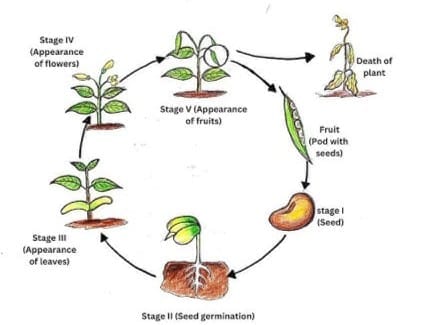
Q27. Explain how the Sun indirectly sustains animal life on Earth. Name three ways that humans use the energy directly provided by the Sun. (4 mark)
Ans: The Sun is the primary source of energy for life on Earth, and it sustains animal life indirectly in the following ways:1. Plants use sunlight for photosynthesis:
- Plants capture solar energy to produce food (glucose) from carbon dioxide and water.
- Animals eat plants (herbivores) or eat other animals (carnivores), thus obtaining energy indirectly from the Sun.
2. Maintains Earth's temperature:
3. Drives natural processes:
The Sun helps in evaporation, rain formation, and wind, which are essential for animals' water supply and habitat.
Three ways humans use solar energy directly:
Solar cookers to cook food.
Solar panels to generate electricity.
Solar water heaters to heat water for domestic use.
Thus, the Sun is crucial for both the indirect support of life and direct human use of energy.
Q28. Describe the characteristics of the inner four planets in our Solar System (Mercury, Venus, Earth, Mars). Explain why Venus is hotter than Mercury, even though it is farther from the Sun. (4 mark)
Ans: The inner four planets, also called terrestrial planets, are Mercury, Venus, Earth, and Mars. They share some common characteristics:
1. Mercury:
- Closest planet to the Sun.
- Smallest planet in the Solar System.
- Has a rocky surface with craters and very thin atmosphere.
2. Venus:
- Second planet from the Sun.
- Similar in size to Earth.
- Has a thick atmosphere mostly of carbon dioxide.
3. Earth:
- Third planet from the Sun.
- Has a rocky surface, abundant water, and supports life.
- Atmosphere contains nitrogen and oxygen.
4. Mars:
- Fourth planet from the Sun.
- Known as the Red Planet due to iron oxide on its surface.
- Has thin atmosphere, cold climate, and evidence of water in the past.
Why Venus is hotter than Mercury:
- Although Mercury is closer to the Sun, it has very little atmosphere, so it cannot trap heat.
- Venus has a thick carbon dioxide atmosphere, which traps heat through the greenhouse effect, making it hotter than Mercury.
Thus, the atmosphere plays a key role in determining the surface temperature of planets.
Q29. Describe the life cycle of a frog, highlighting the stages, the habitat changes that occur, and one key feature of a developmental stage. (4 mark)
Ans: The life cycle of a frog consists of several stages and shows a clear example of metamorphosis, where the frog changes from an aquatic animal to one that can live on land.
1. Egg Stage: The frog lays eggs in water. These eggs are covered with a jelly-like substance that protects them from damage and drying out. At this stage, the frog lives entirely in an aquatic habitat.
2. Tadpole Stage: The eggs hatch into tadpoles. Tadpoles have tails and gills, which allow them to breathe underwater. They feed mainly on algae and small plants. At this stage, the frog continues to live in water.
3. Tadpole with Legs Stage (Froglet): As tadpoles grow, they develop hind legs first, followed by front legs. Their lungs begin to develop so they can breathe air, and their tails gradually shorten. At this stage, the frog starts living partly in water and partly on land.
4. Adult Frog Stage: The tail disappears completely, and the frog becomes an adult. Adult frogs have lungs for breathing air and can live on land, though they return to water for laying eggs.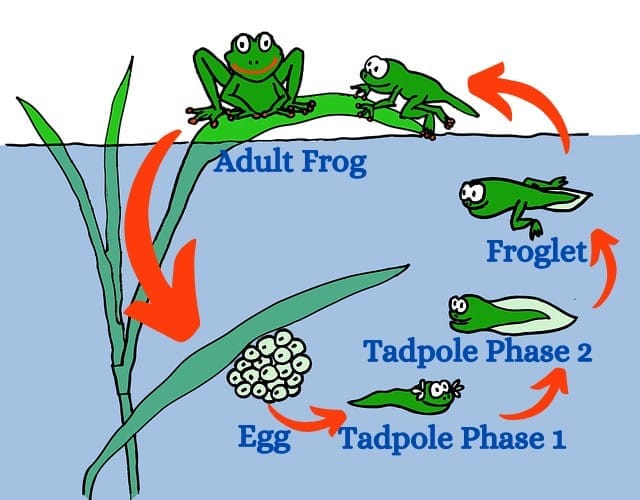
Key Feature: Tadpoles breathe with gills, whereas adult frogs breathe with lungs and through their skin.
This life cycle demonstrates how frogs are adapted to both aquatic and terrestrial environments.
Q30. Outline a clear, step-by-step procedure for separating a mixture containing common salt, sand, iron filings, and water. (4 mark)
Ans: This separation requires a combination of methods:
- Magnetic Separation (Separating Iron Filings): Use a magnet to move through the mixture. The magnetic iron filings will be attracted and separated, leaving the non-magnetic substances (salt, sand, water) behind.
- Sedimentation and Decantation (Separating Sand from Water/Salt): Allow the remaining mixture (salt, sand, water) to settle undisturbed. The insoluble, heavier sand particles will settle at the bottom (sedimentation). Gently pour the clear liquid (salt solution) into a new vessel (decantation).
- Filtration (Removing Fine Sand): If the liquid is still cloudy, pass the salt solution through a filter (e.g., filter paper) to remove any remaining fine sand particles (insoluble residue).
- Evaporation (Separating Salt from Water): Heat the clear salt solution. The water will evaporate (turn into vapor), leaving the solid common salt behind in the container (residue).
Q31. Describe the continuous circulation of water on Earth, explaining the role of evaporation, condensation, and precipitation in the water cycle. (4 mark)
Ans: The continuous circulation of water between the Earth's surface and the atmosphere forms the water cycle.
- Evaporation: Water from oceans and the Earth's surface turns into invisible water vapor and moves into the atmosphere, often due to heat.
- Rising and Cooling: The air containing water vapor moves higher up, where it becomes cooler.
- Condensation: At certain cold heights, the water vapor turns into tiny liquid droplets (condensation). These droplets usually form around dust particles and float, forming clouds.
- Precipitation: Many droplets join together to form bigger, heavier drops. When these heavy drops start falling back to Earth as rain, hail, or snow, this process is called precipitation. The water that returns to the Earth eventually flows back to rivers and oceans, continuing the cycle.
Section D
Q32. Describe the experimental setup used to identify the essential conditions for seed germination. What are the specific roles of air and water in this process? (5 mark)
Ans: To identify the essential conditions for seed germination, the following experimental setup is commonly used:Experimental Setup:
- Take four Petri dishes and place a few moist cotton balls in each.
- Place a few seeds (like bean seeds) on the cotton in each dish.
- Cover the dishes and label them as follows:
- Control - Seeds with water and air.
- Without Water - Seeds kept dry.
- Without Air - Seeds submerged in water or sealed tightly.
- Without Light - Seeds kept in darkness but with water and air.
Observations and Conclusions:
- Seeds in the control dish germinate normally.
- Seeds without water do not germinate, showing water is essential.
- Seeds without air also fail to germinate, showing air is essential.
- Seeds in darkness germinate, indicating light is not essential for germination.
Roles of Water and Air:
- Water: Softens the seed coat, activates enzymes, and helps the seed swell, allowing the embryo to grow.
- Air (Oxygen): Provides the oxygen needed for cellular respiration, which releases energy for the growing seed.
This experiment shows that water and air are essential for seed germination, while light is not necessary.
Q33. Compare the traditional methods of threshing and winnowing with modern technological developments in agriculture. (5 mark)
Ans:
- Traditional methods of threshing and winnowing have been used for centuries to separate grains from crops. Threshing involves beating harvested crops, such as wheat or rice, to loosen the grains from the stalks.
- Winnowing is done by tossing the mixture of grain and chaff into the air, allowing the lighter chaff to be blown away by the wind while the heavier grains fall back. These methods are simple and do not require electricity or machinery, but they are time-consuming, labor-intensive, and less efficient.
- Modern agriculture uses mechanical threshers and combine harvesters, which perform threshing and winnowing simultaneously. These machines save time, reduce human effort, and increase efficiency and yield.
- Additionally, modern technology ensures minimal grain loss and allows large-scale harvesting, making agriculture more productive and sustainable.
Thus, while traditional methods are simple and cost-effective, modern technological developments have greatly improved efficiency, speed, and output in farming.
Q34. Discuss the importance of the Sun as a natural resource. How do humans use solar energy directly, and how does it indirectly sustain animal life? (5 mark)
Ans:
- The Sun is the most important natural resource because it provides light and heat, which are essential for life on Earth. Solar energy drives the water cycle, warms the Earth, and supports plant growth through photosynthesis, which produces food and oxygen.
- This, in turn, sustains animal life, as animals depend on plants for food and oxygen.
- Humans use solar energy in several direct ways. It is harnessed through solar panels to generate electricity, used to heat water in solar water heaters, and helps dry clothes and food naturally.
- Indirectly, the Sun supports animals by enabling plants to grow, which are the primary producers in food chains. Without solar energy, ecosystems could not function, and life on Earth would not be possible.
In summary, the Sun is vital both for direct human use and for maintaining the balance of nature, sustaining life on the planet.