Worksheet Solutions: India, a Home to Many

Multiple Choice Questions
Q1: According to scholars, when did the Bene Israel Jewish community first arrive on the Konkan coast?
(a) 75 BCE
(b) 175 BCE
(c) 275 BCE
(d) 375 BCE
Ans: (b)
The Bene Israel came around 175 BCE from the ancient Kingdom of Israel after their ship was shipwrecked near the Indian coast.
Q2: Which prophet founded Zoroastrianism, the religion followed by Parsis?
(a) Zarathustra
(b) Baha'u'llah
(c) Abraham
(d) Moses
Ans: (a)
Zoroastrianism was founded by prophet Zarathushtra (also spelt Zarathustra) in Central Asia and is based on worship of Ahurā Mazdā.
Q3: Where does the 14th Dalai Lama currently reside in India?
(a) Shimla
(b) Dharamshala
(c) Gangtok
(d) Leh
Ans: (b)
The 14th Dalai Lama has lived in Dharamshala, Himachal Pradesh, since taking refuge in India in 1959 after fleeing Tibet.
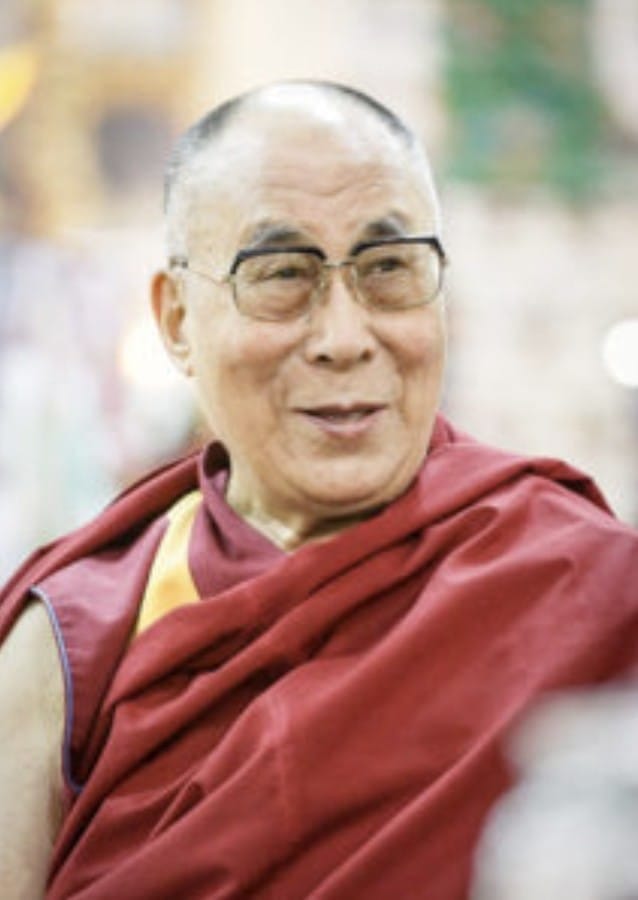 His Holiness the 14th Dalai Lama
Q4: Which Maharaja rescued around 1,000 Polish orphans during the Second World War?
(a) Maharaja of Mysore
(b) Maharaja of Nawanagar
(c) Maharaja of Travancore
(d) Raja of Kochi
Ans: (b)
Digvijaysinhji Ranjitsinhji Jadeja, Maharaja of Nawanagar (present-day Jamnagar), rescued around 1,000 Polish orphans between 1942 and 1946, providing them safety and care.
Q5: What does the Sanskrit phrase 'vasudhaiva kutumbakam' mean?
(a) May all creatures be happy
(b) A guest is like God
(c) The whole world is family
(d) Truth alone triumphs
Ans: (c)
'Vasudhaiva kutumbakam' translates to 'the whole world is family' and represents India's core civilisational value of universal brotherhood and acceptance.
Fill in the Blanks
Q1: The Raja of Kochi granted land to the Cochin Jews 'as long as the world, sun, and _______ endure.'
Ans: moon
Q2: The ancient sacred fire of the Parsis continues to burn in _______, south Gujarat.
Ans: Udvada
Q3: The _______ are people of African origin who were brought to India as slaves between the 7th and 19th centuries.
Ans: Siddis
Q4: The traditional Tibetan medicine system is called _______ or 'Art of Healing'.
Ans: Sowa Rigpa
Q5: Hirabai Lobi, who worked for the upliftment of women in the Siddi community, was awarded the _______ in 2023.
Ans: Padma Shri
True or False
Q1: The Bene Israel became the largest Jewish community in India, numbering over 25,000 after independence.
Ans: True
Q2: Parsis came to India from Persia after the Islamic conquest in the 10th century CE.
Ans: False
Parsis came to India between the 8th and 10th centuries after fleeing persecution following the Islamic conquest in the 7th century CE.
Q3: The earliest Armenian settlement in India was in Agra during the Mughal period.
Ans: True
Q4: The Baha'i faith originated in India in the mid-1800s.
Ans: False
The Baha'i faith began in Persia (modern-day Iran) in the mid-1800s, led by Baha'u'llah, not in India.
Q5: Sowa Rigpa has been integrated into the Government of India's AYUSH programme.
Ans: True
Match the Following
Q1: Match the communities in Column A with their corresponding characteristics or contributions in Column B.
| Column A | Column B |
|---|---|
| 1. Bene Israel | A. Traditional medicine system called Sowa Rigpa |
| 2. Parsis | B. Built India's oldest mosque, Cheraman Juma Masjid |
| 3. Arab merchants | C. Shipwrecked near Konkan coast around 175 BCE |
| 4. Armenians | D. Legend of milk and sugar with Raja Jadi Rāṇā |
| 5. Tibetan refugees | E. Abdul Hai served as Chief Justice in Akbar's court |
Ans:
1 - C (The Bene Israel Jewish community arrived around 175 BCE when their ship was shipwrecked near the Konkan coast south of Mumbai.)
2 - D (According to legend, a wise Parsi man dissolved sugar in milk to show Raja Jadi Rāṇā how they would enrich Indian society.)
3 - B (Arab merchants who came from the 7th century onward helped build India's oldest mosque, the Cheraman Juma Masjid, in Kerala.)
4 - E (Armenians played important roles in the Mughal royal household, with Abdul Hai serving as Chief Justice in Emperor Akbar's court.)
5 - A (Tibetan refugees brought their traditional medicine system Sowa Rigpa, also called 'Art of Healing', which is now part of India's AYUSH programme.)
Short Answer Questions
Q1: Explain the legend of milk and sugar associated with the arrival of Parsis in India.
Ans: When Parsis approached Raja Jadi Rāṇā of Sanjān in Gujarat, the Raja showed them a jug full of milk, indicating his kingdom could not accommodate more people. A wise Parsi man dissolved sugar in the milk without spilling it, symbolising that Parsis would blend into Indian society and enrich it without causing problems. The Raja was pleased and granted them a secure place to settle.
Q2: Describe Swami Vivekananda's statement about India's welcoming nature at the World Parliament of Religions.
Ans: At the World Parliament of Religions in Chicago in 1893, Swami Vivekananda expressed pride in belonging to a nation that sheltered persecuted people and refugees of all religions and nations. He specifically mentioned that India gave refuge to Israelites when their holy temple was destroyed by Roman tyranny and also sheltered the Zoroastrian nation, highlighting India's culture of acceptance.
Q3: What role did the Maharaja of Nawanagar play during the Second World War?
Ans: Digvijaysinhji Ranjitsinhji Jadeja, the Maharaja of Nawanagar (present-day Jamnagar), rescued around 1,000 Polish orphans between 1942 and 1946 during the Second World War. He mobilised the Red Cross and other organisations, providing the children with safety, food, and care. He also welcomed several thousand Polish refugees. His humanitarian service was recognised with a monument called 'Good Maharaja Square' in Warsaw.
Q4: Explain the circumstances that led Tibetan refugees to seek asylum in India.
Ans: From 1950 onwards, the People's Republic of China overran Tibet in several waves, eventually annexing it. In 1959, following a popular uprising in Lhasa against Chinese presence, the 14th Dalai Lama fled across the Himalaya and took refuge in India. The Indian government granted him asylum, and he has been living in Dharamshala since then, where the Central Tibetan Administration functions as a government-in-exile.
Q5: What is Sowa Rigpa and how has it been integrated into Indian healthcare?
Ans: Sowa Rigpa, also called 'Art of Healing', is the traditional Tibetan medicine system codified in the 8th century CE near Lhasa. It blends ancient Ayurvedic principles with inputs from China, Central Asia, Persia, and Greece. Tibetan refugees propagated it in India after 1959. Institutions like Men-Tsee-Khang in Dharamshala practise this system, and it has been integrated into the Government of India's AYUSH programme.
FAQs on Worksheet Solutions: India, a Home to Many
| 1. What are the main features of India's cultural diversity? |  |
| 2. How does India's geography influence its culture? | |
| 3. What role do festivals play in Indian society? | |
| 4. How does language contribute to India's identity? | |
| 5. Why is India considered a land of unity in diversity? | |




