Common Daily Action Verbs


This chapter focuses on essential daily action verbs in Arabic that describe common activities like eating, drinking, going, coming, reading, and writing. These verbs form the foundation of basic Arabic communication and are used frequently in everyday conversations. Understanding their correct forms, pronunciations, and usage in sentences is crucial for building strong Arabic language skills.
1. Basic Structure of Arabic Verbs
Arabic verbs follow specific patterns that differ from English. Understanding these patterns helps in using verbs correctly.
- Root System: Most Arabic verbs come from a three-letter root. These roots carry the basic meaning of the action.
- Verb Forms: Arabic verbs change their forms based on who is doing the action (subject).
- Past and Present: Verbs have different patterns for actions that already happened (past tense) and actions happening now (present tense).
- Gender Agreement: Verbs must match whether the subject is masculine (male) or feminine (female).
2. The Six Essential Daily Action Verbs
2.1 أَكَلَ (Akala) - To Eat
This verb describes the action of eating food. It is one of the most commonly used verbs in daily life.
- Past Tense (Male): أَكَلَ (akala) - He ate
- Past Tense (Female): أَكَلَتْ (akalat) - She ate
- Present Tense (Male): يَأْكُلُ (ya'kulu) - He eats / He is eating
- Present Tense (Female): تَأْكُلُ (ta'kulu) - She eats / She is eating
- Command Form (Male): كُلْ (kul) - Eat!
- Command Form (Female): كُلِي (kuli) - Eat!
Usage in Sentences:
- أَكَلَ الوَلَدُ التُّفَّاحَةَ (Akala al-waladu at-tuffāḥata) - The boy ate the apple
- تَأْكُلُ البِنْتُ الطَّعَامَ (Ta'kulu al-bintu aṭ-ṭa'āma) - The girl eats the food
- كُلِ الخُبْزَ (Kuli al-khubza) - Eat the bread (to a female)
2.2 شَرِبَ (Shariba) - To Drink
This verb is used for the action of drinking any liquid like water, juice, or milk.
- Past Tense (Male): شَرِبَ (shariba) - He drank
- Past Tense (Female): شَرِبَتْ (sharibat) - She drank
- Present Tense (Male): يَشْرَبُ (yashrabu) - He drinks / He is drinking
- Present Tense (Female): تَشْرَبُ (tashrabu) - She drinks / She is drinking
- Command Form (Male): اِشْرَبْ (ishrab) - Drink!
- Command Form (Female): اِشْرَبِي (ishrabi) - Drink!
Usage in Sentences:
- شَرِبَ الطِّفْلُ الحَلِيبَ (Shariba aṭ-ṭiflu al-ḥalība) - The child drank the milk
- تَشْرَبُ الأُمُّ الشَّايَ (Tashrabu al-ummu ash-shāya) - The mother drinks the tea
- اِشْرَبْ المَاءَ (Ishrab al-mā'a) - Drink the water (to a male)
2.3 ذَهَبَ (Dhahaba) - To Go
This verb indicates movement from one place to another. It is used when someone leaves to go somewhere.
- Past Tense (Male): ذَهَبَ (dhahaba) - He went
- Past Tense (Female): ذَهَبَتْ (dhahabat) - She went
- Present Tense (Male): يَذْهَبُ (yadh'habu) - He goes / He is going
- Present Tense (Female): تَذْهَبُ (tadh'habu) - She goes / She is going
- Command Form (Male): اِذْهَبْ (idh'hab) - Go!
- Command Form (Female): اِذْهَبِي (idh'habi) - Go!
Usage in Sentences:
- ذَهَبَ الطَّالِبُ إِلَى المَدْرَسَةِ (Dhahaba aṭ-ṭālibu ilā al-madrasati) - The student went to the school
- تَذْهَبُ البِنْتُ إِلَى البَيْتِ (Tadh'habu al-bintu ilā al-bayti) - The girl goes to the house
- اِذْهَبْ إِلَى السُّوقِ (Idh'hab ilā as-sūqi) - Go to the market (to a male)
2.4 جَاءَ (Jā'a) - To Come
This verb describes movement towards the speaker or a particular location. It is the opposite of "to go".
- Past Tense (Male): جَاءَ (jā'a) - He came
- Past Tense (Female): جَاءَتْ (jā'at) - She came
- Present Tense (Male): يَجِيءُ (yajī'u) - He comes / He is coming
- Present Tense (Female): تَجِيءُ (tajī'u) - She comes / She is coming
- Command Form (Male): تَعَالَ (ta'āla) - Come!
- Command Form (Female): تَعَالَيْ (ta'ālay) - Come!
Usage in Sentences:
- جَاءَ الأُسْتَاذُ إِلَى الصَّفِّ (Jā'a al-ustādhu ilā aṣ-ṣaffi) - The teacher came to the class
- تَجِيءُ الطَّالِبَةُ مُبَكِّرَةً (Tajī'u aṭ-ṭālibatu mubakkiratan) - The student comes early (female)
- تَعَالَ إِلَى هُنَا (Ta'āla ilā hunā) - Come here (to a male)
2.5 قَرَأَ (Qara'a) - To Read
This verb is used when someone reads books, newspapers, or any written text. It is essential for educational contexts.
- Past Tense (Male): قَرَأَ (qara'a) - He read
- Past Tense (Female): قَرَأَتْ (qara'at) - She read
- Present Tense (Male): يَقْرَأُ (yaqra'u) - He reads / He is reading
- Present Tense (Female): تَقْرَأُ (taqra'u) - She reads / She is reading
- Command Form (Male): اِقْرَأْ (iqra') - Read!
- Command Form (Female): اِقْرَئِي (iqra'i) - Read!
Usage in Sentences:
- قَرَأَ التِّلْمِيذُ الكِتَابَ (Qara'a at-tilmīdhu al-kitāba) - The pupil read the book
- تَقْرَأُ المُعَلِّمَةُ القِصَّةَ (Taqra'u al-mu'allimatu al-qiṣṣata) - The teacher reads the story (female)
- اِقْرَأْ الدَّرْسَ (Iqra' ad-darsa) - Read the lesson (to a male)
2.6 كَتَبَ (Kataba) - To Write
This verb describes the action of writing with a pen, pencil, or any writing tool. It is commonly used in school settings.
- Past Tense (Male): كَتَبَ (kataba) - He wrote
- Past Tense (Female): كَتَبَتْ (katabat) - She wrote
- Present Tense (Male): يَكْتُبُ (yaktubu) - He writes / He is writing
- Present Tense (Female): تَكْتُبُ (taktubu) - She writes / She is writing
- Command Form (Male): اُكْتُبْ (uktub) - Write!
- Command Form (Female): اُكْتُبِي (uktubi) - Write!
Usage in Sentences:
- كَتَبَ الوَلَدُ الوَاجِبَ (Kataba al-waladu al-wājiba) - The boy wrote the homework
- تَكْتُبُ الطَّالِبَةُ الرِّسَالَةَ (Taktubu aṭ-ṭālibatu ar-risālata) - The student writes the letter (female)
- اُكْتُبْ اسْمَكَ (Uktub ismaka) - Write your name (to a male)
3. Important Grammar Points
3.1 Verb-Subject Agreement
Arabic verbs must agree with their subjects in gender and number. This is a crucial rule for correct sentence formation.
- Masculine Subject: Use the masculine form of the verb (usually starts with يَ ya- in present tense)
- Feminine Subject: Use the feminine form of the verb (usually starts with تَ ta- in present tense and adds ت at the end in past tense)
- Word Order: In Arabic, the verb typically comes before the subject (Verb + Subject + Object)
3.2 Sentence Structure Patterns
Understanding how to arrange words helps in forming correct Arabic sentences with these verbs.
- Basic Pattern: Verb + Subject + Object (e.g., أَكَلَ الوَلَدُ التُّفَّاحَةَ - The boy ate the apple)
- With Prepositions: Some verbs like "to go" need prepositions like إِلَى (ilā - to/towards)
- Without Object: Some sentences can have just Verb + Subject (e.g., جَاءَ الأُسْتَاذُ - The teacher came)
- Direct Address: Commands don't need to mention the subject as it is understood from context
3.3 Tense Recognition
Identifying whether a verb is in past or present tense helps understand when the action occurred.
- Past Tense Markers: Verbs end with specific vowel patterns (often َ a or َتْ at for feminine)
- Present Tense Markers: Verbs start with يَ (ya-), تَ (ta-), أَ (a-), or نَ (na-) depending on the subject
- Time Context: Words like أَمْسِ (yesterday), اليَوْمَ (today), and غَداً (tomorrow) help identify the tense
4. Common Student Mistakes and Trap Alerts
4.1 Gender Confusion
Students often forget to change the verb form based on whether the subject is male or female.
- Trap: Using يَأْكُلُ (masculine) with a feminine subject like البِنْتُ (the girl) - This is WRONG
- Correct Form: Always use تَأْكُلُ (feminine) when the subject is female
- Memory Tip: If the subject has ة (ta marbuta) at the end, it is usually feminine and needs a feminine verb
4.2 Pronunciation Errors
Some verbs have similar sounds but different meanings. Careful pronunciation is essential.
- قَرَأَ vs. قَرَّأَ: The first means "he read," while doubling the middle letter changes the meaning
- Hamza (ء) Sound: In verbs like جَاءَ and قَرَأَ, the hamza must be pronounced clearly
- Sukūn Marks: In command forms, pay attention to the sukūn (ْ) which indicates no vowel sound
4.3 Word Order Mix-up
Students sometimes use English word order in Arabic sentences, which creates grammatical errors.
- Wrong: الوَلَدُ أَكَلَ التُّفَّاحَةَ (Subject + Verb + Object - This is less common in standard written Arabic)
- Correct: أَكَلَ الوَلَدُ التُّفَّاحَةَ (Verb + Subject + Object - This is the standard pattern)
- Note: Both orders can be correct in Arabic, but Verb-Subject-Object is more formal and common in classical texts
4.4 Forgetting the Definite Article
When using specific nouns, students often forget to add ال (the definite article "the").
- Important Rule: When mentioning a specific object, use ال before the noun (e.g., الكِتَابَ - the book)
- Without Article: كِتَاباً means "a book" (indefinite)
- With Article: الكِتَابَ means "the book" (definite)
5. Practice Sentence Patterns
5.1 Simple Present Tense Sentences
These patterns describe actions happening regularly or right now.
- يَأْكُلُ الطَّالِبُ الفَاكِهَةَ (The student eats the fruit - male)
- تَشْرَبُ الطَّالِبَةُ العَصِيرَ (The student drinks the juice - female)
- يَذْهَبُ الأَبُ إِلَى العَمَلِ (The father goes to work)
- تَقْرَأُ الأُمُّ الجَرِيدَةَ (The mother reads the newspaper)
5.2 Simple Past Tense Sentences
These patterns describe actions that have already been completed.
- أَكَلَ الطِّفْلُ الحَلْوَى (The child ate the candy - male)
- شَرِبَتِ البِنْتُ العَصِيرَ (The girl drank the juice)
- ذَهَبَ المُدِيرُ إِلَى المَكْتَبِ (The director went to the office)
- كَتَبَتِ المُعَلِّمَةُ الدَّرْسَ (The teacher wrote the lesson - female)
5.3 Command Form Sentences
These patterns are used to give instructions or requests to someone.
- كُلِ الخُضْرَوَاتِ (Eat the vegetables - to a female)
- اِشْرَبْ المَاءَ البَارِدَ (Drink the cold water - to a male)
- اِذْهَبِي إِلَى الغُرْفَةِ (Go to the room - to a female)
- اِقْرَأْ بِصَوْتٍ عَالٍ (Read loudly - to a male)
6. Quick Reference Table
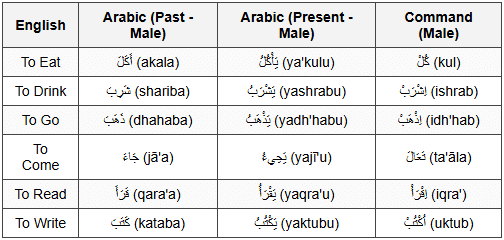
Mastering these six daily action verbs provides a solid foundation for communicating basic activities in Arabic. Remember to practice the correct verb forms based on gender and tense. Pay special attention to pronunciation, especially with sounds like hamza (ء). Regular practice of forming sentences with different subjects and objects will help reinforce proper grammar patterns and build confidence in using these essential verbs naturally in conversation and writing.