CBSE Class 10 > Class 10 Notes > Social Studies (SST) > Quick Revision: Class 10 Democratic Politics - II (SST)
Quick Revision: Class 10 Democratic Politics - II (SST)

Power Sharing
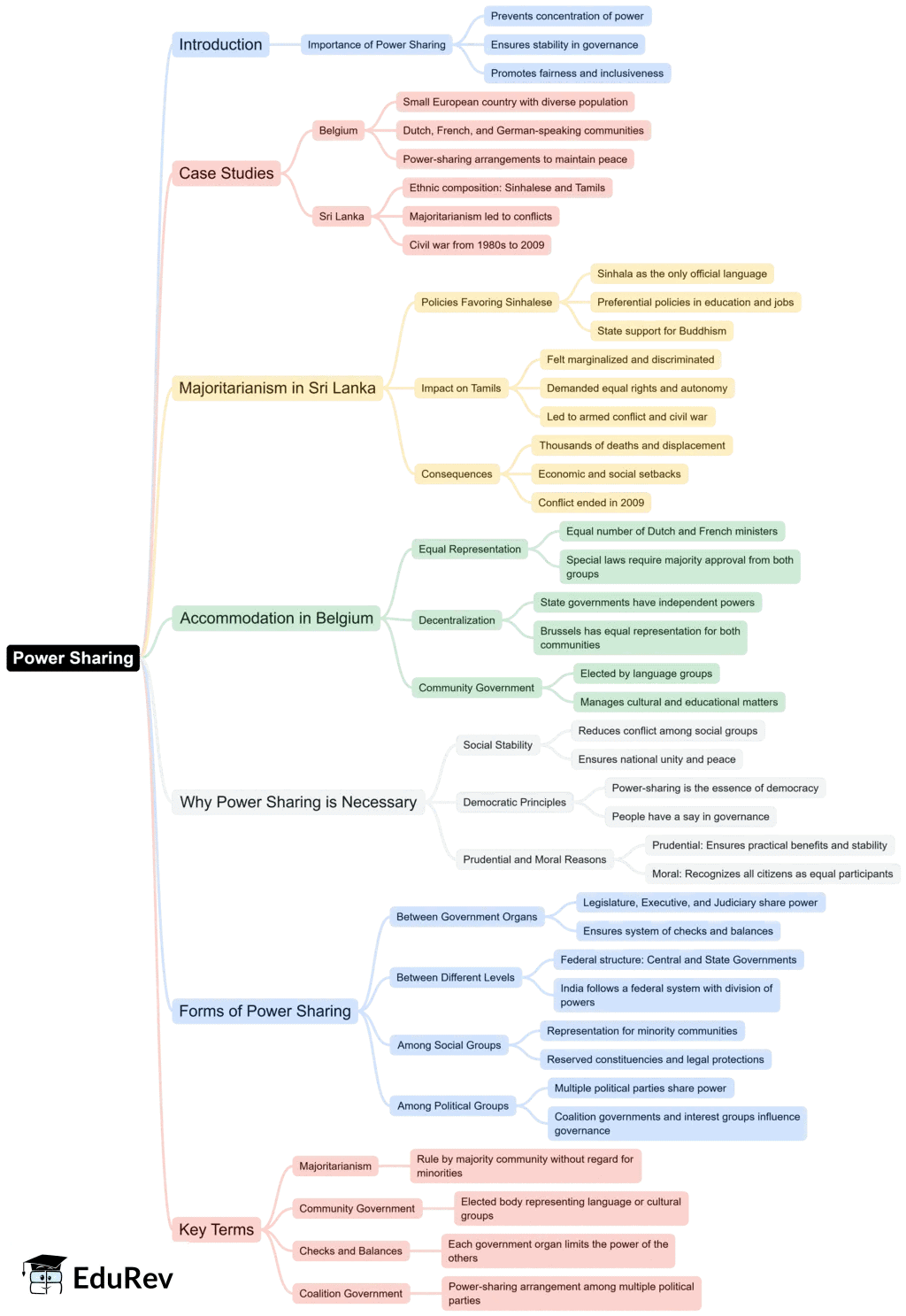
Gender, Religion & Caste
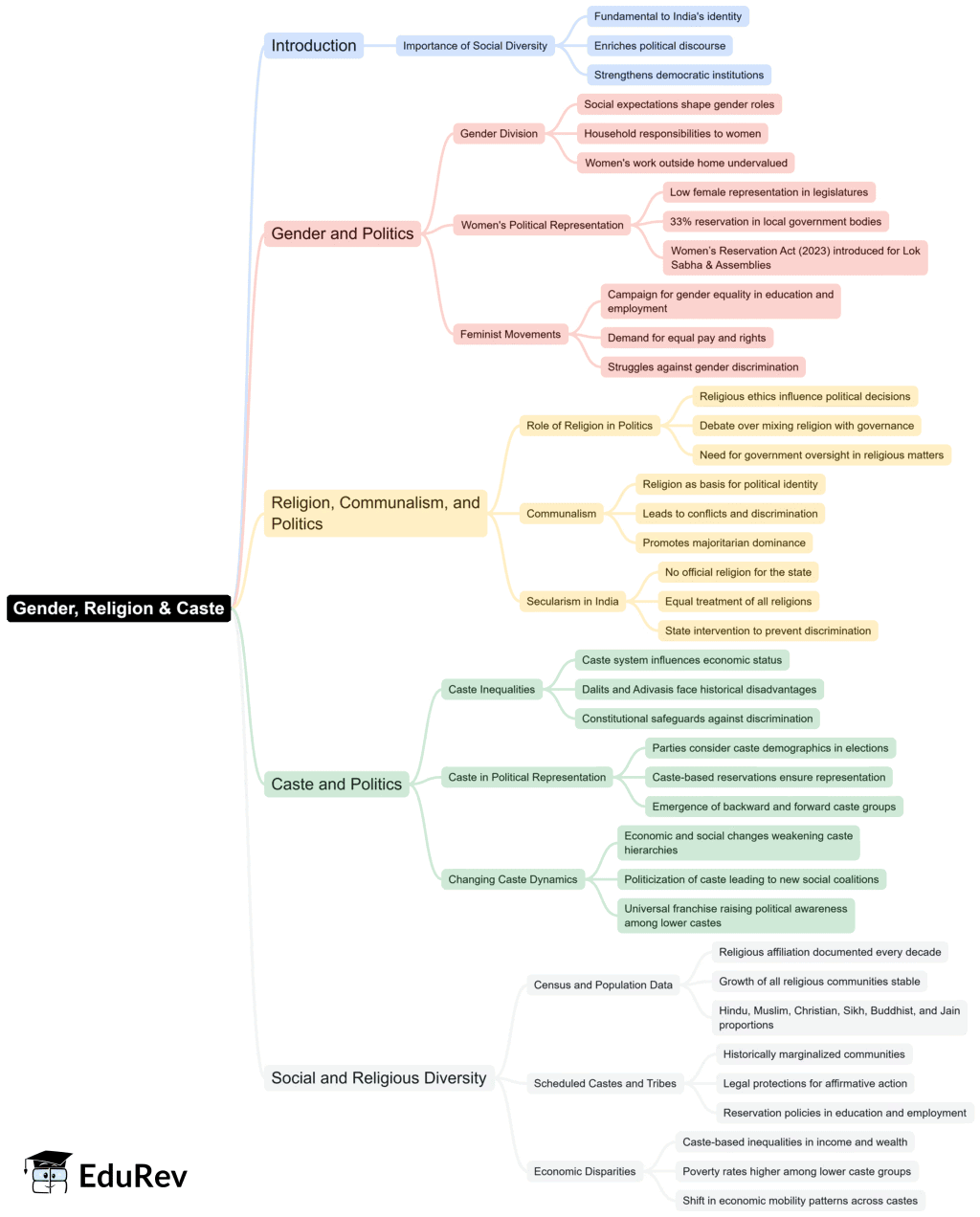
Political Parties
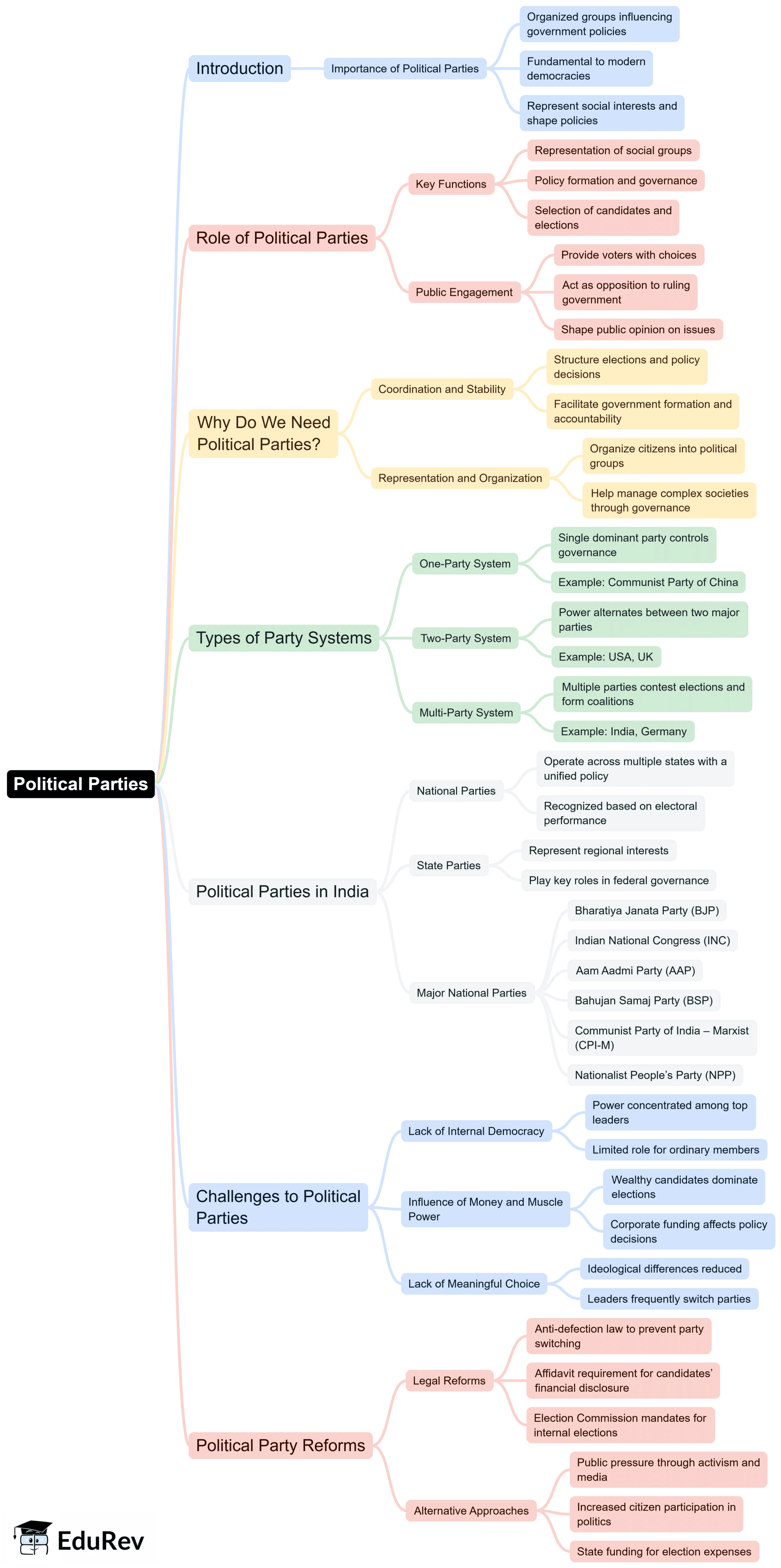
Outcomes of Democracy
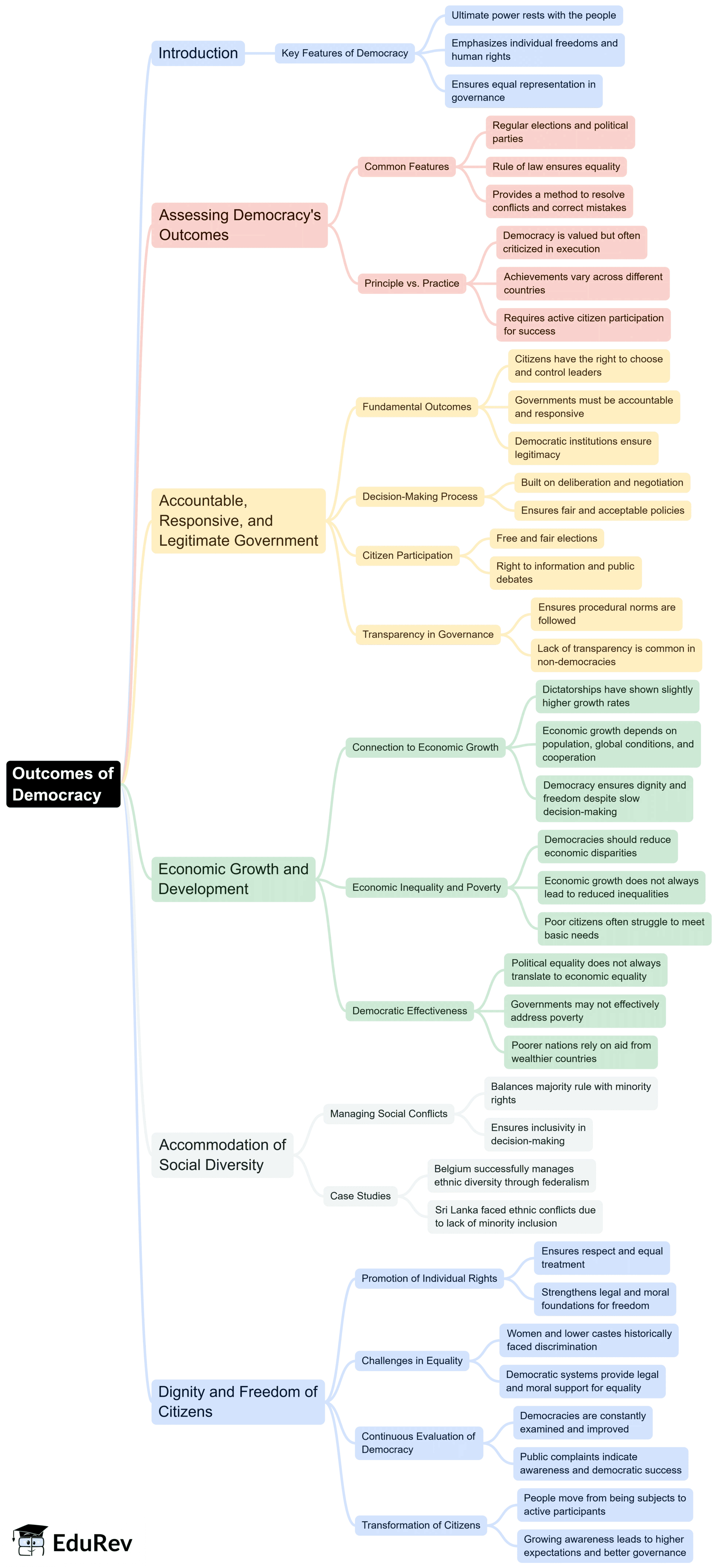
Federalism
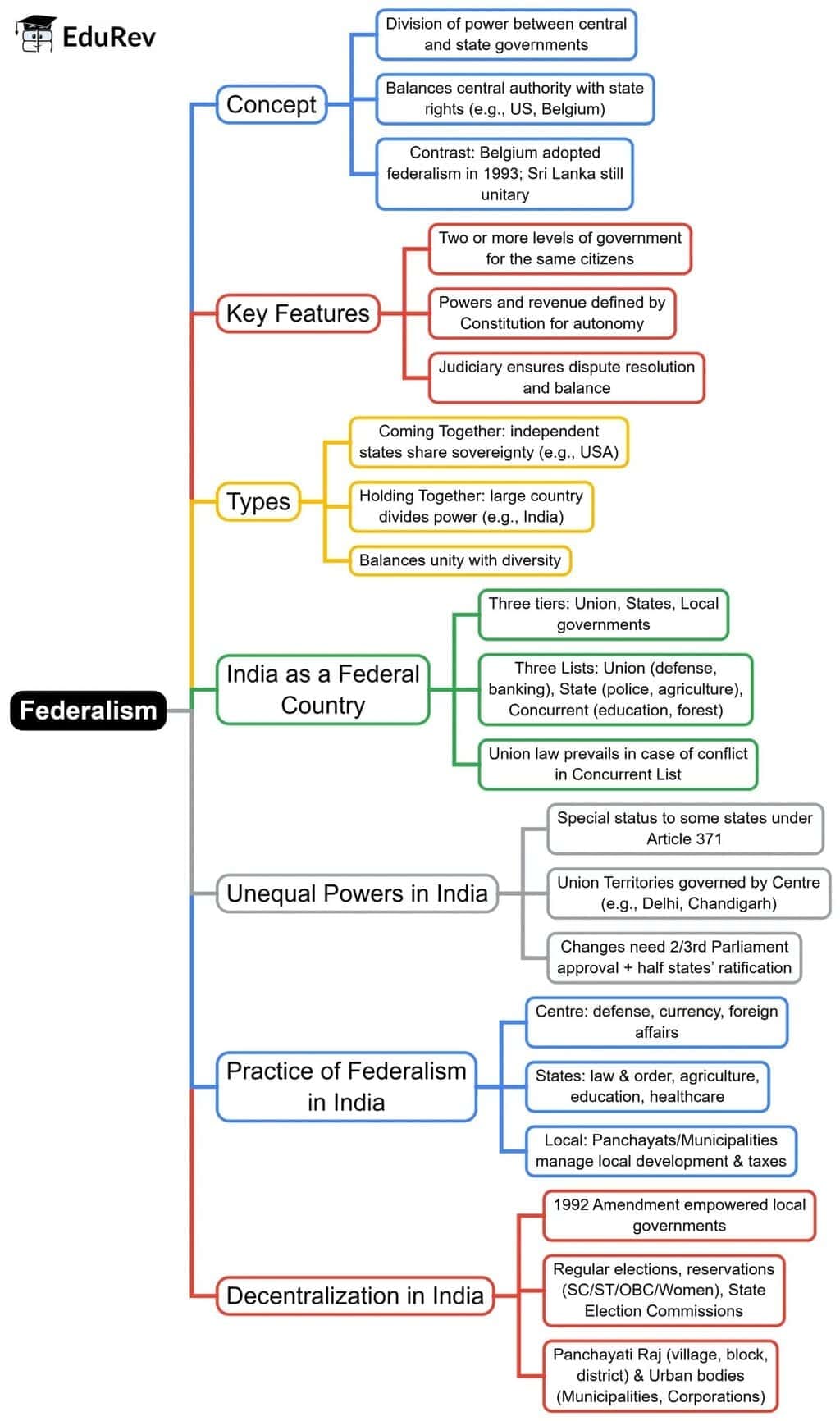
The document Quick Revision: Class 10 Democratic Politics - II (SST) is a part of the Class 10 Course Social Studies (SST) Class 10.
All you need of Class 10 at this link: Class 10
FAQs on Quick Revision: Class 10 Democratic Politics - II (SST)
| 1. What is power sharing and why is it important in a democracy? |  |
Ans. Power sharing refers to the distribution of power among different levels of government, communities, and groups in society. It is crucial in a democracy as it helps to prevent the concentration of power in a single entity, promotes inclusivity, and ensures that diverse voices are heard. By sharing power, democracies can achieve stability, reduce conflict, and foster cooperation among various factions within society.
| 2. How do gender, religion, and caste influence political representation in India? | |
Ans. Gender, religion, and caste significantly shape political representation in India. Women often face barriers to entry in politics, leading to underrepresentation. Similarly, certain religious and caste groups may be marginalised, influencing their political participation. Political parties often cater to specific identities to secure votes, which can reinforce divisions but also provide a platform for historically underrepresented groups to voice their concerns and demands in the political arena.
| 3. What role do political parties play in a democracy? | |
Ans. Political parties are essential in a democracy as they facilitate the organisation of electoral competition, represent various interests, and mobilise public opinion. They provide a platform for citizens to engage with politics, articulate their views, and influence policy decisions. By contesting elections, political parties help to form governments and hold them accountable, thereby enhancing democratic governance and participation.
| 4. What are some key outcomes of democracy? | |
Ans. Key outcomes of democracy include the protection of individual rights and freedoms, the establishment of rule of law, and the promotion of social and economic equality. Democracies tend to foster political stability, encourage civic engagement, and enable peaceful transitions of power. Additionally, they provide mechanisms for accountability and transparency, which help to prevent abuses of power and promote good governance.
| 5. How does federalism contribute to the functioning of democracy? | |
Ans. Federalism contributes to democracy by allowing for the decentralisation of power, enabling local governments to make decisions that reflect the needs and preferences of their communities. This system promotes political participation at various levels, enhances representation, and accommodates diversity within a nation. By distributing power between central and state governments, federalism can mitigate conflicts and encourage cooperation among different regions and groups, thereby strengthening democratic processes.
About this Document

4.80/5 Rating

Apr 26, 2026 Last updated
Document Description: Quick Revision: Class 10 Democratic Politics - II (SST) for Class 10 2026 is part of Social Studies (SST) Class 10 preparation. The notes and questions for Quick Revision: Class 10 Democratic Politics - II (SST) have been prepared according to the Class 10 exam syllabus. Information about Quick Revision: Class 10 Democratic Politics - II (SST) covers topics like and Quick Revision: Class 10 Democratic Politics - II (SST) Example, for Class 10 2026 Exam. Find important definitions, questions, notes, meanings, examples, exercises and tests below for Quick Revision: Class 10 Democratic Politics - II (SST).
Introduction of Quick Revision: Class 10 Democratic Politics - II (SST) in English is available as part of our Social Studies (SST) Class 10 for Class 10 & Quick Revision: Class 10 Democratic Politics - II (SST) in Hindi for Social Studies (SST) Class 10 course. Download more important topics related with notes, lectures and mock test series for Class 10 Exam by signing up for free. Class 10: Quick Revision: Class 10 Democratic Politics - II (SST)
Description
Quick Revision: Class 10 Democratic Politics of SST covers all the important topics, helping you prepare for the Class 10 exam on EduRev. Start for free!
Information about Quick Revision: Class 10 Democratic Politics - II (SST)
In this doc you can find the meaning of Quick Revision: Class 10 Democratic Politics - II (SST) defined & explained in the simplest way possible. Besides explaining types of Quick Revision: Class 10 Democratic Politics - II (SST) theory, EduRev gives you an ample number of questions to practice Quick Revision: Class 10 Democratic Politics - II (SST) tests, examples and also practice Class 10 tests



Related Searches
Important questions, Extra Questions, Quick Revision: Class 10 Democratic Politics - II (SST), Semester Notes, study material, ppt, Quick Revision: Class 10 Democratic Politics - II (SST), Free, Exam, mock tests for examination, Sample Paper, Summary, video lectures, MCQs, past year papers, shortcuts and tricks, Previous Year Questions with Solutions, Quick Revision: Class 10 Democratic Politics - II (SST), pdf , Objective type Questions, Viva Questions, practice quizzes;