Kurukshetra Summary: November 2025

Rural India as a Center for Ecotourism
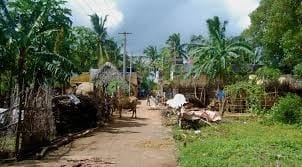
Ecotourism has become a key tool in India's strategy for rural development, blending economic growth, environmental protection, and community involvement.
- According to the International Ecotourism Society, it involves responsible travel that protects natural areas, supports local well-being, and promotes learning and awareness.
- India's abundant biodiversity, diverse cultural sites, and traditional rural lifestyles make it ideally suited for this sustainable approach.
- With growing interest in authentic, low-impact travel experiences, ecotourism demand is rising. Governments see its value in funding conservation, creating rural jobs, and driving eco-friendly economic progress.
Current State of India's Tourism Industry
- The sector is recovering strongly after the pandemic, mainly through domestic travel, placing India 10th worldwide in tourism's GDP impact.
- Foreign tourist arrivals are forecasted to hit 30.5 million by 2028, with 9.24 million in 2023 (up from 6.43 million in 2022), primarily from Bangladesh (24.5%), the USA (20.4%), and the UK (6.9%).
- In 2022, tourism contributed US$ 199.6 billion to the economy, expected to grow to US$ 512 billion by 2028 at 7.1% yearly, potentially creating 53 million jobs by 2029 and solidifying its role in employment.
Government Policies and Initiatives
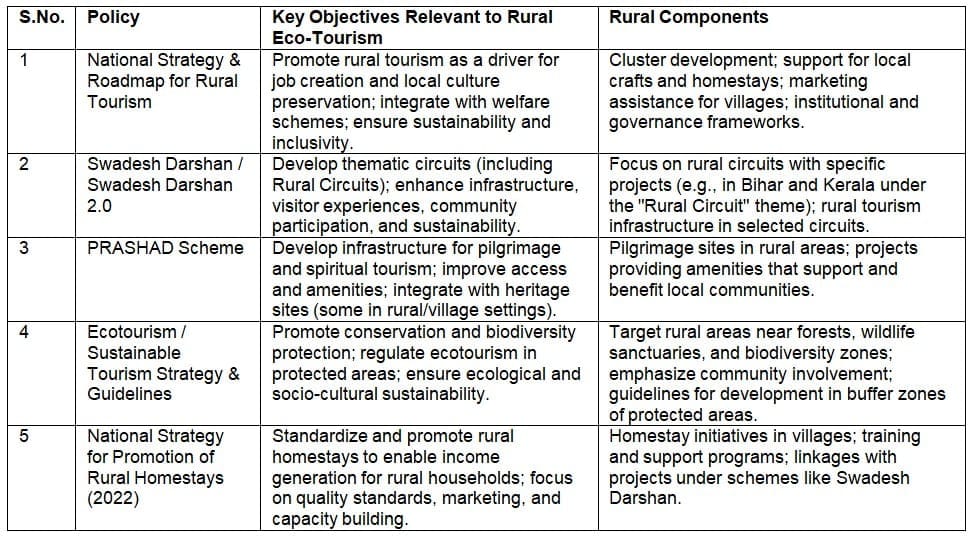
- National Ecotourism Strategy (2022): Coordinates efforts between the Ministry of Tourism and the Ministry of Environment, focusing on eco-certification, responsible practices in sensitive areas, community involvement, capacity limits, and tourism tied to conservation.
- Swadesh Darshan and Swadesh Darshan 2.0: Since 2014-15, over Rs 5,292.91 crore has funded 76 projects (75 completed by 2024). The updated version prioritizes sustainability, including eco-circuits like Kerala's Pathanamthitta-Gavi-Vagamon-Thekkady for rainforest adventures and Jharkhand's Dalma-Betla-Netarhat for wildlife experiences.
- PRASHAD Scheme: Rs 1,646.99 crore allocated for 48 projects, enhancing eco-spiritual routes, heritage sites, and basic facilities.
- Skill Development: 56 Institutes of Hotel Management and 13 Food Craft Institutes (as of 2024) train workers in sustainable hospitality for rural ecotourism roles.
- Travel for LiFE and Dekho Apna Desh: These campaigns encourage responsible behavior, domestic exploration, and models led by women and youth in rural tourism.
Market Trends and Opportunities in Rural Areas
- Rapid Expansion: Ecotourism market valued at USD 19.8 billion in 2024, projected to reach USD 50.4 billion by 2033 (CAGR 9.8%), accounting for about 5% of GDP.
- Eco-Conscious Travelers: 82% of Indian tourists prefer sustainable options like eco-lodges, homestays, hiking, birdwatching, and farm-based activities (IMARC, 2025).
- Rural Potential: 2,509 million domestic trips in 2023; 9.66 million foreign arrivals in 2024 (+19.8%).
- Jobs and Business: Tourism supports 12.57% of employment (42 million jobs in 2024, rising to 48 million by 2025), fostering women-led ventures, youth opportunities, and varied rural earnings.
Key Policies Related to Rural Eco-Tourism and Their Features
Impacts: Economic, Social, and Environmental
- Economic: Boosts household earnings by 35-60%, supports small businesses; examples include Periyar Tiger Reserve (₹60-80 crore revenue, half to locals) and Mawlynnong (+60% incomes).
- Social: Empowers women (e.g., 18,000 in Kerala), curbs youth migration (Khonoma - 30% reduction), and promotes community control, cultural retention, and inclusion.
- Environmental: Funds protection efforts like anti-poaching, habitat restoration (tigers in Madhya Pradesh, mangroves in Western Ghats and Sundarbans), enabling ongoing biodiversity safeguards.
Main Challenges
- Risks of over-commercialization and false eco-claims undermining true sustainability.
- Overloading ecosystems: Crowds in places like Ladakh, Jim Corbett, and Kerala strain resources, water, and waste systems.
- Climate vulnerabilities: Melting glaciers, rising seas, extreme heat, and wildfires threaten sites.
- Policy shortcomings: Inconsistent certification, fragmented oversight, and weak enforcement.
- Infrastructure limitations: Inadequate green transport, waste handling, and resilient buildings in remote areas.
Recommendations for Progress
- Enforce robust eco-standards: Require regular audits and a national eco-label.
- Manage visitor limits: Implement caps, zoning, and peak pricing in vulnerable spots.
- Spread tourism: Highlight underrated rural areas to ease pressure on popular destinations.
- Tie to local economies: Combine with organic farming, crafts, renewables, forestry, and indigenous experiences.
- Prioritize community and resilience: Share revenues, form cooperatives for women/youth, build green facilities, and foster public-private-community collaborations for eco-accommodations and conservation businesses.
Ecotourism offers a transformative path for rural India, merging prosperity, conservation, and empowerment. With strong domestic interest, global appeal, and enabling policies, rural regions are poised to lead in responsible, inclusive tourism worldwide.
Vibrant Villages Programme
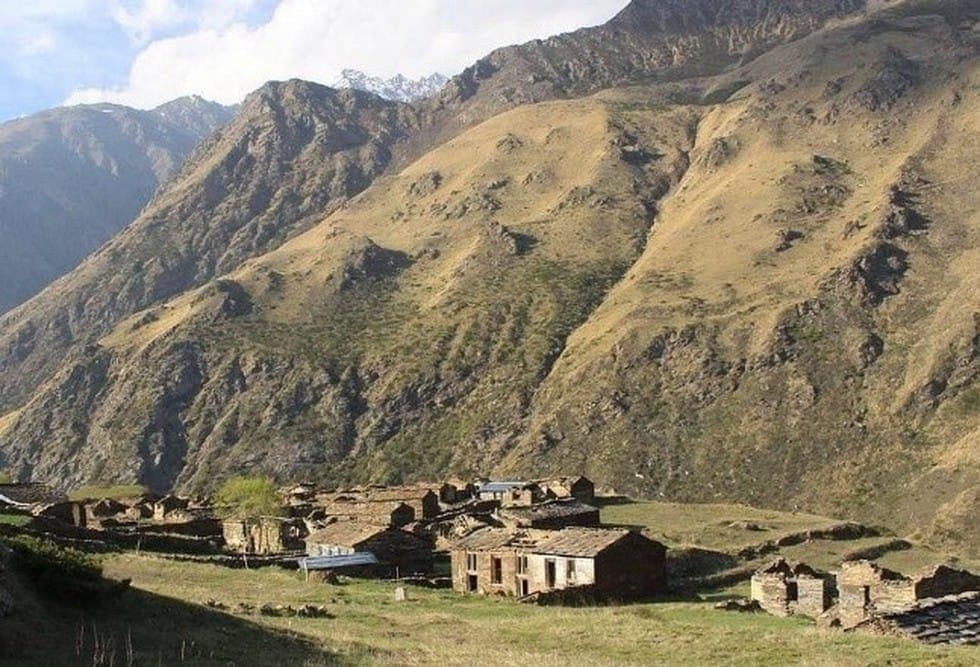
The Vibrant Villages Programme (VVP), introduced by the Indian Government, targets comprehensive growth in border areas through tourism-led economies, better infrastructure, and job creation.
- It emphasizes eco-tourism, farm-based tourism, cultural experiences, and local involvement to boost entrepreneurship, highlight traditional arts, crafts, and foods, and reduce migration by offering lasting livelihoods.
Phase I: Highlights and Progress
- Coverage and Funding: Launched with Rs 4,800 crore (2022-23 to 2025-26), it covered 663 villages in 19 districts and 46 blocks across Arunachal Pradesh (455), Himachal Pradesh (75), Sikkim (46), Uttarakhand (51), and Ladakh (35).
- Plans developed with Gram Panchayats, SHGs, NGOs, and cooperatives.
- Infrastructure Improvements: Funded 113 roads, 8 bridges (Rs 2,400 crore), 4G in 342 villages, and power in 474 on-grid and 127 off-grid sites (43 projects, Rs 238 crore).
- Livelihoods and Tourism: Supported homestays, local events, eco-resorts, adventure activities, and visitor centers (102 projects, Rs 48 crore). Promoted One Village One Product for agri-businesses.
- Broader Development: Rs 556 crore for farming, education, health, energy, cooperatives, and village industries, with strong involvement of women and youth.
- Visibility: Featured successful models during Republic Day 2025.
Phase II: Growth and New Priorities
- Budget and Reach: Approved in April 2025 with Rs 6,839 crore until 2028-29, extending to additional border areas in states like Assam, Bihar, Gujarat, Jammu & Kashmir, Manipur, Meghalaya, Mizoram, Nagaland, Punjab, Rajasthan, Sikkim, Tripura, Uttarakhand, Uttar Pradesh, and West Bengal.
- Cultural and Tourism Focus: Supports fairs, festivals, awareness events, and national celebrations to showcase heritage and products, while building connected tourist routes.
- Sustainable Jobs: Strengthens agri-value chains, brands local foods, and backs community businesses to retain youth.
- Infrastructure and Tech: Aims for reliable roads, telecom, TV, power, and education facilities like SMART classrooms, using tools like PM Gati Shakti.
- Incentives: Best Tourism Village Competition encourages sustainable practices; 2023 had 795 entries (35 winners), 2024 had 991 (36 winners across categories like Adventure, Agri, and Vibrant Villages).
Importance and Results
- Economic Boost: Drives local businesses, crafts, and tourism for steady income.
- Social Inclusion: Promotes participation of women, youth, and communities.
- Preservation: Safeguards culture, traditions, and ecosystems via responsible tourism.
- National Goals: Enhances border security and development, supporting Viksit Bharat @2047 and self-reliant India.
Conclusion
The Vibrant Villages Programme exemplifies integrated rural advancement through tourism, infrastructure, and community efforts. It turns border areas into thriving, independent hubs, advancing India's goals of prosperity, inclusion, and strength.
Agro-Tourism in India
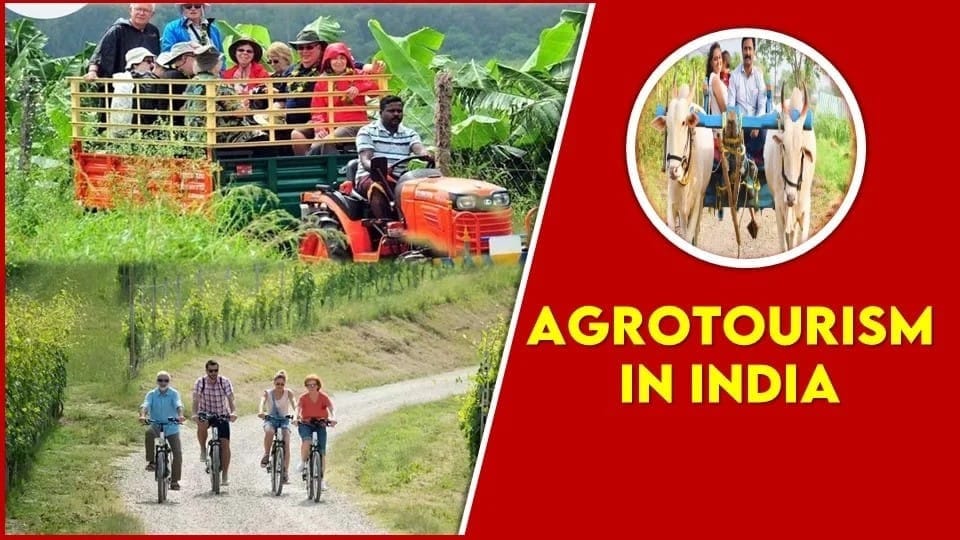
As the world's 4th largest economy in 2025, India-with 15 agro-climatic zones and varied crops-holds immense promise for agro-tourism to advance sustainable farming, rural incomes, and overall progress toward Viksit Bharat @2047.
- Agro-tourism combines travel with farming, offering farmers extra revenue while advancing green practices, cultural continuity, and environmental care.
Importance of Agro-Tourism
Economic and Job Impact:
- Farming engages 46.1% of workers and adds 17.8% to GDP (FY 2023-24).
- It supplements income for small farmers (~80% of total), encouraging small-scale businesses and rural vitality.
- Market Size (IMARC 2024): USD 1,177.9 million in 2024, expected to grow to USD 4,911.9 million by 2033 (CAGR 17.9%).
Environmental and Sustainability Gains:
- Links visitors to farm life, boosting traditional and organic methods.
- Shifts focus to profitable, sustainable farming over mere output.
- Aligns with projects like UNIDO-India FARM for eco-friendly pest control (GEF-UNIDO, 2024 via HIL Ltd).
State Examples:
- Maharashtra: ATDC (since 2005) spans 200+ villages, 1,000+ centers, drawing 80 lakh+ visitors; 500 registered farms.
- Kerala: ATCOS supports farm stays, spice tours, organic experiences, and wellness.
- Sikkim: As India's organic pioneer, involves more rural women.
- Karnataka: Coorg coffee estates popular with tourists.
- Punjab: Scheme highlights rural life and culture for added farmer income.
Agricultural Strength:
- Steady ~5% growth (FY17-FY23); 3.5% in Q2 FY2024-25.
- Leads globally in milk, pulses, spices; second in fruits, vegetables, etc.
- Foodgrain output up from 265.05 million tonnes (2014-15) to 347.44 million (2024-25 estimate).
Community and Social Benefits:
- Involves locals, supports nearby businesses, and creates jobs/income.
- Preserves traditions, crafts, and foods.
- Includes women and youth for fair benefits.
Global Alignment:
- Backed by UNIDO/FAO for SDGs like ending poverty, food security, and growth.
- Needs funding, infrastructure, training, and awareness for success.
Future Steps
- Policy Integration: Embed in national/state programs with training, facilities, and digital support.
- Promote sustainable, profit-focused farming.
- Cultural and Rural Links: Use India's 6.65 lakh villages for immersive experiences, circuits, and events.
- Synergy: Combine tourism with hospitality and local products for inclusive growth.
Conclusion
Agro-tourism unites farming, travel, and rural progress, supporting green practices, livelihoods, culture, and economy. With strong policies and promotion, it can drive self-reliance, Viksit Bharat, and global food prominence.
Rural Festivals in India
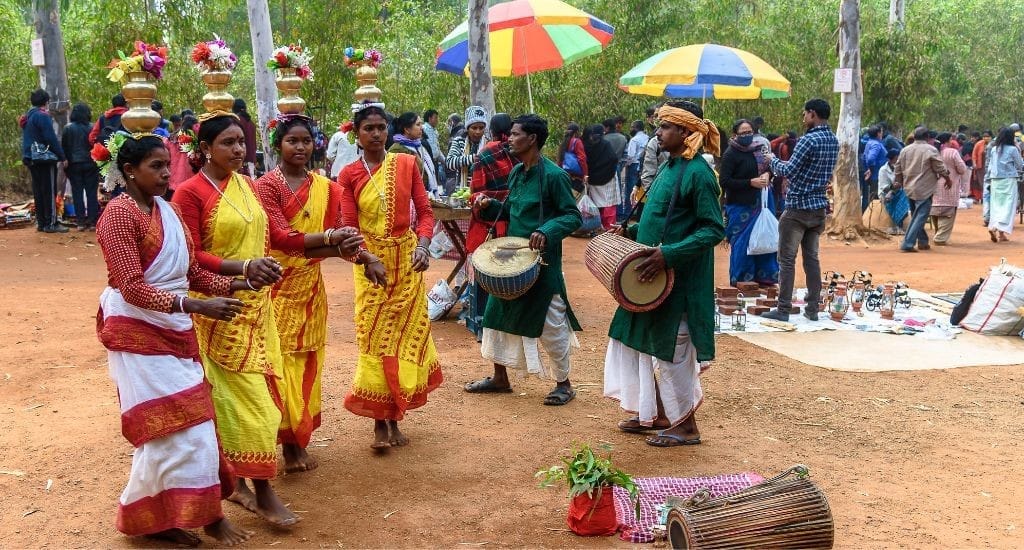
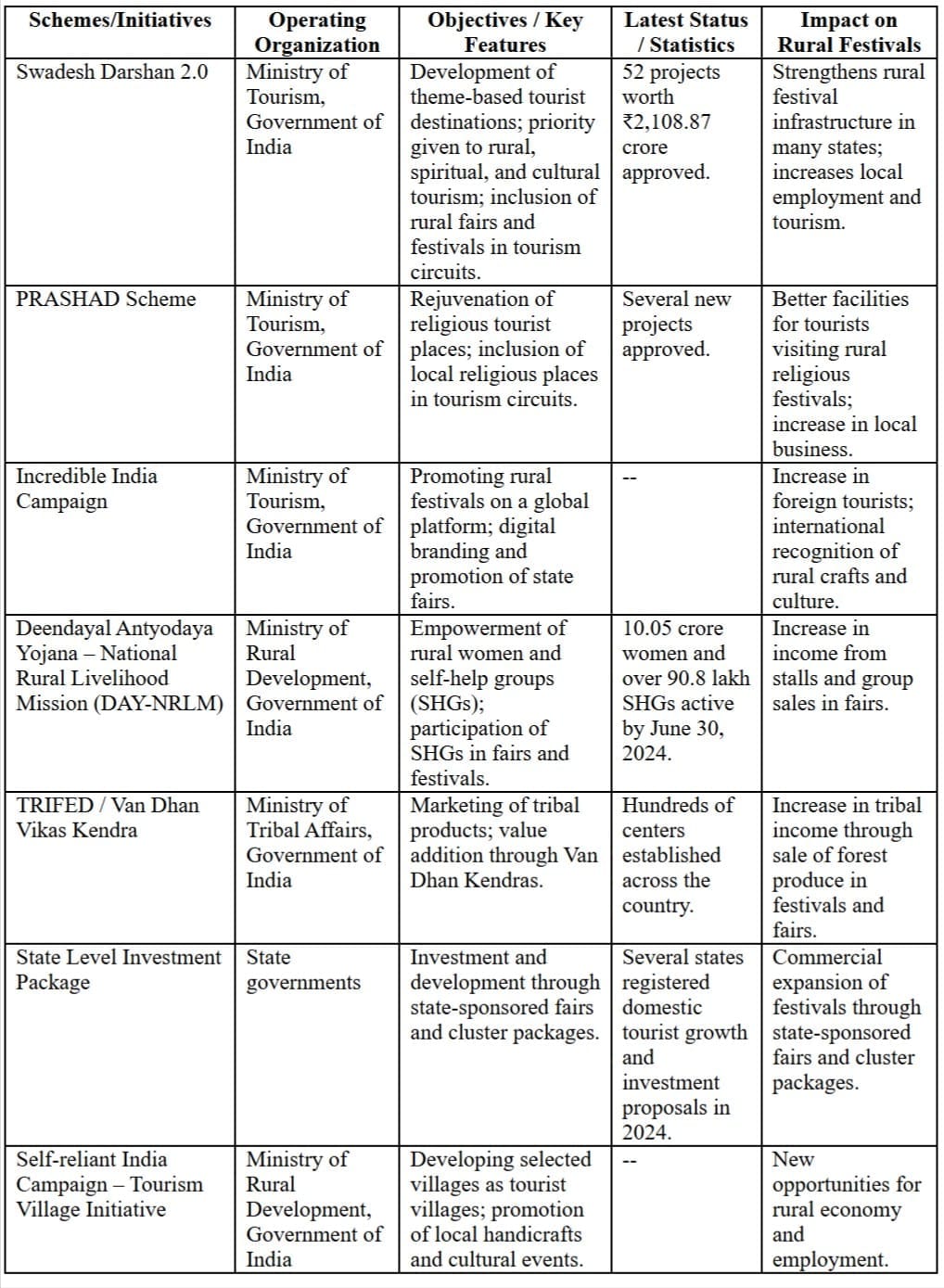
India's rural festivals preserve heritage while fueling economic activity and development. Backed by schemes like Swadesh Darshan, PRASHAD, DAY-NRLM, and TRIFED, they enhance tourism, business, and livelihoods, turning traditions into viable opportunities.
Role and Socio-Economic Benefits
Cultural-Economic Blend:
- Celebrate traditions and unity, while drawing tourists for income.
- Examples: Mawlynnong (Meghalaya), Sualkuchi (Assam), Odisha events attract visitors.
Tourism and Jobs:
- With 65% rural population, festivals create seasonal work for artisans and traders.
- Boost demand for stays, food, transport, and local sales.
- Showcase crafts, textiles, music, and dance for entrepreneurship.
Branding via Festivals:
- Regional highlights: Hornbill (Nagaland), Surajkund (Haryana), Pushkar (Rajasthan), Chhath (Bihar), Pongal (Tamil Nadu), Thrissur Pooram (Kerala).
- Maintain folk arts and generate ongoing revenue.
Rural Festivals and Government Initiatives: An Overview
Challenges
- Eco and Infrastructure Issues:
- Waste, overcrowding, tradition dilution, weather risks.
- Poor roads, facilities, uneven benefits.
- Solutions: Fund improvements, involve communities, use digital tools for ticketing and management.
Path Ahead
- Integrate into tourism policies with digital marketing, infrastructure, and local control.
- Extend activities year-round for steady jobs and income.
- Position India as a top festival tourism destination for rural growth.
Conclusion
Rural festivals connect heritage with opportunity. Successes like Hornbill and Surajkund show economic ripple effects. With planning, engagement, and sustainability, they can drive livelihoods, culture, and prosperity.
Vocal for Local
Launched in May 2020 by Prime Minister Narendra Modi as part of Aatmanirbhar Bharat, 'Vocal for Local' promotes self-reliance by favoring Indian-made goods and services. It bolsters the economy, supports artisans, MSMEs, and startups, cuts imports, and safeguards traditions.
Main Elements and Approaches
Government Buying Preferences:
- Updated 2017/2020 rules prioritize suppliers with >50% local content; global bids need approval for projects up to ₹200 crore.
- Aid for Artisans and MSMEs:
- Funding for tools, designs, and marketing of crafts/handlooms.
- Key Schemes: PMEGP (subsidies for micro-units), CGTMSE (loans without collateral), SFURTI (cluster support), PLI (manufacturing incentives).
Grassroots Business:
- NITI Aayog's programs feature local items on GeM; relaxed rules for startups.
- Digital and Skills Support:
- Ties with GeM and ONDC for e-commerce, training, and literacy.
- Public Campaigns:
- Urge buying local, especially festivals; exhibitions, social media, and endorsements for textiles/crafts.
Broader Importance
- Builds domestic strength, reduces imports.
- Generates jobs, boosts rural/urban entrepreneurship.
- Protects cultural crafts.
- Advances India as a manufacturing leader.
- Supports self-reliant growth.
Challenges and Next Steps
- Competing with low-cost imports.
- Ongoing needs: Training, digital access, infrastructure, and markets for long-term success.
FAQs on Kurukshetra Summary: November 2025
| 1. What is ecotourism and how can rural India serve as a centre for it? |  |
| 2. What is the Vibrant Villages Programme and its significance? | |
| 3. How does agro-tourism contribute to rural development in India? | |
| 4. What role do rural festivals play in promoting tourism in India? | |
| 5. What does "Vocal for Local" mean in the context of rural tourism? | |




