Cyberbullying: Identify, Prevent, Act


Cyberbullying is a serious online threat that affects many young people today. It involves using digital technology like phones, computers, and social media to deliberately harm, threaten, or embarrass someone. Understanding how to identify, prevent, and act against cyberbullying is essential for staying safe online. This topic is important because it helps students protect themselves and others from online harm while building a positive digital environment.
1. Understanding Cyberbullying
1.1 Definition and Key Characteristics
Cyberbullying is the use of electronic communication to bully a person. It typically involves sending mean, threatening, or embarrassing messages repeatedly.
- Digital Platform: Occurs through mobile phones, computers, tablets, and social media platforms
- Intentional Harm: The bully deliberately tries to hurt, threaten, or embarrass the victim
- Repetitive Nature: Often happens multiple times, creating a pattern of harassment
- Power Imbalance: The bully has some advantage over the victim (popularity, anonymity, technical skills)
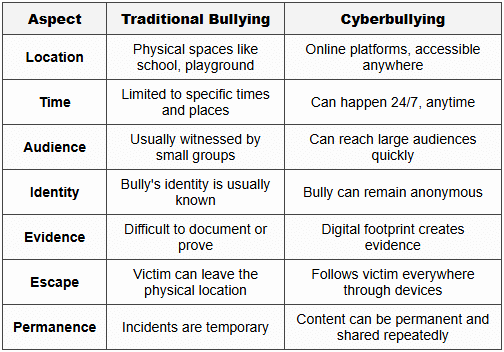
- 24/7 Availability: Unlike traditional bullying, cyberbullying can happen anytime, anywhere
1.2 Common Forms of Cyberbullying
- Harassment: Sending offensive, rude, or insulting messages repeatedly to someone
- Flaming: Sending angry, vulgar messages intended to start online fights or arguments
- Denigration: Spreading rumors, gossip, or false information about someone to damage their reputation
- Impersonation: Pretending to be someone else online and posting embarrassing content in their name
- Outing: Sharing someone's private or embarrassing information, photos, or secrets publicly without permission
- Exclusion: Deliberately leaving someone out of online groups, games, or activities to make them feel isolated
- Cyberstalking: Repeatedly sending threatening or intimidating messages that create fear for safety
- Trolling: Deliberately posting provocative or offensive comments to upset others and get reactions
1.3 Platforms Where Cyberbullying Occurs
- Social Media: Facebook, Instagram, Twitter, Snapchat where comments, posts, and messages can be used to bully
- Messaging Apps: WhatsApp, Telegram, Discord where private or group chats become spaces for harassment
- Online Gaming Platforms: Gaming chats where players use voice or text to insult and threaten others
- Email: Sending threatening or mean emails repeatedly to someone's inbox
- Video Sharing Sites: YouTube comments or posting embarrassing videos of someone
- Forums and Blogs: Public comment sections where anonymous users post mean content
2. Identifying Cyberbullying
2.1 Signs You Are Being Cyberbullied
- Receiving Mean Messages: Getting hurtful, threatening, or insulting texts, emails, or social media messages
- Embarrassing Posts: Finding embarrassing photos, videos, or false information about you shared online
- Fake Accounts: Discovering someone has created a fake profile using your name or photos
- Exclusion from Groups: Being deliberately removed or blocked from online groups or gaming sessions
- Public Humiliation: Being mocked, teased, or insulted in public comment sections or group chats
- Spreading Rumors: Hearing that false or private information about you is being shared online
- Unwanted Contact: Receiving repeated unwanted messages even after asking the person to stop
2.2 Signs Someone Else Is Being Cyberbullied
It is important to recognize when friends or classmates are victims of cyberbullying.
- Behavioral Changes: The person becomes quiet, withdrawn, or suddenly avoids social situations
- Emotional Distress: Showing signs of sadness, anger, anxiety, or depression after using devices
- Avoiding Technology: Suddenly stops using their phone, computer, or social media accounts
- Academic Problems: Grades drop or they lose interest in schoolwork and activities
- Physical Symptoms: Complaints of headaches, stomach aches, or difficulty sleeping
- Secretive Behavior: Being very secretive about online activities or quickly closing screens when others approach
- Loss of Confidence: Shows low self-esteem or makes negative comments about themselves
2.3 Differences Between Cyberbullying and Traditional Bullying
2.4 Common Student Mistakes in Identification
- Mistake: Thinking one-time mean comments are cyberbullying. Reality: Cyberbullying involves repeated, intentional harassment, not single incidents
- Mistake: Believing only direct messages count as cyberbullying. Reality: Public posts, comments, and indirect exclusion are also forms of cyberbullying
- Mistake: Assuming the bully must be someone you know. Reality: Anonymous strangers can also be cyberbullies
- Mistake: Thinking blocking someone solves everything. Reality: Bullies may create new accounts or use other platforms to continue harassment
3. Impact and Effects of Cyberbullying
3.1 Emotional and Psychological Effects
- Anxiety and Stress: Constant worry about online harassment creates high stress levels
- Depression: Victims may feel hopeless, sad, and lose interest in activities they once enjoyed
- Low Self-Esteem: Repeated negative messages damage confidence and self-worth
- Fear and Insecurity: Victims feel unsafe even in their own homes because cyberbullying follows them everywhere
- Anger and Frustration: Feeling powerless to stop the harassment leads to anger
- Isolation: Victims may withdraw from friends, family, and social activities
3.2 Academic and Social Effects
- Poor Academic Performance: Difficulty concentrating on studies leads to declining grades
- School Avoidance: Victims may skip school to avoid facing bullies or their peers
- Loss of Friendships: Social reputation damage can lead to losing friends
- Reduced Participation: Victims stop participating in group activities, sports, or clubs
- Social Withdrawal: Avoiding both online and offline social interactions
3.3 Physical Health Effects
- Sleep Problems: Difficulty falling asleep or having nightmares about the bullying
- Headaches: Stress-related headaches become frequent
- Stomach Issues: Anxiety causes stomach aches, nausea, or digestive problems
- Fatigue: Constant stress and poor sleep lead to exhaustion
- Loss of Appetite: Stress and depression affect eating habits
3.4 Severe Consequences
- Self-Harm: Some victims may hurt themselves as a way to cope with emotional pain
- Suicidal Thoughts: Severe cyberbullying can lead to thoughts of ending one's life
- Long-Term Trauma: Effects can last into adulthood, affecting future relationships and mental health
- Revenge Actions: Some victims may retaliate, becoming bullies themselves
4. Prevention Strategies
4.1 Personal Safety Measures
- Privacy Settings: Use privacy controls on all social media accounts to limit who can see your posts and contact you
- Strong Passwords: Create strong, unique passwords for each account. Never share passwords with anyone except parents
- Think Before Posting: Consider the consequences before sharing photos, videos, or personal information online
- Limit Personal Information: Do not share your address, phone number, school name, or other private details publicly
- Friend Requests: Only accept friend requests from people you know in real life
- Location Sharing: Disable location services and do not share where you are in real-time
- Profile Pictures: Be careful about what photos you use as profile pictures. Avoid anything too personal
4.2 Responsible Online Behavior
Practicing good digital citizenship means behaving responsibly and respectfully online.
- Be Kind: Treat others online the same way you would want to be treated
- Think Before You Type: Consider how your words might affect others before sending messages or posting comments
- No Forwarding: Do not forward or share mean messages, embarrassing photos, or rumors about others
- Respect Privacy: Do not share other people's personal information, photos, or secrets without permission
- Avoid Arguments: Do not engage in online fights or respond to provocative comments
- Report Inappropriate Content: Use reporting features when you see bullying or harmful content
- Stand Up: Support victims by not participating in bullying and speaking out against it
4.3 Communication and Awareness
- Open Dialogue: Talk regularly with parents, teachers, or trusted adults about online experiences
- Report Concerns: Tell adults immediately if you or someone else is being cyberbullied
- Digital Literacy: Learn about online risks, privacy, and security to make informed decisions
- Awareness Programs: Participate in school programs about cyberbullying and online safety
- Peer Education: Share knowledge about cyberbullying prevention with friends and classmates
4.4 Technical Prevention Measures
- Blocking Features: Learn how to block users who send mean or unwanted messages
- Reporting Tools: Know how to report abusive content on different platforms
- Parental Controls: Allow parents to set up monitoring and filtering tools on devices
- Two-Factor Authentication: Enable extra security to prevent account hacking
- Regular Updates: Keep apps and devices updated with latest security features
- Antivirus Software: Use security software to protect devices from malware and hacking
4.5 School and Community Role
- Anti-Bullying Policies: Schools should have clear policies against cyberbullying with consequences for bullies
- Education Programs: Regular workshops and classes teaching students about cyberbullying and prevention
- Support Systems: Counselors and support groups available for victims and witnesses
- Reporting Mechanisms: Easy, confidential ways for students to report cyberbullying incidents
- Parent Involvement: Schools should educate parents about monitoring children's online activities
5. Taking Action Against Cyberbullying
5.1 Immediate Steps for Victims
If you are being cyberbullied, follow these steps immediately:
- Do Not Respond: Do not reply to mean messages or engage with the bully. Responding often encourages more bullying
- Save Evidence: Take screenshots of all bullying messages, posts, photos, or comments with dates and times
- Block the Bully: Use blocking features to prevent the bully from contacting you on that platform
- Report to Platform: Use the platform's reporting feature to report the bullying content or account
- Tell a Trusted Adult: Immediately inform parents, teachers, school counselor, or another trusted adult
- Change Privacy Settings: Make your accounts more private to limit who can see your information
- Take a Break: Step away from social media temporarily if it is causing too much stress
5.2 Evidence Collection
Digital evidence is proof of cyberbullying that can be saved and shown to adults or authorities.
- Screenshots: Capture images of bullying messages, posts, comments, or photos. Include dates, times, and usernames
- Save Messages: Do not delete bullying messages. Keep them as evidence even though they are hurtful
- Record Details: Write down when incidents happened, what was said, and who was involved
- URL Links: Copy and save links to bullying posts or profiles
- Witness Information: Note if anyone else saw the bullying or can provide information
- Platform Information: Record which platform or app the bullying occurred on
5.3 Reporting Procedures
5.3.1 Reporting to Platforms
- Social Media Reports: Most platforms have "Report" buttons next to posts, comments, or profiles
- Abuse Categories: Select appropriate category like "Harassment," "Bullying," or "Hate Speech"
- Follow Up: Check for responses from the platform about actions taken
- Multiple Reports: Ask witnesses or friends to also report the bullying content
5.3.2 Reporting to School Authorities
- School Counselor: First point of contact for emotional support and guidance
- Teachers: Report to class teacher or subject teacher you trust
- Principal: For serious cases or if the situation does not improve
- Anti-Bullying Committee: If school has a specific committee for handling bullying cases
5.3.3 Reporting to Parents/Guardians
- Be Honest: Explain what happened clearly, even if you feel embarrassed
- Show Evidence: Share screenshots and other proof you have collected
- Express Feelings: Tell them how the bullying is affecting you
- Seek Help: Ask them to help you report to school or authorities
5.3.4 Reporting to Law Enforcement
Report to police if cyberbullying involves:
- Serious Threats: Threats of physical harm or violence
- Stalking: Repeated unwanted contact that creates fear
- Explicit Content: Sharing inappropriate or sexual images of minors
- Hate Crimes: Attacks based on religion, caste, gender, or other protected characteristics
- Hacking: Unauthorized access to accounts or devices
- Extortion: Demanding money or favors using threats
5.4 Supporting a Friend Who Is Being Cyberbullied
Being a good upstander means standing up for others instead of being a bystander.
- Listen Without Judgment: Let your friend talk about their experience without interrupting or criticizing
- Believe Them: Take their concerns seriously and do not dismiss their feelings
- Offer Support: Let them know you care and that it is not their fault
- Do Not Share: Do not forward or share the bullying content, even to show others what happened
- Encourage Reporting: Help them tell a trusted adult or report to authorities
- Stand Together: Publicly support your friend and do not participate in the bullying
- Document: If you witness cyberbullying, take screenshots as evidence to support your friend
- Include Them: Make sure your friend feels included and supported in social activities
5.5 What Not to Do
- Do Not Retaliate: Do not bully the bully back. This makes you a bully too and can escalate the situation
- Do Not Delete Evidence: Keep all proof of bullying even if it is hurtful to look at
- Do Not Ignore It: Hoping it will stop on its own usually does not work. Take action
- Do Not Blame Yourself: Cyberbullying is never the victim's fault, regardless of what was posted or said
- Do Not Suffer Alone: Always tell someone. You do not have to handle this by yourself
- Do Not Share Further: Do not spread embarrassing content about the victim, even if trying to help
5.6 Legal Aspects and Consequences
Cyberbullying can have serious legal consequences under various laws:
- IT Act, 2000: Sections dealing with sending offensive messages, identity theft, and hacking
- Indian Penal Code: Sections covering defamation, criminal intimidation, and insult
- POCSO Act: Protection of Children from Sexual Offences Act applies when minors are involved
- Juvenile Justice Act: Applies to bullies who are minors, with focus on counseling and reform
- School Consequences: Suspension, expulsion, or other disciplinary actions
- Criminal Records: Serious cases can lead to criminal charges and records
- Civil Lawsuits: Victims' families can file cases for damages and compensation
6. Recovery and Moving Forward
6.1 Emotional Recovery
- Counseling: Professional counselors or therapists can help process emotions and trauma
- Support Groups: Joining groups with others who have experienced cyberbullying provides understanding and support
- Talk Therapy: Regular conversations with trusted adults help express feelings
- Positive Activities: Engage in hobbies, sports, or activities you enjoy to rebuild confidence
- Mindfulness: Practice relaxation techniques, meditation, or breathing exercises to manage stress
- Self-Care: Focus on sleep, healthy eating, and physical activity
6.2 Rebuilding Confidence
- Focus on Strengths: Remember your positive qualities and achievements
- Supportive Relationships: Spend time with friends and family who care about you
- Set Goals: Work toward small, achievable goals to regain sense of control
- Positive Self-Talk: Replace negative thoughts with positive affirmations
- Celebrate Progress: Acknowledge each step forward in recovery
6.3 Safe Return to Digital Spaces
- Gradual Reentry: Return to online platforms slowly when you feel ready
- Enhanced Security: Use all available privacy and security settings
- Curate Your Space: Follow positive accounts and unfollow or block negative influences
- Set Boundaries: Limit time online and choose which platforms to use
- Monitoring: Have a trusted adult help monitor your accounts initially
- New Perspective: Use experience to help others and spread awareness
7. Creating Positive Online Environments
7.1 Digital Citizenship Principles
Digital citizenship means being a responsible, respectful, and safe member of online communities.
- Respect: Treat all online users with dignity and courtesy
- Empathy: Consider others' feelings before posting or commenting
- Integrity: Be honest and authentic in online interactions
- Responsibility: Take ownership of your digital footprint and actions
- Safety: Protect yourself and others from online harm
- Critical Thinking: Question information and think before sharing
- Positive Contribution: Share content that uplifts, educates, or entertains positively
7.2 Promoting Kindness Online
- Positive Comments: Leave encouraging and supportive comments on others' posts
- Celebrate Others: Acknowledge friends' achievements and milestones
- Defend Victims: Speak out against bullying when you see it
- Share Positivity: Post uplifting content, inspirational quotes, or helpful information
- Compliment Genuinely: Offer sincere compliments to brighten someone's day
- Avoid Gossip: Do not participate in spreading rumors or negative talk
7.3 Building Healthy Online Habits
- Time Limits: Set specific times for using social media and stick to them
- Quality Content: Focus on meaningful interactions rather than endless scrolling
- Reality Check: Remember that online posts often show only the best moments, not real life
- Offline Balance: Prioritize face-to-face relationships and offline activities
- Digital Detox: Take regular breaks from social media and devices
- Purpose-Driven Use: Use technology for specific purposes rather than mindless browsing
Cyberbullying is a serious issue that requires awareness, prevention, and decisive action. By understanding how to identify cyberbullying signs, implementing prevention strategies, and knowing the correct steps to take when it occurs, students can protect themselves and others. Remember that cyberbullying is never acceptable and victims should never suffer in silence. Building positive online communities through kind, respectful digital citizenship creates safer internet spaces for everyone. Always speak up, save evidence, report incidents to trusted adults, and support those who are being targeted. Together, we can make the online world a safer and more respectful place for all users.




