Rapid Revision: Understanding The Weather


1. Meaning of Weather
Weather refers to the condition of the Earth's atmosphere at a particular place and time. It changes frequently and influences our daily life, including clothing, travel, agriculture, and outdoor activities.
All weather phenomena occur mainly in the troposphere, the lowest layer of the atmosphere where humans live. This layer extends roughly from 6 km near the poles to about 18 km near the equator.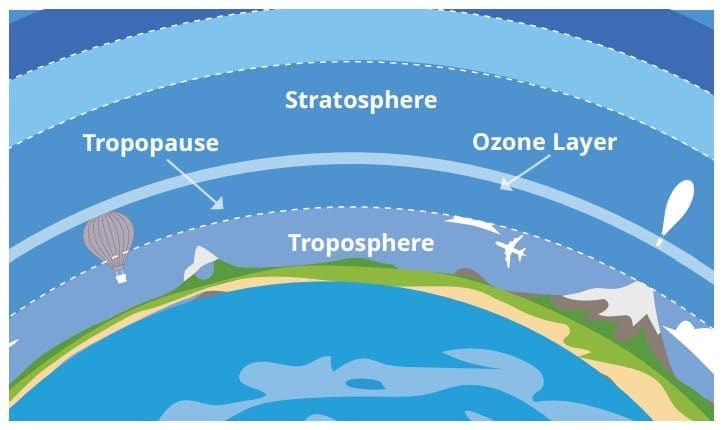
2. Elements That Determine Weather
Weather is described through five key elements. Each element represents a different aspect of atmospheric conditions.
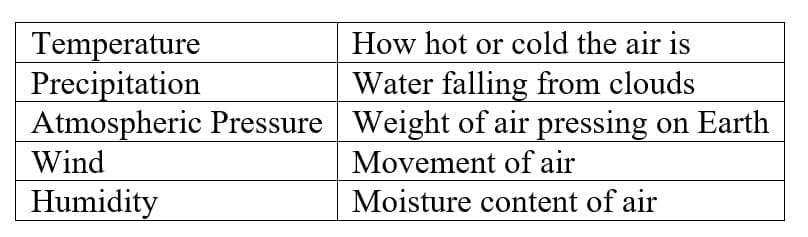
Together, these elements provide a complete picture of the weather at a given time.
3. Importance of Measuring Weather
- Precise measurement allows people to compare weather conditions across regions and time. It also helps in planning agriculture, transportation, disaster management, and daily activities.
- Traditional communities relied on natural signs such as animal behaviour or cloud patterns. Modern meteorology uses scientific instruments to obtain accurate and standardized data.
4. Temperature
Temperature indicates the degree of heat or cold in the air. It affects human comfort, crop growth, and seasonal changes.
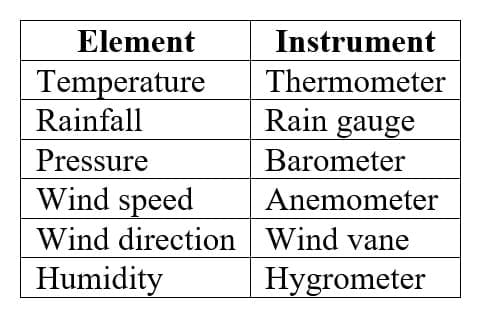
- It is measured using thermometers, usually in Celsius (°C) or Fahrenheit (°F). Weather reports often include maximum temperature, minimum temperature, daily range, and mean temperature.
- Digital thermometers are widely used today because they provide precise readings and can store data.
5. Precipitation
Precipitation includes all forms of water falling from the atmosphere, such as rain, snow, hail, and sleet.
- Rainfall is measured using a rain gauge. Rainwater is collected in a cylinder and measured in millimetres. For example, 10 mm of rainfall means water collected to a depth of 10 mm.
- Precipitation is vital for agriculture, water supply, and ecosystem balance.
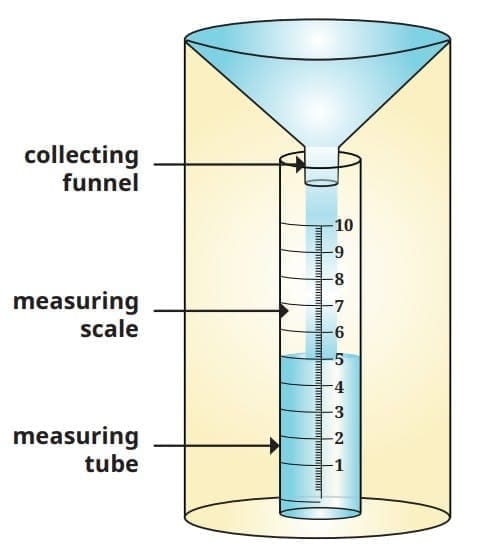 Rain Gauge
6. Atmospheric Pressure
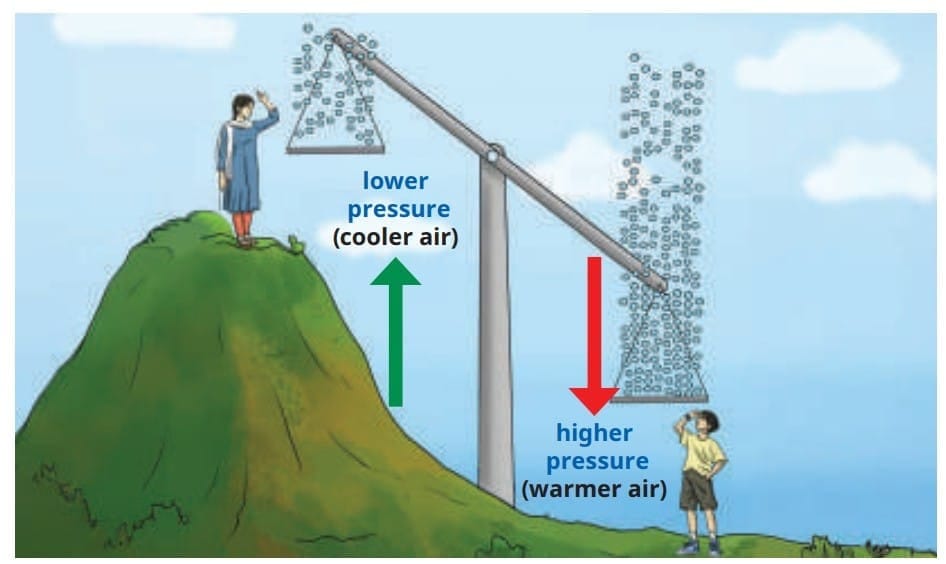
Atmospheric pressure is the force exerted by the weight of air above us. It varies with altitude and weather conditions.
- Pressure is highest near sea level and decreases as altitude increases. Low-pressure systems often bring storms or cyclones, while high-pressure systems are associated with stable weather.
- Pressure is measured using a barometer, usually in millibars (mb). Normal sea-level pressure is about 1013 mb.
7. Wind
- Wind is the movement of air from areas of high pressure to areas of low pressure. It plays a major role in distributing heat and moisture across the Earth.
- Wind is described by its speed and direction. Strong winds can influence weather patterns, aviation, marine activities, and soil conditions.
- Direction is measured using a wind vane, while speed is measured using an anemometer. At airports, wind socks provide a quick visual indication of wind direction.
8. Humidity
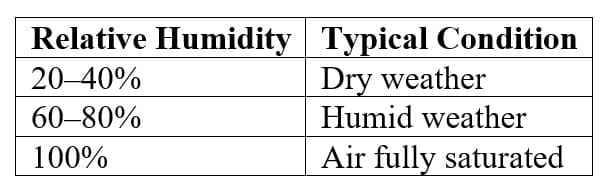
Humidity refers to the amount of water vapour present in the air. It affects how hot or cold the weather feels and influences cloud formation and rainfall.
- High humidity slows evaporation, making the air feel sticky and uncomfortable. Low humidity leads to dry conditions and faster evaporation.
- Humidity is expressed as relative humidity (percentage) and measured using a hygrometer.
9. Weather Instruments at a Glance
Different instruments measure different elements of weather.
10. Weather Stations
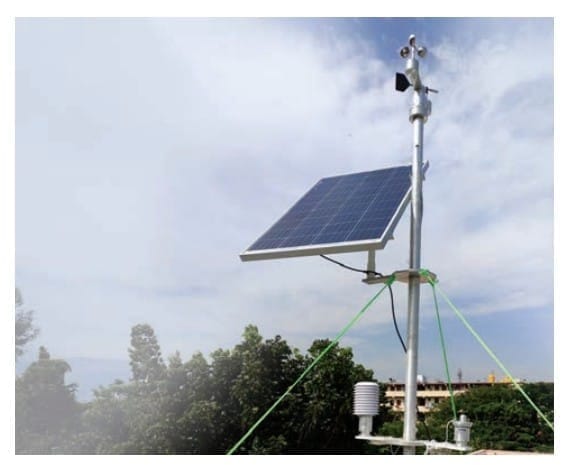
- A weather station brings together multiple instruments at one location to monitor atmospheric conditions continuously. Data collected at regular intervals helps scientists analyse patterns and forecast weather.
- Automated Weather Stations (AWS) use sensors and computers to record data without human intervention. These stations are widely used in agriculture, aviation, navigation, and disaster monitoring.
11. Weather Forecasting
Weather forecasting involves predicting future atmospheric conditions based on collected data and scientific models.
- Accurate forecasts are crucial because extreme weather events such as cyclones, floods, droughts, heat waves, and cold waves are becoming more frequent due to climate change.
- Forecasts help governments issue warnings, prepare emergency services, and protect lives and property. For example, fishermen may be advised not to go to sea during storms, and coastal populations may be evacuated before cyclones.
FAQs on Rapid Revision: Understanding The Weather
| 1. What are the main elements of weather? |  |
| 2. How is weather measured? | |
| 3. What role do weather stations play in forecasting? | |
| 4. What are some key terms related to weather? | |
| 5. Why is understanding weather important for daily life? | |