Cheat Sheet: Offences Against Human Body


1. Culpable Homicide and Murder
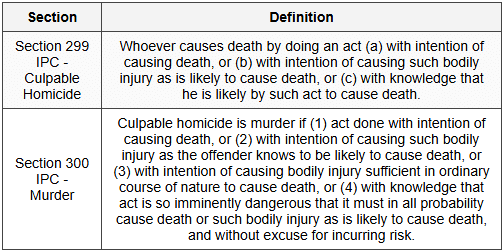
1.1 Definitions
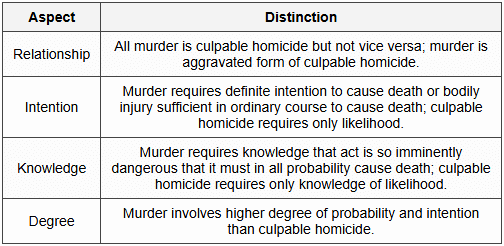
1.2 Distinction Between Culpable Homicide and Murder
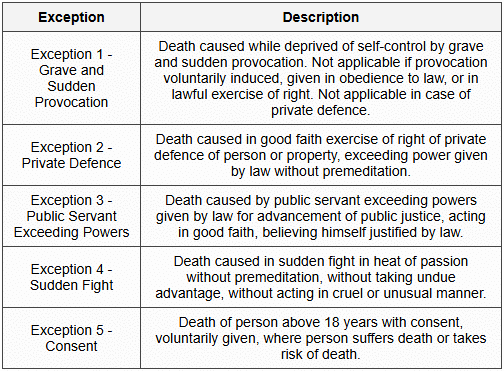
1.3 Exceptions to Section 300 (When Murder becomes Culpable Homicide not amounting to Murder)
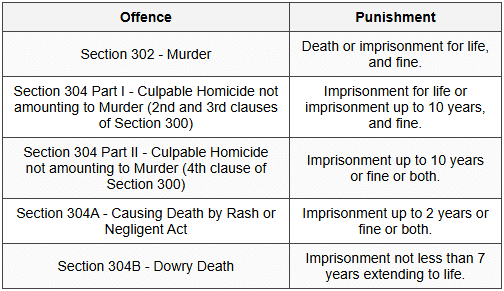
1.4 Punishment Provisions
1.5 Important Case Laws
- Reg v. Govinda (1876): Distinguished culpable homicide from murder based on degree of probability of death.
- K.M. Nanavati v. State of Maharashtra (1962): Grave and sudden provocation must cause loss of self-control; time gap negates suddenness.
- Virsa Singh v. State of Punjab (1958): For Section 300(3rdly), bodily injury intended must be sufficient in ordinary course of nature to cause death.
2. Hurt and Grievous Hurt
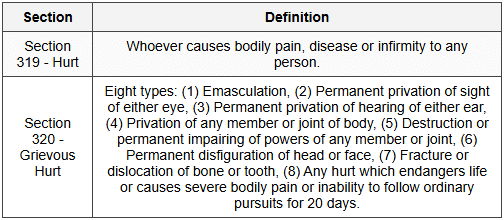
2.1 Definitions
2.2 Punishment for Hurt
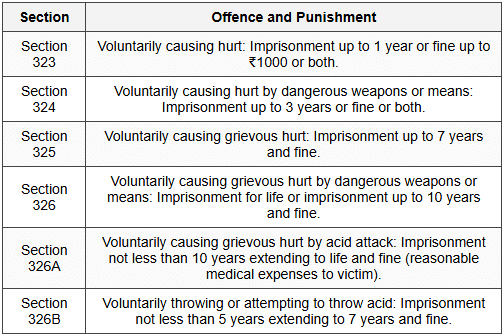
2.3 Aggravated Forms of Hurt
- Section 327: Causing hurt to extort property or valuable security or to constrain to illegal act - imprisonment up to 10 years and fine.
- Section 328: Causing hurt by poison etc. with intent to commit offence - imprisonment up to 10 years and fine.
- Section 329: Causing grievous hurt to extort property or constrain to illegal act - imprisonment for life or up to 10 years and fine.
- Section 330: Causing hurt to extort confession or information - imprisonment up to 7 years and fine.
- Section 331: Causing grievous hurt to extort confession or information - imprisonment up to 10 years and fine.
3. Wrongful Restraint and Wrongful Confinement
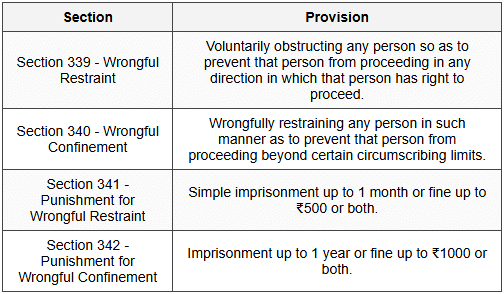
3.1 Definitions and Punishment
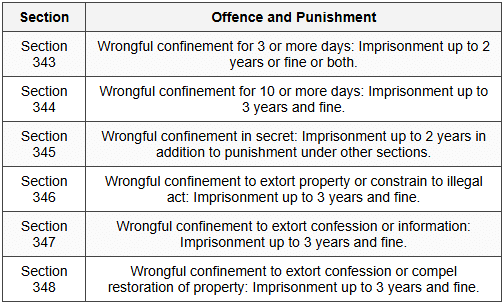
3.2 Aggravated Forms of Wrongful Confinement
4. Assault and Criminal Force
4.1 Definitions
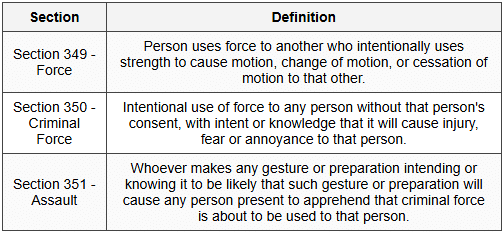
4.2 Punishment Provisions
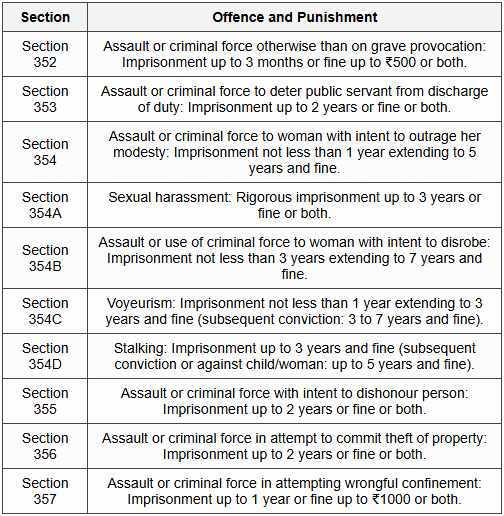
4.3 Elements of Sexual Harassment (Section 354A)
- Physical contact and advances involving unwelcome and explicit sexual overtures.
- Demand or request for sexual favours.
- Making sexually coloured remarks.
- Forcibly showing pornography.
- Making sexually coloured gestures or any other unwelcome physical, verbal or non-verbal conduct of sexual nature.
5. Kidnapping and Abduction
5.1 Kidnapping
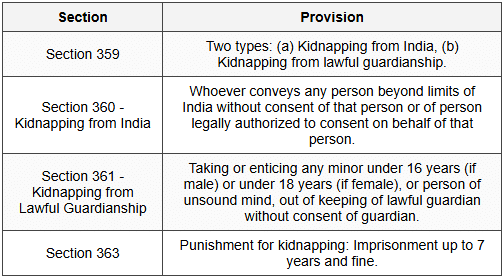
5.2 Abduction
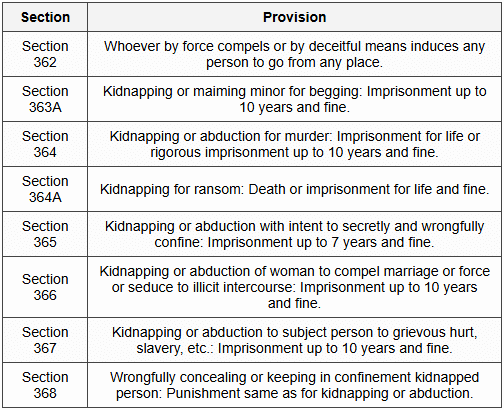
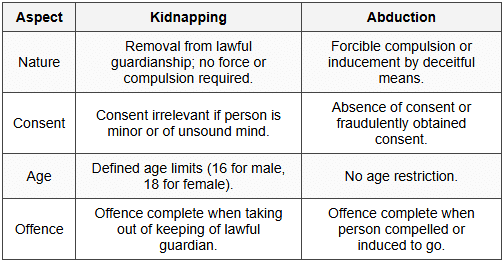
5.3 Distinction Between Kidnapping and Abduction
6. Rape and Sexual Offences
6.1 Definition of Rape (Section 375)
Section 375 IPC: Man commits rape if he penetrates (penis, object, or body part) vagina, mouth, urethra or anus of woman or makes her do so with him or any other person, in circumstances falling under seven descriptions:
- Against her will.
- Without her consent.
- With consent obtained by putting her or any person in whom she is interested in fear of death or hurt.
- With consent obtained when man knows he is not her husband and she believes he is her husband.
- With consent when she is unable to understand nature and consequences (unsound mind, intoxication, etc.).
- With or without consent when she is under 18 years of age.
- When she is unable to communicate consent.
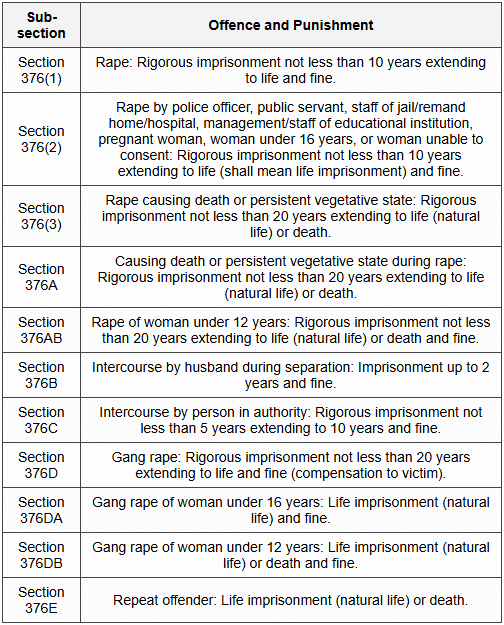
6.2 Punishment for Rape (Section 376)
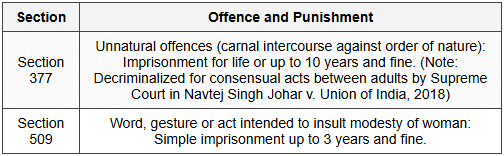
6.3 Other Sexual Offences
6.4 Marital Rape Exception
Exception 2 to Section 375: Sexual intercourse by man with his own wife, wife not being under 15 years, is not rape. (Age raised to 18 years by independent judicial interpretation)
7. Offences Affecting Life or Personal Safety
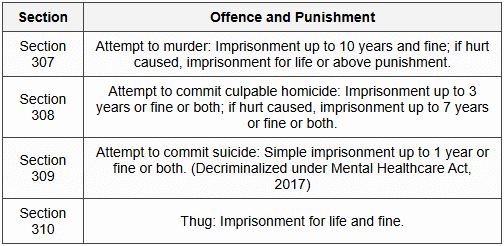
7.1 Attempt to Murder and Related Offences
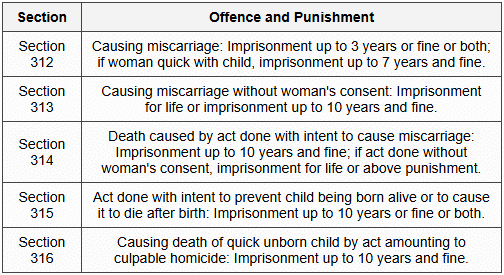
7.2 Causing Miscarriage
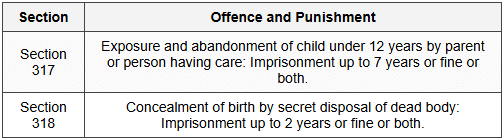
7.3 Exposure and Abandonment
8. Offences Against Liberty
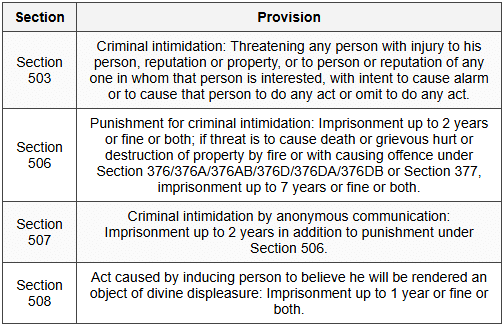
8.1 Criminal Intimidation
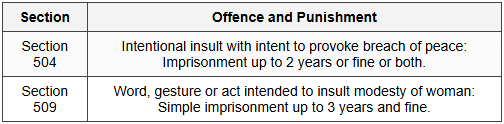
8.2 Insult
9. Specific Concepts and Doctrines
9.1 Mens Rea and Actus Reus
- Mens Rea: Guilty mind; mental element of crime comprising intention, knowledge, recklessness or negligence.
- Actus Reus: Guilty act; physical element consisting of voluntary conduct, surrounding circumstances and consequences.
- General Principle: Both mens rea and actus reus must coexist for criminal liability.
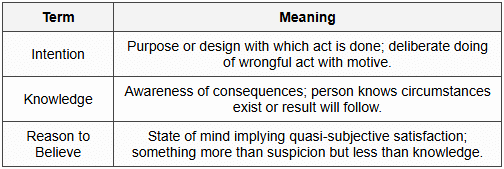
9.2 Intention, Knowledge, Reason to Believe
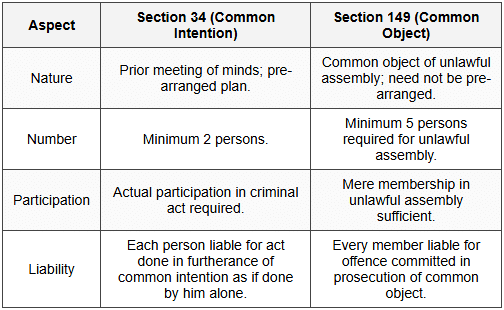
9.3 Common Intention (Section 34) vs. Common Object (Section 149)
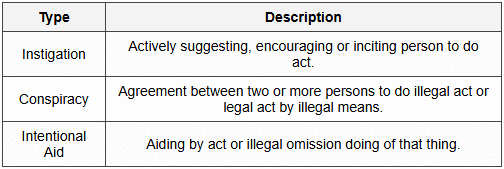
9.4 Abetment (Sections 107-120)
9.5 Transferred Malice
If person intends to harm one person but inadvertently harms another, intention to harm first person is transferred to actual victim. Person guilty of offence intended against original target.
9.6 Constructive Liability
Liability imposed for consequences not directly intended but arising from wrongful act. Includes vicarious liability and liability under Section 34 and Section 149.
10. Defences and Exceptions
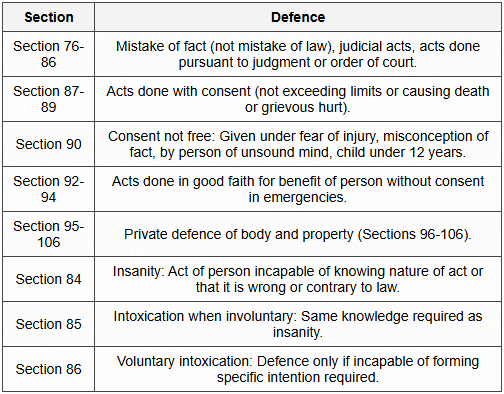
10.1 General Exceptions (Sections 76-106)
10.2 Private Defence
10.2.1 Right to Private Defence of Body (Sections 96-106)
- Extent: May extend to voluntarily causing death if offence is of description in Section 100: assault causing reasonable apprehension of death or grievous hurt, assault with intent to commit rape, acid attack, kidnapping or abduction, wrongful confinement.
- Commencement: From time reasonable apprehension of danger arises.
- Continuation: Till such apprehension continues.
- Against death or grievous hurt: Does not extend to causing death if time to have recourse to public authorities.
10.2.2 Right to Private Defence of Property (Sections 97-106)
- Extent: May extend to causing death if offence is robbery, house-breaking by night, mischief by fire on building used as dwelling, theft/mischief/house-trespass in circumstances causing reasonable apprehension of death or grievous hurt.
- Commencement: From reasonable apprehension of offence affecting property.
- Limitation: Does not extend to causing death if offender not causing or attempting to cause death or grievous hurt, or time to have recourse to public authorities.
11. Important Amendments and Recent Provisions
11.1 Criminal Law (Amendment) Act, 2013
- Inserted Sections 354A (sexual harassment), 354B (assault to disrobe), 354C (voyeurism), 354D (stalking).
- Enhanced punishment for rape; minimum punishment increased to 10 years.
- Inserted Sections 376A (causing death during rape), 376D (gang rape), 376E (repeat offender).
- Broadened definition of rape to include penetration beyond penile-vaginal intercourse.
- Age of consent raised to 18 years.
11.2 Criminal Law (Amendment) Act, 2018
- Inserted Sections 376AB (rape of woman under 12 years), 376DA (gang rape of woman under 16 years), 376DB (gang rape of woman under 12 years).
- Death penalty for rape of girl under 12 years.
- Enhanced minimum punishment for rape of woman under 16 years to 20 years.
- Inserted Section 166A and 166B for public servants derelict in duty towards women.
11.3 Criminal Law (Amendment) Ordinance, 2018
- Inserted Sections 326A (acid attack) and 326B (attempt to throw acid).
- Minimum punishment for acid attack: 10 years extending to life imprisonment.
- Compensation for medical expenses to victim of acid attack.
12. Burden of Proof and Presumptions
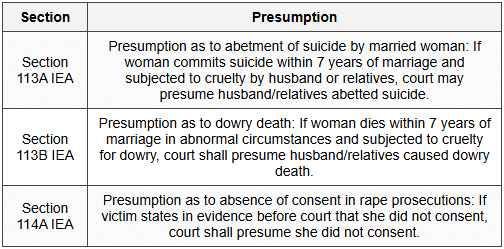
12.1 Statutory Presumptions
12.2 General Principles
- Prosecution burden: Prove guilt beyond reasonable doubt.
- Benefit of doubt: Goes to accused.
- Exception burden: Accused bears burden to prove general exceptions apply (Section 105 IEA).
- Special facts burden: Accused bears burden regarding facts especially within his knowledge (Section 106 IEA).
13. Cognizability, Bailability and Compoundability
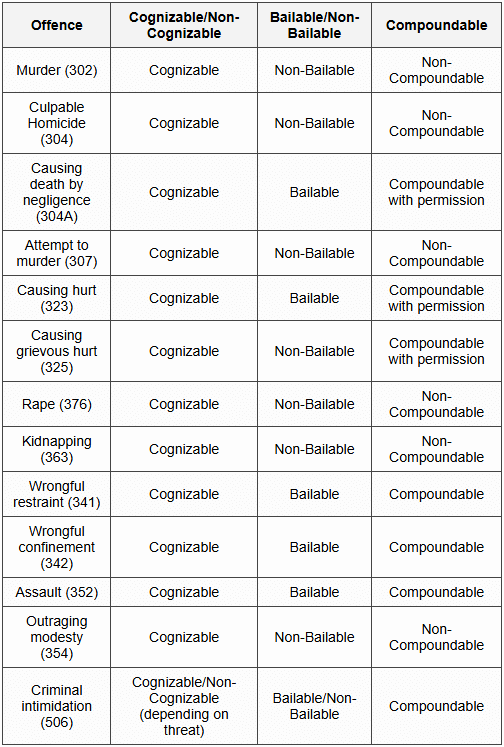
13.1 Classification of Key Offences
13.2 Definitions
- Cognizable Offence: Police may arrest without warrant and investigate without permission of magistrate.
- Non-Cognizable Offence: Police cannot arrest without warrant and cannot investigate without permission of magistrate.
- Bailable Offence: Accused has right to be released on bail; court/police bound to grant bail.
- Non-Bailable Offence: Accused has no right to bail; discretion of court to grant or refuse bail.
- Compoundable Offence: Offence can be compromised between parties with or without permission of court.