CLAT PG Exam > CLAT PG Notes > Environmental Law > Cheat Sheet: Introduction to Environmental Law and Pollution Control
Cheat Sheet: Introduction to Environmental Law and Pollution Control


1. Fundamental Concepts
1.1 Definition and Scope
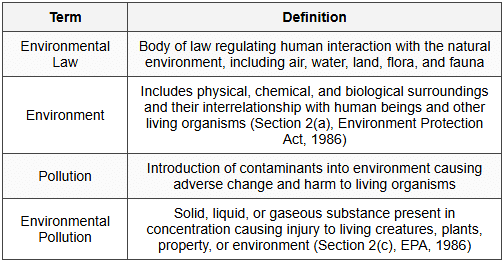
1.2 Objectives of Environmental Law
- Protection and improvement of environment and natural resources
- Prevention and control of pollution
- Conservation of biodiversity and ecosystems
- Sustainable development balancing economic growth with environmental protection
- Inter-generational equity ensuring resource availability for future generations
- Public health protection from environmental hazards
2. Constitutional Framework
2.1 Constitutional Provisions
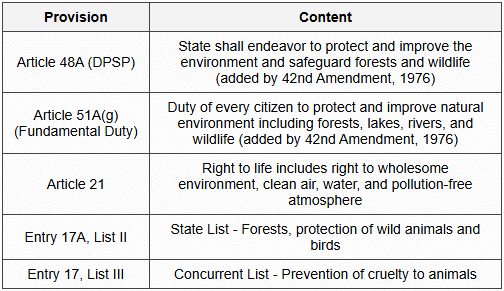
2.2 Judicial Interpretation
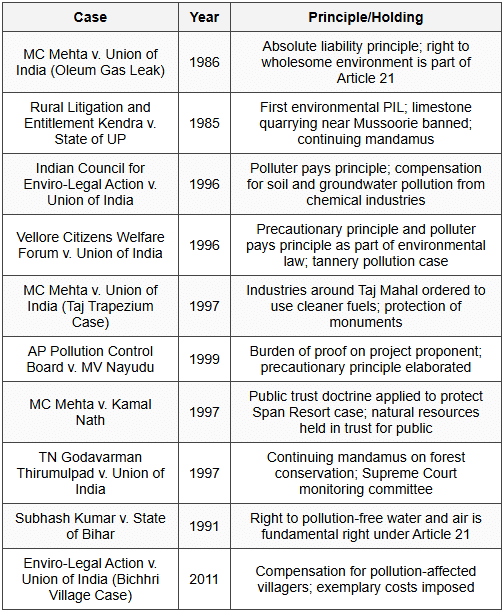
- Rural Litigation and Entitlement Kendra v. State of UP (1985): First major PIL on environmental protection
- MC Mehta v. Union of India (Oleum Gas Leak Case, 1986): Absolute liability principle established
- Subhash Kumar v. State of Bihar (1991): Right to pollution-free environment is part of Article 21
- Vellore Citizens Welfare Forum v. Union of India (1996): Precautionary principle and polluter pays principle recognized
3. Principles of Environmental Law
3.1 Core Principles
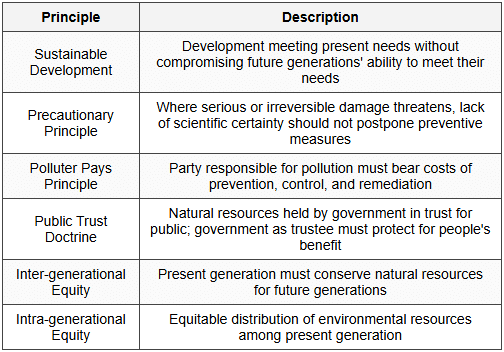
3.2 Liability Principles
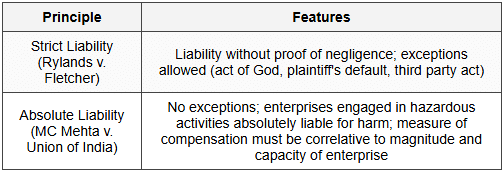
4. Legislative Framework
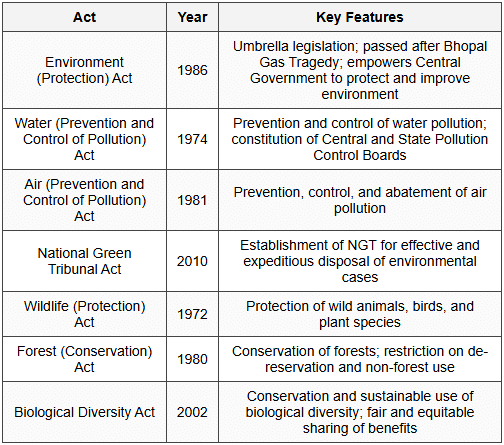
4.1 Central Environmental Legislation
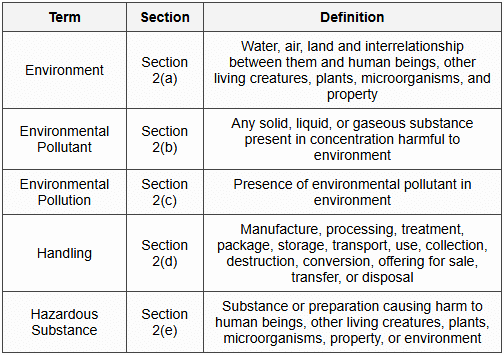
4.2 Key Definitions from EPA, 1986
5. Pollution Control Framework
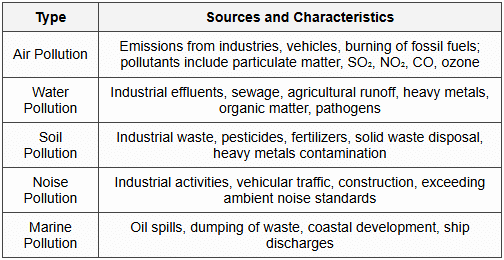
5.1 Types of Pollution
5.2 Central and State Pollution Control Boards
5.2.1 Constitution and Powers
- Central Pollution Control Board (CPCB): Constituted under Water Act, 1974; advises Central Government on pollution prevention and control
- State Pollution Control Boards (SPCBs): Constituted under Water Act, 1974; implement environmental laws at state level
- Powers: Inspection, sampling, analysis, consent mechanism, closure powers, directions to industries
5.2.2 Functions of CPCB
- Advise Central Government on prevention and control of water and air pollution
- Coordinate activities of SPCBs and resolve disputes among them
- Provide technical assistance and guidance to SPCBs
- Lay down standards for quality of air and water
- Collect, compile, and publish technical and statistical data relating to pollution
- Prepare manuals, codes, and guidelines relating to treatment and disposal of sewage and trade effluents
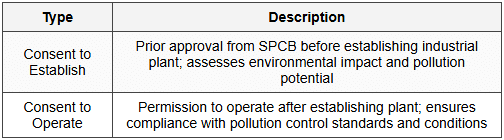
5.3 Consent Mechanism
5.4 Environmental Standards
- National Ambient Air Quality Standards (NAAQS): Prescribed for 12 pollutants including PM₁₀, PM₂.₅, SO₂, NO₂, CO, ozone, lead, benzene, ammonia, nickel, arsenic, benzo(a)pyrene
- Emission Standards: Industry-specific standards for air emissions from stacks and process vents
- Effluent Standards: Industry-specific standards for discharge of liquid effluents
- Noise Standards: Day and night time standards for different zones (industrial, commercial, residential, silence zones)
6. Environmental Impact Assessment
6.1 EIA Framework
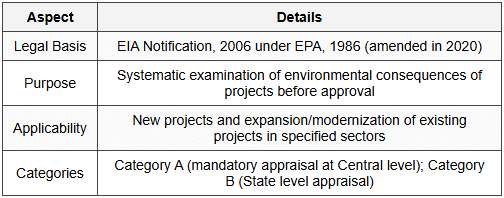
6.2 EIA Process Stages
- Screening: Determines whether EIA is required
- Scoping: Identifies key issues and impacts to be studied
- Impact Assessment: Scientific study of environmental impacts
- Public Consultation: Stakeholder participation through public hearings
- Environmental Management Plan: Mitigation measures and monitoring mechanisms
- Decision Making: Grant or refusal of environmental clearance by competent authority
6.3 Authorities
- Central Level: Ministry of Environment, Forest and Climate Change (MoEFCC) through Expert Appraisal Committees (EACs)
- State Level: State Environment Impact Assessment Authority (SEIAA) and State Expert Appraisal Committees (SEACs)
7. National Green Tribunal
7.1 Constitution and Jurisdiction
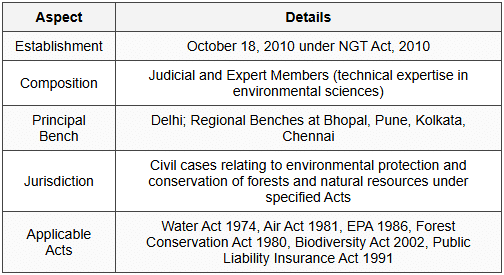
7.2 Powers and Features
- Power to grant relief, compensation, and restitution of damaged environment and natural resources
- Original jurisdiction over substantial questions relating to environment
- Appellate jurisdiction over orders/decisions/directions of regulatory authorities
- Suo motu cognizance of environmental matters
- Decisions binding and enforceable as court decrees
- Time-bound disposal: Endeavor to dispose applications within 6 months
- Appeal lies to Supreme Court within 90 days
7.3 Limitation Period
- Applications must be filed within 5 years from date of cause of action
- No limitation for compensation claims arising from accidents involving handling of hazardous substances
8. International Environmental Law
8.1 Key Conventions and Protocols
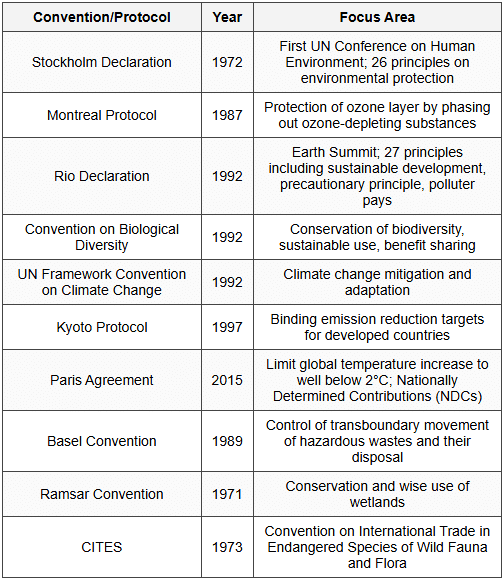
8.2 Stockholm Declaration Principles (Selected)
- Principle 1: Fundamental right to freedom, equality, and adequate conditions of life in quality environment
- Principle 21: States have sovereign right to exploit resources but responsibility to ensure no transboundary environmental damage
8.3 Rio Declaration Principles (Selected)
- Principle 15: Precautionary approach; lack of scientific certainty shall not postpone cost-effective measures
- Principle 16: Polluter should bear cost of pollution
- Principle 3: Right to development must equitably meet developmental and environmental needs
9. Enforcement Mechanisms
9.1 Civil Remedies
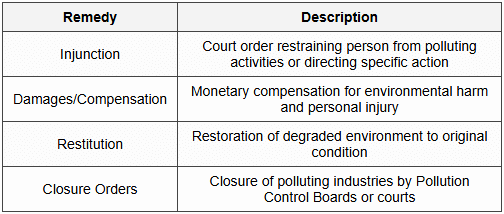
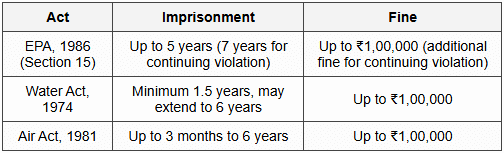
9.2 Criminal Penalties
9.3 Administrative Actions
- Directions under Section 5 of EPA, 1986: Central Government may issue directions for compliance
- Closure/prohibition orders by Pollution Control Boards
- Suspension/cancellation of consent to operate
- Water and electricity disconnection to defaulting units
- Environmental compensation imposed by NGT
9.4 Public Interest Litigation
- Relaxed locus standi: Any person or organization can file on behalf of affected persons
- Supreme Court and High Courts exercise writ jurisdiction under Articles 32 and 226
- NGT entertains applications from affected persons or organizations
- Epistolary jurisdiction: Letters to court treated as PILs
10. Important Case Laws
10.1 Landmark Judgments
11. Waste Management
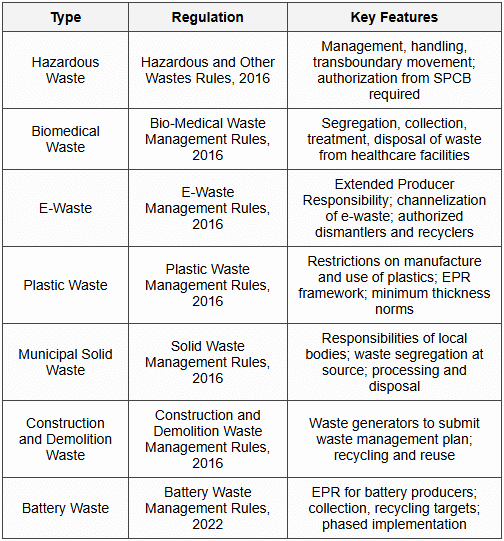
11.1 Categories of Waste
11.2 Extended Producer Responsibility
- Producers responsible for collection and recycling/disposal of post-consumer products
- Applicable to e-waste, plastic waste, batteries
- Producers must obtain EPR authorization and meet collection/recycling targets
- Producer Responsibility Organizations (PROs) facilitate compliance
12. Emerging Areas
12.1 Climate Change Law
- National Action Plan on Climate Change (NAPCC): Eight missions including solar energy, enhanced energy efficiency, sustainable habitat, water, Himalayan ecosystems, forestry, agriculture, strategic knowledge
- State Action Plans on Climate Change (SAPCCs)
- Nationally Determined Contributions (NDCs) under Paris Agreement: Reduce emission intensity of GDP by 33-35% by 2030 from 2005 levels; achieve 40% non-fossil fuel-based electric power capacity
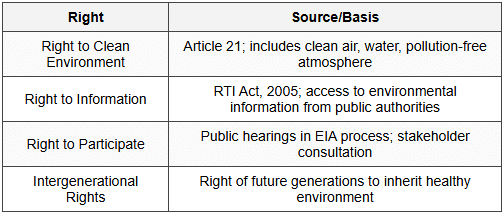
12.2 Environmental Rights
12.3 Corporate Environmental Responsibility
- Section 135, Companies Act, 2013: CSR spending on environmental sustainability
- Environmental audits and reporting requirements
- ISO 14001 Environmental Management System certification
- Green rating and environmental disclosure norms
13. Regulatory Authorities
13.1 Central Authorities
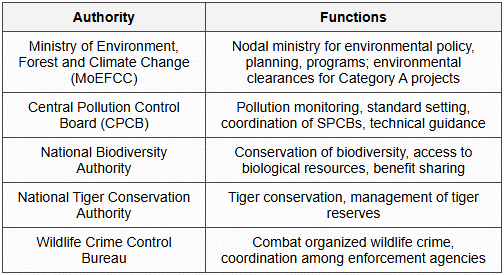
13.2 State Authorities
- State Environment Impact Assessment Authority (SEIAA): Environmental clearance for Category B projects
- State Pollution Control Boards (SPCBs): Implementation and enforcement of pollution control laws
- State Biodiversity Boards: Conservation at state level
- Forest Departments: Forest conservation and wildlife protection
14. Offences and Penalties Summary
14.1 Major Violations
- Operating without consent from Pollution Control Board
- Violation of emission/effluent standards
- Non-compliance with directions of authorities
- Operating without environmental clearance
- Violation of conditions of clearance
- Illegal discharge of hazardous substances
- Non-submission of environmental statements/returns
- Wildlife poaching and illegal trade
14.2 Compounding of Offences
- EPA, 1986: Certain offences compoundable with permission of court
- Compounding authority: Central Government or officers authorized by it
- Compounding does not bar civil liability for compensation
The document Cheat Sheet: Introduction to Environmental Law and Pollution Control is a part of the CLAT PG Course Environmental Law.
All you need of CLAT PG at this link: CLAT PG
About this Document

4.77/5 Rating

Apr 20, 2026 Last updated
Related Exams
Document Description: Cheat Sheet: Introduction to Environmental Law and Pollution Control for CLAT PG 2026 is part of Environmental Law preparation. The notes and questions for Cheat Sheet: Introduction to Environmental Law and Pollution Control have been prepared according to the CLAT PG exam syllabus. Information about Cheat Sheet: Introduction to Environmental Law and Pollution Control covers topics like and Cheat Sheet: Introduction to Environmental Law and Pollution Control Example, for CLAT PG 2026 Exam. Find important definitions, questions, notes, meanings, examples, exercises and tests below for Cheat Sheet: Introduction to Environmental Law and Pollution Control.
Introduction of Cheat Sheet: Introduction to Environmental Law and Pollution Control in English is available as part of our Environmental Law for CLAT PG & Cheat Sheet: Introduction to Environmental Law and Pollution Control in Hindi for Environmental Law course. Download more important topics related with notes, lectures and mock test series for CLAT PG Exam by signing up for free. CLAT PG: Cheat Sheet: Introduction to Environmental Law and Pollution Control
Description
Cheat Sheet: Introduction to Environmental Law & Pollution Control of Environmental Law to help you remember important concepts with short tricks. Start learning for CLAT PG exam & improve retention with EduRev.
Information about Cheat Sheet: Introduction to Environmental Law and Pollution Control
In this doc you can find the meaning of Cheat Sheet: Introduction to Environmental Law and Pollution Control defined & explained in the simplest way possible. Besides explaining types of Cheat Sheet: Introduction to Environmental Law and Pollution Control theory, EduRev gives you an ample number of questions to practice Cheat Sheet: Introduction to Environmental Law and Pollution Control tests, examples and also practice CLAT PG tests



Related Searches
pdf , practice quizzes, ppt, study material, video lectures, mock tests for examination, Important questions, Summary, Previous Year Questions with Solutions, MCQs, Sample Paper, Cheat Sheet: Introduction to Environmental Law and Pollution Control, shortcuts and tricks, Cheat Sheet: Introduction to Environmental Law and Pollution Control, Semester Notes, past year papers, Cheat Sheet: Introduction to Environmental Law and Pollution Control, Exam, Objective type Questions, Viva Questions, Free, Extra Questions;