CLAT PG Exam > CLAT PG Notes > Environmental Law > Cheat Sheet: Other Core Acts
Cheat Sheet: Other Core Acts


1. Noise Pollution (Regulation and Control) Rules, 2000
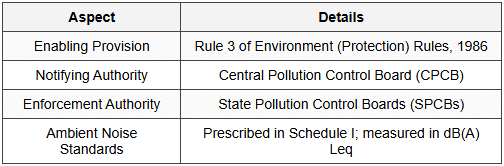
1.1 Basic Framework
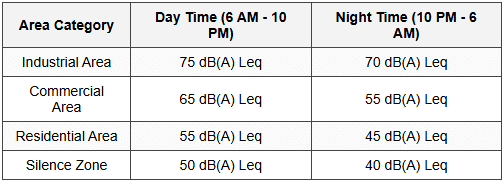
1.2 Ambient Air Quality Standards (Schedule I)
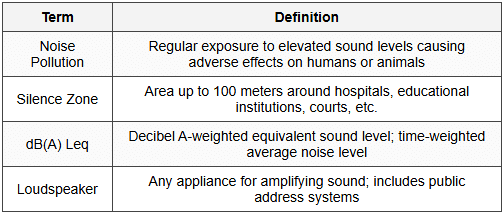
1.3 Key Definitions
1.4 Restrictions on Use of Loudspeakers and Public Address Systems
- Prohibited in silence zones and during night hours (10 PM to 6 AM) without written permission
- Written permission from authority required for use between 10 PM and 12 midnight on cultural/religious occasions (max 15 days/year)
- Noise level from loudspeakers not to exceed ambient noise standards by more than 10 dB(A)
- Direction of loudspeakers should not face residential areas in silence zones
1.5 Firecrackers and Fireworks
- Firecrackers generating noise above 125 dB(A) at 4 meters distance from point of bursting prohibited
- Use restricted between 10 PM and 6 AM except for Diwali/New Year (permissible till 12 midnight)
- Manufacturing licenses subject to compliance with noise limits
- Individual firecrackers: max 145 dB(A) at 4 meters
- Joined firecrackers (series): max 125 dB(A) at 4 meters
1.6 Powers of Authorities
- State Government may declare silence zones around specified areas
- Authority may prohibit/regulate use of sound-emitting construction equipment in silence zones
- District Magistrate/Police Commissioner/District Police Officer may issue directions to prevent noise pollution
- Power to seize sound equipment being used in violation of rules
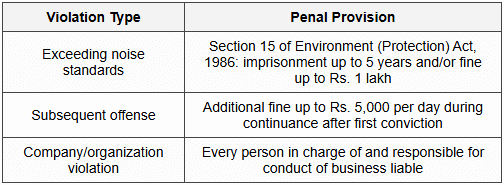
1.7 Penalties and Enforcement
2. Coastal Regulation Zone Notification, 2019
2.1 Basic Framework
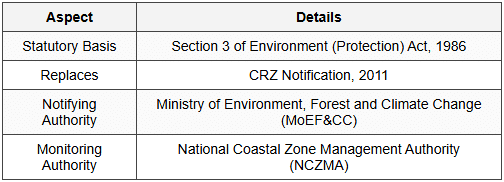
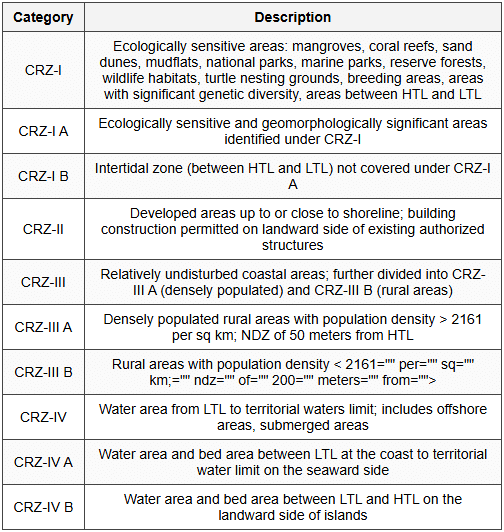
2.2 CRZ Categories
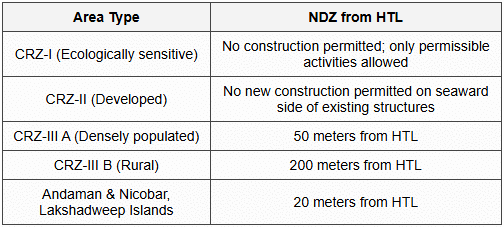
2.3 No Development Zone (NDZ)
2.4 Permissible Activities
2.4.1 CRZ-I Permitted Activities
- Pipelines, conveying systems, facilities for discharge of treated effluents into sea
- Salt harvesting by solar evaporation
- Desalination plants
- Facilities for receipt and storage of petroleum products and liquefied natural gas
- Foreshore facilities for berthing of non-fishing vessels
- Exploration and extraction of natural gas and oil
- Atomic energy facilities
- Maintenance and clearing of waterways, channels
2.4.2 CRZ-II Regulated Activities
- Reconstruction or alteration of authorized structures permitted
- Ground coverage up to 33% in plots > 300 sq meters; up to 50% in plots < 300="" sq="">
- Floor Space Index (FSI) or Floor Area Ratio (FAR) as per existing local norms
2.4.3 CRZ-III Regulated Activities
- In CRZ-III A: construction beyond 50m NDZ subject to floor area ratio ≤ 0.33 and ground coverage ≤ 33%
- In CRZ-III B: construction beyond 200m NDZ subject to floor area ratio ≤ 0.25 and ground coverage ≤ 20%
- Height of buildings not to exceed 9 meters (stilt floor + 2 floors)
- Hotels, beach resorts prohibited between HTL and 200m on landward side
2.5 Prohibited Activities
- Setting up and expansion of industries, operations or processes in CRZ areas
- Manufacture or handling or storage or disposal of hazardous substances as specified in Schedule I to III of Hazardous Wastes Rules
- Setting up of new fish processing units
- Land reclamation, bunding or disturbing natural course of seawater (except for public facilities)
- Mining of sand, rocks and other substrata materials (except for essential purposes)
- Discharge of untreated waste and effluents from industries, cities, towns
- Dumping of city or town wastes for purpose of land filling in CRZ areas
- Construction activities in ecologically sensitive areas (CRZ-I)
2.6 Institutional Framework
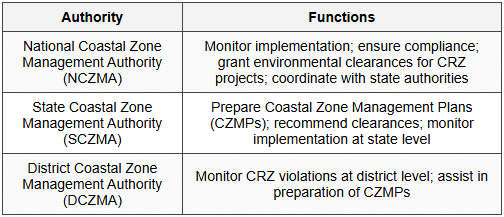
2.7 Coastal Zone Management Plans (CZMPs)
- Prepared by SCZMAs; maps demarcating CRZ-I, II, III, IV
- HTL and LTL demarcated using methods prescribed in notification
- Integration with Island Protection Zone Notification for islands
- Public consultation mandatory during CZMP preparation
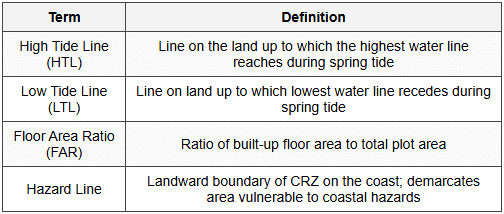
2.8 Key Terms and Definitions
3. E-Waste (Management) Rules, 2016
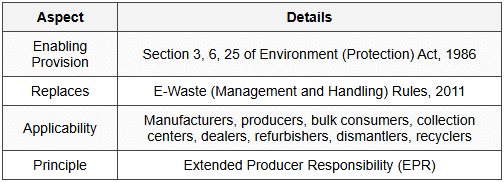
3.1 Basic Framework
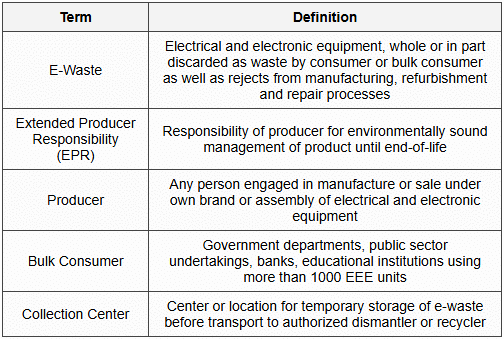
3.2 Key Definitions
3.3 Extended Producer Responsibility (EPR)
3.3.1 Producer Obligations
- Collect e-waste generated during manufacture and from end-of-life products
- Channelize e-waste to authorized dismantlers or recyclers
- Establish collection centers individually or collectively
- Provide contact details on website for return of e-waste
- Establish e-waste collection mechanism with deposit refund scheme
- Ensure awareness among consumers about hazards of e-waste and safe disposal
- File annual returns with CPCB on e-waste collected and recycled
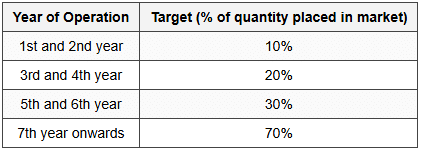
3.3.2 EPR Targets
3.4 Obligations of Stakeholders
3.4.1 Manufacturer Obligations
- Reduce use of hazardous substances in design and manufacture
- Register with CPCB; obtain authorization
- Maintain records of composition of components and materials used
- Provide information on product composition for recycling
3.4.2 Dealer/Retailer Obligations
- Establish collection points or take-back systems
- Channel collected e-waste to authorized collection centers
- Maintain records of e-waste collected and deposited
- Display contact details of authorized collection centers
3.4.3 Bulk Consumer Obligations
- Maintain records of e-waste generated
- Channel e-waste only to authorized collection centers/dismantlers/recyclers
- File annual returns to SPCB on e-waste generated and disposed
- Designate nodal officer for compliance
3.4.4 Refurbisher Obligations
- Obtain registration from SPCB
- Channel non-repairable/non-refurbishable e-waste to authorized dismantlers/recyclers
- Maintain records of e-waste received and refurbished
- Ensure safe storage to prevent environmental damage
3.4.5 Dismantler and Recycler Obligations
- Obtain authorization from SPCB
- Ensure environmentally sound management during dismantling/recycling
- Maintain records of e-waste handled, components/materials recovered
- File annual returns to SPCB
- Dispose residual waste only at authorized disposal facilities
- Obtain consent to establish and operate under Water/Air Acts
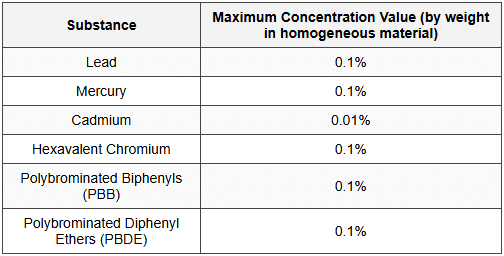
3.5 Reduction of Hazardous Substances (RoHS)
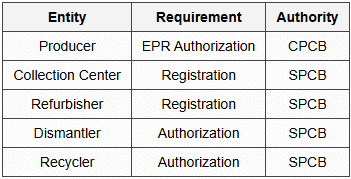
3.6 Authorization and Registration
3.7 Deposit Refund Scheme
- Producers must establish deposit refund scheme for products
- Additional cost for collection and channelization charged at point of sale
- Amount refunded to consumer when product returned at end-of-life
- Deposit refund mechanism details to be given on website
3.8 Penalties
- Section 15 of Environment (Protection) Act, 1986: imprisonment up to 5 years and/or fine up to Rs. 1 lakh
- Continuation after conviction: additional fine up to Rs. 5,000 per day
- Cognizable offense; empowered officers can arrest without warrant
4. Batteries (Management and Handling) Rules, 2001
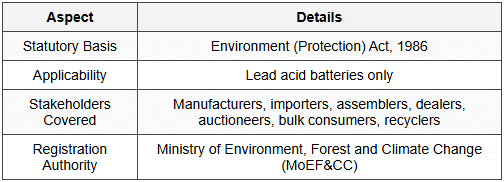
4.1 Basic Framework
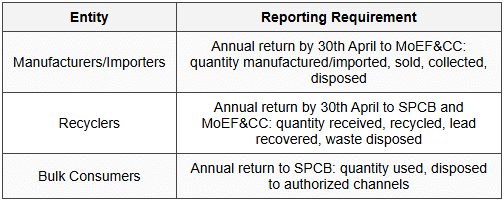
4.2 Obligations of Manufacturers and Importers
- Register with MoEF&CC and obtain registration certificate
- Collect used batteries from dealers; ensure safe disposal through registered recyclers
- Establish collection and take-back system through authorized dealers
- Submit annual returns on manufacture/import, sales, collection, and disposal
- Maintain records of lead content in batteries manufactured
- Ensure minimum 75% collection efficiency of used batteries placed in market
- Pay environmental compensation if collection target not met
4.3 Obligations of Dealers and Auctioneers
- Accept used batteries from consumers free of cost
- Return collected used batteries to manufacturers/importers or deposit at designated collection centers
- Store used batteries in weatherproof and leak-proof containers
- Maintain records of used batteries collected and returned
- Display notice informing consumers about free collection facility
4.4 Obligations of Bulk Consumers
- Maintain records of used batteries generated and disposed
- Return used batteries to dealers or directly to manufacturers
- Ensure no disposal of used batteries in municipal bins
- File annual returns with SPCB
4.5 Obligations of Recyclers
- Register with MoEF&CC obtain consent to operate from SPCB
- Accept used batteries from registered manufacturers/importers only
- Ensure environmentally sound recycling with minimum 90% recovery of lead
- Maintain emission standards as per guidelines
- Establish groundwater monitoring wells
- File annual returns to SPCB and MoEF&CC
- Maintain 150m buffer zone around recycling facility
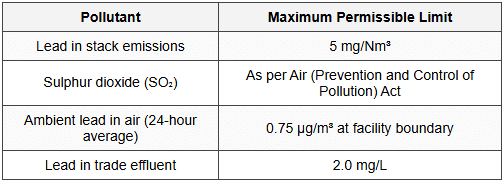
4.6 Emission Standards for Recycling Units
4.7 Buffer Zone and Safety Requirements
- 150 meters buffer zone around recycling facility; no residential or commercial establishments permitted
- Storage yards paved with impervious material; prevent acid leakage
- Used batteries stored in covered weatherproof sheds
- Personal protective equipment mandatory for workers
- Health monitoring of workers every 6 months for blood lead levels
4.8 Reporting and Documentation
4.9 Prohibitions
- No person shall dispose of used batteries in any manner other than depositing with authorized dealers or collection centers
- Recycling of used batteries in unregistered facilities prohibited
- No person shall store used batteries for more than 90 days except registered recyclers
- Open burning of used batteries prohibited
5. Plastic Waste Management Rules, 2016
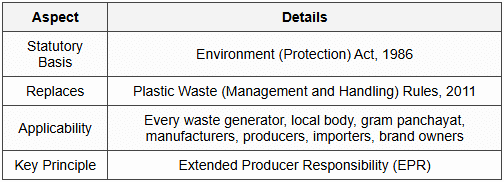
5.1 Basic Framework
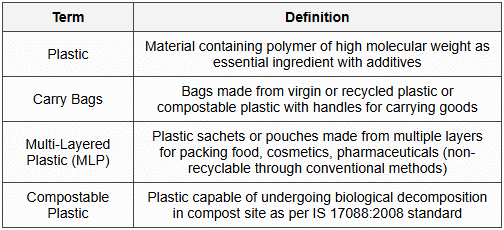
5.2 Key Definitions
5.3 Responsibilities of Local Bodies
- Establish, operationalize and coordinate waste management system
- Ensure segregation, collection, storage, transportation, processing and disposal of plastic waste
- Set up facilities for segregation, recycling and processing of plastic waste
- Conduct awareness programs regarding segregation and management of plastic waste
- Engage waste pickers and informal waste collectors for collection and segregation
- Prohibit littering and ensure fines for non-compliance
- Ensure plastic waste not mixed with municipal solid waste during transportation
5.4 Extended Producer Responsibility (EPR)
5.4.1 Producer, Importer and Brand Owner Obligations
- Formulate and submit EPR plan to SPCB for approval
- Collect plastic waste generated from products through waste collection systems
- Work with local bodies for channelizing plastic waste to registered recyclers/waste processors
- Ensure recycling of plastic waste generated within prescribed timelines
- Maintain records and file annual returns to SPCB
- Pay environmental compensation if EPR targets not achieved
5.4.2 EPR Plan Contents
- Estimation of quantum of plastic waste generated during manufacture and from products at end-of-life
- Mechanism for collection of plastic waste through network of collection centers
- Details of authorized agencies engaged for collection and channelization
- Phased targets for waste collection and recycling over 5 years
- Awareness plan for consumer education
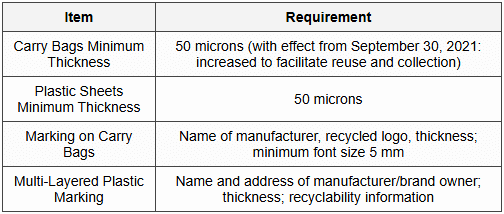
5.5 Thickness and Marking Requirements
5.6 Prohibitions and Restrictions
- Carry bags and plastic sheets below minimum thickness prohibited
- Multi-layered plastic (MLP) that is non-recyclable or non-energy recoverable or with no alternate use prohibited
- Use of plastic carry bags prohibited in retail establishments unless meeting minimum thickness
- Recycled plastic carry bags or sheets for storing, carrying, packaging or wrapping of foodstuffs prohibited
- No vendor shall sell or provide commodities in unmarked plastic carry bags
- Littering of plastic waste in public spaces, drains, water bodies prohibited
5.7 Recycling Standards
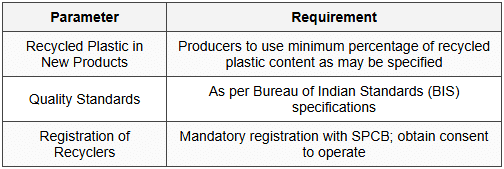
5.8 Responsibilities of Waste Generators
- Segregate plastic waste at source as per municipal solid waste rules
- Hand over segregated plastic waste to authorized waste collectors or local body
- Store plastic waste in prescribed manner to prevent littering
- Pay user fee for solid waste management services as levied by local body
5.9 Special Provisions for Compostable Plastics
- Compostable plastic bags permitted for manufacture/import/stock/sale if conforming to IS 17088:2008
- Must be clearly labeled as "Compostable Plastic" with IS standard number
- Manufacturer to obtain certificate from CPCB
- Bureau of Indian Standards to monitor quality and certification
5.10 Plastic Waste Management Fee
- Deposited annually by producers as determined by State Government
- Used for establishing waste management systems and awareness campaigns
- Differential fee based on quantity of plastic introduced in market
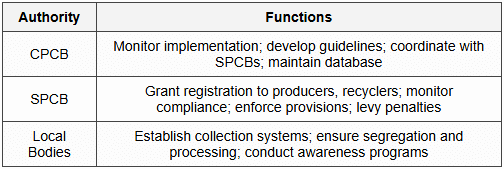
5.11 Institutional Mechanism
6. Biomedical Waste Management Rules, 2016
6.1 Basic Framework
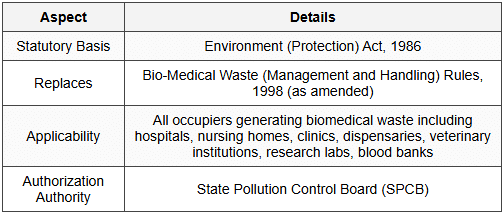
6.2 Definition of Biomedical Waste
- Any waste generated during diagnosis, treatment or immunization of human beings or animals
- Includes waste from research activities, production/testing of biologicals
- Covers waste from abandoned drugs, expired medicines
- Human anatomical waste, animal waste, microbiological waste, sharps, discarded medicines, chemicals, soiled waste, etc.
6.3 Categories of Biomedical Waste (Schedule I)
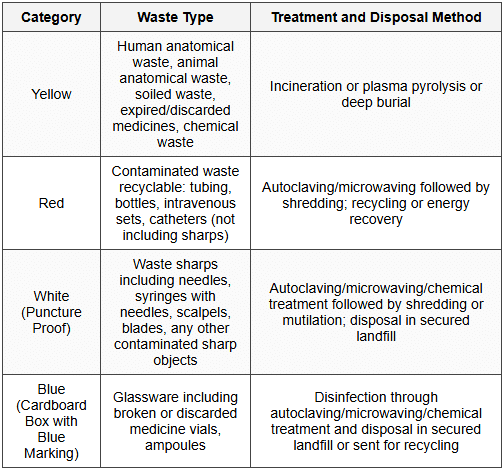
6.4 Obligations of Occupier
- Obtain authorization from SPCB before commencing any activity
- Segregate biomedical waste at source into color-coded bags/containers as per Schedule I
- Ensure treatment and disposal through prescribed methods only
- Pre-treat laboratory and microbiological waste before handing over to common facility
- Immunize all staff handling biomedical waste against diseases including Hepatitis B and Tetanus
- Provide personal protective equipment to staff handling waste
- Establish waste management committee with waste management plan
- Train staff on biomedical waste management and infection control
- Maintain records and file annual reports to SPCB by 30th June each year
- Display information on biomedical waste management within premises
6.5 Bar Coding System
- All biomedical waste bags and containers labeled with bar codes or labels containing information on source and category
- Bar code generated through operator of common biomedical waste treatment facility
- Ensures traceability from generation to disposal
- SMS or online tracking alerts to occupier on pickup and disposal
6.6 Common Biomedical Waste Treatment Facility (CBWTF)
6.6.1 Operator Obligations
- Obtain authorization from SPCB
- Collect segregated waste from occupiers as per pre-defined schedule
- Ensure treatment and disposal within 48 hours of receipt
- Provide bar-coded bags and containers to occupiers
- Issue acknowledgement or receipt for waste collected
- Maintain records and submit annual report to SPCB
- Establish captive treatment facility if serving remote areas
- Send untreated or partially treated waste only to authorized TSDF
6.6.2 Treatment Standards
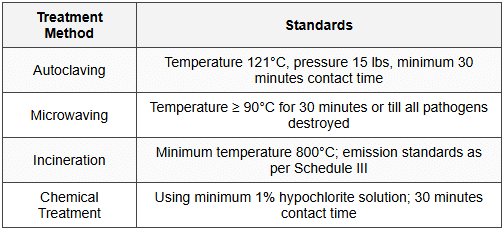
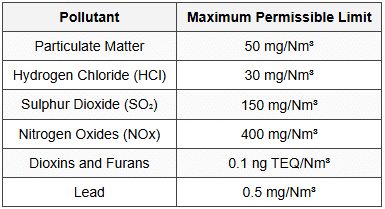
6.7 Incineration Emission Standards (Schedule III)
6.8 Deep Burial Method
- Permitted in rural or remote areas where CBWTF not available within 75 km
- Applicable for animal anatomical waste, human anatomical waste
- Pit depth minimum 2 meters; waste covered with 50 cm soil layer
- Location at least 20 meters from water sources
- Pit to be fenced to prevent access by animals
6.9 Prohibited Activities
- Mixing of biomedical waste with municipal solid waste
- Open burning of biomedical waste
- Chlorinated plastic bags or containers for biomedical waste collection
- Use of PVC in manufacturing containers, bags for biomedical waste
- Chemical disinfection of waste sharps (needles, syringes) before disposal
- Reuse of disposable syringes, needles, catheters, etc.
6.10 Personal Protective Equipment for Waste Handlers
- Gloves (heavy-duty rubber or puncture-proof material)
- Masks (minimum N-95 standard during handling of infectious waste)
- Aprons (waterproof material)
- Boots (puncture-proof, waterproof)
- Goggles or face shields when handling liquid waste
6.11 Authorization Requirements
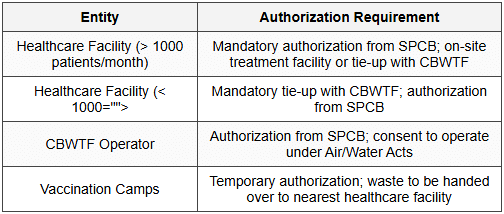
6.12 Accident Reporting
- Any accident during handling, treatment or disposal must be reported to SPCB within 24 hours
- Occupier to maintain accident register with details of incident, injuries, corrective action taken
- Post-exposure prophylaxis to be provided immediately to affected persons
7. Construction and Demolition Waste Management Rules, 2016
7.1 Basic Framework
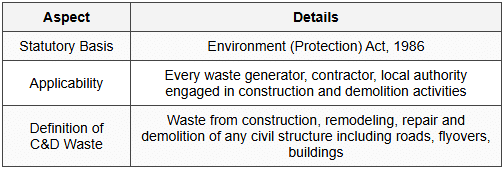
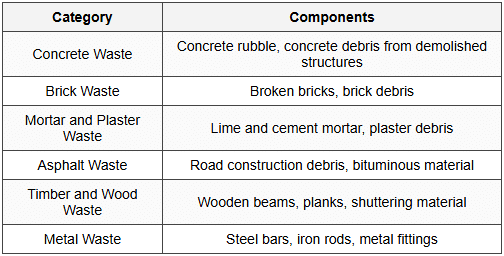
7.2 Classification of C&D Waste
7.3 Obligations of Waste Generators
- Submit waste management plan for projects generating > 20 tons or > 300 sq. meters of built-up area
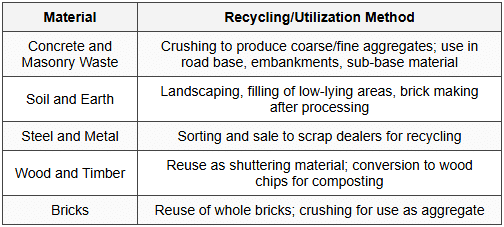
- Segregate C&D waste into four streams: concrete, soil, steel, wood and plastics, bricks and mortar
- Store segregated waste on-site or transport to collection centers authorized by local authority
- Pay collection charges to local authority as levied
- Ensure no littering or unauthorized dumping of C&D waste
- Use recycled products to extent of 10-20% of procurement in construction
- Deposit with local authority or authorized processing facility within 3 days of generation
7.4 Waste Management Plan Requirements
- Details of waste generation: estimated quantity, category-wise breakup
- Storage area identification on-site for segregated waste
- Transportation mechanism and routes to collection centers or processing facilities
- Details of authorized processing facility where waste will be deposited
- Plan for reuse of processed materials in same project or other projects
- Timeline for waste clearance from site
7.5 Obligations of Local Authorities
- Prepare detailed project report on C&D waste management within jurisdiction
- Establish collection, storage, segregation and transportation systems
- Set up processing facilities or identify sites for processing and recycling
- Ensure final disposal only for non-recyclable/non-reusable waste
- Promote use of recycled materials from C&D waste in municipal and government contracts
- Levy spot fines for littering or unauthorized dumping
- Earmark landfill sites for disposal of residual inert waste
7.6 Recycling and Utilization Standards
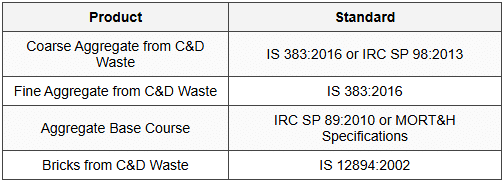
7.7 Quality Standards for Recycled Products
7.8 Mandated Use of Recycled Products
- Government and public sector construction projects to mandatorily use 10-20% recycled C&D waste products
- Preference to be given to contractors using recycled materials in bidding process
- Building bylaws amended to encourage use of recycled materials
- Development authorities to specify use of recycled products in approval conditions
7.9 Storage and Transportation
- C&D waste stored in covered area or containers to prevent dust emissions
- Storage area clearly demarcated and fenced if stored for > 48 hours
- Transportation in covered vehicles to prevent spillage and dust
- Vehicles to display information on source and destination of waste
- No mixing of C&D waste with municipal solid waste during transportation
7.10 Landfilling Standards
- Landfills exclusively for inert residual C&D waste not amenable to recycling
- Site selection avoiding ecologically sensitive areas, wetlands, water bodies
- Lined landfill with leachate collection system if waste contains hazardous components
- Fencing and security to prevent unauthorized dumping
- Regular monitoring of groundwater quality around landfill site
7.11 Penalties and Enforcement
- Spot fine up to Rs. 5,000 for littering or unauthorized dumping by individuals
- Penalty on contractors up to Rs. 5 lakh or 5% of project cost for non-compliance with waste management plan
- Suspension of building permits for repeated violations
- Prosecution under Environment (Protection) Act, 1986 for severe violations
8. Solid Waste Management Rules, 2016
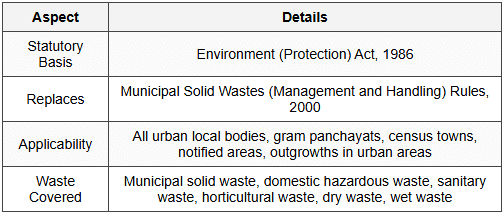
8.1 Basic Framework
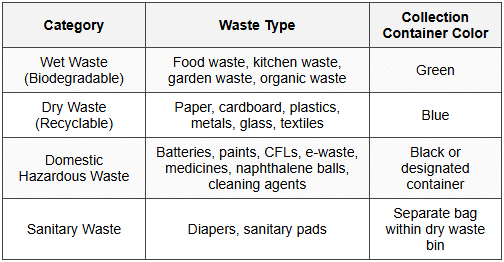
8.2 Waste Segregation Categories
8.3 Responsibilities of Waste Generators
- Segregate waste at source into wet, dry and domestic hazardous waste
- Store segregated waste in separate colored bins as prescribed
- Hand over segregated waste to waste collectors or local body as per schedule
- Wrap securely used sanitary waste and dispose in designated bins
- Pay user fees for solid waste management services as levied
- No littering or burning of waste in open spaces
- Home composting of wet waste encouraged; reduce waste generation
8.4 Responsibilities of Residential and Commercial Establishments
- Bulk generators (> 100 kg/day) to segregate waste and manage through composting, biogas or other methods
- Hotels, restaurants to segregate biodegradable waste; compost or biomethanation mandatory if generating > 100 kg/day
- Large residential complexes to install decentralized composting or biogas plants
- Horticulture waste and garden waste to be composted; no disposal in landfills
- Market associations to set up material recovery facilities for recyclables
8.5 Duties of Local Bodies
- Formulate bye-laws for prohibition of littering, segregation, storage, collection, user fees
- Establish waste collection system ensuring door-to-door collection of segregated waste
- Set up material recovery facilities for sorting, baling and storage of recyclable materials
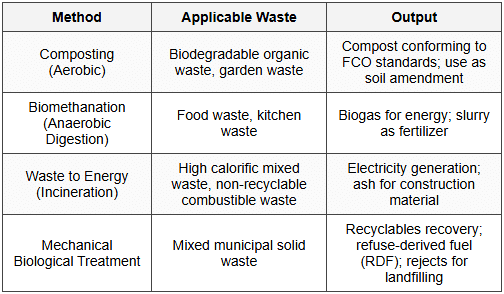
- Establish processing facilities for treatment of biodegradable waste through composting, biomethanation
- Develop sanitary landfills for disposal of non-biodegradable, inert waste and residues from waste processing facilities
- Levy user fees on waste generators; differential rates based on quantity generated
- Conduct awareness campaigns on waste segregation, reduction, reuse
- Integrate waste pickers and informal waste collectors into waste management system
- Ensure no waste dumping in water bodies, open areas, streets
8.6 Waste Processing and Treatment Methods
8.7 Sanitary Landfill Standards
- Designed to prevent contamination of groundwater and surface water
- Impermeable liner (HDPE or equivalent) with minimum 1.5 mm thickness
- Leachate collection and treatment system mandatory
- Landfill gas collection for energy recovery or flaring
- Buffer zone of minimum 100 meters around landfill boundary
- Fencing and security to prevent unauthorized access and open dumping
- Daily compaction and covering of waste with 10-15 cm soil layer
- Final capping with 65 cm impermeable layer upon closure
- Groundwater monitoring wells at upstream and downstream locations
- Post-closure monitoring and maintenance for minimum 15 years
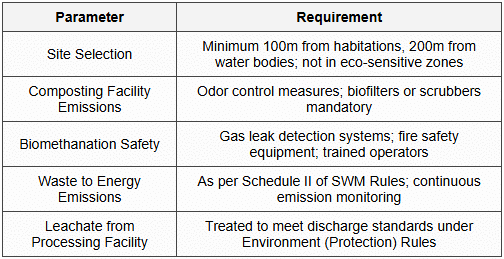
8.8 Waste Processing Facility Standards
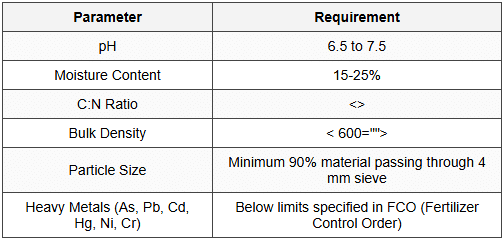
8.9 Compost Quality Standards (Schedule II)
8.10 Waste to Energy Incineration Standards (Schedule II)
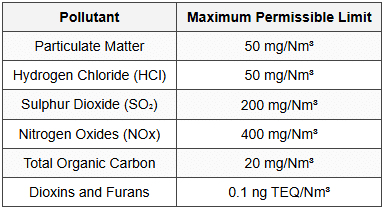
8.11 Prohibition of Open Dumping and Burning
- Open dumping of municipal solid waste prohibited with immediate effect
- Existing dumpsites to be bio-remediated or capped within prescribed timeline
- Burning of waste in open spaces prohibited; violators subject to penalties
- Local bodies to ensure complete ban on open burning by imposing spot fines
8.12 Role of State Government
- Constitute State Level Advisory Body for monitoring implementation
- Prepare state solid waste management policy and strategy
- Identify regional waste processing and disposal facilities
- Provide financial assistance to local bodies for infrastructure development
- Frame rules for levy and collection of user charges
The document Cheat Sheet: Other Core Acts is a part of the CLAT PG Course Environmental Law.
All you need of CLAT PG at this link: CLAT PG
About this Document

4.85/5 Rating

Apr 20, 2026 Last updated
Related Exams
Document Description: Cheat Sheet: Other Core Acts for CLAT PG 2026 is part of Environmental Law preparation. The notes and questions for Cheat Sheet: Other Core Acts have been prepared according to the CLAT PG exam syllabus. Information about Cheat Sheet: Other Core Acts covers topics like and Cheat Sheet: Other Core Acts Example, for CLAT PG 2026 Exam. Find important definitions, questions, notes, meanings, examples, exercises and tests below for Cheat Sheet: Other Core Acts.
Introduction of Cheat Sheet: Other Core Acts in English is available as part of our Environmental Law for CLAT PG & Cheat Sheet: Other Core Acts in Hindi for Environmental Law course. Download more important topics related with notes, lectures and mock test series for CLAT PG Exam by signing up for free. CLAT PG: Cheat Sheet: Other Core Acts
Description
Cheat Sheet: Other Core Acts of Environmental Law to help you remember important concepts with short tricks. Start learning for CLAT PG exam & improve retention with EduRev.
Information about Cheat Sheet: Other Core Acts
In this doc you can find the meaning of Cheat Sheet: Other Core Acts defined & explained in the simplest way possible. Besides explaining types of Cheat Sheet: Other Core Acts theory, EduRev gives you an ample number of questions to practice Cheat Sheet: Other Core Acts tests, examples and also practice CLAT PG tests



Related Searches
Exam, Free, Summary, Semester Notes, Cheat Sheet: Other Core Acts, study material, Previous Year Questions with Solutions, practice quizzes, Viva Questions, past year papers, Cheat Sheet: Other Core Acts, MCQs, Extra Questions, Objective type Questions, mock tests for examination, ppt, Cheat Sheet: Other Core Acts, video lectures, shortcuts and tricks, Important questions, pdf , Sample Paper;