CBSE Class 6 > Class 6 Notes > Hindi > Infographics: सत्रिया और बिहू नृत्य
Infographics: सत्रिया और बिहू नृत्य

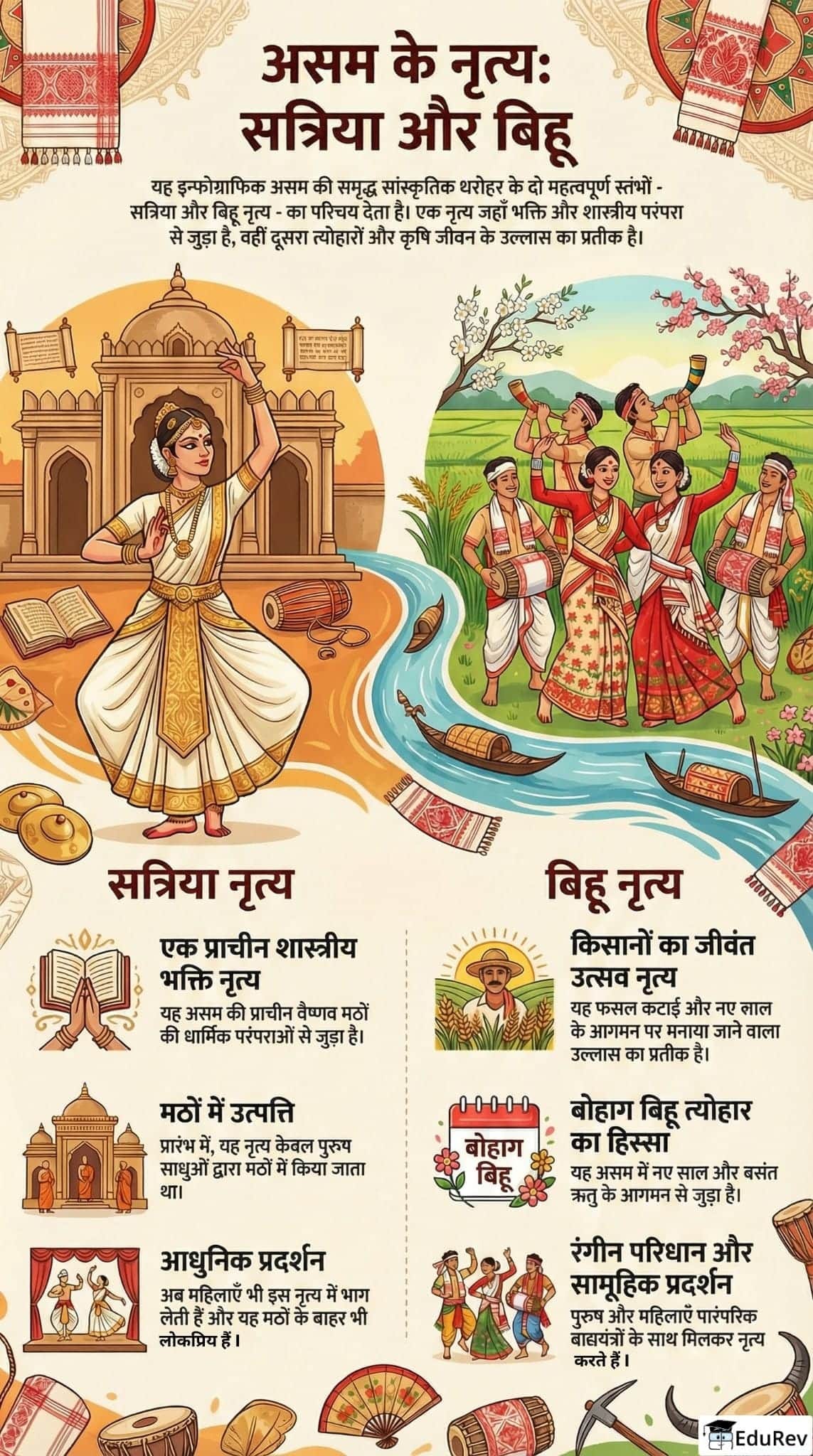
The document Infographics: सत्रिया और बिहू नृत्य is a part of the Class 6 Course Hindi for Class 6.
All you need of Class 6 at this link: Class 6
FAQs on Infographics: सत्रिया और बिहू नृत्य
| 1. What is Sattriya dance? |  |
Ans. Sattriya dance is a classical dance form originating from the state of Assam in India. It is traditionally performed by male monks in monasteries known as "Sattras" and is characterised by graceful movements, expressive gestures, and intricate footwork. The dance is accompanied by traditional Assamese music and is often performed during religious festivals and cultural events.
| 2. How is Bihu dance different from Sattriya dance? | |
Ans. Bihu dance is a folk dance associated with the Bihu festival in Assam, celebrating the Assamese New Year and the harvest season. Unlike Sattriya, which has a spiritual context and is more structured, Bihu dance is lively and performed in groups, featuring energetic movements and joyful expressions. Bihu dance reflects the daily life and culture of the Assamese people, while Sattriya focuses on themes from Hindu mythology.
| 3. What are the main themes depicted in Sattriya dance? | |
Ans. Sattriya dance typically revolves around themes from Hindu mythology, especially stories related to Lord Krishna and various deities. It often portrays love, devotion, and the divine play of gods, using intricate narratives conveyed through facial expressions and hand gestures, known as "mudras." The dance serves not only as a form of entertainment but also as a medium for spiritual expression and devotion.
| 4. What instruments are commonly used in Bihu dance performances? | |
Ans. Bihu dance performances are accompanied by traditional musical instruments that include the dhol (a type of drum), pepa (a wind instrument made from buffalo horn), gogona (a type of mouth organ), and other folk instruments. These instruments create a vibrant and rhythmic backdrop that enhances the energetic and lively nature of the Bihu dance.
| 5. Why is it important to preserve Sattriya and Bihu dance? | |
Ans. Preserving Sattriya and Bihu dance is essential for maintaining the cultural heritage of Assam and promoting its rich traditions. These dance forms reflect the history, values, and identity of the Assamese people. By ensuring their continued practice and recognition, future generations can appreciate and learn about their cultural roots, fostering a sense of pride and community.
About this Document

4.60/5 Rating

Apr 22, 2026 Last updated
Related Exams
Document Description: Infographics: सत्रिया और बिहू नृत्य for Class 6 2026 is part of Hindi for Class 6 preparation. The notes and questions for Infographics: सत्रिया और बिहू नृत्य have been prepared according to the Class 6 exam syllabus. Information about Infographics: सत्रिया और बिहू नृत्य covers topics like and Infographics: सत्रिया और बिहू नृत्य Example, for Class 6 2026 Exam. Find important definitions, questions, notes, meanings, examples, exercises and tests below for Infographics: सत्रिया और बिहू नृत्य.
Introduction of Infographics: सत्रिया और बिहू नृत्य in English is available as part of our Hindi for Class 6 for Class 6 & Infographics: सत्रिया और बिहू नृत्य in Hindi for Hindi for Class 6 course. Download more important topics related with notes, lectures and mock test series for Class 6 Exam by signing up for free. Class 6: Infographics: सत्रिया और बिहू नृत्य
Description
Infographics: सत्रिया और बिहू नृत्य of Hindi provides you one-page visual summary of the chapter covering all the important topics. Download the PDF from EduRev.
Information about Infographics: सत्रिया और बिहू नृत्य
In this doc you can find the meaning of Infographics: सत्रिया और बिहू नृत्य defined & explained in the simplest way possible. Besides explaining types of Infographics: सत्रिया और बिहू नृत्य theory, EduRev gives you an ample number of questions to practice Infographics: सत्रिया और बिहू नृत्य tests, examples and also practice Class 6 tests



Related Searches
Sample Paper, Extra Questions, Exam, ppt, Infographics: सत्रिया और बिहू नृत्य, practice quizzes, Semester Notes, Free, mock tests for examination, video lectures, shortcuts and tricks, study material, Summary, past year papers, Previous Year Questions with Solutions, Viva Questions, Objective type Questions, MCQs, Important questions, pdf , Infographics: सत्रिया और बिहू नृत्य, Infographics: सत्रिया और बिहू नृत्य;