On-Campus vs Off-Campus Jobs


When students pursue education abroad, they often need to earn money alongside their studies. Universities and colleges offer different types of work opportunities. Understanding the difference between on-campus jobs and off-campus jobs helps students plan their finances better and make smart choices about work while studying.
1. On-Campus Jobs
On-campus jobs are work opportunities provided within the university or college premises. These jobs are directly connected to the educational institution where the student is enrolled.
1.1 Definition and Basic Features
- Location: Work is performed inside the college or university campus buildings and facilities.
- Employer: The university itself or campus-based organizations hire students directly.
- Eligibility: Only students enrolled at that specific institution can apply for these positions.
- Work Hours: Typically limited to 15-20 hours per week during academic terms.
- Visa Compliance: Most student visas automatically allow on-campus work without extra permissions.
1.2 Common Types of On-Campus Jobs
- Library Assistant: Helping with book management, checking books in/out, organizing shelves.
- Research Assistant: Supporting professors with research projects, data collection, laboratory work.
- Teaching Assistant: Assisting faculty with grading papers, conducting tutorials, helping other students.
- Campus Cafeteria/Dining Hall Staff: Working in food service areas, serving meals, cleaning tables.
- Administrative Support: Office work in various departments like admissions, student services, registrar.
- Campus Tour Guide: Showing prospective students and visitors around the campus.
- IT Help Desk Assistant: Providing technical support to students and faculty for computer issues.
- Recreation Center Staff: Working at gyms, sports facilities, or student activity centers.
1.3 Advantages of On-Campus Jobs
- Convenience: No commuting required; workplace is within walking distance from classes and dormitories.
- Flexible Scheduling: Employers understand academic priorities and schedule work around class timings and exams.
- Legal Compliance: Automatically permitted under most student visa regulations without additional work permits.
- Networking Opportunities: Direct interaction with professors, staff, and administrators builds professional connections.
- Academic Integration: Jobs like research or teaching assistant roles enhance learning and add value to resumes.
- Understanding Campus Culture: Helps international students integrate better into campus life and understand local systems.
- Safe Environment: Secure campus premises with institutional oversight and protection.
- Limited Competition: Job openings are reserved only for students of that institution.
1.4 Limitations of On-Campus Jobs
- Limited Availability: Fewer job positions compared to the total number of students seeking work.
- Lower Pay Rates: Wages are often at minimum levels, sometimes lower than off-campus market rates.
- Restricted Hours: Strict limitations on weekly working hours (usually 15-20 hours during term time).
- Seasonal Closure: Many campus facilities reduce operations during holidays, limiting work opportunities.
- Limited Skill Diversity: Job types may not match all students' career interests or skill development needs.
- High Competition: Despite being limited to campus students, competition for desirable positions can be intense.
2. Off-Campus Jobs
Off-campus jobs are employment opportunities available outside the university premises in the local community, businesses, or organizations.
2.1 Definition and Basic Features
- Location: Work is performed outside the college or university campus in external establishments.
- Employer: Private companies, businesses, non-profit organizations, or individuals hire students.
- Legal Requirements: Usually requires specific work authorization or permits beyond the basic student visa.
- Work Hours: May vary; some countries allow 20-40 hours per week depending on visa conditions.
- Application Process: Students must apply through regular job market channels like other job seekers.
2.2 Common Types of Off-Campus Jobs
- Retail Store Staff: Working in shops, supermarkets, clothing stores as sales associates or cashiers.
- Restaurant/Cafe Workers: Serving food, bartending, kitchen assistance, delivery services.
- Internships: Professional work experience in companies related to the student's field of study.
- Tutoring Services: Private tutoring for school children or other students in various subjects.
- Freelance Work: Graphic design, content writing, web development, or other skill-based independent work.
- Customer Service Representatives: Call centers, help desks, or support services for businesses.
2.3 Advantages of Off-Campus Jobs
- Higher Earning Potential: Market-driven wages often higher than on-campus positions; opportunity for tips in service jobs.
- Wider Job Variety: Extensive range of positions across different industries matching diverse skills and interests.
- Professional Experience: Real-world work experience valuable for career building and future employment.
- Industry Networking: Connections with professionals outside academia can lead to career opportunities.
- Skill Development: Practical skills like customer service, sales, technical abilities enhance employability.
- More Positions Available: Larger job market means more openings compared to limited campus positions.
- Potential Full-Time Transition: Good performance may lead to full-time offers after graduation.
- Extended Hours Option: Some visa types allow more working hours off-campus during vacation periods.
2.4 Limitations of Off-Campus Jobs
- Work Authorization Required: Students must obtain special permits or meet specific visa conditions before starting work.
- Commuting Challenges: Travel time and transportation costs reduce net earnings and consume valuable time.
- Less Flexible Schedules: Employers may not accommodate academic schedules; potential conflicts with classes or exams.
- Legal Compliance Risks: Working without proper authorization can result in visa cancellation and deportation.
- Competitive Application: Must compete with local workforce and other international students for positions.
- Job Insecurity: Higher risk of termination compared to campus jobs with institutional oversight.
- Tax Complications: More complex tax filing requirements for off-campus employment income.
- Limited Understanding: Employers may not understand international student visa restrictions and academic pressures.
3. Legal and Visa Considerations
3.1 Work Authorization Requirements
- On-Campus Work: Generally permitted automatically under student visa conditions without separate authorization.
- Off-Campus Work: Requires specific approval, work permits, or meeting certain conditions set by immigration authorities.
- Timing Restrictions: Some countries allow off-campus work only after completing one academic year.
- Hour Limitations: Strict weekly hour caps during academic terms (commonly 20 hours) and different limits during vacations.
3.2 Common Student Mistakes (Trap Alert)
- Working Without Authorization: Starting off-campus work without proper permits assuming it's similar to on-campus rules.
- Exceeding Hour Limits: Working more hours than permitted can violate visa conditions even if the job is legal.
- Unofficial Payment: Accepting cash payments "under the table" to avoid taxes creates serious legal problems.
- Confusing Internship Rules: Not all internships qualify as legal work; some require specific training visa categories.
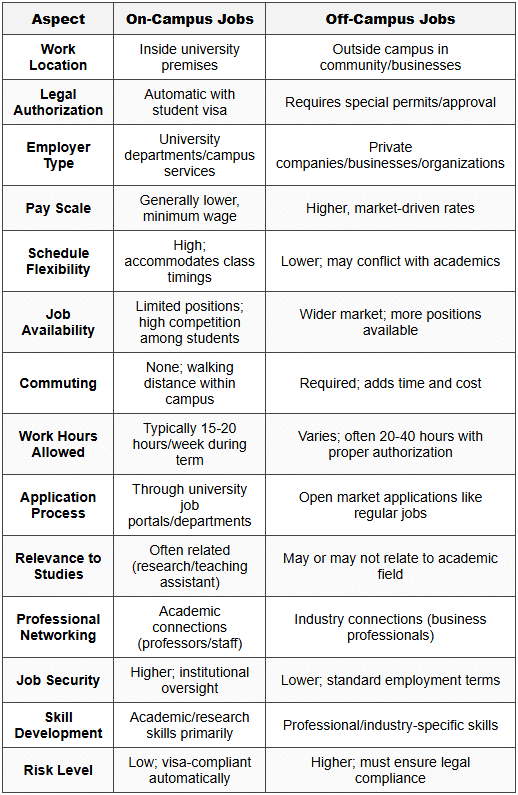
4. Comparative Analysis: On-Campus vs Off-Campus Jobs
5. Financial Planning Considerations
5.1 Earning Potential Comparison
- On-Campus Average: Earnings typically cover partial living expenses; useful for pocket money and small bills.
- Off-Campus Average: Can contribute significantly to tuition fees or substantial living costs if permitted hours are maximized.
- Hidden Costs: Off-campus jobs involve transportation, work clothing, meal expenses that reduce net income.
- Time Value: Consider hours spent commuting and working versus time needed for studies and academic success.
5.2 Budgeting Strategy
- Conservative Planning: Budget should not depend entirely on job income; treat it as supplementary rather than primary funding.
- Emergency Buffer: Save portion of earnings for unexpected expenses or periods when work isn't available.
- Academic Priority: Ensure work hours don't compromise grades; poor academic performance can affect scholarships or visa status.
- Vacation Earnings: Plan to work more hours during holidays when academic pressure is lower and more hours are legally permitted.
6. Choosing Between On-Campus and Off-Campus Work
6.1 When to Prefer On-Campus Jobs
- First Year Students: Easier to manage while adjusting to new country, education system, and culture.
- Heavy Academic Load: When course requirements are demanding and flexibility is crucial.
- Visa Restrictions: When student visa doesn't permit off-campus work or approval is pending.
- No Transportation: When students don't have vehicle access or public transport is inconvenient/expensive.
- Academic Career Goals: When research or teaching experience directly benefits future graduate school or academic career plans.
6.2 When to Consider Off-Campus Jobs
- Financial Need: When higher income is necessary to meet living expenses or reduce loan burden.
- Professional Experience: When internships or industry work aligns with career goals and adds resume value.
- After Settling In: Once comfortable with academic routine and local environment after first semester/year.
- Specific Skills: When possessing marketable skills (programming, design, languages) that command good pay off-campus.
- Legal Authorization: After obtaining proper work permits and meeting eligibility requirements.
6.3 Combination Strategy
- Sequential Approach: Start with on-campus work in first year, transition to off-campus opportunities later.
- Seasonal Mix: Work on-campus during academic terms, seek off-campus positions during summer/winter breaks.
- Dual Approach: Maintain small on-campus role for convenience while pursuing part-time off-campus internship if legally permitted hours allow.
7. Application and Selection Process
7.1 Finding On-Campus Jobs
- University Job Portals: Check official student employment websites regularly for new postings.
- Career Services Office: Visit campus career center for job listings and application guidance.
- Direct Department Inquiry: Contact specific departments (library, IT, admissions) to ask about openings.
- Faculty Connections: Inform professors of interest in research or teaching assistant positions.
- Notice Boards: Check physical bulletin boards in student centers and academic buildings.
7.2 Finding Off-Campus Jobs
- Online Job Platforms: Use general job websites filtering for part-time and student-friendly positions.
- Local Businesses: Visit nearby shops, restaurants, cafes with resume and inquire about openings.
- Networking: Connect with senior students, alumni, or community members for referrals and recommendations.
- Internship Programs: Apply through university career services or company websites for structured internship opportunities.
- International Student Office: Seek guidance on legal work options and employer contacts who hire international students.
7.3 Important Documents Required
- For On-Campus: Valid student ID, enrollment verification, social security number or equivalent tax identification.
- For Off-Campus: Work authorization document, passport, visa, proof of student status, background checks as required.
- Tax Forms: Complete necessary tax documentation for legal employment in the host country.
- Bank Account: Local bank account for salary deposits (cash payments should be avoided).
8. Impact on Academic Performance
8.1 Time Management Challenges
- Study Time Reduction: Working 15-20 hours weekly reduces available time for coursework, assignments, and exam preparation.
- Energy Depletion: Physical and mental fatigue from work affects concentration and learning efficiency.
- Schedule Conflicts: Especially with off-campus jobs, work shifts may clash with important classes or academic deadlines.
8.2 Balancing Work and Studies
- Priority Setting: Always keep academics as first priority; work is secondary to educational goals.
- Realistic Assessment: Honestly evaluate capacity before committing to work hours; quality matters over quantity.
- Communication: Inform employers about exam periods and academic commitments upfront.
- Academic Calendar Awareness: Reduce work hours during midterms, finals, and major project deadlines.
- Health Consideration: Ensure adequate sleep, nutrition, and stress management while balancing work and studies.
8.3 Trap Alert: Common Mistakes
- Overcommitting Hours: Taking maximum allowed hours from first week; better to start small and increase gradually.
- Ignoring Grade Impact: Continuing heavy work schedule even when grades are declining.
- Financial Pressure Override: Letting financial needs push work hours beyond healthy or legal limits.
- Missing Deadlines: Arriving late to classes, missing assignment submissions due to work tiredness.
9. Country-Specific Variations
9.1 Key Differences Across Popular Study Destinations
- United States: F-1 visa students allowed 20 hours/week on-campus automatically; off-campus requires CPT (Curricular Practical Training) or OPT (Optional Practical Training) approval after one year.
- United Kingdom: Tier 4 visa typically permits 20 hours/week during term time (on or off-campus) and full-time during holidays.
- Canada: Study permit allows 20 hours/week off-campus work without separate permit after commencing full-time studies.
- Australia: Student visa allows 40 hours biweekly (approximately 20 hours/week) during study periods and unlimited hours during breaks.
9.2 Verification Requirement
- Check Current Rules: Immigration policies change; always verify latest regulations with official government sources.
- University Guidance: International student office provides accurate, updated information specific to your visa type.
- Documentation: Keep all work authorization documents, employment contracts, and hour logs for visa compliance proof.
Understanding the differences between on-campus and off-campus jobs helps students make informed decisions for financial planning while studying abroad. On-campus positions offer convenience, legal simplicity, and academic integration, while off-campus jobs provide higher earnings and professional experience. The best choice depends on individual circumstances including visa regulations, academic workload, financial needs, and career goals. Successful students balance work opportunities with academic priorities, always ensuring legal compliance and maintaining focus on their primary objective: quality education and successful degree completion.
