UPSC Exam > UPSC Notes > Geography CSE > Infographic: Acid Rain
Infographic: Acid Rain

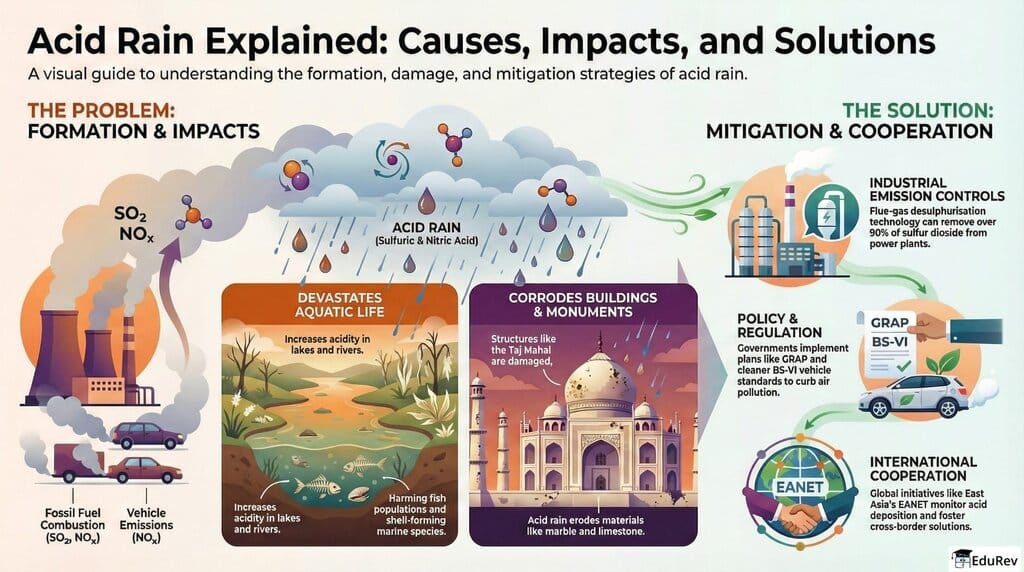
The document Infographic: Acid Rain is a part of the UPSC Course Geography for UPSC CSE.
All you need of UPSC at this link: UPSC
FAQs on Infographic: Acid Rain
| 1. What is acid rain and how is it formed? |  |
Ans. Acid rain refers to precipitation that has a lower pH than normal rainwater, making it more acidic. It is primarily formed when sulphur dioxide (SO₂) and nitrogen oxides (NOₓ) emitted from industrial processes and vehicles react with water vapour, oxygen, and other chemicals in the atmosphere, resulting in the formation of sulphuric acid (H₂SO₄) and nitric acid (HNO₃).
| 2. What are the environmental impacts of acid rain? | |
Ans. Acid rain can have detrimental effects on the environment, including the acidification of lakes and streams, which harms aquatic life. It can damage forests by leaching essential nutrients from the soil and weakening trees, making them more susceptible to disease and harsh weather conditions. Additionally, acid rain can erode buildings and monuments, particularly those made of limestone and marble.
| 3. How does acid rain affect human health? | |
Ans. While acid rain itself does not pose a direct health risk to humans, the pollutants that cause acid rain, such as sulphur dioxide and nitrogen oxides, can lead to respiratory issues and other health problems. These pollutants can contribute to the formation of fine particulate matter in the air, which can aggravate conditions like asthma and bronchitis when inhaled.
| 4. What measures can be taken to reduce acid rain? | |
Ans. To reduce acid rain, measures can include implementing stricter emissions regulations for industries and vehicles, promoting the use of cleaner energy sources, and increasing energy efficiency. Additionally, using technologies such as scrubbers in smokestacks can help capture and neutralise harmful emissions before they are released into the atmosphere.
| 5. How is acid rain monitored and studied? | |
Ans. Acid rain is monitored through a network of environmental agencies that collect data on precipitation pH levels, air quality, and emissions from various sources. Researchers study the impacts of acid rain on ecosystems, human health, and infrastructure to inform policy and regulation. This includes long-term studies that observe changes in soil chemistry, water bodies, and biodiversity in affected areas.
About this Document

4.88/5 Rating

Apr 19, 2026 Last updated
Related Exams
Document Description: Infographic: Acid Rain for UPSC 2026 is part of Geography for UPSC CSE preparation. The notes and questions for Infographic: Acid Rain have been prepared according to the UPSC exam syllabus. Information about Infographic: Acid Rain covers topics like and Infographic: Acid Rain Example, for UPSC 2026 Exam. Find important definitions, questions, notes, meanings, examples, exercises and tests below for Infographic: Acid Rain.
Introduction of Infographic: Acid Rain in English is available as part of our Geography for UPSC CSE for UPSC & Infographic: Acid Rain in Hindi for Geography for UPSC CSE course. Download more important topics related with notes, lectures and mock test series for UPSC Exam by signing up for free. UPSC: Infographic: Acid Rain
Description
Infographic: Acid Rain of Geography provides you one-page visual summary of the chapter covering all the important topics. Download the PDF from EduRev.
Information about Infographic: Acid Rain
In this doc you can find the meaning of Infographic: Acid Rain defined & explained in the simplest way possible. Besides explaining types of Infographic: Acid Rain theory, EduRev gives you an ample number of questions to practice Infographic: Acid Rain tests, examples and also practice UPSC tests



Related Searches
video lectures, past year papers, practice quizzes, Extra Questions, shortcuts and tricks, Objective type Questions, Semester Notes, Viva Questions, pdf , Important questions, Previous Year Questions with Solutions, mock tests for examination, ppt, Exam, Sample Paper, Free, study material, Summary, Infographic: Acid Rain, Infographic: Acid Rain, Infographic: Acid Rain, MCQs;