Short Answer Questions: The World of Things

Q1: What do we mean by materials?
Ans: Materials are the substances from which different objects are made, such as wood, metal, glass, plastic, and cloth.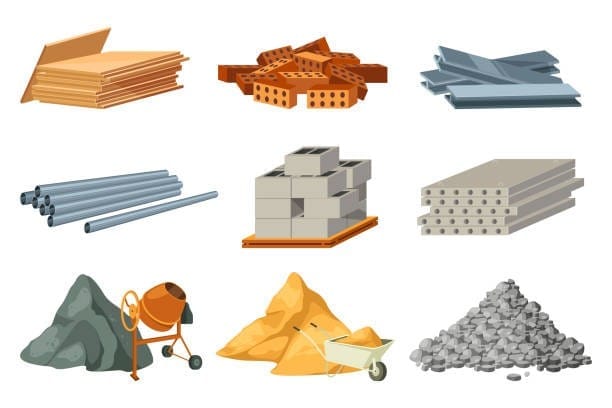
Q2: Look around your classroom or home. What do you notice about the things kept there?
Ans: I notice that the things around me are made of different materials and are used for different purposes.
Q3: Why are different objects made of different materials?
Ans: Different objects are made of different materials because each material has special properties that make it suitable for a particular use.
Q4: Name one object and write what material it is made of.
Ans: A chair is made of wood.
Q5: How can you find out the material of an object without breaking it?
Ans: We can find out by looking at it, touching it, and feeling whether it is hard, soft, shiny, or dull.
Q6: Some materials allow us to see through them, while others do not. What do we call such materials?
Ans: Materials that allow us to see through them are called transparent, and materials that do not are called opaque.
Q7: Why are glass windows useful in houses?
Ans: Glass windows are useful because they allow light and air to enter the room while letting us see outside.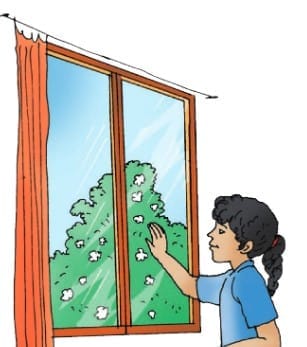
Q8: Some materials are neither fully see-through nor fully blocked. What are they called?
Ans: Such materials are called translucent.
Q9: How does touching an object help us learn more about it?
Ans: Touching helps us know whether an object is smooth, rough, hard, soft, or cold, which tells us about the material.
Q10: Why are clothes made from soft and flexible materials?
Ans: Clothes are made from soft and flexible materials because they are comfortable to wear and easy to move in.
Q11: When you tap different objects, they make different sounds. What does this tell you?
Ans: This tells us that different materials have different properties and behave differently.
Q12: Why can water not be used to make things like walls or tables?
Ans: Water cannot be used to make walls or tables because it flows and does not keep a fixed shape.
Q13: How are solids and liquids different?
Ans: Solids keep their shape, while liquids flow and take the shape of the container.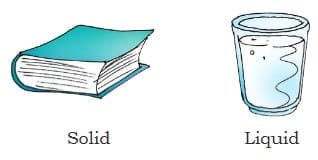
Q14: What is the difference between natural and artificial things?
Ans: Natural things occur in nature, while artificial things are made by humans using natural materials.
Q15: Why should we think before using or wasting materials?
Ans: We should think before using or wasting materials because they come from nature and should be used carefully.
FAQs on Short Answer Questions: The World of Things
| 1. What are the different types of materials mentioned in "The World of Things"? |  |
| 2. How do natural materials differ from synthetic materials? | |
| 3. What are some common uses of composite materials? | |
| 4. Why is recycling of materials important? | |
| 5. How do the properties of materials affect their applications? | |