CBSE Class 6 > Class 6 Notes > Social Studies > Mnemonics : Part 1 : Governance
Mnemonics : Part 1 : Governance

Governance & Government
1. Governance & Government
Governance is the process of taking decisions, organising society with rules, and ensuring rules are followed. The system/group that makes rules and ensures they are followed is the government.
Mnemonic : G² = Govern + Guide
- Governance = Govern society using rules
- Government = Guides and ensures rules are followed
2. Why We Need Rules
When many people live together, disagreements and disorder happen, so rules are needed for order and harmony. Without rules, society cannot function.Mnemonic : Order Harmony Must Stay
- Order = O = Order stays
- Harmony = H = Harmony stays
- Memory = M = Mess reduces
- Stay = S = Society functions
Working of Government
1. Three Organs of Government
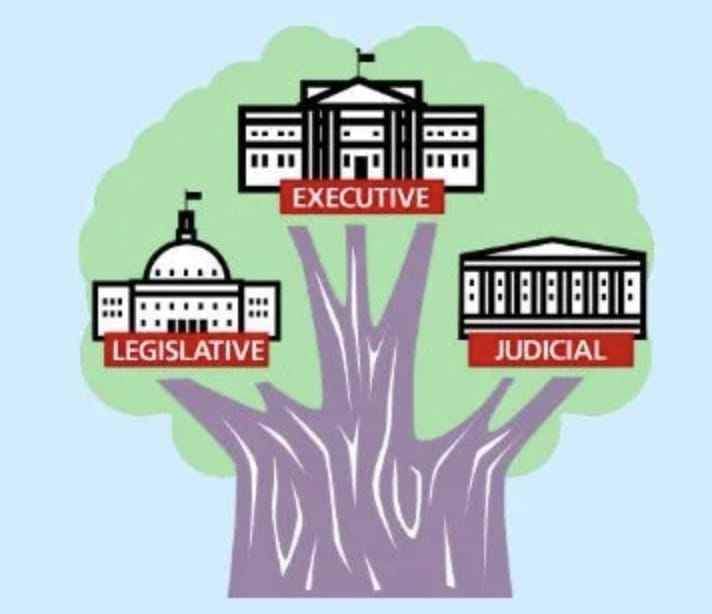 Government has 3 organs: Legislature makes laws, Executive implements laws, Judiciary decides if law is broken and punishment.
Mnemonic: Let's Enjoy Justice
- Let's = Legislature (makes laws)
- Enjoy = Executive (executes/implements laws)
- Justice = Judiciary (judges lawbreakers)
2. Separation of Powers
The 3 organs should be separate but interact; this is separation of powers, meant for checks and balances.Mnemonic:CHECK
- C = Check each other
- H = Helps prevent misuse
- E = Each has different job
- C= Can't control others
- K = Keeps system safe
3. Three Levels of Government
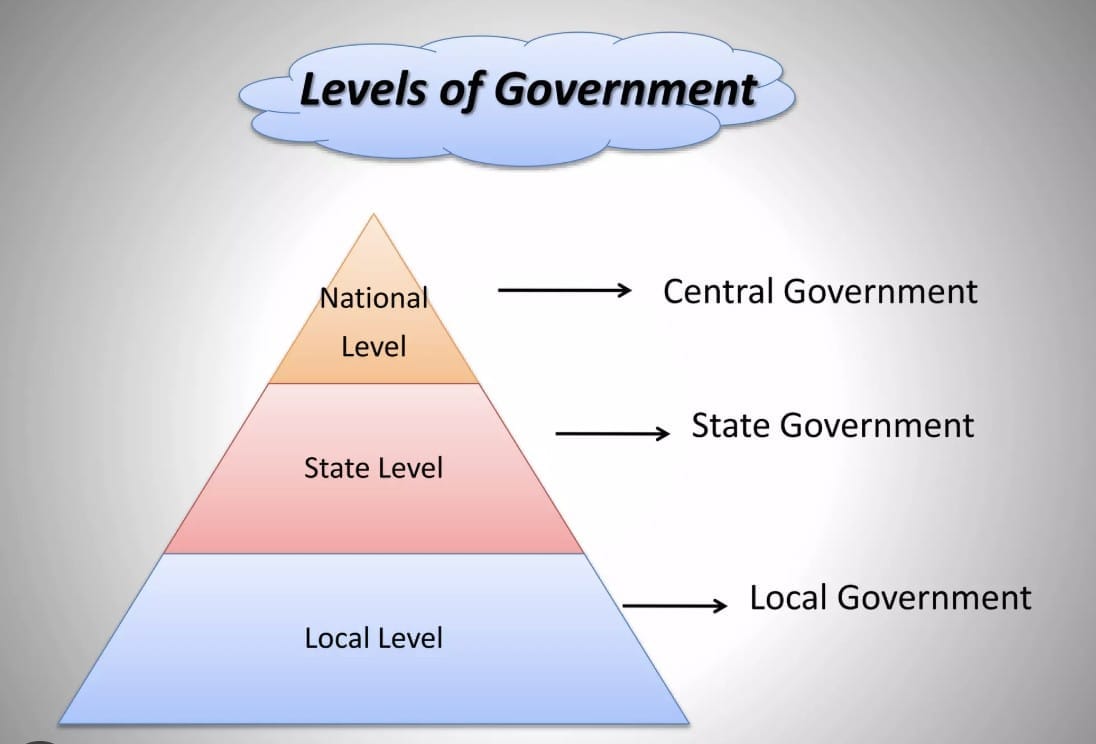
In India, government works at 3 levels: local, state/regional, national (Centre/Union).
Mnemonic: LSC
- L = Local
- S = State
- C = Central/Union
Government Responsibilities
1. Central Government Responsibilities
Central Govt handles defence, foreign affairs, atomic energy, communications, currency, interstate commerce, education, national policies.Mnemonic : DANCCE
- D = Defence
- A = Atomic energy
- N = National policies
- C = Communications
- C = Currency
- E = Education
2. State Government Responsibilities
State Govt handles police/law & order, public health, education, agriculture, irrigation, local government + implements central laws in state.Mnemonic: Help All People In Learning.
- Help= Health
- All= Agriculture
- People= Police & law and order
- In= Irrigation
- Learning= Local government
The document Mnemonics : Part 1 : Governance is a part of the Class 6 Course Social Studies for Class 6.
All you need of Class 6 at this link: Class 6
FAQs on Mnemonics : Part 1 : Governance
| 1. What is the definition of governance? |  |
Ans. Governance refers to the processes and structures through which decisions are made and authority is exercised in a society. It encompasses the mechanisms by which public institutions conduct public affairs, manage public resources, and uphold the rule of law.
| 2. What are the key features of democracy? | |
Ans. The key features of democracy include free and fair elections, the active participation of citizens, the protection of human rights, the rule of law, and the separation of powers among different branches of government. These features ensure that the government is accountable to the people and operates in their best interests.
| 3. How does the government ensure the implementation of laws? | |
Ans. The government ensures the implementation of laws through various institutions, including the judiciary, law enforcement agencies, and regulatory bodies. These institutions work together to uphold the law, protect citizens' rights, and maintain order within society.
| 4. What role do citizens play in a democratic government? | |
Ans. Citizens play a crucial role in a democratic government by participating in the electoral process, voicing their opinions, and holding elected officials accountable. They can engage in civic activities, such as voting, campaigning, and advocating for policies that reflect their needs and values.
| 5. Why is accountability important in governance? | |
Ans. Accountability is important in governance because it ensures that government officials and institutions are answerable to the public for their actions. It fosters transparency, builds trust among citizens, and helps to prevent corruption and misuse of power, ultimately leading to a more effective and equitable government.
About this Document

4.68/5 Rating

Apr 29, 2026 Last updated
Related Exams
Document Description: Mnemonics : Part 1 : Governance for Class 6 2026 is part of Social Studies for Class 6 preparation. The notes and questions for Mnemonics : Part 1 : Governance have been prepared according to the Class 6 exam syllabus. Information about Mnemonics : Part 1 : Governance covers topics like and Mnemonics : Part 1 : Governance Example, for Class 6 2026 Exam. Find important definitions, questions, notes, meanings, examples, exercises and tests below for Mnemonics : Part 1 : Governance.
Introduction of Mnemonics : Part 1 : Governance in English is available as part of our Social Studies for Class 6 for Class 6 & Mnemonics : Part 1 : Governance in Hindi for Social Studies for Class 6 course. Download more important topics related with notes, lectures and mock test series for Class 6 Exam by signing up for free. Class 6: Mnemonics : Part 1 : Governance
Description
Mnemonics : Part 1 : Governance of SST to help you remember important concepts with short tricks. Start learning for Class 6 exam & improve retention with EduRev.
Information about Mnemonics : Part 1 : Governance
In this doc you can find the meaning of Mnemonics : Part 1 : Governance defined & explained in the simplest way possible. Besides explaining types of Mnemonics : Part 1 : Governance theory, EduRev gives you an ample number of questions to practice Mnemonics : Part 1 : Governance tests, examples and also practice Class 6 tests



Related Searches
Sample Paper, Important questions, study material, shortcuts and tricks, mock tests for examination, video lectures, Viva Questions, ppt, Mnemonics : Part 1 : Governance, MCQs, pdf , Extra Questions, Mnemonics : Part 1 : Governance, Previous Year Questions with Solutions, Objective type Questions, Free, Summary, past year papers, Exam, Semester Notes, Mnemonics : Part 1 : Governance, practice quizzes;