CBSE Class 6  >  Class 6 Notes  >  Social Studies  >  Mnemonics : Grassroots Democracy - Part 2: Local Government in Rural Areas

Mnemonics : Grassroots Democracy - Part 2: Local Government in Rural Areas

Panchayati Raj System

1. Three-Tier Panchayati Raj System
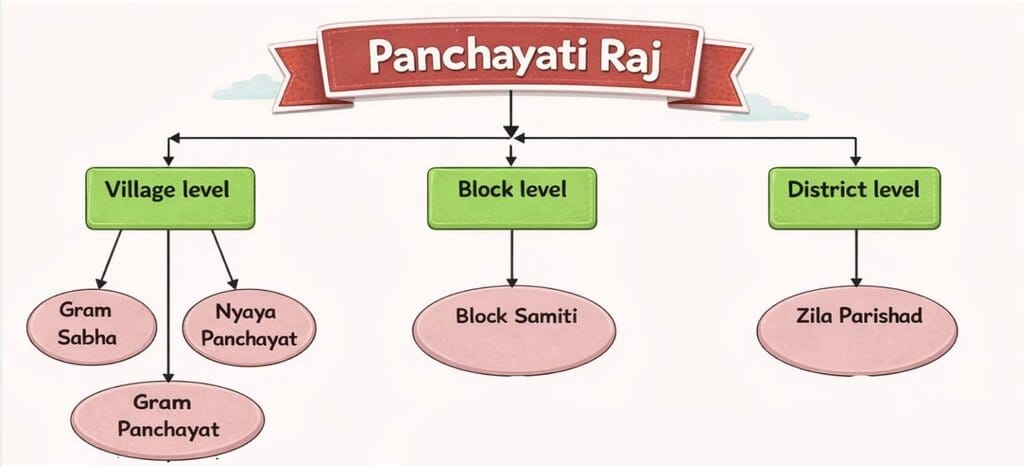
1. Three-Tier Panchayati Raj System

Panchayati Raj system works at three levels - from bottom up - village, block and district (three-tier system).
Mnemonic: VBD Ladder

Mnemonic explained:

V = Village level (Gram Panchayat)

B = Block level (Panchayat Samiti)

D = District level (Zila Parishad)

2. Panchayats = Self-Government 

Panchayats bring governance closer to people and help them participate in decisions; Panchayati Raj is a form of self-government.
Mnemonic :  Close People System

Mnemonic explained:

Close = Closer to people

People = Participation in decisions

System = Self-government

Village Level
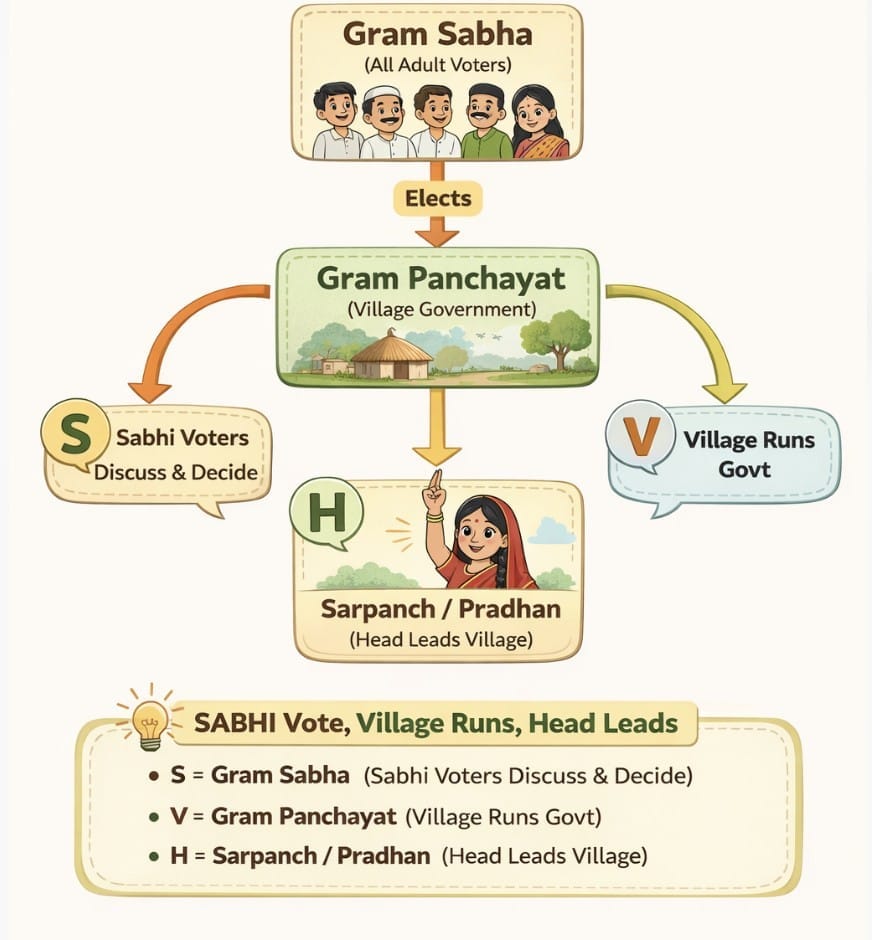
Village Level

Gram Panchayat is closest to the people in rural areas; its members are elected directly by the Gram Sabha. Gram Sabha is a group of adults from a village (or neighbouring villages) who are enrolled as voters; women and men discuss matters and take decisions. Each Gram Panchayat elects a head/president called Sarpanch or Pradhan.
Mnemonic: SABHI Vote, Village Runs, Head Leads

Mnemonic explained:

S - Gram Sabha → SABHI

  • S = Sabhi (all adult voters)

  • They discuss and decide

V - Gram Panchayat → Village Govt

  • V = Village-level government

  • Elected by Gram Sabha

H - Sarpanch / Pradhan → Head

  • H = Head of the village

  • Leader of Gram Panchayat

Work of Panchayats
Work of Panchayats

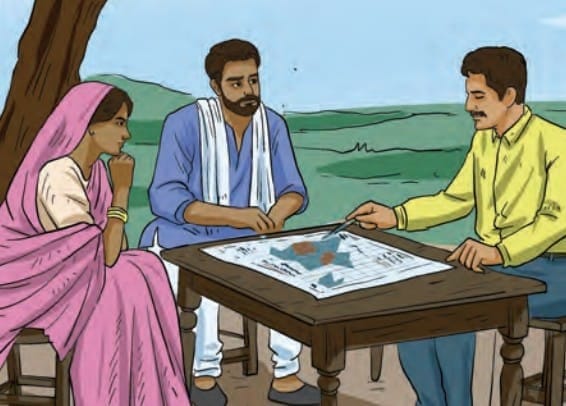
Panchayat institutions cover many aspects like agriculture, housing, roads, water resources, education, health care, social welfare, cultural activities.
Mnemonic: SEARCH Her Wallet.

Mnemonic explained:

S = Social welfare

E = Education

A = Agriculture

R = Roads (maintenance)

C = Cultural activities

H = Housing

Her= Health care

Wallet = Water resources

Bal Panchayat Work & Sikkim Gram panchayat

Some Bal Panchayats worked to eliminate child labour and child marriage and brought many children back to school. Sangkhu Radhu Khandu Gram Panchayat built compound walls for safer schools and constructed kitchens for hygienic midday meals.

Mnemonic:  Kids Love Making Sweets inside Sikkim's Kitchen Walls

Mnemonic explained:

Kids= who run bal panchayat

Love= Labour (stop child labour)

Making= Marriage (stop child marriage)

Sweets= School (back to school)
Kitchen = Kitchen (hygienic midday meal) (sikkim)
Walls = Wall (school safety)(sikkim)


The document Mnemonics : Grassroots Democracy - Part 2: Local Government in Rural Areas is a part of the Class 6 Course Social Studies for Class 6.
All you need of Class 6 at this link: Class 6

FAQs on Mnemonics : Grassroots Democracy - Part 2: Local Government in Rural Areas

1. What is the Panchayati Raj system?
Ans. The Panchayati Raj system is a form of local self-government in rural India, which aims to decentralise power and promote grassroots democracy. It allows villagers to participate in decision-making processes related to local governance and development. The system operates at three levels: village, block, and district, allowing for effective management of rural resources and services.
2. What are the main functions of village Panchayats?
Ans. Village Panchayats are responsible for various functions including the implementation of development programmes, maintenance of public infrastructure, management of local resources, and addressing community needs. They facilitate the delivery of essential services such as water supply, sanitation, and education, and also play a role in conflict resolution and fostering community participation.
3. How do children participate in the Panchayati Raj system?
Ans. Children's participation in the Panchayati Raj system can be encouraged through initiatives that involve them in local decision-making and community activities. This can include forming children's councils or committees that represent their interests and ideas, ensuring their voices are heard in matters that affect their lives, and promoting awareness about their rights and responsibilities within the community.
4. What roles do block and district levels play in the Panchayati Raj system?
Ans. Block and district levels of the Panchayati Raj system serve as an intermediary between village Panchayats and the state government. They are responsible for coordinating and supporting the activities of village Panchayats, ensuring that development projects are effectively implemented and monitored. They also help in resource allocation, planning, and policy formulation to enhance rural development.
5. Why is the Panchayati Raj system important for rural development?
Ans. The Panchayati Raj system is crucial for rural development as it empowers local communities by giving them a say in governance and resource management. It promotes accountability and transparency in local administration, encourages participatory planning, and helps address the specific needs of the rural population. This leads to more effective implementation of development programmes, ultimately improving the quality of life in rural areas.
Explore Courses for Class 6 exam
Get EduRev Notes directly in your Google search
Related Searches
mock tests for examination, Viva Questions, pdf , Extra Questions, video lectures, Summary, Mnemonics : Grassroots Democracy - Part 2: Local Government in Rural Areas, Important questions, practice quizzes, Free, ppt, Exam, Semester Notes, MCQs, shortcuts and tricks, Mnemonics : Grassroots Democracy - Part 2: Local Government in Rural Areas, study material, Objective type Questions, Previous Year Questions with Solutions, Sample Paper, Mnemonics : Grassroots Democracy - Part 2: Local Government in Rural Areas, past year papers;