

Herbivores eat only plants, carnivores eat only meat, and omnivores eat both plants and meat.
CBSE Class 8 > Class 8 Notes > Science Curiosity - New NCERT > Mnemonics : How Nature Works in Harmony
Mnemonics : How Nature Works in Harmony
Components & Levels of an Ecosystem
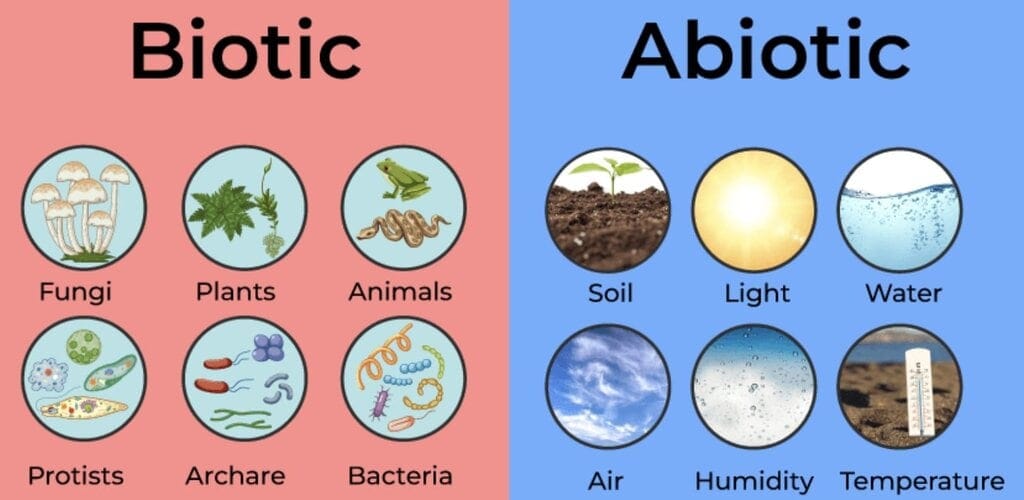
1. Biotic Components
Living parts of ecosystemMnemonic: Biotic = Biology = Living things
2. Abiotic Components
Non-living parts of ecosystem
Mnemonic: Abiotic = Opposite of biotic or non living things
3. Population
Same species in one areaWhat students need to learn: In ecology, a population isn't just a group of living things. It must meet three specific criteria: they must be the same kind of organism, living in the same place, at the same time.
Mnemonic: SAME
Same species: All members must be the same type of organism
Area: They must live in the same specific location
Moment: They must be there at the same time
Environment: They share the same SWAT (Abiotic) factors and HOME (Habitat).
Food Relationships
1. Food Chain
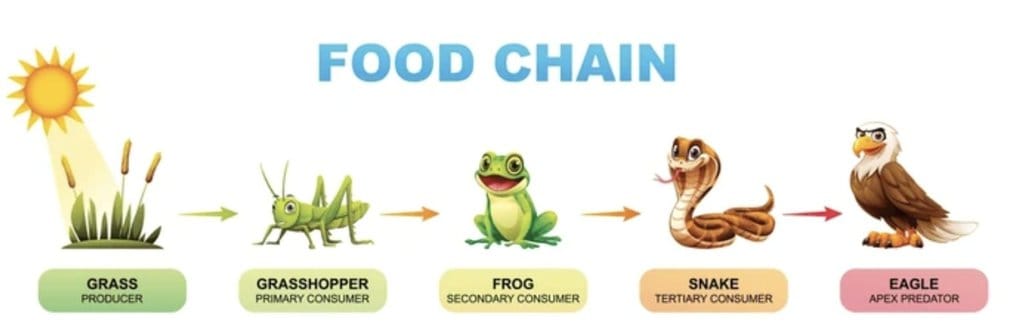
A food chain is a single, straight path that shows how energy moves from one organism to another. It always begins with a producer
The arrows always point in the direction the energy is going (into the stomach of the one who is eating!).
2. Food Web
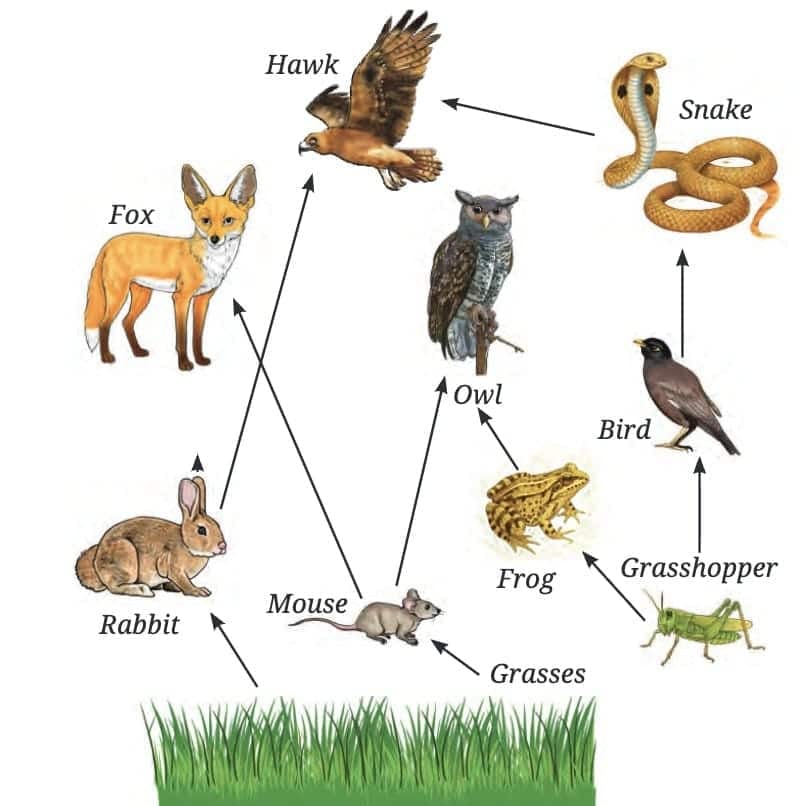
It shows that most organisms have multiple feeding paths and are part of a complex system of survival.
Carnivores features
Meat eatersMnemonic:EAT
- Eat animals
- Apex predators
- Teeth sharp
Living Together
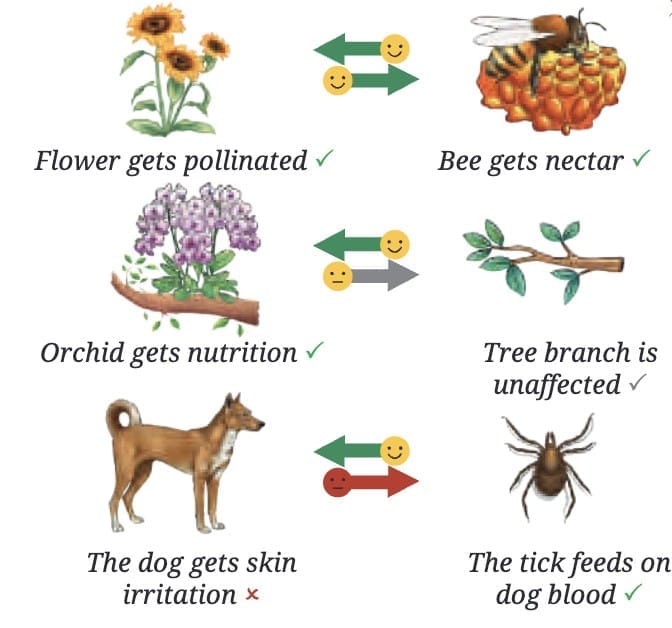
| Type | Relationship | Logic | Example |
| Mutualism | Both Benefit | (+ / +) | Bee & Flower: Bee gets nectar, Flower gets pollinated. |
| Commensalism | One benefits, one neutral | (+ / 0) | Orchid on Tree: Orchid gets a home, Tree is unaffected. |
| Parasitism | One benefits, one harmed | (+ / -) | Tick on Dog: Tick gets food, Dog gets sick/hurt. |
Ecosystem Balance & Threats
1. Ecosystem Balance
Stable interactionsMnemonic: BALANCE
- Biotic
- Abiotic
L = Limits: Nature has "carrying capacities"-limits on how many organisms an area can support.
A = Adjust: If there are too many deer, the food runs low, and the population adjusts downward.
- Nature
- Controls
- Ecosystem
2. Frog Export Case
Loss of frogs increased pestsMnemonic: FROG
- Frogs eat pests
- Reduction : Exporting frogs for food led to a massive Reduction in their population in the wild.
- leading to Over-pests
- Government ban on export
3. Threats to Ecosystem
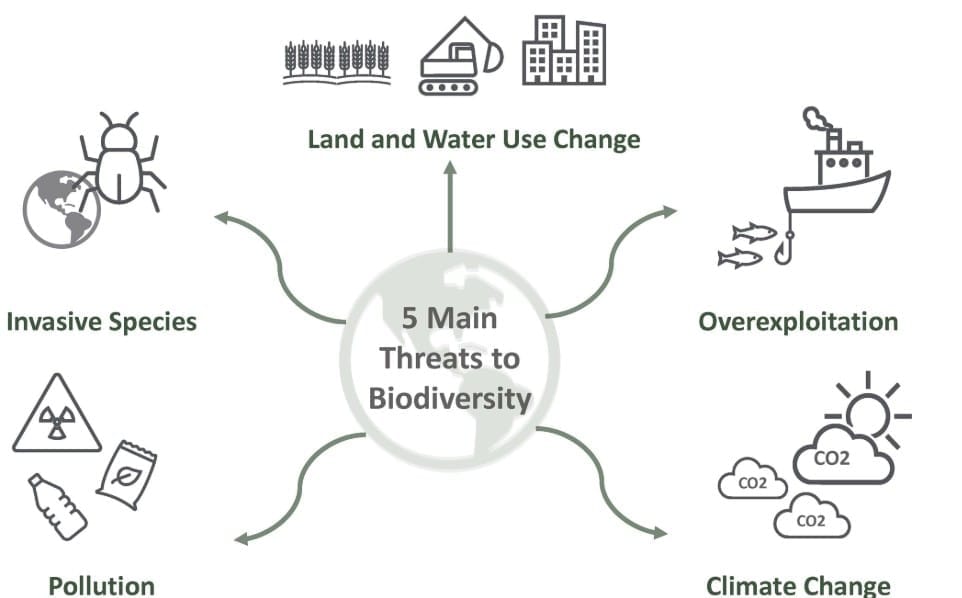
Human activities harm nature
Mnemonic: I Can Play On Drums.
- Invasive species
- Can= Climate change
- Play = Pollution
- On = Overuse
- Drums = Deforestation
Classification of Animals by Feeding Habits
Mnemonic :
Herbivore→ Herbs (plants)
Carnivore → Chicken (meat)
Omnivore → Open to both
The document Mnemonics : How Nature Works in Harmony is a part of the Class 8 Course Science Curiosity Class 8 - New NCERT.
All you need of Class 8 at this link: Class 8
FAQs on Mnemonics : How Nature Works in Harmony
| 1. What are the main components of an ecosystem? |  |
Ans. The main components of an ecosystem include biotic factors such as plants, animals, and microorganisms, and abiotic factors like water, soil, air, and sunlight. These components interact with one another to form a balanced and functioning ecosystem.
| 2. How do food relationships work in an ecosystem? | |
Ans. Food relationships in an ecosystem are established through food chains and food webs. Producers, such as plants, convert sunlight into energy. Herbivores consume these plants, while carnivores eat herbivores. Omnivores can consume both plants and animals, creating complex interdependencies that sustain the ecosystem.
| 3. What roles do herbivores, carnivores, and omnivores play in an ecosystem? | |
Ans. Herbivores are primary consumers that feed on plants, helping to control plant populations and providing energy for carnivores. Carnivores are secondary or tertiary consumers that prey on herbivores or other carnivores, maintaining the balance of species. Omnivores contribute to this balance by consuming both plant and animal matter, thus linking different trophic levels.
| 4. What does it mean for organisms to live together in an ecosystem? | |
Ans. Living together in an ecosystem refers to the interactions among different species, including competition, mutualism, commensalism, and parasitism. These relationships enhance biodiversity and contribute to the stability and resilience of the ecosystem.
| 5. What are some threats to ecosystem balance? | |
Ans. Threats to ecosystem balance include habitat destruction, pollution, climate change, invasive species, and overexploitation of resources. These factors disrupt the natural interactions and processes within ecosystems, leading to biodiversity loss and degradation of ecosystem services.
About this Document

4.95/5 Rating

Apr 22, 2026 Last updated
Related Exams
Document Description: Mnemonics : How Nature Works in Harmony for Class 8 2026 is part of Science Curiosity Class 8 - New NCERT preparation. The notes and questions for Mnemonics : How Nature Works in Harmony have been prepared according to the Class 8 exam syllabus. Information about Mnemonics : How Nature Works in Harmony covers topics like and Mnemonics : How Nature Works in Harmony Example, for Class 8 2026 Exam. Find important definitions, questions, notes, meanings, examples, exercises and tests below for Mnemonics : How Nature Works in Harmony.
Introduction of Mnemonics : How Nature Works in Harmony in English is available as part of our Science Curiosity Class 8 - New NCERT for Class 8 & Mnemonics : How Nature Works in Harmony in Hindi for Science Curiosity Class 8 - New NCERT course. Download more important topics related with notes, lectures and mock test series for Class 8 Exam by signing up for free. Class 8: Mnemonics : How Nature Works in Harmony
Description
Mnemonics : How Nature Works in Harmony of Science Curiosity Class 8 to help you remember important concepts with short tricks. Start learning for Class 8 exam & improve retention with EduRev.
Information about Mnemonics : How Nature Works in Harmony
In this doc you can find the meaning of Mnemonics : How Nature Works in Harmony defined & explained in the simplest way possible. Besides explaining types of Mnemonics : How Nature Works in Harmony theory, EduRev gives you an ample number of questions to practice Mnemonics : How Nature Works in Harmony tests, examples and also practice Class 8 tests



Related Searches
Viva Questions, ppt, Mnemonics : How Nature Works in Harmony, Mnemonics : How Nature Works in Harmony, Objective type Questions, Mnemonics : How Nature Works in Harmony, practice quizzes, pdf , Free, study material, Semester Notes, Exam, past year papers, shortcuts and tricks, Summary, mock tests for examination, video lectures, Important questions, Previous Year Questions with Solutions, MCQs, Sample Paper, Extra Questions;