Veena Bhargava Textbook Solutions: Mineral and Energy Resources - II

Multiple Choice Questions
Question 1Conventional energy resources consist of:
- Petroleum
- Tidal energy
- Biofuel
- Wind energy
Ans: (a)
Explanation: Conventional energy resources are those that have been traditionally used and are generally derived from fossil fuels or large mechanical systems. Petroleum is a classic conventional source because it is a fossil fuel extracted from underground reserves and has been widely used for transport, industry and power generation.
Question 2This is the best quality of coal with 80% carbon:
- Bituminous
- Lignite
- Anthracite
- Peat
Ans: (c)
Explanation: Anthracite is the highest grade of coal with the highest carbon content (around 80% or more). It burns with a short, smokeless flame and releases more heat per unit mass than lower grades such as bituminous or lignite.
Question 3Petroleum is:
- Non-inflammable liquid
- Natural fossil fuel
- Renewable form of energy resource
- None of the above
Ans: (b)
Explanation: Petroleum is a natural fossil fuel formed from the remains of ancient marine organisms. It is a combustible liquid used as fuel and as raw material for many industrial products, so it is correctly classified as a natural fossil fuel.
Question 4Hydel power is a:
- Renewable resource
- Non-renewable resource
- Exhaustible resource
- Very expensive
Ans: (a)
Explanation: Hydel (hydroelectric) power uses the flow of water to generate electricity. Since water flow is renewed naturally by the water cycle, hydel power is classed as a renewable source of energy.
Question 5Multipurpose projects were installed by Pandit Jawaharlal Nehru to:
- Supply water to cities and for power generation
- For navigation
- For economic development
- To avoid silting in the river
Ans: (a)
Explanation: Multipurpose river projects undertaken after independence aimed primarily to provide irrigation and domestic water supply and to generate hydroelectric power. Nehru promoted such projects to support industrialisation and agricultural irrigation by supplying water and electricity to towns and farms.
Question 6Hirakud dam was constructed mainly:
- For irrigation
- To control floods
- To supply water for domestic use
- To store water
Ans: (b)
Explanation: The Hirakud Dam on the Mahanadi was primarily built to control floods that affected large areas of Orissa. Flood control was the main objective, though the dam also provides irrigation and water storage benefits.
Question 7The main raw materials for generation of atomic energy:
- Uranium and plutonium
- Coal and non-ore
- Manganese and copper
- Copper and bauxite
Ans: (a)
Explanation: Atomic or nuclear energy is produced by nuclear reactions using fissile materials. Uranium and plutonium are the principal fuels used in nuclear reactors and hence are listed as the main raw materials for atomic energy.
Question 8Solar energy is:
- In-exhaustible
- Non-renewable
- Non-affordable
- More useful in temperate zone
Ans: (a)
Explanation: Solar energy comes from the Sun and is effectively inexhaustible on human time scales. It is a renewable energy source available widely and does not get depleted by use.
Question 9Identify the type of energy used in the given picture:
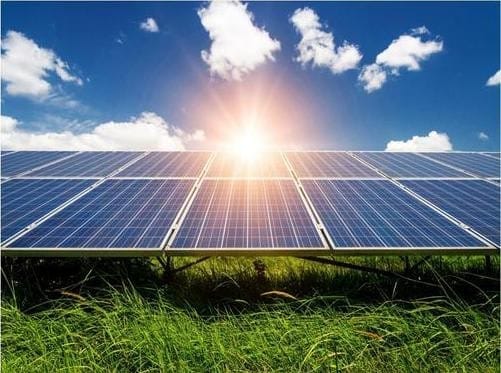
- wind energy
- solar energy
- biomass energy
- tidal power
Ans: (b)
Explanation: The image labelled shows solar panels or equipment that collect sunlight; therefore the energy type depicted is solar energy. Solar systems convert sunlight into electricity or heat.
Largest coal field in India:
- Digboi
- Ranigunj
- Jharia
- Bombay High
Ans: (c)
Explanation: Jharia in Jharkhand is one of the largest and most important coal fields in India, known for its extensive reserves of high-grade coking coal used in industry.
Answer the followingQuestion 1How is energy obtained?
Ans: Energy is obtained from both conventional and non-conventional sources.
- Conventional sources: Coal, Petroleum, Natural Gas, Hydel power, Thermal power and Nuclear power.
- Non-conventional sources: Solar, Wind, Biogas, Tidal and Geothermal energy.
How do we classify energy?
Ans: Energy can be classified into two broad groups based on source:
- Conventional energy:
- Coal
- Petroleum
- Natural Gas
- Hydel power
- Thermal power
- Nuclear power
- Non-conventional energy:
- Solar
- Wind
- Biogas
- Tidal
- Geothermal
Where is coal obtained from?
Ans: Coal is a fossil fuel extracted from the ground by mining. The common methods used are:
- Surface mining: Used where coal seams are close to the surface; it involves removing overlying rock and soil.
- Underground mining: Used for deep coal seams, involving tunnels and shafts to reach and extract the coal.
Why is coal often referred to as 'black gold'?
Ans: Coal is called 'black gold' because it is a valuable natural resource that fuels industries and electricity generation. Its economic importance and role in industrial development make it highly prized, similar to gold.
Question 5Write in brief about the origin of coal.
Ans: Coal originates from the remains of ancient plants that accumulated in swamps millions of years ago. Over long periods, layers of plant material were buried under sediments and transformed by heat and pressure into different types of coal such as Anthracite, Bituminous, Lignite and Peat.
Question 6Give the different varieties of coal. Which do you think is the best variety? Why?
Ans: The different varieties of coal are:
- Anthracite
- Bituminous
- Lignite
- Peat
Ans (continued): Anthracite is considered the best variety because it has the highest carbon content (about 80% or more) and gives off more heat and burns cleaner than lower grades.
Question 7Name the main coal-bearing areas of India.
Ans: The main coal-bearing regions of India are:
- Jharkhand
- Odisha
- West Bengal
- Madhya Pradesh
List the state-wise distribution of coal.
Ans: State-wise distribution of coal:
- Jharkhand: Largest reserves (about 33.53%). Main coal fields include Jharia, Bokaro, Giridih, Hazaribagh and Karanpura.
- Chhattisgarh: Key coal field is Korba.
- Odisha: Major coal fields are Talcher and Sambalpur.
- Madhya Pradesh: Important fields include Singrauli, Shahdol and Pench Valley.
- West Bengal: Around 18% of national reserves with Ranigunj as a principal field.
- Maharashtra: Wardha Valley, Chandrapur and related areas.
- Telangana: Singreni field.
- Tamil Nadu: Neyveli (lignite).
Which state ranks first in Gondwana coal?
Ans: Jharkhand ranks first in Gondwana coal, holding about 33.53% of India's total coal reserves.
Question 10Name three important states that form the tertiary coal distribution.
Ans: Three important states with tertiary (younger) coal deposits are:
- Kashmir
- Assam
- Arunachal Pradesh
Name any three major problems of the coal mining industry.
Ans: Major problems in the coal mining industry include:
- Destruction of forest: Mining often requires clearing forests, which destroys wildlife habitats and reduces biodiversity.
- Need for extensive transportation: Coal must be moved from mines to users, requiring roads, railways and heavy vehicles that add to environmental disturbance and pollution.
- Impact on miners' health: Underground mining can cause accidents, exposure to harmful gases and chronic respiratory illnesses among miners.
List any two ways to conserve coal.
Ans: Two ways to conserve coal are:
- Develop and use alternative renewable energy sources such as solar and wind.
- Save energy through efficient use, for example by switching off appliances when not needed and improving energy efficiency in industry and transport.
Where is petroleum obtained from?
Ans: Petroleum is obtained from sedimentary rock formations and is extracted from both onshore and offshore oil fields using drilling techniques.
Question 14Name the two most important areas of petroleum oil.
Ans: Two important petroleum-producing areas in India are:
- Offshore fields such as Mumbai High, Bassein and Alibag (Aliabet).
- Onshore fields in Assam such as Digboi, Naharkatiya, Rudra Sagar and Nunmati.
Name a few important oil fields in North East India.
Ans: Important oil fields in North East India include:
- Digboi
- Moran
- Rudrasagar
Name a few important oil fields in West India.
Ans: Important oil fields in West India include:
- Ankleshwar
- Kalol
- Mehsana
- Dholka
Why is Mumbai High considered a major oil-bearing site in India?
Ans: Mumbai High is considered a major oil-bearing site because it produces more than one-third of India's crude oil, making it a crucial offshore field for national energy supply.
Question 18How many oil refineries are there in India?
Ans: India has 23 operational oil refineries.
Question 19Name a few problems associated with natural gas.
Ans: Problems associated with natural gas include:
- Although cleaner than some fossil fuels, it still contributes to greenhouse gas emissions when burned.
- Widespread use is limited by infrastructure; pipelines and compression facilities are costly.
- Gas is volatile and leaks are dangerous because it is colourless and odourless, making detection difficult without sensors.
- Flare-ups and accidental releases can cause safety hazards and environmental harm.
Name the different types of electricity.
Ans: Types of electricity based on primary raw materials are:
- Hydroelectricity
- Thermal electricity (from coal, oil or gas)
- Nuclear electricity
What are the main causes for the low production of hydel power?
Ans: Main causes for low hydel power production include:
- Erratic river regimes and seasonal variation in water flow reduce generation consistency.
- Lack of natural waterfalls or suitable head in many rivers means costly construction is required.
- Hydropower sites are often remote and far from load centres, causing transmission losses and higher distribution costs.
Enumerate the factors needed for installing a hydroelectric project.
Ans: Essential factors for a hydroelectric project are:
- Location in hilly or mountainous terrain so water can fall from a height.
- A perennial water supply, preferably from snow-fed or large rivers.
- Climate that does not freeze the rivers for long periods.
- Low silt content in water or reservoirs to reduce silting problems.
- A narrow gorge between hills suitable for dam construction.
- Uniform flow to provide steady electricity throughout the year.
- Reasonable proximity to industrial or urban load centres to reduce transmission losses.
How important are hydel power projects for India?
Ans: Hydel power projects are important for India because:
- They provide renewable and relatively clean energy to meet growing demand.
- India's rivers and hilly regions offer good potential for hydropower development.
- Areas with steep gradients and heavy rainfall, such as parts of the Western Ghats and Himalaya, can generate substantial hydropower.
How do hydel power projects compare to thermal projects?
Ans: Hydel projects have several advantages over thermal projects:
- Hydel power is renewable and does not rely on finite fossil fuels.
- Operating costs are generally lower once dams and turbines are built.
- Hydel projects produce far less air pollution than thermal power stations.
- Hydel power can be transmitted over long distances and easily regulated to meet peak demand.
What are the main disadvantages of H.E.P?
Answer
The main disadvantages of H.E.P are:
- The location is very important for the construction of hydel power projects. Regions must be mountainous or hilly so that water falls from a height.
- The supply of water may fluctuate thus affecting the generation of electricity.
- Almost all the power projects face the problem of silting.
Which was the first state to set up a hydel power project?
Ans: West Bengal was the first state to establish a hydel power project.
Question 27What are the disadvantages of thermal electricity?
Ans: Disadvantages of thermal electricity include:
- It is non-renewable and based on exhaustible fossil fuels.
- Setting up thermal power stations is capital-intensive.
- Thermal electricity production generates air pollution and waste products that require management.
- Thermal stations are usually located near coal fields, which may limit distribution and increase transport needs.
Name three coal-based projects.
Ans: Three notable coal-based power projects are:
- Rihand in Uttar Pradesh
- Vindhyachal in Madhya Pradesh
- Talcher Kaniha in Odisha
What are the raw materials required for nuclear energy?
Ans: Raw materials essential for nuclear energy include:
- Uranium
- Plutonium
- Beryllium
- Thorium
Where is uranium found in India?
Ans: Uranium is found in parts of the copper belt of Bihar and in rock formations of the Aravali range in Rajasthan.
Question 31Name the nuclear power stations of India.
Ans: The nuclear power stations in India include:
- Tarapur in Maharashtra
- Narora in Uttar Pradesh
- Kakrapar in Gujarat
- Rana Pratap Sagar in Rajasthan
Name a few non-conventional sources of energy.
Ans: Non-conventional energy sources include:
- Sun (solar)
- Wind
- Biogas
- Tides
- Geothermal energy
How do the non-conventional sources of energy score over the conventional sources of energy?
Ans:
The non-conventional sources score over conventional ones in these ways:
- They are renewable and widely available, so there is little risk of exhaustion.
- They are generally environment friendly and produce minimal pollution or waste.
- They can be deployed both at large scale and in small, local installations, making them suitable for remote or difficult terrain.
- If located near load centres, they reduce transmission costs and can be cost effective in the long run.
Explain the need to develop the alternative sources of energy.
Ans:
Conventional energy sources are limited and will eventually be exhausted if used unchecked. They also contribute to pollution and global warming. Therefore, it is necessary to develop alternative sources that are renewable, clean and environmentally friendly to meet future energy needs sustainably.
State two advantages that biogas has over the solar energy.
Ans:
Two advantages of biogas over solar energy are:
- Biogas can be produced and used both day and night, whereas solar energy is available only during daylight hours.
- Biogas systems and storage are generally cheaper and simpler to install at small scale compared with many solar energy systems.
Which is the most abundant non-conventional source of energy?
Ans: The Sun is the most abundant non-conventional source of energy available on Earth.
Name two states where wind farm projects have been undertaken.
Ans: Two states where wind farm projects are prominent are Tamil Nadu and Gujarat.
What are the advantages of producing electricity from water?
Ans:
The advantages of producing electricity from water are:
- Hydel power is a renewable and largely inexhaustible source of energy.
- Hydel power generation does not cause air pollution during operation.
FAQs on Veena Bhargava Textbook Solutions: Mineral and Energy Resources - II
| 1. What are the different sources of energy? |  |
| 2. How is coal formed? | |
| 3. What are the main coal-bearing areas in India? | |
| 4. What are the environmental impacts of coal mining? | |
| 5. Why are hydel power projects significant for India? | |




