Veena Bhargava Textbook Solutions: Agriculture in India - III : Cash Crops

Multiple Choice Questions
Question 1Rabi crop is sown in
- June-July
- Oct-Nov
- Dec-Jan
- March-April
Ans: (b)
Explanation: Rabi crops are sown after the monsoon when the soil has retained moisture and temperatures are moderate. October-November marks the start of the Rabi season in India, so crops for this season are sown then.
Question 2Cotton requires
- 21°- 27° C temp
- 15°- 25° C temp
- 10°- 5° C temp
- 30° - 35° C temp
Ans: (a)
Explanation: Cotton grows best in a mild and fairly warm climate. Temperatures between 21° and 27° C provide the right conditions for healthy growth and fibre development; extremes of heat or cold harm the crop.
Question 3Cultivation of sugarcane from the root stock of the cane which has been cut is called
- Ginning
- Ratooning
- Clone planting
- Retting
Ans: (b)
Explanation: Ratooning is the practice of allowing the stubble or root stock left after harvesting to sprout again and produce a new crop. It saves planting effort and time because replanting is not required.
Question 4Cotton plant is vulnerable to attack by diseases like
- green leaf hopper
- stripe rust
- boll worms
- rust
Ans: (c)
Explanation: Bollworms attack the fruiting parts (bolls) of the cotton plant and cause serious loss of yield and quality. They are a common and damaging pest of cotton.
Question 5Study the picture given and answer the question - the largest producer of this crop is
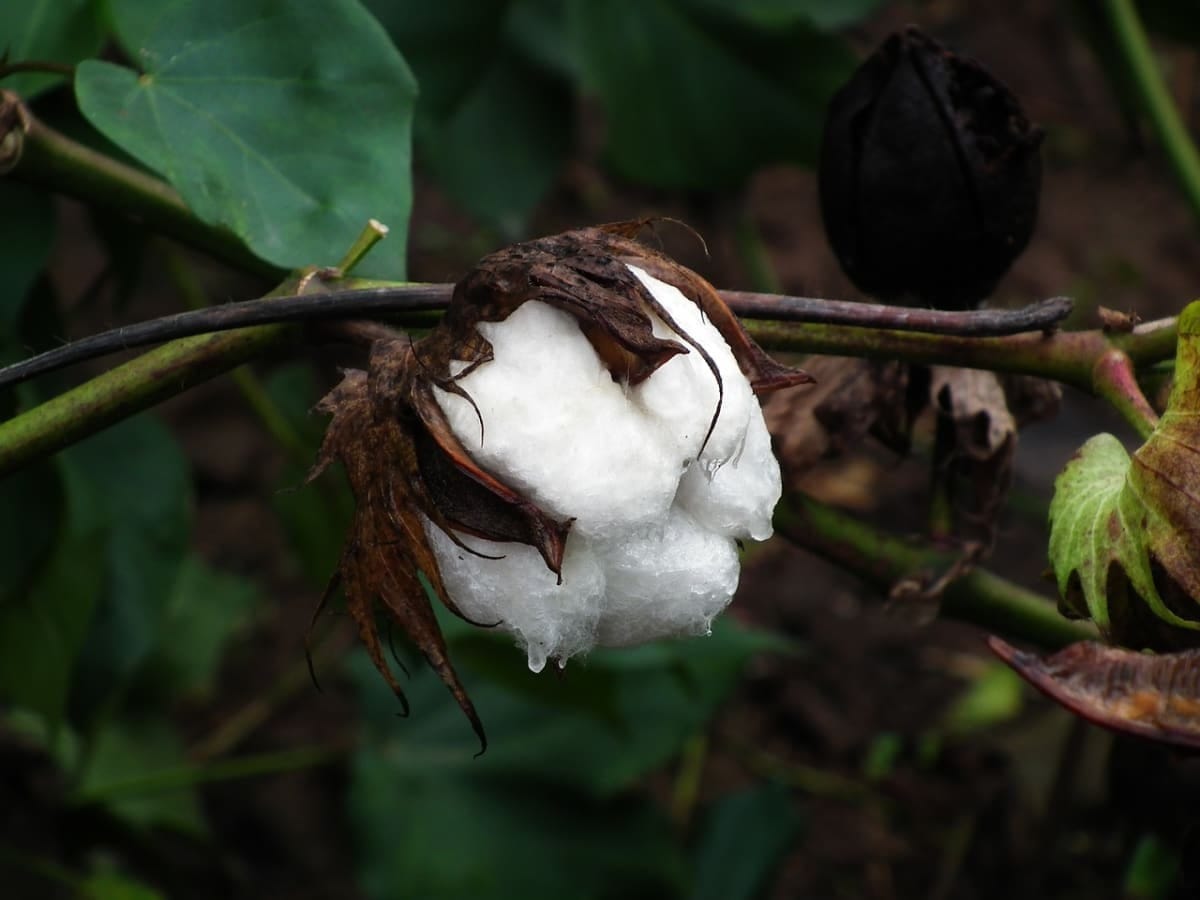
- Gujarat
- Punjab
- Haryana
- Tamil Nadu
Ans: (a)
Explanation: Gujarat is a major producer of the crop shown (groundnut/cotton context as per figure). Its climate and soil conditions favour large-scale cultivation, making it the leading producer among the options given.
Question 6The groundnut kernels contain
- 40 - 50% oil
- no oil
- 20 - 30% oil
- 10 - 15% oil
Ans: (a)
Explanation: Groundnut kernels are rich in oil, typically containing about 40-50% oil. This high oil content makes groundnut an important oilseed crop for edible oil production.
Question 7Sugarcane can grow well in the alluvial soil. It should be rich in
- Nitrogen
- Calcium
- Phosphorus
- All the above
Ans: (d)
Explanation: Sugarcane needs a fertile soil with adequate nitrogen, phosphorus and calcium for strong growth and sucrose accumulation. All three nutrients together support healthy cane development.
Question 8The fine plucking is associated with
- coffee
- tea
- rubber
- cotton
Ans: (b)
Explanation: Fine plucking refers to picking the two youngest leaves and the bud from a tea bush. This careful method ensures high-quality tea leaves and is characteristic of tea cultivation.
Question 9Crop rotation is done to
- preserve the soil
- preserve minerals in the soil
- grow more crops
- none of the above
Ans: (b)
Explanation: Crop rotation involves changing the crop grown on a piece of land in successive seasons. It helps to preserve and restore soil fertility and minerals, reduces pest and disease build-up, and maintains better yields.
Question 10Winnowing is associated with
- rice crop
- cotton crop
- soya bean
- wheat crop
Ans: (d)
Explanation: Winnowing is the process of separating grain from chaff using wind or air flow. It is commonly used with cereals such as wheat and is also practised for rice after threshing.
Answer the following questions
Question 1What are the climatic conditions that favour the cultivation of cotton?
Ans: The climatic conditions that favour the cultivation of cotton are:
- Mild, cool and preferably dry climate with temperatures between 21° and 27° C.
- Ample sunshine throughout the growing period.
- Warm days combined with cool nights during fruiting help develop the boll and fibres.
- Temperatures should not fall below 20° C and the crop needs about 200 frost-free days.
Where in India does long staple cotton grow? What are its advantages?
Ans: Long-staple cotton grows in parts of Punjab, Haryana, Maharashtra, Tamil Nadu, Andhra Pradesh and Telangana. Its advantages are:
- It yields fine-quality cotton cloth that is stronger and softer.
- Fabrics made from long-staple cotton are more durable and resist fraying, pilling and wrinkling better than shorter-staple cotton.
Is dry weather necessary at the time of harvest of cotton? Why?
Ans: Yes. Dry weather at harvest helps cotton bolls to ripen and burst open cleanly. Humid or rainy conditions encourage pest attack and fungal diseases and reduce fibre quality, so harvesting in dry weather preserves quality.
Question 4Why is jute called the 'brown paper' of the wholesale trade?
Ans: Jute is called the 'brown paper' of wholesale trade because jute sacks and bags have traditionally been used for packaging bulk commodities such as rice, wheat, sugar, pulses, cement and fertilisers due to their strength and low cost.
Question 5What are the geographical requirements for growing jute? Name the leading producer of jute.
Ans: Geographical requirements for jute cultivation are:
- Light sandy or clayey loams, and especially fertile flood plains and river deltas rich in alluvium.
- High temperatures of about 24°-35° C.
- High relative humidity of 80%-90% during growth.
- Heavy rainfall of 170-200 cm; regular flooding replenishes soil fertility.
Leading producer: West Bengal is the chief jute-producing state in India.
Question 6Name the two most important fibre crops of India.
Ans: The two most important fibre crops of India are cotton and jute.
Question 7Name the different varieties of tea in India.
Ans: The main varieties of tea produced in India are Black Tea, Green Tea and Oolong Tea.
Question 8Why is tea generally grown on the hill slopes?
Ans: Tea is generally grown on hill slopes because slopes provide good drainage and prevent waterlogging. Tea plants are sensitive to stagnant water around their roots, so hill slopes protect root health and reduce fungal problems.
Question 9Why are the tea plants pruned?
Ans: Tea plants are pruned regularly to keep their height and spread within manageable limits (about one metre). Regular pruning stimulates the growth of fresh shoots and leaves, which improves yield and quality.
Question 10Name the leading producer of tea in India. What factors have helped it to become the leading state?
Ans: Assam is the leading producer of tea in India. Factors that have helped Assam include:
- High annual rainfall often exceeding 250 cm.
- Warm temperatures generally above 20° C.
- Frequent morning fog and absence of frost during the growing season.
- An abundant supply of labour suitable for the labour-intensive plucking process.
Why is the plucking of tea leaves entrusted generally to women?
Ans: Plucking tea leaves requires skill, patience and careful judgment to pick the two youngest leaves and a bud. Women are often more efficient at this delicate task and can be employed at lower wages, making them the main pluckers on many plantations.
Question 12Name the different stages of tea processing before it is sent out to the market.
Ans:
The main stages of tea processing are:
- Withering - Moisture is reduced from fresh leaves by spreading them on racks and passing air through.
- Rolling - Leaves are twisted and rolled to break cells and release juices that aid fermentation.
- Fermentation - Rolled leaves are left to ferment and their colour changes to copper-red; this develops flavour.
- Drying or Fixing - Fermented leaves are dried in ovens to stop fermentation and fix the leaf characteristics.
- Sorting - Dried leaves are graded into different sizes and qualities using meshes.
- Blending - Different lots are mixed to obtain a consistent flavour and the brand profile.
- Packing - The final tea is packed, commonly in cases lined with foil, for sale and transport.
Name the two main centres where tea is auctioned.
Ans: Kolkata and Guwahati are the two principal tea auction centres in India.
Question 14Why is blending necessary for tea?
Ans: Blending is necessary because the flavour, colour and aroma of tea are influenced by the region and conditions in which the leaves are grown. By blending teas from different gardens and batches, producers create a consistent and distinctive brand flavour.
Question 15Give two reasons stating the economic importance of the tea industry.
Ans:
- The tea industry is labour-intensive and provides employment to over a million workers directly and many more indirectly.
- Tea generates significant foreign exchange earnings through exports and supports allied industries such as packaging and transport.
Name two important regions where tea is grown in South India.
Ans: The Nilgiri hills in Tamil Nadu and the Annamalai hills (in the Western Ghats region of Tamil Nadu/Karnataka) are important tea-growing regions in South India.
Question 17Name the two main varieties of coffee grown in India.
Ans:
- Coffea arabica
- Coffea robusta
Why are young coffee plants protected from heat?
Ans: Young coffee plants are delicate and can be damaged by excessive heat, which causes wilting, leaf scorch and moisture stress. Protecting them from heat helps establish strong young plants and improves survival and future yields.
Question 19State three factors which favour the cultivation of coffee in South India. Name the leading producer of coffee in India.
Ans:
- Altitude - Coffee grows well at 800-1,500 metres in the Western Ghats, which provide cool nights and moderate days.
- Climate - A tropical climate with moderate temperatures, good rainfall and humidity suits coffee plants.
- Soil - Rich loamy or laterite soils with humus and iron oxides support coffee cultivation.
Leading producer: Karnataka is the largest coffee-producing state in India.
Question 20State one climatic and one commercial problem that coffee cultivation in India faces.
Ans:
Climatic problem: Irregular rainfall and occasional high temperatures or droughts can reduce yields and affect quality.
Commercial problem: Low productivity due to traditional practices and limited investment in modern techniques, leading to strong competition from high-yield producers abroad.
Question 21Name the different methods by which sugarcane can be propagated.
Ans:
- Sett method - Planting pieces of cane (setts) each with one or two buds.
- Ratooning - Cutting the mature cane and leaving the rootstock to sprout a new ratoon crop.
State the leading producer of sugarcane in India.
Ans: Uttar Pradesh is the leading producer of sugarcane in India.
Question 23What are the advantages of 'Ratooning'?
Ans:
- No need to replant the crop each season.
- Ratoon crops mature faster than newly planted crops.
- Reduced planting costs, since replanting is avoided.
Give two problems the farmers of North India face during sugarcane cultivation.
Ans:
- Hot, dry summer winds called the 'loo' can stress and stunt cane growth.
- Very low winter temperatures in parts of the northern plains can also adversely affect the crop.
What advantage does the Deccan region have over the north with reference to sugarcane cultivation?
Ans:
- The Deccan enjoys milder climates with no harsh 'loo' winds and generally frost-free winters, aided by maritime influences in coastal parts.
- Black lava (regur) soils in parts of the Deccan retain moisture well, which suits sugarcane.
- Use of improved farming methods, manures and fertilisers is more widespread, helping yields.
Name a few diseases that sugarcane plant is susceptible to.
Ans:
- Fungal diseases such as red rot, smut and rust.
- Ratoon stunting disease.
Name a few important oil-seeds grown in India.
Ans:
- Edible oilseeds: groundnuts, sesame, rapeseed, mustard, sunflower and niger.
- Non-edible oilseeds: linseed, castor, neem and mahua.
State the economic importance of oilseeds.
Ans:
- India has one of the largest areas under oilseed production.
- Oilseeds occupy nearly 20% of the net sown area in many regions.
- Oils extracted are important in the diet as edible oils and serve as raw materials in industries producing paints, soaps, cosmetics, medicines, lubricants and perfumes.
- The residue (oil cake) is valuable as cattle feed and manure.
- The oilseed and oil industries provide employment to millions of people.
What is an oil cake? How is it used?
Ans: The residue left after extracting oil from edible oilseeds is called oil cake. It is used chiefly as cattle feed and as a fertiliser/manure to enrich the soil.
Name the non-edible oilseeds. Why are they so called?
Ans: The non-edible oilseeds include linseed, neem, mahua and castor seeds. They are termed non-edible because their oils are not suitable for human consumption and are used mainly for industrial purposes.
Give the geographical conditions necessary for the growth of groundnuts. Name its leading producer.
Ans:
The geographical conditions for groundnut cultivation are:
- Well-drained light sandy loams, red and black soils suit groundnut growth.
- Temperatures of about 20°-25° C are favourable.
- Warm and dry weather is important during ripening.
- Annual rainfall of about 50-70 cm is adequate.
Leading producer: Gujarat is the leading producer of groundnut in India.
Name the by-products of sugarcane. Give one important use of each.
Ans:
The by-products of sugarcane and their uses are:
- Molasses - Used to produce industrial alcohol, rum, yeast and as a raw material in fermentation industries.
- Bagasse - Used as fuel in mills and as raw material for paper, fibreboards and some synthetic fibres.
- Press mud - Used in the manufacture of products such as wax, shoe polish and as a soil conditioner.
Why are floods beneficial for better growth of jute?
Ans: Jute exhausts soil fertility rapidly. Annual floods bring silt and fresh alluvium which replenish soil nutrients and maintain the fertility needed for good jute yields, so controlled flooding is beneficial.
Explain the following terms. With which crop do you associate them?
- Ginning
- Retting
- Clonal planting
- Ratooning
- Fine plucking
- Bud grafting
Ans:
- Ginning - The process of separating fibre from seeds and other raw material. It is associated with cotton.
- Retting - A microbiological process where jute stalk bundles are submerged in water for 2-3 weeks to loosen the bark and free the fibre. It is associated with jute.
- Clonal planting - Taking cuttings from a high-yielding mother plant and planting them instead of sowing seed; commonly used in tea.
- Ratooning - Allowing the rootstock left after cutting sugarcane to sprout and produce another crop. It is associated with sugarcane.
- Fine plucking - Picking the two youngest leaves and the bud from a tea bush; it is a method associated with tea.
- Bud grafting - Inserting a bud from a high-yielding plant under the bark of a seedling to transfer desirable traits; this is used in rubber cultivation.
Give reason -
- Tea is best grown on hill slopes.
- Pruning is essential for a tea plant.
- Honey bees are reared on coffee plants.
Ans:
- Hill slopes provide good drainage and prevent waterlogging, which protects tea roots from damage and fungal diseases.
- Pruning controls the height and spread, keeping bushes around one metre and encouraging production of fresh leaves and shoots for harvesting.
- Honey bees are reared on coffee plants because bees help pollinate coffee flowers, improving fruit set and yields.
Answer in one word -
- Method in which coffee is obtained by pulping, fermenting, washing and drying.
- Method in which coffee berries are dried in the sun.
- Method in which seeds are dropped through bamboo shafts attached to a plough
Ans:
- Wet method
- Dry method
- Drilling
FAQs on Veena Bhargava Textbook Solutions: Agriculture in India - III : Cash Crops
| 1. What are cash crops and why are they significant in Indian agriculture? |  |
| 2. How do cash crops differ from food crops in India? | |
| 3. What are some challenges faced by cash crop farmers in India? | |
| 4. What role do government policies play in the cultivation of cash crops in India? | |
| 5. How has the shift towards cash crops affected food security in India? | |




