Veena Bhargava Textbook Solutions: Insolation

Chapter 12
Insolation
Class 9 - Veena Bhargava Geography Solutions
Answer the following questions briefly
Question 1What is insolation? State its importance.
Ans: Insolation is the solar radiation received by the Earth. Its importance includes:
- It supplies energy in the form of heat and light which sustains life on Earth.
- It helps regulate atmospheric and surface temperatures, influencing climate and weather.
- It enables photosynthesis in plants, which is essential for food production and oxygen supply.
What are the three processes by which air gets heated? Explain briefly.
Ans: The three processes by which air gets heated are:
- Convection - Heat is transferred by the vertical movement of air or fluid. Warm air rises and cooler air sinks, causing circulation that redistributes heat.
- Conduction - Heat passes directly through contact from warmer to cooler matter. The ground warms the air in contact with it by direct transfer of heat.
- Radiation - Heat is transferred as electromagnetic waves without needing a medium. The Sun's energy reaches the Earth by radiation.
What are the various factors influencing the temperature of a place?
Ans: Temperature at a place is influenced by several factors:
- Latitude - Areas near the Equator receive more direct sunlight and are generally warmer than polar regions.
- Altitude - Temperature generally falls with height; commonly taken as about 1°C fall for every 166 metres of ascent.
- Distance from the sea - Coastal regions have milder temperatures due to the moderating effect of the sea; interiors show larger ranges.
- Ocean currents - Warm currents raise coastal temperatures, while cold currents lower them.
- Clouds and rainfall - Cloud cover reduces daytime heating and retains heat at night, moderating temperature extremes.
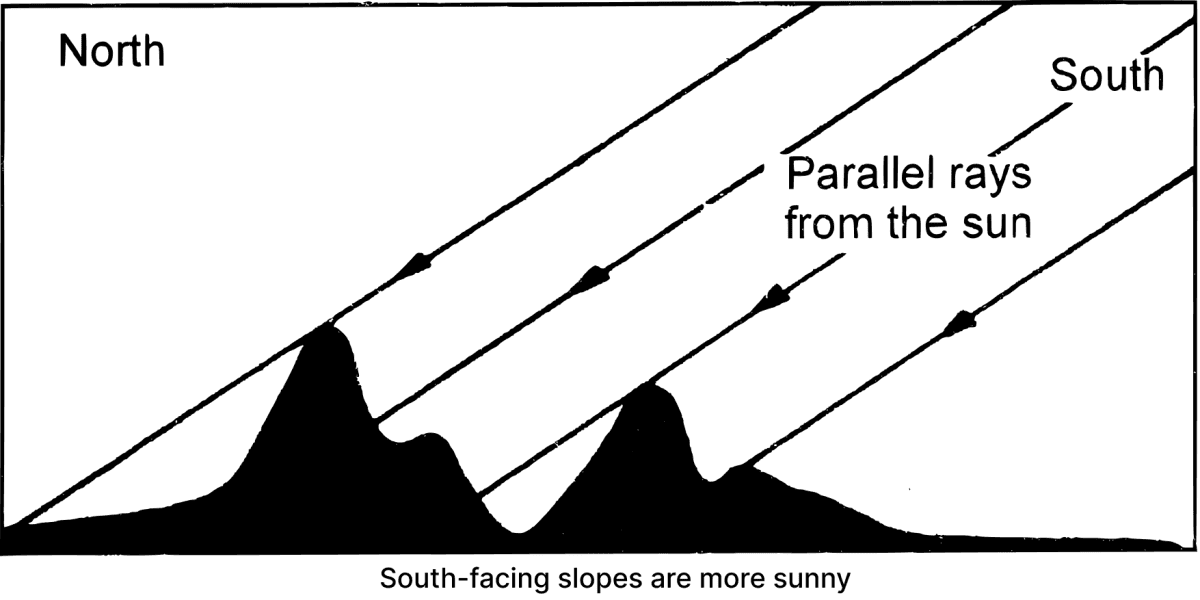
- Slope of land - Slopes facing the Sun receive more heat than shaded slopes.
- Vegetation - Plant cover shades the ground and reduces heating of the surface air.
- Nature of soil - Moist or dark soils absorb and release heat differently; dry, dark soils heat up faster.
Why does only 51% of the insolation reach the Earth's surface?
Ans: Only about 51% of incoming solar radiation reaches the surface because much of it is either reflected or absorbed before reaching the ground:
- About 35% is reflected back to space by clouds, atmospheric particles and the Earth's surface (albedo).
- About 14% is absorbed within the atmosphere, for example by gases and the ozone layer.
What is the effect of latitude on temperature?
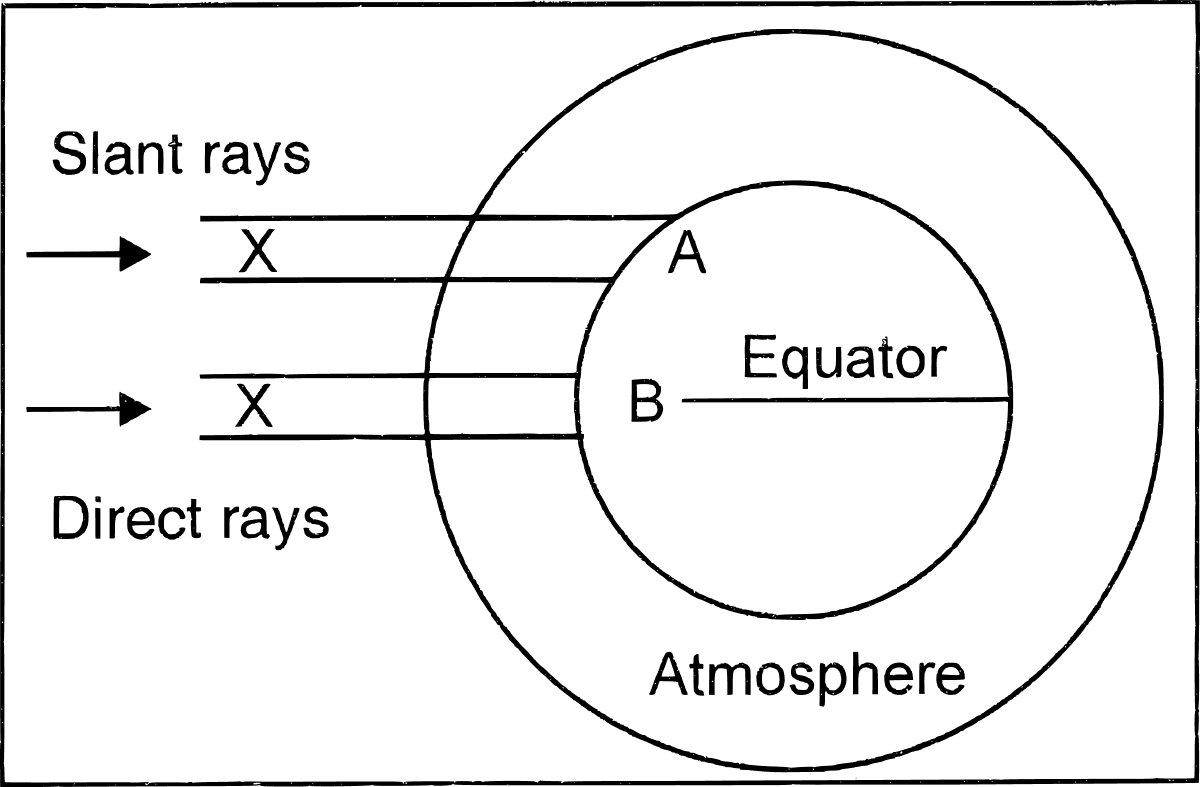
Ans: Latitude affects temperature because the Sun's rays strike different latitudes at different angles. Near the Equator rays are more direct and concentrated, so these regions receive more heat. At higher latitudes the rays arrive at a slant and pass through more atmosphere, losing energy, so temperatures are lower.
Question 6What causes the differential heating of land and water?
Ans: Land and water heat differently because of their physical properties:
- Land absorbs more solar radiation and has a lower specific heat than water, so it warms faster.
- Water reflects more, mixes vertically and has a higher heat capacity, so it warms and cools more slowly.
- As a result, during the day land becomes hotter than the sea, producing sea breezes; at night land cools faster, producing land breezes.
What is inversion of temperature? Under what conditions does it apply?
Ans: Temperature inversion is a reversal of the normal lapse rate: instead of decreasing with height, temperature increases with altitude over a layer. It commonly occurs under calm, clear nights in valleys when cold dense air sinks and becomes trapped near the surface, while warmer air lies above. Inversions are common in middle latitudes and can affect agriculture and pollution dispersion.
Question 8Which zone will have a higher range of temperature? Why?
Ans: The Temperate Zone has a higher range of temperature. This is because these zones lie between the tropics and the polar regions and experience marked seasonal changes in the Sun's altitude and day length, producing greater variation between summer and winter temperatures.
Question 9Name the factors that affect the insolation over the Earth's surface.
Ans: Major factors affecting insolation are:
- Latitude
- Altitude
- Winds
- Clouds and rainfall
- Slope of the land
- Vegetation
Why are the slanting rays less effective than the vertical rays in heating the atmosphere?
Ans: Slanting rays are less effective because they spread their energy over a larger surface area and travel a longer path through the atmosphere, losing more energy to scattering and absorption by clouds, dust and water vapour. Vertical rays concentrate their energy on a smaller area and pass through less atmosphere, so they heat the surface more efficiently.
Question 11How do winds modify the temperature of a place?
Ans: Winds transport air with the temperature characteristics of the region they come from. Warm winds from lower latitudes or warm ocean areas raise temperatures where they blow, while cold continental winds lower temperatures. For example, cold continental winds in winter reduce temperatures in parts of Asia, whereas winds from lower latitudes can bring warmth to higher latitudes.
Question 12What does Normal Lapse Rate mean?
Ans: Normal Lapse Rate is the average rate at which temperature decreases with height in the atmosphere; it is commonly taken as about 1°C for every 166 metres of ascent.
Question 13Explain with the help of a diagram how the slope of the land affects the temperature.
Ans: The slope of the land affects temperature in these ways:
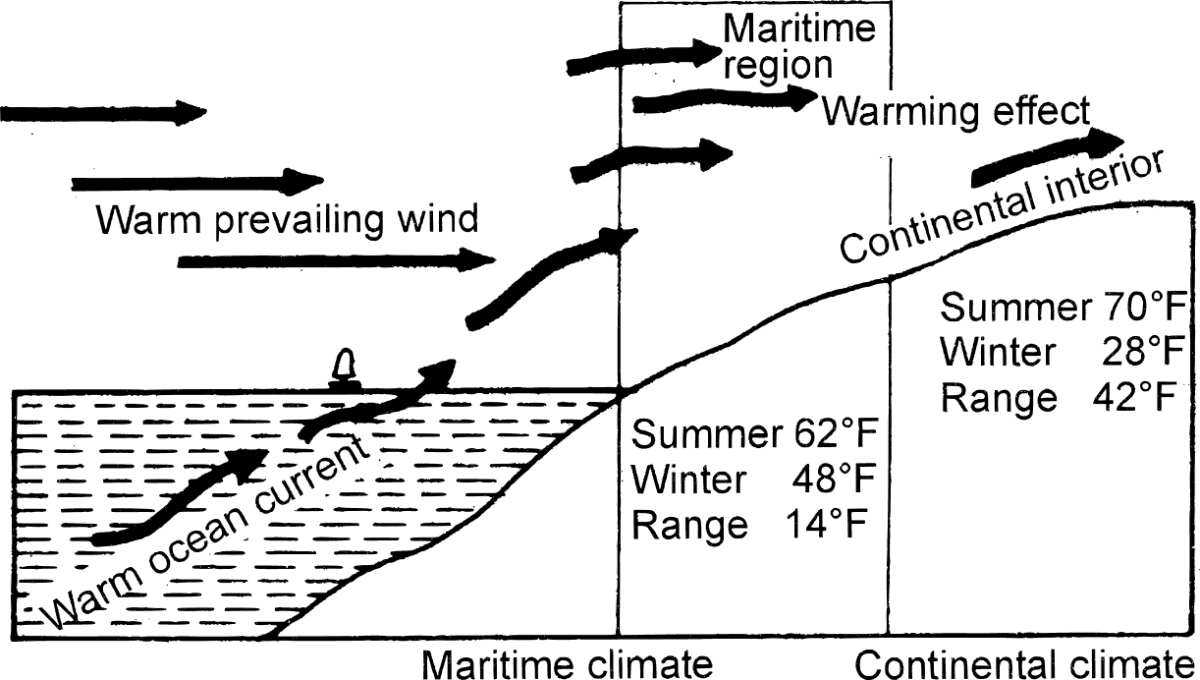
- Mountains act as barriers to air masses and winds, affecting local temperature and rainfall patterns - for example, the Himalayas block cold continental winds and influence monsoon movement.
- Steeper slopes and valley shapes influence heating and cooling; valleys may trap cold air causing inversions, while exposed slopes heat more quickly.
- Aspect or direction of slope matters: in the Northern Hemisphere, south-facing slopes receive more direct solar radiation and are warmer than north-facing slopes, which are cooler and retain more moisture.
Why does the temperature of a place in the atmosphere decrease with height?
Ans: Temperature generally decreases with altitude because the atmosphere itself absorbs little of the incoming solar radiation. The ground absorbs most solar energy and warms the air close to the surface by conduction and convection, so air becomes cooler as one moves away from the heated surface.
Question 15What causes equable climate?
Ans: An equable climate, with low annual and daily temperature ranges, is caused by the moderating influence of large water bodies. Coastal areas receive heat from the sea and lose heat to it slowly, which stabilises temperatures and produces mild conditions.
Question 16State the reason for the differential heating of land and water?
Ans: Differential heating arises because land and water differ in reflectivity, mixing and heat capacity. Land absorbs more solar radiation and warms quickly but also cools quickly, while water reflects more, mixes vertically and has a higher heat capacity so it heats and cools slowly. This difference causes sea and land breezes.
Explain the following terms
Question 1Insolation
Ans: Insolation is the solar radiation intercepted by the Earth's surface and atmosphere.
Question 2Conduction
Ans: Conduction is the transfer of heat through direct contact, from warmer to cooler parts of a substance or between substances in contact.
Question 3Normal Lapse Rate
Ans: Normal Lapse Rate is the typical decrease in temperature with height in the lower atmosphere, taken as about 1°C per 166 metres.
Question 4Inversion of Temperature
Ans: Temperature inversion is a condition in which temperature increases with height over a layer of the atmosphere, reversing the usual decrease with altitude.
Distinguish between the following Question 1
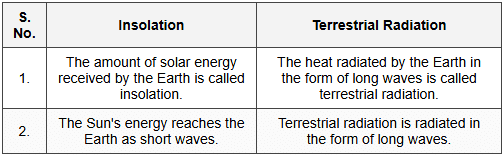
Insolation and Terrestrial Radiation
Ans:- Insolation is incoming solar radiation received by the Earth from the Sun.
- Terrestrial radiation is long-wave radiation emitted from the Earth's surface and atmosphere back into space after the surface has been heated.
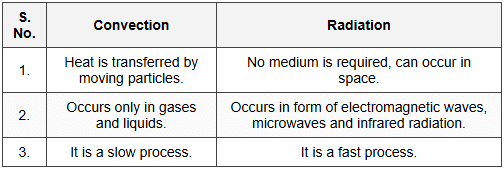
Convection and Radiation
Ans:- Convection transfers heat by the movement of fluid or air masses (mass movement carrying heat).
- Radiation transfers heat by electromagnetic waves and does not require any medium.
Give reasons for the following
Question 1Land gets heated faster than the sea.
Ans: Land heats faster because it absorbs more solar energy, has lower heat capacity and does not mix vertically like water, so it warms quickly compared with the sea.
Question 2The climate of continental interiors is of comparatively extreme type.
Ans: Continental interiors are far from the moderating influence of oceans, so they experience larger daily and annual temperature ranges leading to more extreme climates.
Question 3Coastal climates are equable.
Ans: Coastal climates are equable because the sea moderates temperature changes; water warms and cools slowly, reducing both daily and seasonal extremes.
Question 4South-facing slopes are much warmer than north-facing slopes in the Northern Hemisphere.
Ans: In the Northern Hemisphere, south-facing slopes receive more direct and longer-duration solar radiation, so they are warmer and drier than north-facing slopes.
Question 5The amount of insolation received on the Earth's surface is not uniform.
Ans: Insolation varies with latitude, season, cloud cover, and surface characteristics; it is greatest near the equator and decreases towards the poles because of the changing angle and path length of the Sun's rays.
Question 6Hill stations are cooler even in the summer.
Ans: Hill stations are cooler because temperature falls with altitude (normal lapse rate), so places at higher elevations remain cooler than nearby lowlands even during summer.
Diagrams Question 1
Draw a neat diagram showing the Effect of Latitude on Solar Insolation.
Ans: The diagram below illustrates how the angle of the Sun's rays and the area over which they are spread change with latitude, affecting the amount of insolation received.
Choose the correct option
Question 1The process through which heat passes from warmer to colder substances as long as a temperature difference exists, is known as:
- Convection
- Conduction
- Radiation
- Advection
Ans: (b)
Explanation: Conduction is the transfer of heat through direct contact from a warmer body to a cooler one, for example when the ground warms the air in contact with it.
Question 2Which of the following reasons is responsible for the minimum insolation at the Poles?
- The earth is spherical in shape.
- Poles are far away from the equator.
- Poles get extremely slanting rays of the sun.
- All the above
Ans: (d)
Explanation: All these factors combine to give the poles the least insolation: Earth's curvature, great distance from the equator and very slanting solar rays reduce the amount of solar energy they receive.
Question 3Which of the following factor/factors are responsible for unequal temperature distribution on the earth?
- Distance from the sea
Ans: All the above
Explanation: Several factors such as latitude, distance from the sea, altitude, ocean currents and cloud cover together cause unequal temperature distribution; distance from the sea is one important example.
Question 4'Latitude is one of the important factors for controlling the temperature' - which of the following fact justifies this statement?
- The hill stations are cooler even in summer.
- The areas in high latitude are not very hot compared to the equatorial regions.
- Areas close to water bodies have lower diurnal and annual ranges of temperature than areas situated far away from the coast.
Ans: The areas in high latitude are not very hot compared to the equatorial regions.
Explanation: This choice directly links latitude with temperature: higher latitudes receive more slanting rays and so are cooler than equatorial regions.
Question 5'Forest areas are cooler than the open places' - which of the following reasons is responsible for it?
- Forests receive more slanting rays of the sun than the open areas.
- All forests are situated in higher latitudinal areas.
- The vegetation cover checks the radiation from the upper layer of the soil.
- Forests are mainly situated in the mountains.
Ans: The vegetation cover checks the radiation from the upper layer of the soil.
Explanation: Vegetation shades the ground, reduces direct heating of the soil and air, and increases transpiration, all of which keep forested areas cooler than open places.
Question 6'Tropical Deserts have high diurnal ranges of temperature' - which of the following factor/factors are responsible for it?
- Tropical deserts
Ans: Clear skies, sparse vegetation and dry soils in tropical deserts cause rapid heating during the day and rapid cooling at night, producing high diurnal temperature ranges.